
Yard Standing Water Guide for Homeowners
Struggling with yard standing water? Our yard standing water guide helps you identify causes and implement effective solutions. Protect your home!

Standing water in a residential yard is defined as surface water that remains pooled on soil for more than 48 to 72 hours after rainfall. That threshold matters because mold growth begins within 24 to 48 hours of persistent moisture, and foundation damage from chronic pooling can cost tens of thousands of dollars to repair. This yard standing water guide covers how to diagnose the root cause, apply targeted fixes, and know when to call a professional. Whether your problem traces back to poor grading, compacted soil, clogged gutters, or a failing septic system, the solution starts with identifying the actual source, not just filling the puddle.
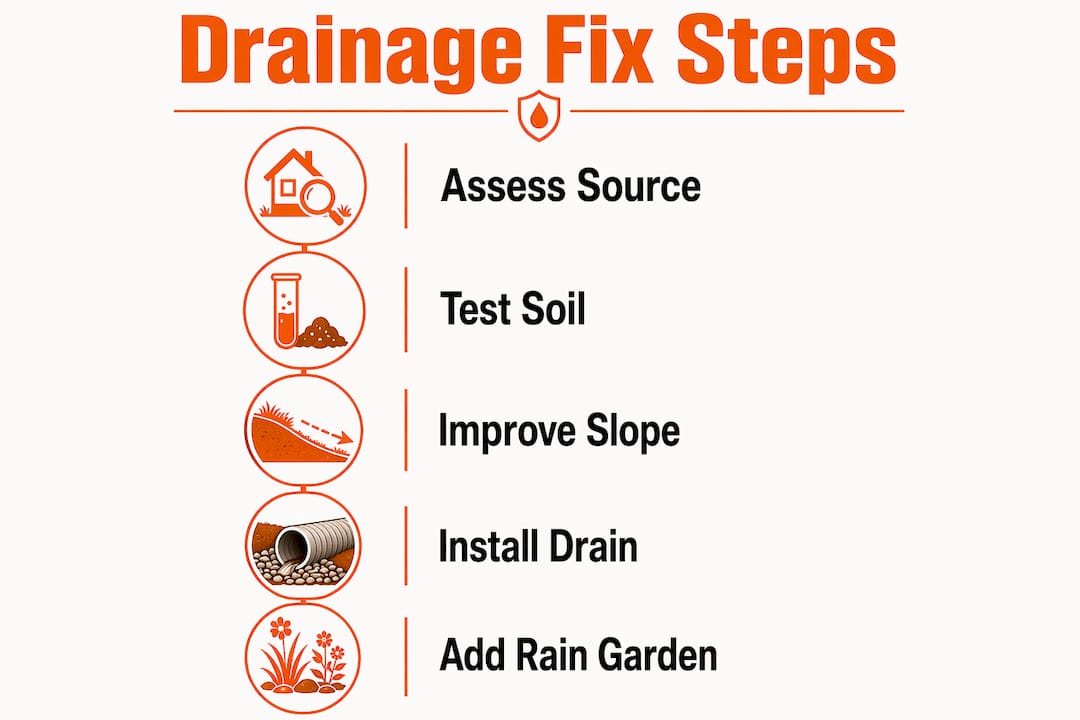
What is causing standing water in your yard?
Failing to identify whether water comes from gutters, uphill runoff, or a high water table is the single most common reason homeowners waste money on drainage fixes that do not work. Treating the symptom, the puddle, without understanding the source leads to repeated problems and unnecessary expense. Before spending anything, spend time observing your yard during and after rain.
Reading the visual signs
Persistent puddles in the same location after every storm, soggy or mushy ground that stays soft for days, and yellowing or dying grass patches are the three most reliable visual indicators of a yard drainage problem. Yellowing grass signals root suffocation from oxygen-depleted, waterlogged soil. If you see these signs in multiple areas, the cause is likely systemic, such as grading or soil type, rather than a single localized issue.
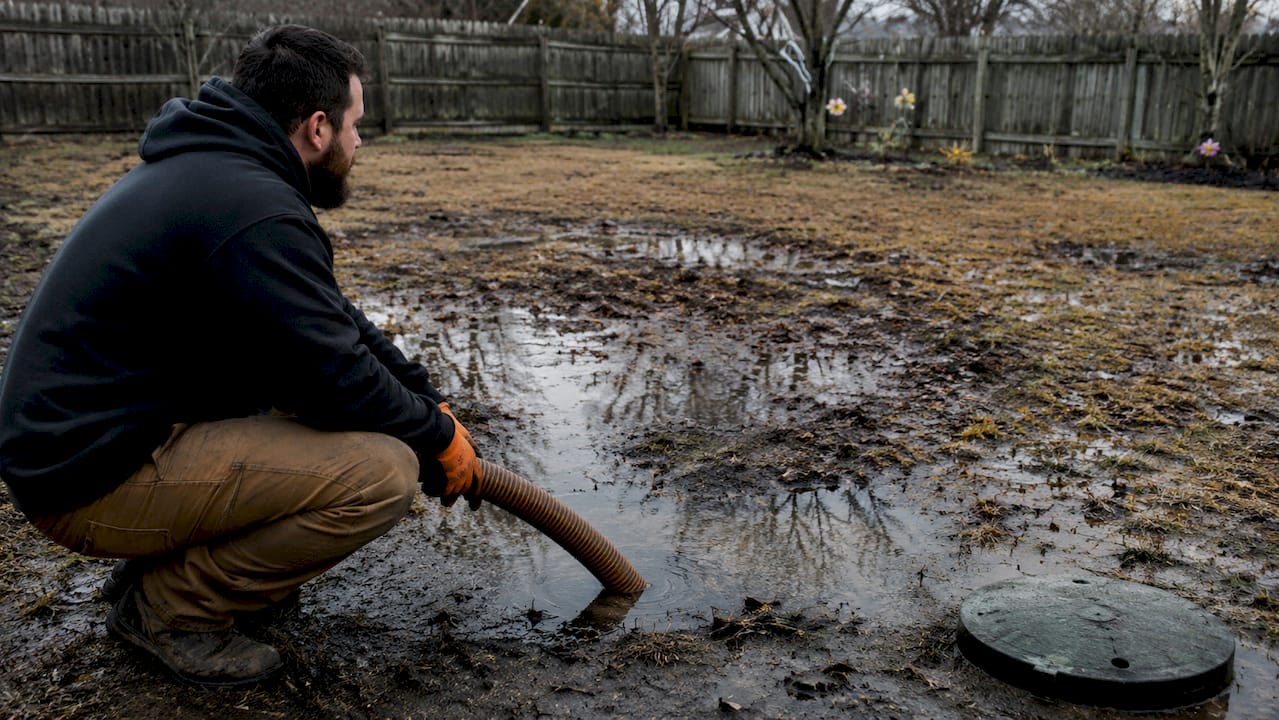
Testing soil and slope
Soil compaction reduces infiltration rates drastically, often by up to ten times compared to healthy soil, and is a hidden contributor after construction or heavy foot traffic. You can test compaction by pushing a screwdriver into the ground. If it meets resistance within two inches, aeration is overdue. For slope, use a string line level rather than eyeballing. Proper grading requires at least a 1-inch drop per 8 to 10 feet away from your home’s foundation, which equals a 1 to 5 percent slope. Anything flatter allows water to pool against the structure.
When to suspect a pipe or septic problem
Standing water caused by septic system failure or broken pipes appears in fixed spots regardless of how much rain has fallen. If you notice a consistently wet patch in dry weather, especially near your drain field or sewer line, that is a plumbing or septic issue, not a grading problem. Regrading the yard will not fix it. This distinction saves homeowners from expensive, misapplied solutions.
Pro Tip: Mark the wet spots in your yard with flags after a rain event and check them again 72 hours later. Spots that stay wet in dry weather point to subsurface leaks, not surface drainage.
How to fix common yard drainage problems yourself
Simple maintenance like clearing gutters and small regrading fixes resolves the majority of standing water problems before any major investment is needed. Start with the lowest-cost interventions and work up from there. DIY fixes typically run between $200 and $800, a fraction of professional system installation.
Here is the order of operations that works for most residential yards:
-
Clear and extend your downspouts. Extending downspouts at least 6 to 10 feet from the foundation is one of the most effective and affordable fixes available. Flexible downspout extensions cost under $30 at any hardware store and redirect roof runoff away from the areas most prone to pooling.
-
Check and clean your gutters. Gutters sized for 1-inch-per-hour rainfall and free of debris prevent overflow that saturates the soil directly against your foundation. Standard 5-inch gutters handle most average-sized roofs. Larger roofs need 6-inch gutters. Clean them at minimum twice a year, in spring and fall.
-
Aerate compacted soil. A core aerator, available at most equipment rental shops for around $75 per day, pulls plugs from the soil and opens channels for water to move downward. This is especially effective in yards with heavy clay soil or high foot traffic.
-
Regrade low spots. Fill low areas with a mix of topsoil and sand, not pure topsoil, which compacts quickly. Build up the area gradually in 2-inch layers, tamping each layer before adding the next. The goal is a consistent slope away from your home, not just a filled depression. For precision, use a string line level for grading to confirm your slope before and after.
-
Install gutter guards. Gutter guards from brands like LeafFilter or Amerimax reduce the frequency of clogs and are worth the investment if your yard sits under heavy tree cover.
Pro Tip: Never fill a low spot with pure topsoil alone. It settles and compacts within one season, recreating the same depression. Mix in coarse sand at a 60/40 ratio for lasting results.
What professional drainage systems actually solve
When DIY fixes do not resolve the problem, the next step is understanding which professional system matches your specific cause. Differentiating between surface water fixes and subsurface saturation fixes is critical. Applying the wrong system wastes money and can make drainage worse.
| System | Best for | Approximate cost | DIY feasible? |
|---|---|---|---|
| French drain | Subsurface water saturation, soggy lawn | $1,500 to $15,000+ | Partially |
| Catch basin | Surface runoff collection in low spots | $500 to $2,500 | Yes, with planning |
| Dry well | Concentrated discharge from downspouts | $300 to $1,500 | Yes |
| Rain garden | Moderate runoff, aesthetic preference | $500 to $3,000 | Yes |
| Sump pump | Basement and foundation water intrusion | $1,000 to $4,000 installed | No |
A French drain is a perforated pipe buried in gravel that intercepts groundwater before it saturates the surface. A French drain requires a minimum 1 percent slope and an approved outlet. Without both, the pipe fills with water and stops draining entirely. This is the most common installation mistake homeowners make when attempting French drains without professional guidance.
Rain gardens planted with native species tolerate both wet and dry conditions while slowing and filtering runoff. They are typically 6 to 12 inches deep and positioned to receive water from downspouts or natural flow paths. In Alamance County and the Piedmont Triad, native plants like swamp rose, cardinal flower, and river oats perform well in rain garden applications. Rain gardens combine function with curb appeal in a way that catch basins and French drains cannot.
For homeowners considering subsurface drainage materials, understanding drain field material options helps clarify what goes into a properly built system and why material choice affects long-term performance.
How septic systems cause yard standing water
A septic system that is failing, overloaded, or improperly maintained is one of the most overlooked causes of yard water drainage problems. The drain field, which is the network of perforated pipes buried in gravel beneath your yard, disperses treated wastewater into the soil. When that system is compromised, water surfaces.
The signs of septic-related standing water are distinct from rain-related pooling:
- Wet or spongy ground directly above the drain field, even during dry weather
- Strong sewage odors near the wet area
- Slow drains or gurgling pipes inside the house occurring at the same time as yard pooling
- Bright green, unusually lush grass growing over the drain field (a sign of nutrient-rich effluent reaching the surface)
The critical rule for any drainage project near a septic system is to coordinate drainage fixes with your septic layout before breaking ground. Installing a French drain or catch basin without knowing where your drain field sits can crush pipes, disrupt gravel beds, and trigger a full system failure. That mistake turns a $2,000 drainage project into a $15,000 septic replacement.
Common septic-related fixes include tank pumping and inspection, broken lateral line repair, and in severe cases, full drain field replacement. Preventive maintenance, including pumping every 3 to 5 years and avoiding heavy vehicles over the drain field, prevents most of these failures. For homeowners who want to understand the full picture of preventing septic failure before it escalates, early action is always less expensive than emergency repair.
Key takeaways
Standing water in your yard requires diagnosing the actual source first, then applying the right fix in the right order, from gutters and grading to French drains and septic repair.
| Point | Details |
|---|---|
| Diagnose before spending | Identify whether water comes from gutters, grading, soil, or septic before committing to any fix. |
| Start with low-cost fixes | Extending downspouts and aerating soil resolve most problems for under $800. |
| Match the system to the cause | French drains fix subsurface saturation; catch basins handle surface runoff. Never swap them. |
| Septic systems need separate attention | Wet spots above drain fields signal septic failure, not grading problems. |
| Protect your septic layout | Always map your septic system before installing any drainage infrastructure nearby. |
What I’ve learned after years of septic and drainage work
The most expensive mistake I see homeowners make is skipping the diagnosis and going straight to a solution they read about online. A French drain is a great tool. So is regrading. But neither one fixes a failing septic system, and a septic repair does nothing for a yard that slopes toward the house. The fix has to match the cause, and that requires actually looking at the yard, testing the soil, and in many cases, pulling the septic records before touching a shovel.
The second mistake is treating drainage as a one-time project. Gutters clog every season. Soil settles. Tree roots invade drain pipes. The homeowners I see with the fewest problems are the ones who do a quick inspection every spring, clear their gutters in the fall, and call for a septic pump-out on schedule rather than waiting for a backup. That kind of routine maintenance costs a few hundred dollars a year and prevents the kind of failures that cost tens of thousands.
My honest recommendation: start cheap and systematic. Extend the downspouts. Check the slope with a level. Aerate the lawn. If water is still pooling after those steps, then bring in a professional for a proper site assessment. And if you see wet spots that appear regardless of rain, call a septic professional before you call a landscaper.
— Jason
Protect your yard and your septic system with professional help

If you have worked through the DIY steps and still have standing water, or if you suspect your septic system is involved, Jmseptic is the team to call. Serving Burlington, Mebane, Elon, Graham, Whitsett, and McLeansville across Alamance County, Jmseptic handles everything from septic installation and drain field repair to system diagnostics and hydro jetting. Getting the drainage right and the septic system right at the same time is the only way to protect your yard and your home long term. Learn more about new septic installation or review North Carolina septic costs to understand what a professional solution actually involves.
FAQ
How long can water safely sit in my yard?
Standing water lasting more than 48 to 72 hours is abnormal and signals a drainage problem. Beyond that window, mold risk and soil damage increase significantly.
What is the cheapest fix for yard standing water?
Extending downspouts 6 to 10 feet from the foundation and clearing gutters are the lowest-cost starting points, often resolving pooling near the home for under $50.
How do I know if my septic system is causing the wet yard?
Wet spots that appear during dry weather, sewage odors, or lush green patches directly above the drain field all indicate septic-related standing water rather than a grading or rainfall issue.
What slope does my yard need to drain properly?
A minimum 1-inch drop per 8 to 10 feet away from your home’s foundation is the standard for effective surface drainage, equivalent to a 1 to 5 percent slope.
Can I install a French drain myself?
A French drain is partially DIY-feasible, but it requires a minimum 1 percent slope and a legal outlet to function. Without both, the system collects water and stops draining, making the problem worse.