
Why septic pumping matters: protect your home and wallet
Discover why septic pumping is important for your home and wallet. Learn how regular pumping can prevent costly damages and keep your system running!

Most homeowners in Alamance County never think about their septic system until something goes wrong. A gurgling toilet, a soggy patch of yard, or the unmistakable smell of sewage creeping into the house usually kicks off a panic call to a contractor. By that point, the damage is often already done. The truth is that your septic system is one of the most expensive and important systems on your property, and regular pumping is the single best thing you can do to keep it running without surprises. This guide covers everything you need to know about why pumping matters, when to schedule it, and what happens if you wait too long.
Table of Contents
- What septic pumping actually does
- How regular pumping saves you money
- Protecting health and the environment
- When and how often should you pump your tank?
- Why pumping is not one-size-fits-all
- Why waiting for a problem is the biggest mistake homeowners make
- Get ahead of septic issues with local pros
- Frequently asked questions
Key Takeaways
| Point | Details |
|---|---|
| Early pumping prevents failures | Pumping your septic tank before problems arise saves thousands in repairs. |
| Protect your health and water | Routine pumping prevents household sewage from polluting groundwater and streams. |
| Follow smart schedules | Don’t guess; schedule based on system size, use, and expert measurement, not just time. |
| Act on warning signs quickly | Slow drains, odors, or wet spots need a prompt professional check—not just pumping. |
| Proactive care beats crisis response | Homeowners who stay consistent with maintenance avoid the biggest costs and disruptions. |
What septic pumping actually does
Now that you know ignoring your septic tank can be risky, let’s break down what septic pumping actually involves and how it protects your property.
Your septic tank is not a magic container that makes waste disappear. It works by separating household wastewater into three distinct layers. Heavier solids sink to the bottom and form a layer called sludge. Lighter oils, grease, and foam float to the top as scum. The relatively clear liquid in the middle, called effluent, flows out to the drainfield where it is filtered through the soil.
The sludge and scum layers do not break down completely on their own. Over time they build up and take up more and more space inside the tank. When those layers get thick enough, solid material starts escaping out of the tank and into the drainfield pipes. Once that happens, the soil gets clogged, the drainfield fails, and you are looking at a very expensive repair.
Preventive pumping removes sludge and scum before they can escape into the drainfield, preventing clogged soil absorption and costly system failure.
Pumping physically removes those built-up layers using a vacuum truck. It does not fix a broken drainfield or repair cracked pipes, but it eliminates the root cause of most septic failures before they start. Think of it like changing the oil in your car. You do not wait until the engine seizes.
Key facts about how your tank works:
- Sludge accumulates at the bottom every time you flush or drain anything.
- Scum builds up from soaps, fats, and household cleaning products.
- The tank’s bacteria can slow decomposition but cannot eliminate solids entirely.
- A full tank forces solids out before they should leave, every single time.
- Pumping every 3 to 5 years keeps layers at safe levels and protects the drainfield.
| Tank layer | What it contains | What happens if ignored |
|---|---|---|
| Sludge (bottom) | Solid waste, sediment | Overflows into drainfield, causes clogs |
| Effluent (middle) | Treated wastewater | Flows safely to drainfield when layers are managed |
| Scum (top) | Grease, oils, foam | Blocks outlet baffle, contaminates effluent |
The EPA recommends professional inspection every 1 to 3 years and pumping every 3 to 5 years for most households. That schedule is not a guess. It is based on real data about how fast sludge accumulates in average-sized tanks under average conditions.
How regular pumping saves you money
Understanding what pumping does makes it clear that skipping maintenance costs more. Here is how regular pumping directly protects your finances.
Routine septic pumping typically costs between $250 and $500 depending on tank size and access. That is it. You call a professional, they come out, they remove the sludge and scum, and you are protected for another three to five years. Compare that to the alternative.
A failed septic system, meaning a clogged drainfield that can no longer absorb effluent, can cost anywhere from $5,000 to $15,000 or more to repair or replace. If the soil is severely saturated or the drainfield is in a difficult location, costs can climb even higher. New system installation on a property with complicated soil conditions can run well above that range, as you can see when reviewing septic system installation costs.
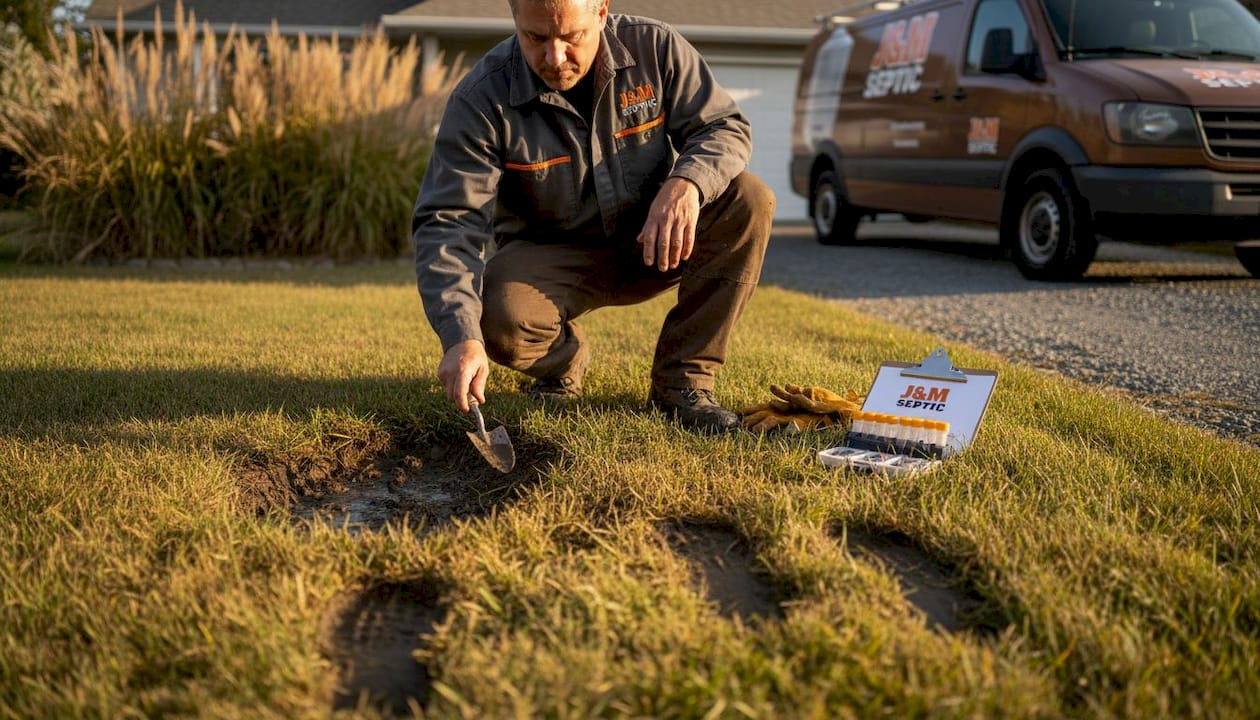
As the EPA points out, preventive pumping typically costs a few hundred dollars, while a malfunctioning system can cost thousands more to repair or replace. That math is hard to argue with.
The real cost comparison looks like this:
| Maintenance type | Typical cost | Frequency | 15-year cost estimate |
|---|---|---|---|
| Routine pumping | $250 to $500 | Every 3 to 5 years | $750 to $2,500 |
| Drainfield repair | $1,500 to $5,000 | Once if neglected | $1,500 to $5,000 |
| Full system replacement | $5,000 to $15,000+ | Once if neglected | $5,000 to $15,000+ |
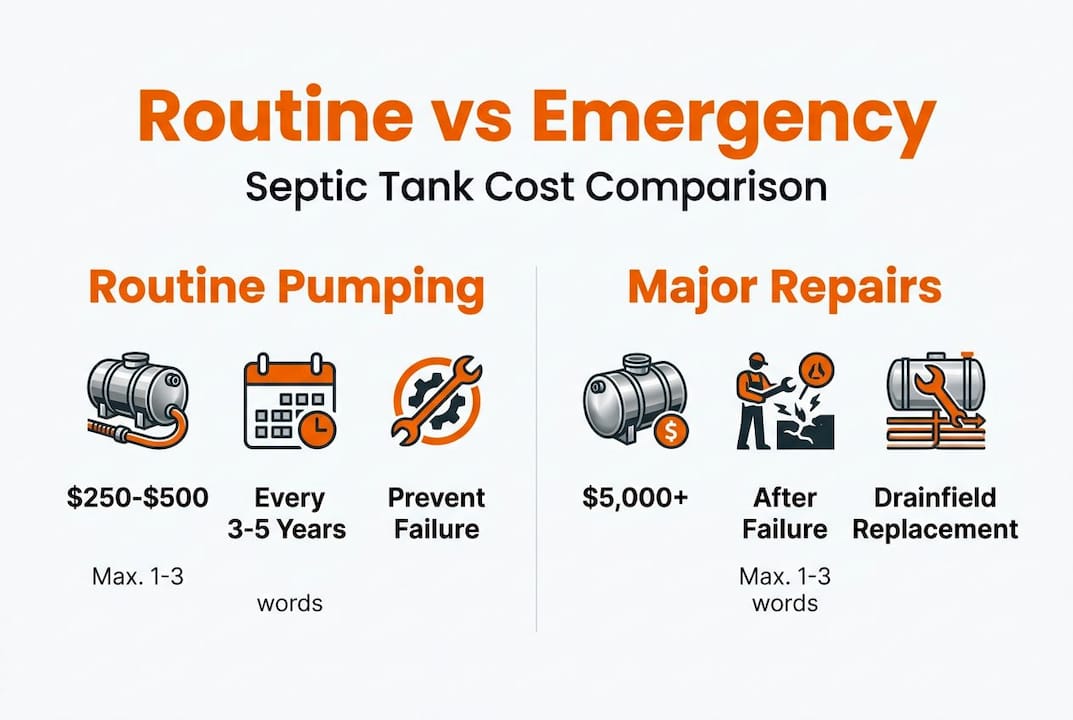
The numbers tell a clear story. A homeowner who pumps on schedule might spend $1,500 over 15 years. A homeowner who skips pumping could spend $10,000 or more in a single emergency repair call, plus landscaping to fix torn-up yards and possible interior cleanup if there was a backup.
Four steps to protect your investment financially:
- Get your tank pumped on a consistent schedule, not just when you notice problems.
- Keep a written record of every pump-out with the date and volume removed.
- Note any warning signs your technician mentions during service visits.
- Plan ahead by budgeting a few hundred dollars every few years rather than absorbing a five-figure repair bill without warning.
Pro Tip: If you recently bought a home in Burlington, Mebane, or anywhere in Alamance County, ask the previous owners for pumping records. If they cannot provide any, schedule a pump-out and inspection right away. You have no idea what is sitting in that tank.
Protecting health and the environment
Protecting your wallet is crucial, but your family’s health and the environment matter just as much. Here is why pumping is about more than savings.
Raw household wastewater is not just dirty water. It contains bacteria, viruses, nitrates, phosphorus, and other materials that are genuinely dangerous to people and ecosystems. A well-functioning septic system treats that wastewater before it reaches the groundwater. An overloaded or neglected system does not.
Improperly treated septic effluent can contaminate groundwater and surface waters with disease-causing pathogens and nutrients, creating health risks that extend far beyond your own property.
When a tank is overfull, untreated sewage can seep into the soil around your home, run off into nearby streams, or leach into private wells. In Alamance County, many rural homeowners rely on well water. A failing septic system near a well is a serious health threat, not a hypothetical one.
Real health and environmental risks from a neglected tank:
- Contaminated well water can cause gastrointestinal illness, particularly in children and elderly residents.
- Nitrates from septic effluent can exceed safe drinking water levels without any visible sign.
- Bacteria like E. coli and pathogens from untreated sewage can survive in soil and water for weeks.
- Nearby streams and ponds can experience algae blooms from excess nutrients, harming local wildlife.
- Neighbors on adjacent properties can be affected if your system fails near a shared water source.
This is not just a personal problem. Failing septic systems are one of the leading causes of groundwater contamination in rural and suburban areas across the country. Regular pumping is one of the simplest and most affordable ways to prevent your system from becoming part of that statistic.
When and how often should you pump your tank?
Knowing when to pump is not as simple as picking a number. Let us see how to fine-tune your schedule for true system health.
The EPA baseline is clear: inspect every 1 to 3 years, pump every 3 to 5 years. But that range exists because not every household is the same. A two-person household with a 1,500-gallon tank uses far less capacity than a family of six with a 1,000-gallon tank and a garbage disposal running every night.
Pumping should be timed to measurable conditions, specifically sludge and scum layer depths, rather than a fixed calendar date. The EPA provides specific trigger criteria based on the outlet baffle and layer depths that tell you exactly when the tank is due.
The three measurable trigger criteria:
- Scum layer: If the bottom of the scum layer is within 6 inches of the bottom of the outlet baffle, pump immediately.
- Sludge layer: If the top of the sludge layer is within 12 inches of the bottom of the outlet baffle, pump immediately.
- Combined layers: If more than 25 percent of the liquid depth in the tank is taken up by sludge and scum, it is time to pump.
These measurements require a professional with the right tools and experience. You cannot eyeball them yourself, and guessing wrong can cost you thousands.
| Household size | Tank size | Recommended pump frequency |
|---|---|---|
| 1 to 2 people | 1,000 gallons | Every 5 years |
| 3 to 4 people | 1,000 gallons | Every 3 to 4 years |
| 5 to 6 people | 1,500 gallons | Every 3 years |
| 6+ people or heavy use | Any size | Every 1 to 2 years |
Garbage disposals accelerate sludge accumulation significantly. If your household uses one regularly, shorten your pumping interval. Same goes for households with a home-based business generating extra water use, or properties that host frequent guests.
Pro Tip: Do not just schedule pumping based on the calendar. Ask your technician to measure sludge and scum levels every time they come out. That way you get a real number, not a guess.
Why pumping is not one-size-fits-all
With a plan in place, remember not every home is the same. Local realities and warning signs mean you need a custom approach to pumping.
Homes in Alamance County vary widely in lot size, soil type, system age, and daily water use habits. A 1970s system on a smaller lot in Graham behaves very differently than a newer installation on a few acres outside Whitsett. Soil conditions in the Piedmont Triad can include clay-heavy soils that drain more slowly, which means drainfields can become saturated faster than average if the system is overloaded.
Warning signs that your system needs immediate attention include:
- Slow drains in multiple fixtures throughout the house, not just one sink or toilet.
- Sewage odors inside the home or near the drainfield area outside.
- Wet, spongy, or unusually green patches of grass over the drainfield, especially during dry weather.
- Gurgling sounds from pipes when water is draining.
- Sewage backups in toilets or floor drains.
Here is the important distinction: these symptoms can indicate either a tank that needs pumping or a drainfield that is already failing. You need a professional inspection to tell the difference. Pumping a tank when the drainfield is the actual problem gives you only temporary relief.
This matters enormously because, as experienced professionals know firsthand, pumping cannot reverse drainfield failure. Once solids and biomat, which is a thick bacterial layer, clog the drainfield soil, pumping the tank alone will not fix it. That is why diagnosis comes before any recommendation.
Pro Tip: Do not assume that a pump-out will solve every slow drain or odor problem. If symptoms return within days or weeks of pumping, you likely have a drainfield issue that needs a professional diagnosis and possibly repairs.
Why waiting for a problem is the biggest mistake homeowners make
After exploring the practical side of pumping, here is our field-tested perspective that homeowners in Alamance County should hear directly.
We have seen this pattern repeat itself more times than we can count. A homeowner calls us because their toilets are backing up or their yard smells terrible. When we get there, the tank has not been pumped in 10 years or more. The drainfield is saturated. What started as a $300 pump-out job years ago has now become a full system situation.
The conventional wisdom says “if it is not broken, do not fix it.” For septic systems, that thinking is genuinely dangerous. Unlike a leaky faucet, a failing septic system gives you almost no warning before it becomes a crisis. By the time you notice the symptoms, the system has usually been in trouble for months or even years.
We believe the biggest savings come from consistency, not crisis response. Homeowners who stick to a regular pumping schedule almost never call us in a panic. They call us on a Tuesday afternoon, we pump the tank, and they go back to their lives. That is the goal. Protecting your system also protects your property value. A home with documented, scheduled septic maintenance is a much easier sell than one with an unknown history or a recent repair. Thinking about avoiding premature septic replacement starts with the small, consistent steps that add up over years.
If you do not know when your septic tank was last pumped, that is your sign to schedule service today, not next season.
Pro Tip: Write your next scheduled pumping date on a sticky note and put it somewhere you will see it, on the fridge, in a home maintenance binder, or as a recurring calendar reminder. Simple systems beat good intentions every time.
Get ahead of septic issues with local pros
Ready to stay safe instead of sorry? Act now, and let reliable professionals protect your investment.
At J&M Septic Installation & Repair, we work with homeowners across Burlington, Mebane, Elon, Graham, Whitsett, and McLeansville every day. We understand local soil conditions, system ages, and the specific challenges that come with properties across Alamance County.
Whether you need a routine pump-out, a full inspection to understand your system’s current condition, or a conversation about whether it is time to get a new septic system, we are here to give you honest answers and long-term solutions. We do not sell you repairs you do not need. We also do not let a problem get bigger than it has to be. If you are not sure when your last service was, give us a call and we will help you figure out exactly where you stand.
Frequently asked questions
How often should my septic tank be pumped?
Most tanks should be inspected every 1 to 3 years and pumped every 3 to 5 years, though your actual schedule depends on household size, water use, and tank capacity.
What are warning signs that my system needs pumping?
Slow drains in multiple fixtures, sewage odors indoors or outdoors, or wet patches near your drainfield are clear signals, but you should always get a professional inspection to confirm whether the issue is the tank or the drainfield.
Is septic tank pumping enough to fix system failure?
Not always. If the drainfield is already blocked with solids or biomat, pumping alone may offer only temporary relief, and the underlying drainfield problem will require professional repairs or replacement.
What happens if I never pump my septic tank?
Sludge and scum will eventually overflow into the drainfield, clogging the soil and leading to system failure, sewage backups in your home, and a repair bill that can reach five figures.
Can I pump my septic tank myself?
No. Septic pumping requires certified professionals with specialized vacuum equipment and proper waste disposal protocols to meet safety and environmental compliance standards.
Recommended
- New Septic System Installation – J&M SEPTIC
- Equipment Financing – J&M SEPTIC
- About Emory Lending – J&M SEPTIC
- Maximizing Your Blog’s Reach: SEO Tips for Bloggers – J&M SEPTIC
- Why Schedule Roof Inspections: Protect Your Home and Wallet