
Sewer Line Spot Repair: What Homeowners Need to Know
Learn what is a spot repair sewer line and discover how it saves you money and yard space. Get crucial tips before your next repair!

A sewer line spot repair is a targeted fix on one damaged section of pipe, leaving the rest of the line untouched. It’s the right call when the damage is isolated and the surrounding pipe looks structurally sound on camera. When those conditions are met, it typically costs less and tears up far less of your yard than a full replacement. When they’re not, it’s a temporary patch that will likely have you digging again within a year or two.
Before any contractor recommends a spot repair, a professional video camera inspection should confirm the damage is localized. Without that footage, you’re guessing.
Quick summary:
- A spot repair replaces only the damaged pipe section, not the entire line
- Lower cost and less property disruption than full replacement
- Only appropriate when damage is isolated and surrounding pipe is healthy
- A camera inspection is non-negotiable before approving any repair
- Get the warranty in writing and ask for before/after camera footage
Table of Contents
- What warning signs suggest you might need a sewer repair?
- How do professionals confirm whether a spot repair will work?
- When is a spot repair actually the right choice?
- When a spot repair isn’t enough
- How does a sewer spot repair actually work?
- Spot repair vs. pipe lining vs. full replacement
- What does a sewer spot repair cost?
- How long does a spot repair last, and how do you protect it?
- What should you expect during the repair process?
- How do you choose the right contractor?
- When is a spot repair a real win vs. a temporary fix?
- Key Takeaways
- The honest case for getting the diagnosis right
- Jmseptic serves Alamance County homeowners with honest sewer inspections and repairs
- Useful sources
What warning signs suggest you might need a sewer repair?
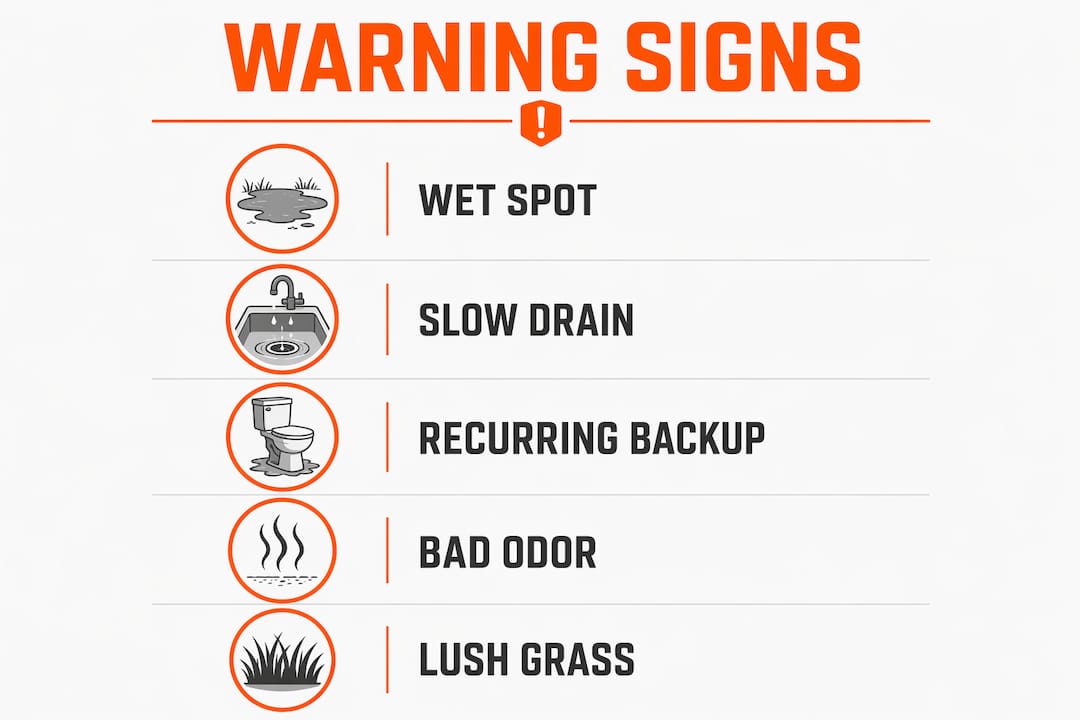
Most homeowners don’t think about their sewer line until something goes wrong. These are the symptoms worth paying attention to:
- Repeated drain backups throughout the house, especially in lower-level fixtures
- Slow drains in multiple sinks or tubs at the same time
- Gurgling sounds from toilets or drains when water runs elsewhere in the house
- Foul odors near drains, in the yard, or around the foundation
- Soggy or sunken patches in the yard along the sewer run, even without recent rain
- Visible sewage surfacing in the yard or pooling near the cleanout
The location and pattern of symptoms matter. A single wet spot in the yard near a known pipe run often points to one localized leak, which is exactly the kind of problem a sewer line spot repair can address. Generalized, frequent backups throughout the house suggest something more systemic. If your drains have been slow for months and the problem keeps returning after cleaning, that’s a different conversation.
A practical first step: check whether the issue clears after a professional rooter or hydro-jet cleaning. If it does, you may not need a repair at all. If it doesn’t, or if it comes back within weeks, that’s when a camera inspection becomes necessary.
How do professionals confirm whether a spot repair will work?
Diagnosis is where the decision gets made. Here’s what a proper evaluation looks like:
- Initial cleaning or rooter pass to clear the line enough for a camera to travel through
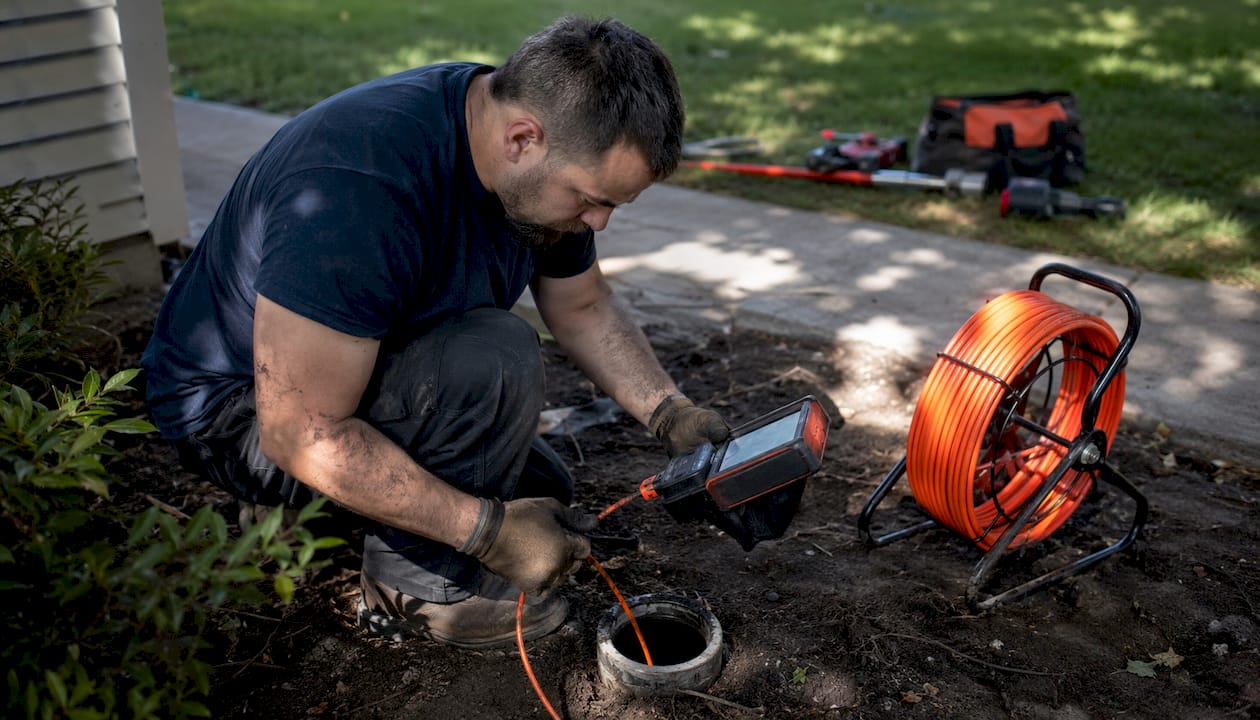
- Video camera inspection — a technician drops a camera into the pipe and records footage of the full run, noting defect type, location, and pipe condition on both sides
- Footage and depth mapping — the technician records the exact distance in feet from the cleanout to the defect and notes the depth below grade
- Surface marking — the defect location is marked on the ground above the pipe, which reduces excavation time and cost if a dig is needed
- Structural assessment — the plumber evaluates whether the pipe on both sides of the defect is stable, well-shaped, and free of additional problems
What you’re looking for in the footage: a single, clearly defined defect (a crack, separated joint, or root intrusion point) with healthy, round pipe on both sides. If the camera shows multiple weak spots, consistent offsets, or sagging sections, a spot repair is unlikely to hold.
Key defect types that often qualify:
- Single crack or hole in one pipe section
- One separated or offset joint
- Root intrusion limited to a single joint
- Localized collapse from external impact or excavation damage
Pro Tip: Ask the technician to record the exact footage measurement from the cleanout to the defect and to mark that point on the ground before the crew leaves. That mark alone can cut excavation time significantly if a dig is required, and it gives you a reference point if you need a second opinion.
A professional camera inspection is the only reliable way to confirm whether a localized fix will actually hold. Without it, you’re approving work based on a guess.
When is a spot repair actually the right choice?
A spot repair earns its keep when the conditions are right. Use this checklist before approving one:
- Single isolated defect confirmed on camera — one crack, one bad joint, one intrusion point
- Healthy pipe on both sides — the camera shows stable, round pipe with good flow on either side of the damaged section
- Limited root intrusion — roots at one joint only, not spread across multiple sections
- No bellies or consistent offsets — the line runs at a proper slope without sagging or repeated misalignment
- Reasonable access — the repair can be reached without destroying a driveway, foundation, or major landscaping feature
- Camera footage provided — the contractor shows you the video and explains what it shows
- Written estimate with line items — you know exactly what you’re paying for
- Warranty on the repaired section — get the terms in writing before work begins
Common scenarios where a spot repair is genuinely the cost-effective, durable choice: a single tree root that punched through one clay joint, a separated joint caused by soil settling, or a localized crack from an old excavation nearby. In each case, the damage has a clear cause, a defined location, and healthy pipe surrounding it.
Don’t approve a spot repair based on a verbal recommendation alone. The camera footage is the evidence. If a contractor can’t show it to you, that’s a problem.
When a spot repair isn’t enough
Choosing a spot repair on a compromised line is one of the more expensive mistakes a homeowner can make. You pay for the dig, the repair, and the restoration — and then you’re back in the same situation six months later with a different section failing.
Watch for these red flags on the camera report:
- Multiple defects along the run — more than one crack, break, or bad joint
- Repeated or consistent offsets — several joints that have shifted, suggesting ground movement along the whole run
- Widespread root intrusion — roots at many joints, meaning the entire line is vulnerable
- Bellies or sagging sections — low spots where water and waste pool instead of flowing through
- Systemic corrosion — deterioration that extends well beyond one section, common in older clay or cast iron lines
- Chronic backups that return after cleaning, pointing to a structural flow problem rather than a single blockage
If the camera shows any combination of these, ask your contractor to walk you through the full-line options: pipe relining (CIPP) or full replacement. Get a long-term cost comparison. A full relining often costs more upfront but eliminates the cycle of repeat excavations that add up fast.
Spot repairs do not fix slope problems. If the line has a belly, patching the pipe material doesn’t correct the grade. Waste will still pool in that low spot, and backups will continue.
How does a sewer spot repair actually work?
There are two main paths: traditional excavation and trenchless point repair. Which one applies depends on the defect type, pipe material, depth, and local code.
Excavation-based spot repair
- Locate and mark the defect using camera footage and surface markers
- Excavate a targeted hole directly above the damaged section — typically a few feet wide, not a trench across the yard
- Remove the damaged pipe section and inspect the surrounding pipe ends
- Install new pipe (matching material or an approved coupling) and seal the joints
- Backfill in layers, compacting as you go to prevent future settling
- Restore the surface — replace sod, gravel, concrete, or pavement as needed
The excavation footprint is small compared to a full replacement, but surface restoration still adds to the total cost, especially if the pipe runs under a driveway or patio.
Trenchless point repair
Instead of digging, a technician inserts a resin-saturated liner or sleeve into the pipe and positions it at the defect. The liner is inflated to press against the pipe wall, then cured in place to form a rigid, watertight patch. No yard destruction required — just access at the cleanout or a small entry point.
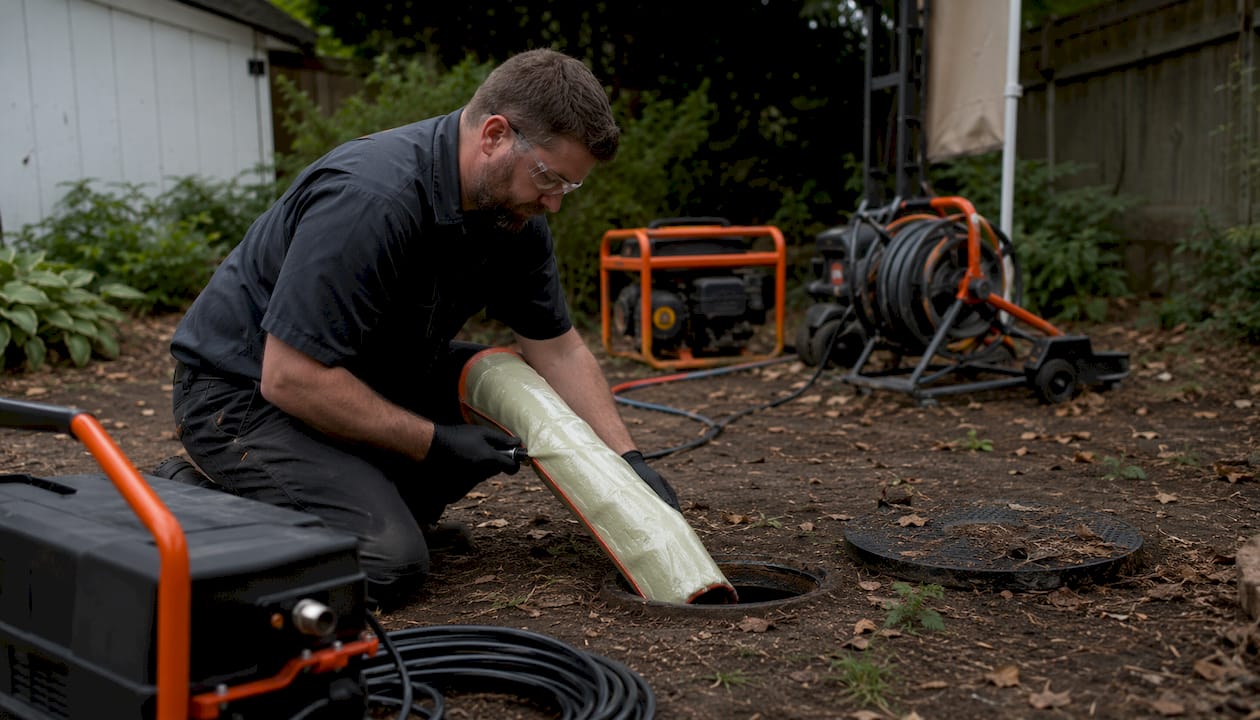
Trenchless spot liners can be effective, but they’re not a universal solution. Feasibility depends on pipe diameter, defect type, and whether the pipe is round enough to accept the liner. There’s also a code consideration: some municipalities prohibit trenchless methods for private lateral repairs and require open excavation instead. Always verify local requirements before assuming a no-dig option is available.
Pro Tip: Before scheduling any dig, confirm the technician has recorded the exact footage from the cleanout to the defect and marked the surface. That information directly reduces how much soil gets moved and how long the crew spends on-site.
Spot repair vs. pipe lining vs. full replacement
| Method | Best for | Typical cost (relative) | Disruption | Expected lifespan | Repair time | When to choose |
|---|---|---|---|---|---|---|
| Spot repair | Single isolated defect, healthy surrounding pipe | Lowest | Minimal excavation, small surface area | Long-term when correctly done; depends on pipe material and surrounding condition | Often one day | One confirmed defect, healthy pipe on both sides |
| Pipe lining (CIPP) | Moderate damage over longer sections, multiple weak joints | Mid-range | Trenchless, minimal yard impact | several decades per published liner specs | One to two days | Multiple weak spots but pipe shape is intact; no bellies |
| Full replacement | Severe deterioration, collapse, systemic failure, major bellies | Highest | Most invasive, significant excavation | Decades with new pipe | Several days | Line is beyond repair or relining; repeated failures |
Which option fits which situation:
- One bad joint in an otherwise healthy clay line: spot repair
- Several weak joints across a 40-foot run with no bellies: pipe lining
- Collapsed pipe, major offset, or systemic corrosion throughout: full replacement
- A belly that’s causing chronic backups: full replacement or line correction (spot repair won’t fix slope)
What does a sewer spot repair cost?
Spot repairs cost less than full replacement because they require less excavation, fewer materials, and less surface restoration. The actual range varies by region, access conditions, and repair method.
Major cost drivers:
- Access difficulty — a pipe under a concrete driveway costs more to reach than one under a grass lawn
- Depth — deeper pipes mean more excavation time and shoring requirements
- Repair method — trenchless point repair typically runs higher in labor setup but saves on restoration; excavation costs depend on surface type
- Surface restoration — replacing concrete, pavers, or asphalt adds meaningfully to the total
- Municipal permits — some jurisdictions require a permit for sewer work; permit fees and inspection scheduling add time and cost
- Emergency timing — after-hours or weekend calls carry premium rates
Sewer spot repair costs can vary widely depending on regional factors, access difficulty, and pipe depth, with costs generally lower than full replacement expenses. Full sewer line replacement typically runs several thousand dollars more.
No contractor can give you an accurate quote without a camera inspection and a site visit. Anyone who quotes a firm price over the phone without seeing the footage is guessing. Get two or three written, line-item estimates and compare them carefully. Ask each contractor to break out labor, materials, permits, and restoration separately so you’re comparing the same scope.
How long does a spot repair last, and how do you protect it?
A well-executed spot repair that addresses the actual root cause can last for many years. Longevity depends on pipe material (PVC holds up differently than aging clay or cast iron), the condition of the surrounding run, and whether the repair was done correctly the first time.
General expectations:
- A properly done spot repair on a healthy surrounding line can perform for decades
- Pipe lining (CIPP) is generally rated by manufacturers to last for several decades
- Full replacement with new PVC pipe offers the longest baseline lifespan
Maintenance steps that protect the repair and the rest of the line:
- Avoid flushing anything other than toilet paper — wipes, paper towels, and hygiene products accelerate blockages
- Keep large trees with aggressive root systems away from the sewer run; consider root barriers for existing trees
- Schedule periodic hydro-jetting to clear buildup before it becomes a blockage
- Have a camera inspection done every few years on an older line, especially after heavy root removal
Pro Tip: Schedule a follow-up camera check six to twelve months after a major root removal or spot repair. It confirms the seal is holding, the flow is clear, and no adjacent section has started to fail. That footage also becomes part of your maintenance record.
What should you expect during the repair process?
Typical timeline
- Camera inspection — same day or within a day or two of your call; this is the diagnostic step
- Estimate and decision — written estimate delivered after the inspection; review it, ask questions, confirm warranty terms
- Permit (if required) — some municipalities require a permit before sewer work begins; factor in processing time
- Repair day — most spot repairs complete in a single day once the crew is on-site; depth and access can extend that
- Surface restoration — backfill and compaction happen the same day; surface restoration (concrete, asphalt) may follow within a few days depending on materials
- Follow-up camera check — confirm the repair is sealed and flow is restored
Homeowner checklist
Before the repair:
- Clear vehicle access to the work area
- Mark any irrigation lines, buried cables, or landscaping features near the pipe run
- Confirm who is responsible for pulling the permit
- Review the written estimate line by line before signing
During the repair:
- Stay available for questions — depth or pipe condition sometimes changes the scope once the crew is in the ground
- Ask to see the camera footage before and after the repair
After the repair:
- Collect all warranty paperwork and keep it with your home records
- Note the footage location and depth of the repair for future reference
- Schedule the follow-up camera check
How do you choose the right contractor?
Contractor vetting checklist
- Verify state license and liability insurance before any work begins
- Confirm the contractor performs a camera inspection before recommending a repair
- Request the camera recording — not just a verbal description
- Ask for a written, line-item estimate that separates labor, materials, permits, and restoration
- Get warranty terms in writing, including what is covered and for how long
- Ask for references or before/after camera images from similar jobs
- Clarify who handles permit applications and inspections
Questions to ask before you approve anything
- Why do you recommend a spot repair over relining or replacement?
- Can I see the camera footage and the footage measurement to the defect?
- What warranty do you offer on the repaired section, and what does it cover?
- What surface restoration will you perform, and is it included in this estimate?
- Who pulls the permit, and is the permit fee included in the quote?
Red flags to walk away from
- A firm price quoted over the phone without a camera inspection
- No camera footage offered or shown
- Vague warranty language (“we stand behind our work” with no written terms)
- Pressure to approve work the same day without time to review the estimate
- No written estimate at all
A contractor who skips the camera and pushes for a quick verbal approval is not someone you want digging up your yard. The camera inspection is the foundation of an honest recommendation.
When is a spot repair a real win vs. a temporary fix?
A spot repair is a genuine, long-term solution when it eliminates the actual cause of the problem and the surrounding pipe is structurally sound. It’s a temporary patch when the line has multiple defects, consistent offsets, or systemic joint failure — and choosing it in those conditions usually means paying for the same excavation twice.
The camera footage is the deciding factor, every time:
- Green light for spot repair: one clear defect, healthy pipe on both sides, no bellies or repeated offsets
- Red light: multiple defects, widespread roots, sagging sections, or pipe that looks deteriorated beyond the one problem area
Pro Tip: Document everything. Save the camera footage file, the written estimate, the permit record, and the warranty paperwork. That documentation proves the condition of the line at the time of repair, which matters for future maintenance decisions and for disclosure if you sell the home.
One practical note on recordkeeping: saving camera footage and written records of any sewer repair gives you proof of condition that’s worth real money at resale.
Key Takeaways
A sewer line spot repair is the right fix when a single, camera-confirmed defect exists in an otherwise healthy line — and the wrong one when the line shows multiple failures, bellies, or systemic deterioration.
| Point | Details |
|---|---|
| What a spot repair is | A targeted fix on one damaged pipe section, leaving the rest of the line intact. |
| Top candidacy criteria | Single isolated defect, healthy pipe on both sides, no bellies or repeated offsets confirmed by camera. |
| Major red flag | Multiple defects or consistent offsets on camera mean relining or replacement is the smarter long-term choice. |
| Camera proof is required | Never approve a spot repair without seeing the video footage and a written, line-item estimate with warranty terms. |
| Jmseptic’s role | Jmseptic serves Alamance County homeowners with camera inspections, written estimates, and repair options for localized sewer issues. |
The honest case for getting the diagnosis right
Most homeowners who end up paying for the same sewer problem twice didn’t get bad contractors. They got incomplete diagnoses. A spot repair recommended without camera footage isn’t a repair recommendation — it’s a guess dressed up as one.
The repair method matters less than the accuracy of the diagnosis. A well-done excavation spot repair on a confirmed single defect will outlast a trenchless liner installed on a line that had three other weak joints the camera never checked. The technology is secondary. The inspection is primary.
Homeowners sometimes push back on the cost of a camera inspection, especially when they’re already stressed about a backup. That’s understandable. But skipping it to save a few hundred dollars on the diagnostic is how you end up spending several thousand more on a repair that fails in a year. The footage is the evidence. Insist on it.
Jmseptic serves Alamance County homeowners with honest sewer inspections and repairs

If you’re dealing with slow drains, recurring backups, or a soggy yard in Burlington, Mebane, Graham, or anywhere across Alamance County, Jmseptic can help you figure out what’s actually going on before any work begins. The team performs camera inspections, delivers written line-item estimates, and walks you through repair options — spot repair, cleaning, or something larger — based on what the footage actually shows. No pressure, no guesswork.
For urgent issues or to schedule an inspection, reach out through the Alamance County repair services page. If you’re weighing repair costs against a larger system decision, the cost factors guide for North Carolina breaks down what drives local pricing. Warranty terms are discussed upfront, in writing, before any work starts.
Useful sources
These resources are worth bookmarking if you want to go deeper on inspection standards, local code requirements, or repair methods:
-
Seattle Public Utilities — Side Sewer Repair Methods: Clear explanation of when spot repair applies versus other methods, plus best-practice guidance on marking defect locations before excavation. Useful for understanding what a proper diagnostic process looks like.
-
Seattle Public Utilities — Side Sewer Maintenance: Covers inspection standards, footage recording, and surface marking — practical guidance that applies broadly, not just in Seattle.
-
NYC Department of Buildings — Plumbing Code: A concrete example of how local codes can restrict or prohibit trenchless methods for private lateral repairs. Read this if you’re in a jurisdiction that may have similar restrictions, and always verify with your local building department before assuming a no-dig option is permitted.
-
Jmseptic — Sewer Lateral Repair Guide: Explains homeowner responsibility for lateral repairs and how spot repairs fit into the broader picture of lateral maintenance.
-
Jmseptic — Crack in Sewer Line: Signs, Causes, and Fixes: Detailed breakdown of crack causes and how to distinguish localized from systemic damage — useful background before your camera inspection.