
What Is a Septic System Easement? A Homeowner’s Guide
Discover what a septic system easement is and how it affects homeowners. Learn to protect your property rights and avoid costly surprises.

A septic system easement is a legally recorded right that allows one property owner to install, use, and maintain septic system components on a neighboring property. The formal industry term is “appurtenant easement,” and it covers components like septic tanks, leach fields, and connecting pipes. These rights bind every future owner of both properties, not just the people who signed the original agreement. If you are buying or already own a home with a shared or cross-boundary septic setup, understanding what is a septic system easement protects you from costly surprises.
What is a septic system easement and how does it work legally?
A septic system easement grants one property, called the dominant estate, the legal right to use part of a neighboring property, called the servient estate, for septic purposes. The servient estate is the land that physically hosts the septic components. The dominant estate is the property that benefits from the arrangement. Both terms appear in recorded county documents and define exactly who can do what on the land.

The single most important legal principle is that easements run with the land. This means the rights and restrictions transfer automatically when either property sells. A new buyer inherits the easement whether they knew about it or not. This is why recording matters so much.
An easement also differs fundamentally from a license. A license is revocable and personal. If your neighbor verbally agrees to let your drain field cross their yard, that permission disappears when they sell the property or simply change their mind. An easement, by contrast, is a permanent property interest that survives ownership changes.
A written easement is required by the statute of frauds, and it must be notarized and recorded with the county to be enforceable. Recording transforms a private contract into a public encumbrance that protects every future owner. Without that recorded document, you have no reliable legal protection.
A properly written easement agreement typically covers:
- The right to install, access, maintain, and repair septic components
- The specific area of land covered, described by survey boundaries
- Restrictions on what the servient landowner can build or plant in the easement zone
- The obligation of the easement holder to restore the property surface after any work, including replacing disturbed soil and replanting
Pro Tip: Ask your attorney to include a survey plat as an exhibit in the easement document. Vague boundary descriptions are the leading cause of neighbor disputes years after the original agreement is signed.
When do septic easements arise, and how do you find them?
Septic easements most often arise when a property lacks the soil conditions, lot size, or setback distances needed to install a compliant system entirely on its own land. Rural properties with rocky soil, steep slopes, or high water tables frequently depend on neighboring land for their leach fields. Subdivisions created before modern health codes sometimes share a single septic system across multiple lots.
Shared septic systems are legal in most U.S. states when permitted by local health departments, sized for combined use, and governed by recorded shared-use agreements. The key word is “recorded.” A shared system operating under a handshake deal is a liability waiting to surface during a sale.
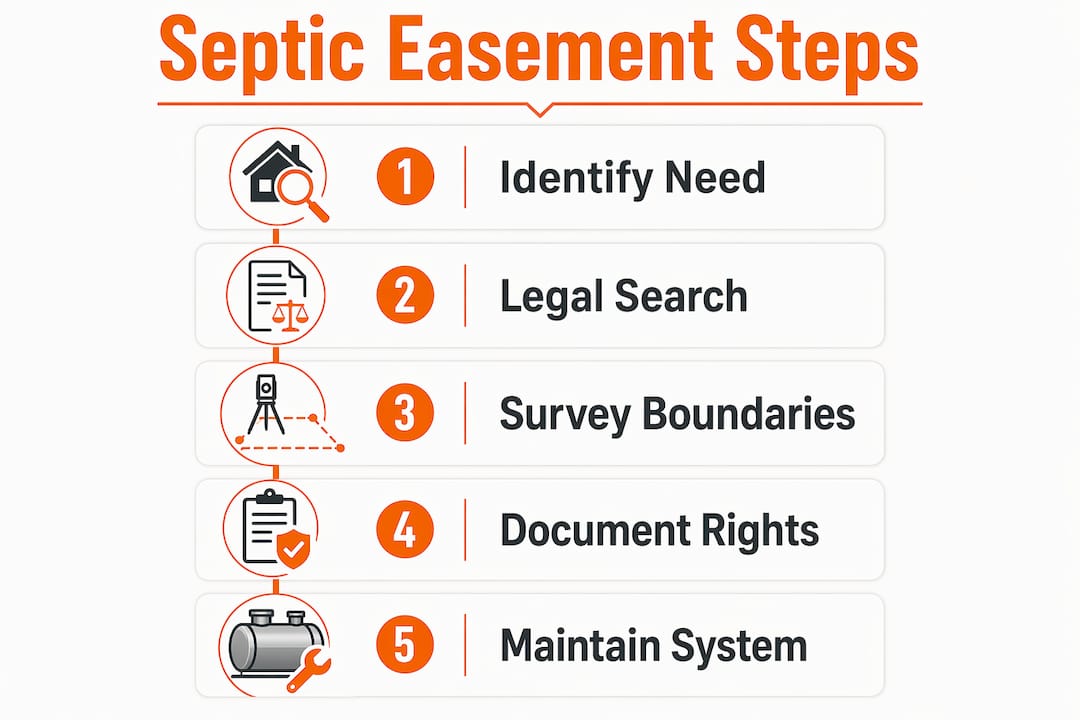
Finding existing easements before you buy requires a deliberate process. Here is how to do it:
- Order a professional title search. A title search costing $75–$200 is the most reliable method for identifying all recorded encumbrances, including septic easements. Title companies review the full chain of ownership and flag anything attached to the deed.
- Review the deed directly. Easements are often referenced in the property deed itself. Look for language about “appurtenant rights” or “drainage easements.”
- Check county records. Most counties maintain a register of deeds that is searchable online. Search both the subject property and adjacent parcels.
- Commission a boundary survey. A licensed surveyor will locate and mark easement boundaries on the ground, which is especially useful when deed descriptions are old or vague.
- Request a septic inspection report. A licensed inspector can identify where system components are physically located, which sometimes reveals cross-boundary installations that no recorded document mentions.
| Discovery method | Cost range | Reliability |
|---|---|---|
| Professional title search | $75–$200 | High |
| Deed review (self-directed) | Free | Moderate |
| County records search | Free | Moderate |
| Boundary survey | $400–$900+ | Very high |
| Septic inspection | $200–$600 | High for physical location |
Title companies and attorneys flag the absence of a recorded septic easement as a red flag in rural real estate transactions. Unrecorded arrangements may indicate hidden legal liabilities that affect property value and insurability.
How does a septic easement affect property use and maintenance?
The servient landowner gives up meaningful control over the easement area. The landowner cannot interfere with septic system use and must accept restrictions on building and landscaping within the easement zone. Practically, this means:
- No sheds, garages, or permanent structures over the leach field or tank
- No paving, concrete, or compacted gravel that restricts soil absorption
- No deep-rooted trees or shrubs that can crack pipes or clog the drain field
- No parking of heavy vehicles that compress the soil above the system
These restrictions protect the system’s function. A crushed pipe or compacted drain field can cost thousands of dollars to repair, and the servient landowner may bear partial liability if their actions caused the damage.
On the cost side, installation, pumping, maintenance, and repairs typically fall on the easement holder. That said, the easement agreement should spell out financial responsibilities explicitly. Vague language about “shared costs” routinely leads to disputes when a pump fails or a line needs replacing.
Ambiguous language in easement documents is the primary cause of conflicts between property owners. Courts interpret easement terms strictly against the holder, which means any gap in the document tends to favor the servient landowner. A well-drafted agreement eliminates that ambiguity before it becomes a courtroom argument.
Pro Tip: Keep a maintenance log with dates, service providers, and repair costs. If a dispute arises, documented history of responsible upkeep is your strongest evidence.
Easements also affect property value in ways buyers often underestimate. A servient property with a large easement zone may sell at a discount because the owner cannot develop that portion of the land. The dominant property, on the other hand, may be unsalable without the easement, since removing it would eliminate the legal right to operate the septic system.
Steps for managing a septic easement as a homeowner or buyer
Handling a septic easement well requires action at two distinct stages: before you buy, and throughout ownership.
- Order a title search before closing. Never rely on a seller’s disclosure alone. A professional title search reveals every recorded encumbrance and gives you a complete picture of what you are buying.
- Read the recorded easement document in full. Confirm it describes the easement area with survey-grade precision, names the allowed activities, and assigns financial responsibilities clearly.
- Get a septic inspection. A licensed inspector confirms the system is functioning and that its physical footprint matches the recorded easement boundaries. Discrepancies between the two are a serious problem.
- Consult a real estate attorney. If the easement document is vague, outdated, or missing entirely, an attorney can draft a new agreement or file a corrective deed before the transaction closes.
- Establish a maintenance schedule with your neighbor. Routine inspections and pumping are standard responsibilities under local health regulations. Agreeing on a schedule in writing prevents misunderstandings.
- Address informal arrangements immediately. Without a recorded easement, shared septic use creates legal uncertainty. Long-term unrecorded use may support a claim for a prescriptive easement, but that requires a court process. Formalizing the arrangement now costs far less than litigation later.
Pro Tip: If you are selling a property with a septic easement, prepare a disclosure package that includes the recorded document, recent inspection reports, and a maintenance history. Buyers and their attorneys will ask for this anyway. Having it ready speeds up the transaction and builds trust.
Sellers benefit from reviewing pre-sale property disclosures carefully, since undisclosed easements or system defects can derail a closing or trigger post-sale legal claims.
Key Takeaways
A septic system easement is a permanent, recorded property right that governs septic use across property lines and binds every future owner of both properties.
| Point | Details |
|---|---|
| Easements run with the land | Rights and restrictions transfer automatically to new owners at every sale. |
| Recording is non-negotiable | A notarized, county-recorded document is the only legally enforceable form of a septic easement. |
| Verbal agreements offer no protection | Informal permissions are licenses, not easements, and disappear when the property changes hands. |
| Title searches reveal easements | A $75–$200 professional title search is the most reliable discovery method before purchase. |
| Clear agreements prevent disputes | Explicit language on boundaries, allowed activities, and cost responsibilities eliminates the most common sources of conflict. |
What I have learned from years of septic work in rural North Carolina
The properties that cause the most trouble are not the ones with documented easements. They are the ones where two neighbors agreed on something decades ago, shook hands, and never wrote it down. I see this pattern regularly in Alamance County and the surrounding Piedmont Triad area. A family farms the same land for forty years, the septic field crosses the fence line, and nobody thinks twice about it. Then one parcel sells, and the new owner has no idea the drain field is on their property.
The legal exposure in those situations is real. Courts do not care about good intentions or long-standing custom. They care about recorded documents. A prescriptive easement claim can sometimes rescue an unrecorded arrangement, but it requires proving continuous, open, and uninterrupted use over a statutory period, and that proof is harder to gather than most people expect.
My honest advice: if you suspect your septic system crosses a property line without a recorded easement, treat it as urgent. The cost of a real estate attorney drafting a proper agreement is a fraction of what a boundary dispute costs in court. And if you are buying a rural property, do not let a seller’s assurance substitute for a title search and a septic inspection. Those two steps together catch nearly every problem before it becomes yours.
Proactive communication with neighbors matters too. A good working relationship does not replace legal documentation, but it makes compliance and access far easier when maintenance is needed.
— Jason
Jmseptic is here when your septic system needs attention
Septic easements define the legal framework, but the physical system still needs expert care to function properly. Jmseptic serves homeowners across Alamance County, Burlington, Mebane, Graham, and the surrounding Piedmont Triad area with installation, repair, and maintenance built around long-term results.

Whether you are installing a new system on a property with easement obligations or maintaining an existing one, Jmseptic’s team understands the local soil conditions, county permit requirements, and NC septic regulations that affect your project. For homeowners starting from scratch, the septic installation guide covers every step of the process. Call Jmseptic directly for a straight answer and a service plan that fits your property.
FAQ
What is a septic easement in simple terms?
A septic easement is a recorded legal right that lets one property owner place and maintain septic system parts on a neighbor’s land. It is permanent and transfers to new owners when either property sells.
How does a septic easement affect what I can do on my property?
The servient landowner cannot build structures, pave, or plant deep-rooted trees over the easement area. These restrictions protect the septic system’s function and are enforceable by the easement holder.
Who pays for septic maintenance when an easement is involved?
Maintenance, pumping, and repair costs typically fall on the easement holder, but the written agreement should specify financial responsibilities explicitly to avoid disputes.
How do I find out if a property has a septic easement?
Order a professional title search, review the property deed, and search county records. A boundary survey and septic inspection add further confirmation of the system’s physical location.
What happens if there is no recorded septic easement but shared use has occurred?
Unrecorded shared use creates legal uncertainty for both parties. Long-term continuous use may support a prescriptive easement claim, but formalizing the arrangement with a recorded document is far safer and less expensive than litigation.