
Pipe Jetting Process Explained: What Homeowners Should Know
Discover what is a pipe jetting process and how it effectively cleans and restores your pipes with high-pressure water, without chemicals.

What is the pipe jetting process?
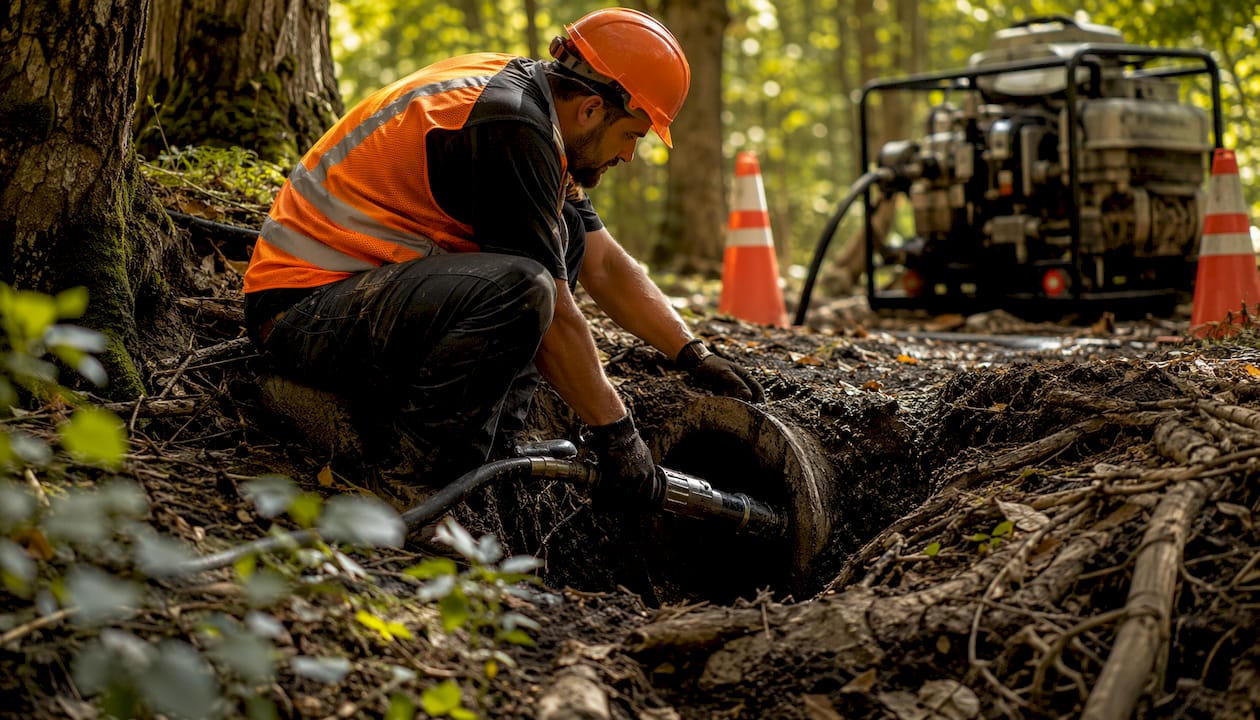
Pipe jetting, also called hydro jetting, is a professional plumbing method that uses high-pressure water to clean the full interior surface of a pipe. Water is pressurized to a high level and forced through a flexible hose fitted with a specialized nozzle, scouring away grease, mineral scale, sludge, and even tree roots from the pipe walls.
What sets it apart from traditional snaking is scope. Snaking punches a hole through a clog and calls it done. Pipe jetting cleans the entire pipe wall, restoring full flow capacity and leaving far less residue behind to seed the next blockage. It requires specialized equipment and a licensed professional who can assess pipe condition before applying pressure. No chemicals, no harsh residues — just water doing the work.
Key features at a glance:
- Uses high-pressure water, not chemicals, making it an eco-friendly cleaning option
- Cleans the entire pipe circumference, not just the clog
- Performed by licensed professionals after a camera inspection
- Effective on grease, scale, sludge, soap scum, and root intrusion
- Suitable for residential drain lines, sewer lines, and septic systems
Table of Contents
- How does the pipe jetting process work?
- Benefits of pipe jetting for homeowners
- When should you consider pipe jetting?
- Is pipe jetting safe for your pipes?
- Practical considerations: cost and duration of pipe jetting
- Expert insights and professional advice on pipe jetting
- What equipment does a pipe jetting setup actually use?
- What happens before the jetting crew arrives?
- What should you do after pipe jetting is complete?
- Where pipe jetting works well and where it has limits
- Jmseptic handles hydro jetting for Alamance County homeowners
- Key Takeaways
How does the pipe jetting process work?
The process follows a clear sequence, and every step matters for both effectiveness and safety.
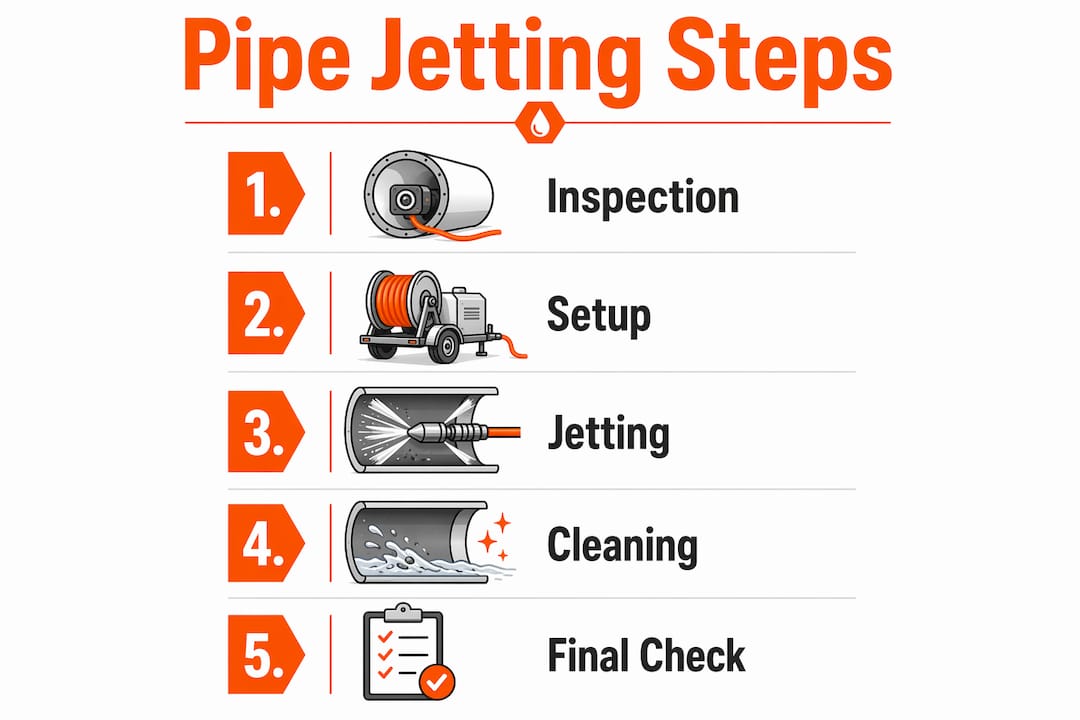
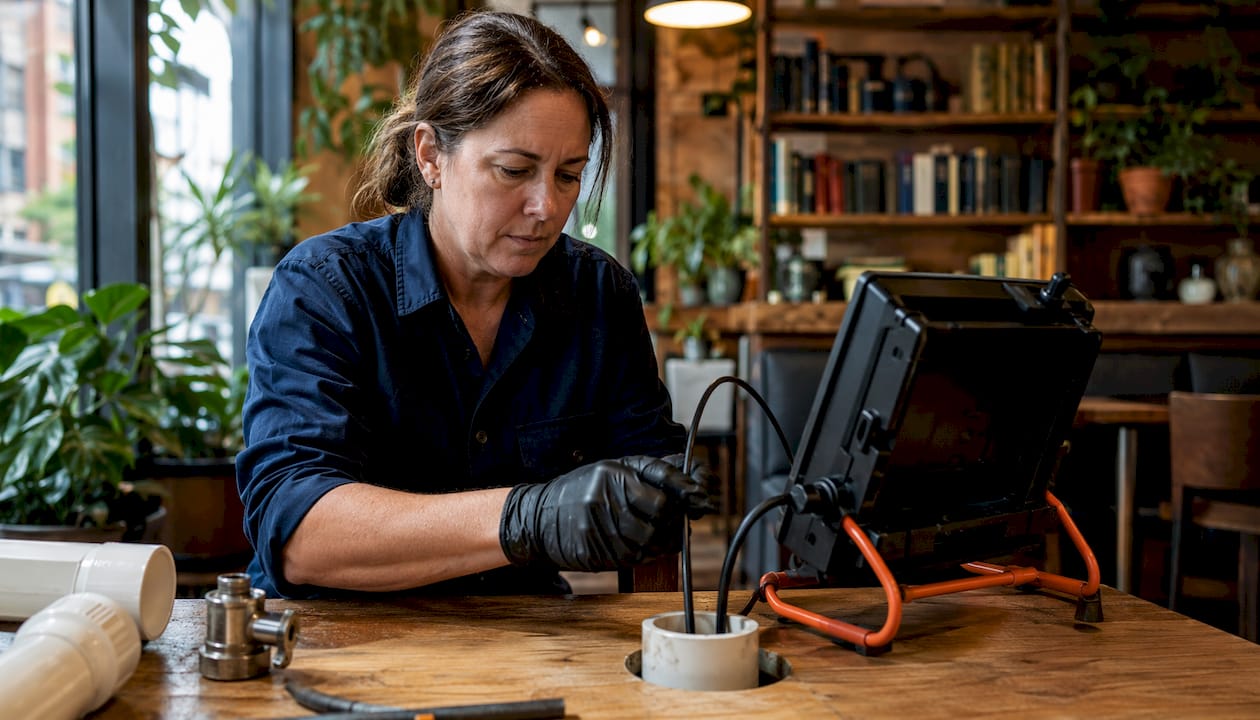
- Camera inspection first. A licensed plumber runs a CCTV camera through the pipe to locate blockages and assess the pipe’s condition. This step confirms whether the pipe can handle high-pressure water and rules out collapsed sections or serious structural damage.
- Hose insertion. A flexible hose is fed into the pipe through an existing cleanout access point. If no cleanout exists, one may need to be installed, which adds to the job’s cost and complexity.
- Nozzle action. The nozzle sprays water in two directions simultaneously. Forward-facing jets break up the blockage; rear-facing jets propel the hose deeper into the pipe and flush debris back out. Side jets scour the pipe walls clean.
- PSI and GPM balance. Effective jetting balances PSI and GPM — pressure cuts through debris while flow volume carries it out. Technicians adjust both to match the pipe’s diameter, material, and the type of blockage.
- Continuous hose movement. The operator keeps the hose moving throughout, pushing forward and pulling back methodically to spread the cleaning action evenly and prevent localized pressure buildup.
Pipe jetting is effective for a range of common residential drain and sewer pipe diameters. Different nozzle types handle different problems: a chisel nozzle cuts through hardened root intrusion, while a rotating nozzle works well on grease and scale.
Pro Tip: Ask your plumber which nozzle type they plan to use before the job starts. The answer tells you whether they’ve actually diagnosed your specific blockage or are just running a standard setup.
| Step | What Happens | Why It Matters |
|---|---|---|
| CCTV inspection | Camera locates blockage and checks pipe condition | Prevents jetting a damaged or collapsed pipe |
| Hose insertion | Flexible hose fed through cleanout access point | Positions nozzle at the right entry point |
| Forward jets | High-pressure water breaks up the clog | Clears the obstruction directly |
| Rear jets | Water propels hose and flushes debris out | Removes debris from the system entirely |
| Wall scouring | Side jets clean the full pipe circumference | Reduces residue that causes future clogs |
Benefits of pipe jetting for homeowners
The difference between snaking and jetting shows up not on the day of service, but three months later. Snaking often provides a temporary fix; jetting delivers a long-term, thorough cleaning that keeps pipes flowing freely for much longer.
- Full pipe cleaning. The high-pressure stream reaches the entire interior surface, removing buildup that snaking leaves behind on the walls.
- Fewer repeat calls. Because the pipe is actually clean rather than just unblocked, recurring clogs happen far less often.
- No chemicals. Hydro jetting relies solely on water, making it safe for your pipes and the environment. No corrosive residues, no disposal concerns.
- Handles tough materials. Grease, mineral scale, sludge, soap scum, and even soft root intrusion are no match for a properly calibrated jetting setup.
- Restores full flow capacity. Buildup narrows the pipe’s effective diameter over time. Jetting removes that buildup and brings drainage performance back to where it should be.
- Works preventively. You don’t have to wait for a backup. Scheduling jetting as part of routine septic line maintenance can prevent the kind of buildup that leads to expensive emergency repairs.
When should you consider pipe jetting?
Some situations call for jetting specifically. Others are better handled with simpler methods. Here’s where jetting earns its place:
- Clogs that keep coming back despite snaking or chemical treatments
- Slow drains throughout the house, not just one fixture
- Grease or sludge buildup in kitchen drain lines
- Mineral scale accumulation in older pipes
- Before buying or selling a home, as part of a full plumbing inspection
- Sewer or septic system performance problems, including slow field drainage
- Preventive maintenance on a schedule, especially for homes with heavy kitchen use or mature trees near sewer lines
One situation worth flagging: if a professional inspection confirms root intrusion in your sewer line, jetting can clear it, but the underlying cause (a cracked pipe letting roots in) still needs to be addressed separately.
Is pipe jetting safe for your pipes?
Done correctly by a licensed professional, pipe jetting is safe for most residential plumbing. Done wrong, it can crack older pipes or dislodge connections. The difference is almost entirely in the hands of the operator.
- Licensed professionals assess first. A camera inspection before jetting confirms the pipe can handle the pressure. No reputable plumber skips this step.
- Pressure is matched to the pipe. Industry best practices favor high-volume, lower-pressure water for routine cleaning, especially in older or plastic pipes. Higher pressure isn’t always better.
- Hose movement prevents damage. A stationary nozzle concentrates pressure in one spot and can damage the pipe interior. Operators keep the hose moving continuously to avoid this.
- DIY is a real risk. Experts strongly advise against DIY jetting for residential plumbing. Incorrect pressure application can burst a pipe, turning a $300 cleaning into a $3,000 repair.
- Septic system compatibility. Jetting works well with residential septic systems, but the plumber needs to know your system’s layout. Read more in Jmseptic’s homeowner safety guide for water jetting before scheduling service.
Practical considerations: cost and duration of pipe jetting
Most residential pipe jetting jobs take a few hours, depending on factors like pipe length, blockage severity, and accessibility. A straightforward kitchen drain line clears faster than a full sewer line with root intrusion.
- Cost factors include: pipe length, blockage type, accessibility, and whether a cleanout access point needs to be installed
- Access point installation adds cost if your home lacks a suitable entry point for the hose — a common issue in older residential plumbing
- Camera inspection is typically included or required as part of the service, not an optional add-on
- Long-term value: the cost of one jetting service often compares favorably to repeated snaking visits that never fully solve the problem
- Choosing a qualified professional matters as much as price — a technician who skips the camera inspection or uses the wrong pressure setting can cause more damage than the original clog
For plumbing maintenance best practices that put jetting in context with your overall home maintenance schedule, it’s worth understanding how often your specific pipe layout and usage patterns warrant a cleaning.
Expert insights and professional advice on pipe jetting
Professionals who work with jetting equipment regularly emphasize a few points that homeowners rarely hear from a quick online search.
- Camera inspection is non-negotiable. Jetting a cracked or structurally compromised pipe can make the damage significantly worse. The inspection isn’t a formality — it’s what separates a safe job from a costly mistake.
- PSI cuts; GPM clears. The balance between pressure and flow volume is what makes jetting effective. Pressure alone breaks up debris; flow carries it out of the system. Skewing too far in either direction reduces results and increases risk.
- High pressure isn’t always the answer. For routine maintenance, especially on older or plastic pipes, high-volume, lower-pressure water protects the pipe better while still delivering a thorough clean.
- Hose technique matters more than most homeowners realize. Operators move the jetting hose forward and backward in a controlled, repetitive motion in a continuous rhythm to maximize the scouring action and prevent the hose from getting stuck.
- Access points are a real constraint. Many residential systems lack suitable cleanout access points, which means the technician either works from a less-than-ideal entry point or installs one — a factor worth discussing before you get a quote.
- Hydro jetting is a long-term maintenance tool, not just an emergency fix. Professionals recommend scheduling it periodically rather than waiting for a backup to force the issue.
Pro Tip: Before hiring anyone for pipe jetting, ask specifically whether they’ll run a camera before and after the job. Post-jetting inspection confirms the pipe is actually clean and catches any damage the jetting may have revealed.
What equipment does a pipe jetting setup actually use?
The jetting machine itself is more than just a pump. Understanding the components helps you ask better questions when hiring a professional.
- Water tank: Holds the supply of water the machine pressurizes. Capacity varies by unit size.
- High-pressure pump: Generates the PSI needed to drive water through the hose and nozzle. Residential jobs typically use machines rated for high pressure suitable for effective cleaning.
- Flexible hose: Feeds through the pipe and must be durable enough to handle both the pressure and the friction of moving through bends and joints.
- Specialized nozzles: Different nozzle types serve different purposes. Rotating nozzles work on grease and scale; chisel or penetrating nozzles cut through roots or hardened deposits; flushing nozzles clear loose debris quickly.
- CCTV inspection camera: Not part of the jetter itself, but used before and after the job to assess conditions and verify results.
The NASSCO (National Association of Sewer Service Companies) provides training and standards for sewer jetting equipment operation, which is one benchmark worth asking a prospective contractor about.
What happens before the jetting crew arrives?
Preparation on both sides — yours and the plumber’s — affects how smoothly the job goes.
- Locate your cleanout access point. Know where it is before the technician arrives. If you don’t know, ask when you book.
- Clear the area around the access point. The crew needs room to set up equipment and run hose.
- Describe your symptoms accurately. Which drains are slow? How long has the problem been building? Any history of root intrusion or previous jetting? The more specific you are, the better the technician can prepare.
- The plumber’s prep: Running the CCTV camera, selecting the right nozzle for the blockage type, and setting the machine’s pressure and flow rate to match your pipe’s material and diameter.
- Confirm what’s included. Ask whether the camera inspection, cleanout installation (if needed), and post-jetting verification are part of the quoted price.
What should you do after pipe jetting is complete?
The job isn’t finished when the hose comes out. Post-jetting steps protect your investment and catch problems early.
- Post-jetting camera inspection. A good technician runs the camera again after jetting to confirm the pipe is clean and check for any damage the process may have exposed. This is the step that separates thorough service from a quick-and-done visit.
- Run water through the system. Test every drain in the house to confirm flow has improved across the board.
- Ask for a written report. If the camera found anything concerning — hairline cracks, joint separation, root entry points — you want that documented.
- Schedule follow-up maintenance. Depending on your pipe’s condition and your household’s usage patterns, your plumber can recommend how often to repeat the service. For homes with heavy grease use or mature trees nearby, annual jetting may make sense.
- Address underlying issues. Jetting clears the pipe; it doesn’t fix a cracked pipe or a root entry point. If the inspection found structural problems, get those repaired before the next buildup cycle begins.
For a full picture of how professional inspections protect your home over the long term, the pre- and post-jetting camera steps are among the most cost-effective things a homeowner can do.
Where pipe jetting works well and where it has limits
Pipe jetting handles a wide range of residential and commercial applications, but it isn’t the right tool for every situation.
Common applications:
- Kitchen drain lines with grease and soap scum buildup
- Sewer lines with root intrusion or mineral scale
- Septic system inlet and outlet lines
- Commercial grease traps and restaurant drain systems
- Municipal sewer maintenance (industrial-scale equipment)
Limitations to know:
- Severely damaged, cracked, or collapsed pipes cannot be jetted safely — the pressure will worsen the damage
- Very old clay or cast-iron pipes with significant corrosion may not tolerate even moderate pressure
- Pipes with loose joints or deteriorating connections are at risk of separation under jetting pressure
- Without a suitable access point, the job becomes more complicated and more expensive
- Jetting removes blockages and buildup; it does not repair the pipe or seal root entry points
If a household plumbing emergency involves a suspected pipe collapse or major structural failure, jetting is not the first call. Camera inspection comes first, every time.
Jmseptic handles hydro jetting for Alamance County homeowners
If you’re dealing with slow drains, recurring backups, or a septic system that isn’t performing the way it should, Jmseptic offers professional hydro jetting and sewer line cleaning as part of its full-service septic and plumbing maintenance work across Alamance County and the surrounding Piedmont Triad area.

What makes Jmseptic the practical choice here is straightforward: this is a locally owned operation that handles the camera inspection, the jetting, and the post-service verification as a complete job, not a series of upsells. No chemicals, no guesswork on pressure settings, and no skipping the inspection step that protects your pipes. Whether you need a one-time clearing of a stubborn clog or want to set up a preventive maintenance schedule for your septic line cleaning, Jmseptic serves Burlington, Mebane, Elon, Graham, Whitsett, and McLeansville. Call to schedule a camera inspection and get a clear picture of what your pipes actually need.
Key Takeaways
Pipe jetting cleans the entire pipe interior with high-pressure water, delivering longer-lasting results than snaking and avoiding the chemical residues that damage pipes and the environment over time.
| Point | Details |
|---|---|
| Full pipe cleaning | Jetting scours the entire pipe wall, not just the blockage, reducing future clog recurrence. |
| PSI and GPM balance | Pressure breaks debris loose; flow volume carries it out — both must be matched to your pipe. |
| Camera inspection required | A pre-jetting CCTV check confirms pipe condition and prevents pressure damage to compromised pipes. |
| DIY is high-risk | Incorrect pressure application can burst residential pipes; always use a licensed professional. |
| Jmseptic for local service | Jmseptic provides hydro jetting and sewer line cleaning for Alamance County homeowners, inspection included. |