
What Is a Grease Trap in a Restaurant, and Why It Matters
Discover the critical role of grease traps in restaurants. Learn how they prevent costly plumbing issues and ensure compliance with local regulations.

A grease trap is a plumbing device installed between a kitchen’s drains and the sewer line that catches fats, oils, grease, and food solids before that waste reaches the municipal system. Restaurants need one because commercial kitchens generate far more FOG than any residential kitchen, and untreated grease hardens fast, clogs pipes, and violates local wastewater rules.
Three things ride on this small piece of equipment:
- Compliance risk. Most municipalities enforce FOG discharge ordinances, and inspectors can fine an establishment traced to a blockage.
- Operational risk. A neglected trap backs up drains, floods a kitchen mid-service, and shuts down a line during your busiest hours.
- Environmental impact. Grease that bypasses a trap contributes to sanitary sewer overflows (SSOs), a problem serious enough that the EPA tracks it as a national pretreatment priority, given that nearly 1,000,000 food service establishments operate across the country.
You’ll also hear the term grease interceptor. In casual kitchen talk, people use “grease trap” and “grease interceptor” interchangeably, but they aren’t quite the same device. More on that distinction below.
Key Takeaways
A grease trap works only when sized correctly for the kitchen it serves and cleaned on a schedule tied to actual fill levels, not the calendar.
| Point | Details |
|---|---|
| Definition matters | A grease trap separates FOG and food solids from wastewater before it reaches the sewer line. |
| Know your type | HGIs suit smaller indoor setups; GGIs handle higher-volume kitchens outdoors. |
| Pump at 25% fill | Industry guidance recommends pumping once FOG and solids reach about a quarter of liquid depth. |
| Staff habits reduce load | Scraping plates and screening drains cuts FOG buildup and pump frequency. |
| Records protect you | Keep pump-out receipts and monitoring logs to satisfy inspectors and avoid fines. |
Table of Contents
- What Is a Grease Trap in a Restaurant and How Does It Work?
- Types of Grease Traps Used in Commercial Kitchens
- Grease Trap Parts and What Each One Does
- Grease Trap vs. Grease Interceptor: What’s the Real Difference?
- How to Estimate the Right Grease Trap Size for Your Restaurant
- Grease Trap Maintenance: Cleaning Frequency and Recordkeeping
- Kitchen Best Practices to Keep FOG Out of the Drain
- What Does a Grease Trap Cost to Install and Maintain?
- Signs Your Grease Trap Is Full or Failing
- Frequently Asked Questions
- Sources
What Is a Grease Trap in a Restaurant and How Does It Work?
Water flows in through the inlet, sits in a retention chamber long enough for physics to do the sorting, and clarified water exits through the outlet. That’s the entire operating principle. Everything else is engineering built around that one idea.
The separation happens through a handful of predictable physical processes:
- Flow control slows incoming wastewater so it has time to separate instead of rushing straight through.
- Cooling drops the water temperature, which causes suspended grease to solidify and separate from the liquid.
- Flotation lets FOG rise to the top since fat is lighter than water.
- Settling lets heavier food solids sink to a collection pocket at the bottom.
- Clarified outflow sends the middle layer, the cleanest portion of the wastewater, on to the sewer line.
Pro Tip: Water that enters too hot or too fast defeats the whole system. Grease stays liquefied at high temperatures and flows straight through instead of separating, so a trap that’s technically “working” can still let FOG escape if your dish pit runs scalding water into it at full blast during a rush.
Types of Grease Traps Used in Commercial Kitchens
Not every kitchen uses the same equipment, and knowing which type sits under your sink or buried in your parking lot changes how you plan maintenance and budget for service.
- Hydromechanical grease interceptors (HGIs) are compact, point-of-use units installed indoors, usually right under or near a sink. They’re rated by flow rate, commonly in the 20 to 50 gallon-per-minute range for smaller models.
- Gravity grease interceptors (GGIs) are large tanks buried outdoors, sized by volume rather than flow, often running from 1,000 to 4,000 gallons for higher-volume operations.
- Point-of-use under-sink traps are the smallest category, meant for single fixtures like a bar sink or a prep station rather than the whole kitchen.
A small café with limited menu prep and lighter fryer use can often get by on one or two HGIs. A full-service restaurant with a fryer line, a dish pit, and heavy sauce work typically needs a GGI to handle the volume.
Grease Trap Parts and What Each One Does
Knowing the components helps you describe a problem accurately when you call a technician, instead of just saying “it’s backed up again.”
- Inlet: where wastewater enters; check for debris blocking flow.
- Outlet: where treated water exits; a clog here signals a downstream problem.
- Baffles: internal walls that slow flow and force separation; these can crack or come loose.
- Flow-control device: regulates intake speed; damage here causes water to rush through untreated.
- Access lids: removable covers for inspection and pump-out; watch for damaged gaskets that let odors escape.
- Sampling port: where inspectors or technicians test effluent.
- Solids pocket: the bottom chamber where food particles settle.
Staff can safely do visual checks on lids, gaskets, and visible buildup. Anything involving the baffles, flow-control device, or actual pump-out belongs to a licensed plumber or grease hauler.
Grease Trap vs. Grease Interceptor: What’s the Real Difference?
The terms get used loosely, but there’s a practical distinction worth knowing before you talk to an inspector or a contractor. “Grease trap” traditionally refers to smaller, point-of-use hydromechanical units. “Grease interceptor” usually refers to larger-capacity systems, whether that’s a bigger HGI or an outdoor gravity tank.
The differences that actually matter operationally:
- Size and capacity: traps handle smaller flow volumes; interceptors handle a full kitchen’s output.
- Location: traps sit indoors near fixtures; interceptors, especially GGIs, are usually buried outside.
- Maintenance cadence: smaller traps need more frequent attention relative to their size; large interceptors go longer between pump-outs but cost more per service.
- Use case: traps suit single-fixture or low-volume setups; interceptors suit full-service kitchens.
Before sizing or replacing anything, confirm whether your jurisdiction follows the International Plumbing Code (IPC) or Uniform Plumbing Code (UPC), since local authorities apply different formulas under each.
How to Estimate the Right Grease Trap Size for Your Restaurant
Sizing isn’t guesswork, but it does require pulling together specific numbers before a contractor can give you an accurate recommendation.
- Count your fixtures. Every sink, dishwasher, and floor drain that discharges wastewater factors into the fixture unit calculation your code uses.
- Check flow ratings. Your dishwasher’s gpm rating and your prep sink’s typical flow both push the required capacity up or down.
- Estimate FOG generation from your menu. A fryer-heavy menu with sauce reductions generates far more grease than a salad-and-sandwich operation.
- Apply your local code formula. IPC and UPC jurisdictions calculate required capacity differently, so confirm which one applies to your address.
- Factor in meals per service. Peak flow during a Saturday dinner rush matters more than your average daily volume.
Bring fixture counts, appliance gpm ratings, and average meals served per shift to your plumber. That’s the data that turns a rough estimate into an accurate quote.
Grease Trap Maintenance: Cleaning Frequency and Recordkeeping
Cleaning frequency isn’t one-size-fits-all. It depends on your trap’s size, your kitchen’s volume, and how disciplined your staff is about keeping FOG out of the drain in the first place. Municipal guidance generally points to a practical fill threshold rather than a fixed calendar date.
- Monitor fill levels regularly. Industry guidance recommends pumping once combined FOG and solids reach roughly 25% of the trap’s liquid depth, a simpler trigger than guessing based on the calendar.
- Follow municipal self-cleaning rules if you do it in-house. Calgary’s guidance, for example, recommends self-cleaned traps be serviced every 4 weeks or more often, with monitoring records kept on file.
- Hire a licensed hauler for full pump-outs. A professional removes trapped waste completely and disposes of it at an approved facility, which most local codes require rather than allowing dumping.
- Log every service. Keep pump-out receipts and dates in a maintenance binder near your dish area, since inspectors often ask for this history first.
Pro Tip: Don’t substitute degreasing chemicals or enzyme treatments for mechanical pump-outs. Chemical additives can temporarily liquefy grease enough to pass an inspection, then let it re-solidify further down the line, which just relocates the clog instead of removing it.
A well-run pretreatment program at the municipal level exists precisely because FOG loading from food service establishments can overwhelm treatment infrastructure when hundreds of restaurants in one city skip maintenance at the same time.
Kitchen Best Practices to Keep FOG Out of the Drain
The best trap in the world can’t compensate for a kitchen that treats the drain like a garbage can. A few habits at the shift level do more to reduce pump frequency than any equipment upgrade.
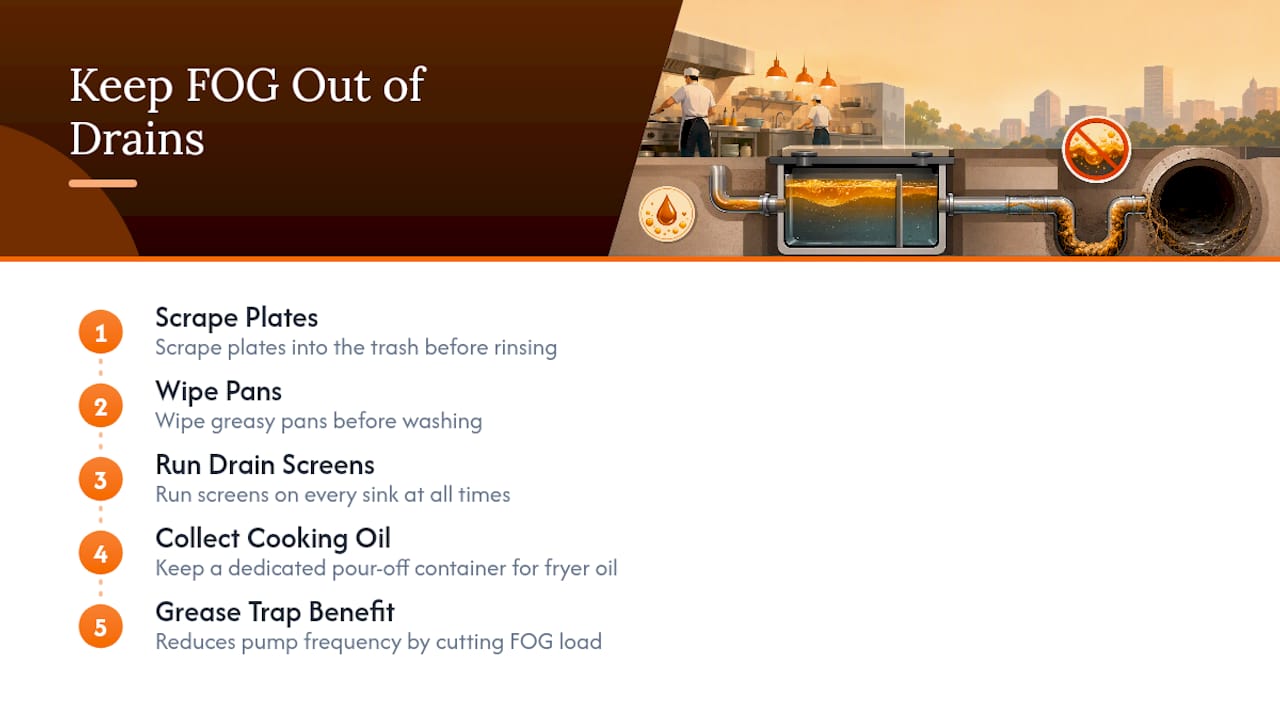
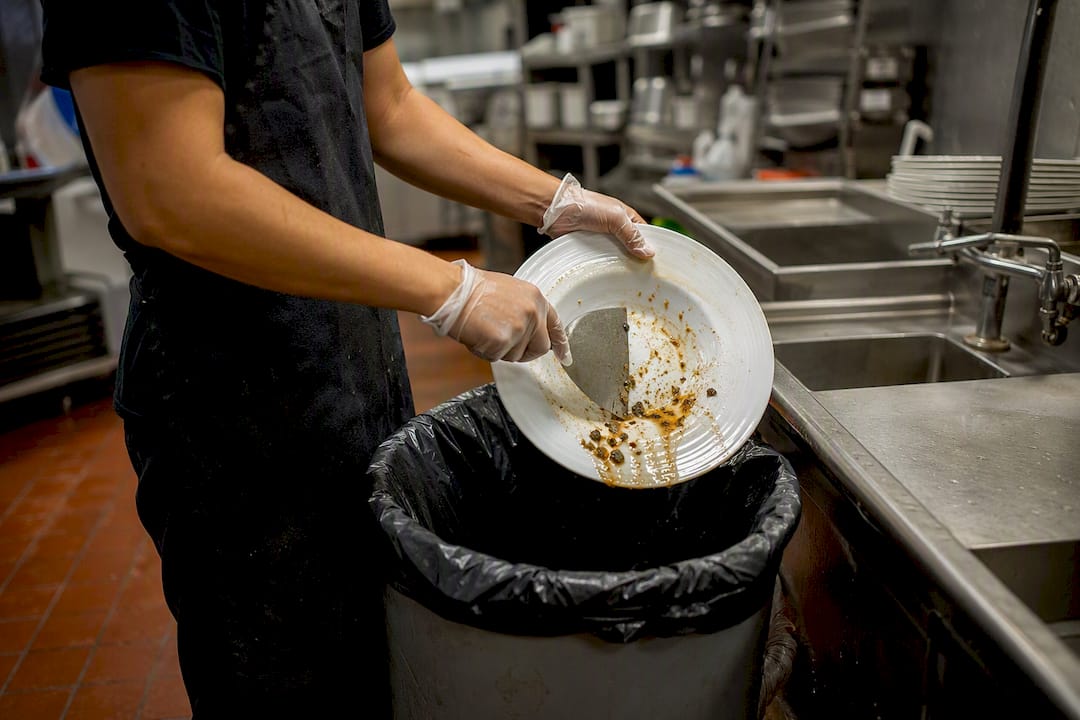
Never pour these down a drain: cooking oil, meat fat, sauce reductions, coffee grounds, or food scraps of any size. Bus staff should scrape plates into the trash before rinsing, wipe greasy pans before washing, and run drain screens on every sink at all times.
Build a shift checklist: check screens before close, keep a dedicated pour-off container for used fryer oil, and remind staff that hot water doesn’t dissolve grease, it just delays where it re-solidifies.
Pro Tip: Collect used cooking oil separately instead of dumping it. Yellow grease can be sold to recyclers in many areas, turning a disposal cost into a small revenue line while cutting the FOG load hitting your trap. One overlooked source of grease volume worth reviewing is prep waste, which often outweighs plate waste in a typical kitchen.
What Does a Grease Trap Cost to Install and Maintain?
Costs vary by region, so treat these as planning ranges rather than quotes. A point-of-use under-sink trap sits at the lower end, HGIs cost more depending on flow rating, and outdoor GGIs represent the largest investment given the excavation and tank size involved. Always get local bids, since labor and permit fees swing significantly by market.
Before installation, walk through these logistics with your contractor:
- Access for pump-out trucks. A GGI buried under a parking lot needs truck access; an indoor HGI needs enough clearance for a technician to remove the lid.
- Distance to fixtures. Longer runs between fixtures and the trap affect pipe slope and venting requirements.
- Permits. Most jurisdictions require a permit before installation or replacement, and your local authority may inspect before sign-off.
- Venting and slope. Improper slope defeats flow control regardless of trap quality.
Bring your permit application, a site sketch, and your fixture list to any contractor conversation. A hydro jetting service can also clear existing line buildup before a new trap goes in, so old grease deposits don’t immediately overload a fresh system.
Signs Your Grease Trap Is Full or Failing
Catching a problem early costs a phone call. Catching it late costs a shutdown.
- Slow drains across multiple fixtures usually mean the trap is near capacity and backing pressure into your lines.
- Sewage or rotten-egg odors near sinks or floor drains signal trapped gas escaping through a failed gasket or overfull chamber.
- Visible backups at the lowest fixture in the kitchen mean the trap has likely already exceeded capacity.
- Grease sheen on nearby manholes outside your building is a sign the trap failed and FOG reached the municipal line, a red flag for inspectors.
Regulatory consequences follow quickly. A POTW that traces a blockage back to your establishment can issue fines, add surcharges to your utility bill, or require more frequent inspections going forward.
If you’re facing an active backup right now: contain the spill, shut off water to the affected fixtures, call a licensed hauler or plumber immediately, and photograph everything for your insurance and compliance records.
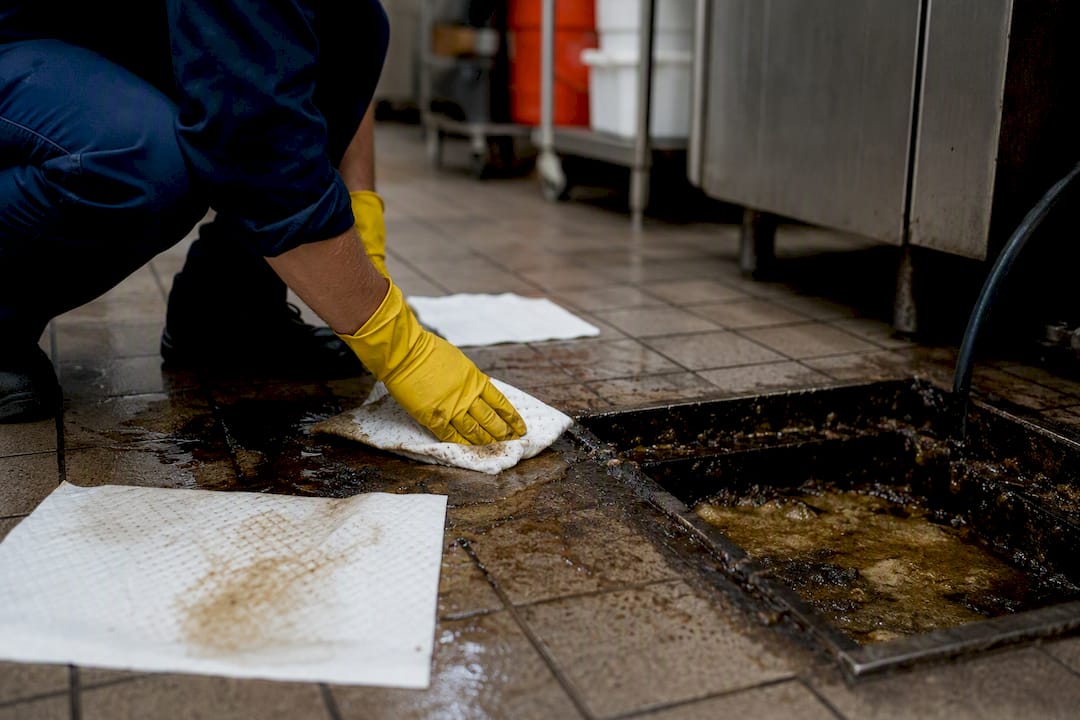
A Field Technician’s Take on Preventing Most Grease Trap Problems
Most avoidable service calls trace back to one habit: nobody scraped the plate before it hit the sink. Kitchens that build a two-minute visual check into every shift, screens clear, lid seated, no sheen near the outlet, call for emergency pump-outs far less often.
Pro Tip: Assign the trap check to whoever closes the kitchen, not whoever happens to remember. A habit without an owner disappears within a month.
Protect your plumbing infrastructure before a grease problem turns into a full system failure. If you’re dealing with recurring backups, slow drains, or a system that’s overdue for a serious look, Jmseptic handles installation, repair, and maintenance for properties across Alamance County and the surrounding Piedmont Triad, including Burlington, Mebane, Elon, Graham, Whitsett, and McLeansville. Our hydro jetting and sewer line cleaning service clears grease-related blockages before they force an emergency shutdown, and if your property needs a full evaluation, our septic tank pump service keeps your system on a documented, reliable schedule instead of a guessing game.
Frequently Asked Questions
What is a grease trap in a restaurant, exactly?
It’s a plumbing device that catches fats, oils, grease, and food solids from kitchen wastewater before that water reaches the sewer system, protecting both your pipes and municipal infrastructure.
How often should a restaurant clean its grease trap?
It depends on trap size and kitchen volume, but a common guideline is pumping once FOG and solids reach about 25% of liquid depth, or every 4 weeks if you self-clean under municipal rules like Calgary’s.
What’s the difference between a grease trap and a grease interceptor?
Traps are typically smaller, point-of-use units near a single fixture; interceptors handle higher volume, either as larger indoor units or outdoor gravity tanks serving the whole kitchen.
What happens if a grease trap overflows?
Untreated FOG backs up into kitchen drains, causes slow drains and odors, and can reach the municipal sewer, which can trigger fines or surcharges if traced back to your establishment.
Can kitchen staff clean the grease trap themselves?
Staff can handle visual checks, screen cleaning, and lid inspection. Full pump-outs and baffle repairs should go to a licensed plumber or grease hauler.
Sources
- EPA pretreatment guidance: Food Service Establishments (fact sheet)
- Grease interceptors (City of Portland)
- How grease traps work: A complete guide for restaurants (Grease Trap Guru)
- Why grease traps matter: a critical guide for food service establishments (WR Environmental, 2026)