
What Is a Fill System Septic: Homeowner Guide
Discover what a fill system septic is and learn how it benefits homeowners with challenging soil conditions. Get expert insights now!

A septic fill system is an engineered, raised drainfield that uses imported sand, gravel, or engineered soil to create an infiltrative layer where native ground cannot support a conventional in-ground system. According to the US EPA, this approach raises the treatment area above poor native soils or a high water table so effluent can percolate and filter before reaching groundwater. Two things every homeowner should know upfront: a fill system requires a licensed designer and site-specific permitting, and it costs more to install than a standard drainfield because of the imported material and engineered design involved.
Table of Contents
- When does your property need a fill system?
- What are the main components and types of fill systems?
- How is a fill system installed, step by step?
- What permits and tests does a fill system require?
- How can you tell if your property likely needs a fill system?
- What does maintenance cost and how long does a fill system last?
- What warning signs should you watch for after installation?
- Key Takeaways
- Why most homeowners underestimate what a fill system actually involves
- Jmseptic handles fill system installations across Alamance County
- Useful resources for homeowners
When does your property need a fill system?
Not every lot can support a conventional in-ground drainfield. The most common triggers are a high seasonal water table, shallow bedrock, dense clay soils that fail percolation tests, and tight lot dimensions that force a raised configuration to meet required setbacks. When native soil absorbs water too slowly, effluent cannot filter adequately before reaching groundwater. Imported fill with the right permeability creates the treatment layer that native soil cannot provide.
The EPA classifies mound systems as a standard fill-type solution for exactly these conditions, and most state health departments follow similar logic when reviewing site evaluations.
| Feature | Fill / Raised System | Conventional In-Ground System |
|---|---|---|
| Best site conditions | High water table, clay, shallow bedrock | Deep, permeable, well-draining soils |
| Drainfield position | Above grade (raised mound or cap) | Below grade, trenches in native soil |
| Installation complexity | Higher — imported fill, engineered design | Lower — standard excavation |
| Typical cost | Higher due to fill volume and design fees | Lower baseline cost |
| Maintenance | Erosion and vegetation management added | Standard pumping and inspection |
| Lifespan (well-maintained) | multiple decades for the field; tank longer | Similar with proper maintenance |
A conventional system is the right call when soil percolation tests pass and the water table sits well below the proposed trench bottom. When either condition fails, a fill system is not optional — it is the code-required path forward.
What are the main components and types of fill systems?
Every fill septic system shares the same basic chain: wastewater leaves the house, enters a septic tank for primary treatment, then moves through a distribution system into an engineered fill bed where final treatment happens in the soil.
Primary components:
- Septic tank: A watertight concrete, plastic, or fiberglass container that separates solids (sludge) from liquid effluent before it reaches the field.
- Distribution box or pump: Routes effluent evenly across the fill bed; pressurized pump systems are common when the fill area sits uphill from the tank.
- Distribution piping: Perforated pipes laid in the fill bed that spread effluent across the infiltrative layer.
- Engineered fill material: Typically coarse sand or gravel meeting state-specified percolation standards. Original excavated surface soil is not acceptable as backfill above the trenches in most codes.
- Geotextile fabric: Placed over distribution aggregate to prevent fine soil from migrating into the fill and clogging it.
- Cover vegetation: Grass or shallow-rooted plants seeded over the mound to hold the fill in place and shed rainwater.
Common types:
Mound system. The most recognized fill variant. A raised earthen mound, typically 2–4 feet above grade, contains the engineered fill and distribution pipes. The cut-and-fill approach differs in that impermeable overlying soil is removed (cut) first to expose more permeable substrate before engineered fill is placed on top, reducing the total mound height needed.

Cap-and-fill. A shallower raised bed placed directly over native soil that passed a marginal perc test. Less dramatic than a full mound but still requires imported fill and a licensed design.
Engineered fill trench or bed. Trenches or a flat bed excavated into existing soil and backfilled with approved material. Common where the water table is borderline rather than severely high.
Pro Tip: Ask your designer for a simple cross-section schematic showing the tank, distribution box, fill bed layers, and mound geometry before you sign off on any design. A labeled visual catches misunderstandings early and is standard practice for permitted work.
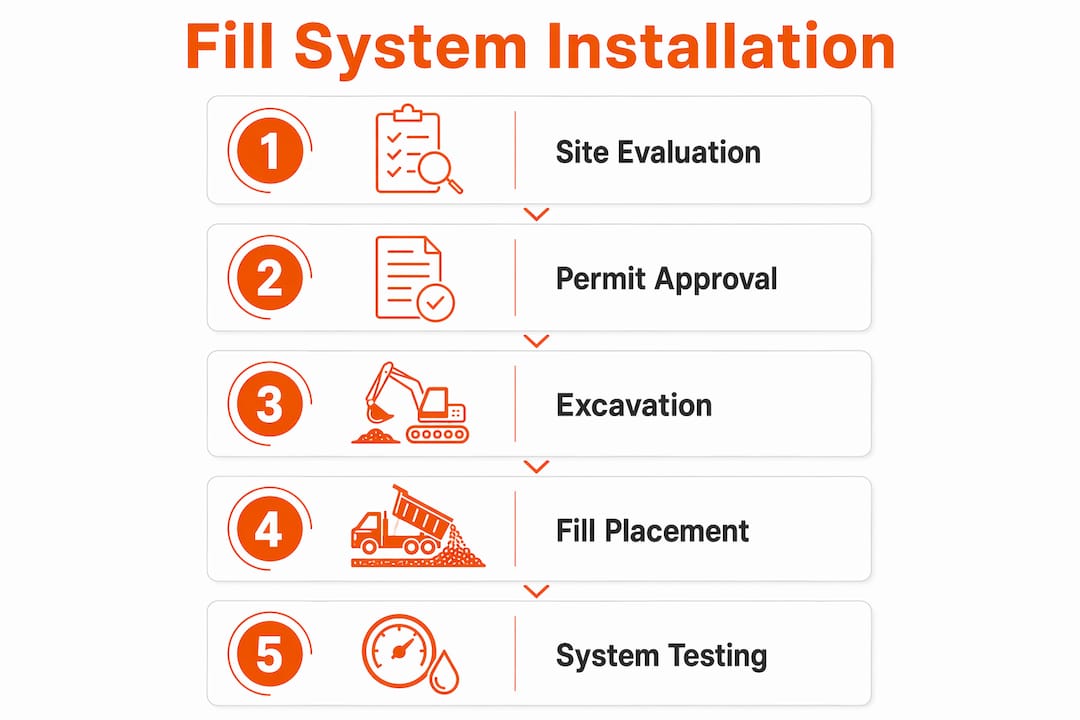
How is a fill system installed, step by step?
The process moves in a fixed sequence, and skipping any step typically means a failed inspection or a system that fails prematurely.
- Site evaluation and soil/perc testing (1–3 weeks): A licensed soil scientist or registered designer visits the property, digs test pits, measures the seasonal high water table, and runs percolation tests. These results determine whether a fill system is required and what fill depth is needed.
- Engineered design (2–4 weeks): A licensed septic designer produces a site-specific plan specifying fill type, bed dimensions, buffer distances, distribution layout, and erosion controls. Regulators commonly require licensed designers to sign off because fill composition and buffer zones directly determine environmental safety.
- Permitting application (2–8 weeks, varies by county): The design is submitted to the local health department or state environmental agency. Reviewers check setbacks from wells, property lines, and surface water before issuing a construction permit. For North Carolina-specific steps, the NC septic permitting guide walks through county health department requirements in detail.
- Excavation and fill import (1–3 days on site): Contractors excavate the footprint, remove any impermeable overlying layers if a cut-and-fill design is specified, and haul in approved fill material. This is the phase that drives cost — haul distance and fill volume are the two biggest variables.
- Distribution system placement (1 day): Distribution box or pump chamber, piping, and aggregate are installed in the fill bed per the approved plan.
- Grading, cover, and vegetation (1 day plus establishment time): The mound is shaped to shed rainfall, geotextile is placed, topsoil cover is added, and grass seed or sod is applied. Proper surface management — grading and vegetation — prevents erosion that can expose distribution pipes and compromise the system. For guidance on how grading and planting interact with mound areas, landscape drainage principles are worth reviewing before finalizing your site plan.
- Final inspection and approval (1–5 days): The health department inspector verifies construction matches the permitted design. No system goes into service without this sign-off.
Pro Tip: Before any contractor breaks ground, confirm they carry liability insurance, have the permit physically on site, and have an erosion control plan in place. A contractor who cannot produce all three on day one is a red flag.
A realistic total timeline from first site visit to a permitted, operational system runs 8–16 weeks, with permitting being the most variable phase depending on county workload.
What permits and tests does a fill system require?
Permitting for a fill system is not optional and cannot be shortened by skipping tests. The regulatory sequence is consistent across most U.S. states, though the specific agency varies.
Key regulatory actors:
- Local health department or state environmental agency: Issues the construction and operating permits; sets setback distances from wells, streams, and property lines.
- Licensed soil scientist or registered designer: Conducts the perc test, measures the seasonal high water table, and describes soil texture. Their signed report is typically required before a permit application is accepted.
- Septic system designer or engineer: Translates the soil data into a code-compliant design. Virginia’s administrative code, for example, codifies specific percolation requirements and buffer distances for cut-and-fill systems — most states have equivalent technical criteria.
Required tests:
- Percolation (perc) test: Measures how fast water moves through native soil. A failing perc rate is the most common trigger for a fill system requirement.
- Seasonal high water table measurement: Determines the minimum depth of fill needed above the water table to meet treatment standards.
- Soil texture description: Identifies clay content, structure, and horizon depths that affect both the perc rate and the design approach.
How to start: Contact your county health department first. Ask for the onsite wastewater permit application and a list of licensed soil scientists approved to conduct evaluations in your county. Most counties require the soil evaluation before they will accept a design submittal.
Regional note: State requirements vary meaningfully. North Carolina, for instance, routes all onsite wastewater permits through county environmental health offices. Some western states use state-level environmental agencies. Always confirm with your local authority before hiring a designer.
How can you tell if your property likely needs a fill system?
Run through this checklist before spending on a full evaluation. If two or more items apply, a fill system is a real possibility.
- Visible wet spots or standing water in the yard after moderate rain, especially in the area where a drainfield would go
- Slow drainage throughout the house that worsens after heavy rain
- Shallow, clayey soils — dig a test hole 18 inches deep and check whether water pools within an hour
- A recent failed perc test on the property or an adjacent lot with similar soil
- Known shallow bedrock (less than 24 inches to rock in the proposed drainfield area)
- A small yard where required setbacks from wells, property lines, or structures push the drainfield into a marginal soil zone
- An existing conventional system that has failed or been condemned
Next steps when items are present: Call your county health department to ask about the onsite wastewater evaluation process. Commission a licensed soil scientist for a perc test and water table measurement. Get a site-specific design quote from a licensed septic designer before assuming any particular system type.
Warning: Do not add fill or regrade your yard without a professional design and a permit. Unapproved fill can violate local health codes, void any existing system permit, and create a liability if the property is sold. A fill system is an engineered response to specific site constraints, not a homeowner upgrade project.
What does maintenance cost and how long does a fill system last?
A well-designed and properly maintained fill system typically lasts for multiple decades for the drainfield component. The septic tank itself can last considerably longer with regular care. The distribution piping and pump (if present) are the components most likely to need attention before the fill bed itself.
Maintenance schedule:
| Component | Recommended Action | Frequency |
|---|---|---|
| Septic tank | Pump and inspect for cracks or baffle damage | Every 3–5 years (household size dependent) |
| Pump chamber (if present) | Inspect float switches, pump operation | Annually |
| Distribution piping | Inspect for root intrusion or clogging | Every 3–5 years with tank pump-out |
| Fill surface and vegetation | Check for erosion, bare spots, and compaction | Every spring and fall |
| Mound geometry | Verify no settling or slumping | Annually after first two winters |
Regular pumping is not negotiable. As UF/IFAS extension guidance notes, solids that migrate from an unpumped tank into the drainfield pipes will eventually block them entirely, and a fill system’s engineered fill is no more immune to this than a conventional field. More on why that matters is covered in Jmseptic’s guide on why septic pumping matters.

Cost drivers for fill systems:
Fill volume and haul distance are the dominant cost variables. A site requiring 50 cubic yards of imported sand costs far less than one needing 300 cubic yards hauled from a distant quarry. Other factors that push costs up include the need for a pressurized pump system (required when the fill area sits uphill from the tank), engineered design fees, local permitting and inspection fees, and any required advanced treatment components. For a detailed breakdown of what drives septic installation costs in North Carolina, site-specific quotes are always required because fill volume and access conditions vary too much for a reliable flat estimate. HomeGuide notes that drain field replacement costs vary widely based on site conditions and specialty work required.
What warning signs should you watch for after installation?
A fill system that is working correctly is quiet. You should not see water, smell odors, or notice unusual plant growth over the mound. Any of the following signals a problem that needs professional attention quickly.
Red flags:
- Soggy or spongy ground over the fill mound, especially after dry weather
- Sewage odors in the yard or near the mound
- Unusually lush, dark-green grass growing in a defined patch over the field (effluent is fertilizing the surface)
- Sinkholes, slumping, or visible erosion exposing aggregate or pipe
- Slow drains or sewage backups inside the house
- Visible liquid seeping from the side of the mound (effluent breakout)
Immediate actions:
- Reduce household water use immediately — every gallon you send to the system makes the problem worse.
- Stop all lawn irrigation over or near the mound.
- Keep vehicles, heavy equipment, and foot traffic off the mound area.
- Call a licensed septic contractor for an inspection before the problem compounds.
When to escalate: If you see visible effluent breakout, receive a failed inspection notice, or experience recurring backups after a pump-out, contact your county health department and a licensed contractor the same day. Visible breakout is a public health issue in most states and may require emergency repair. Jmseptic’s guide on emergency septic repair for Alamance County homes covers the immediate steps in detail. For drainfield-specific issues, the partial drain field replacement guide explains when repair is possible versus full replacement.
Key Takeaways
A fill septic system is a permitted, engineered solution for sites where native soil or groundwater prevents a conventional drainfield, and it requires a licensed designer, soil testing, and local health department approval before any construction begins.
| Point | Details |
|---|---|
| What a fill system is | A raised, engineered drainfield using imported fill where native soil or water table prevents conventional installation. |
| When you need one | High water table, clay soils, shallow bedrock, or a failed perc test are the primary triggers. |
| First three steps | Contact your county health department, commission a licensed soil scientist for a perc test, and get a site-specific design quote. |
| Permitting is required | No fill system can be built legally without a licensed designer, soil evaluation, and health department approval. |
| Jmseptic’s role | Jmseptic coordinates site evaluations, engineered installations, and permitting support for homeowners in Alamance County and the Piedmont Triad. |
Why most homeowners underestimate what a fill system actually involves
The phrase “fill system” sounds deceptively simple, like someone just piled dirt in the yard and called it a day. What it actually describes is one of the more technically demanding residential wastewater solutions available, and the gap between that perception and reality is where most homeowner frustration originates.
The design is not generic. Fill depth, buffer distances, fill material gradation, and mound geometry are all calculated from your specific soil data and water table measurements. A design that works on one lot can fail on the adjacent one with slightly different clay content. That is why regulators require licensed designers to sign off, not as bureaucratic formality, but because the math genuinely changes from site to site.
The other thing homeowners consistently underestimate is the surface management commitment. A fill mound is not a set-it-and-forget-it feature. The vegetation cover is structural, not decorative. Bare spots invite erosion, erosion exposes aggregate, and exposed aggregate means a repair call. Checking the mound twice a year takes ten minutes and prevents a problem that costs thousands to fix.
The homeowners who get the best long-term results are the ones who treat the fill system as infrastructure, not landscaping. They pump on schedule, they keep traffic off the mound, and they call a professional at the first sign of a problem rather than waiting to see if it resolves on its own.
Jmseptic handles fill system installations across Alamance County
When your property needs a fill system, the difference between a smooth project and a drawn-out one usually comes down to who coordinates the moving parts. Jmseptic works directly with county health departments, licensed soil scientists, and engineered fill suppliers to take that coordination off your plate.

Services relevant to fill system projects include site evaluation coordination, perc test scheduling, engineered fill import and placement, distribution system installation, final grading and vegetation, and ongoing maintenance plans. Jmseptic serves Burlington, Mebane, Elon, Graham, Whitsett, McLeansville, and surrounding Alamance County communities.
If you are planning a new build or replacing a failed system, the septic systems for new construction guide is a practical starting point. Ready to get a site evaluation scheduled? Call Jmseptic directly for a quote tailored to your property and soil conditions.
Useful resources for homeowners
These sources provide authoritative guidance on septic system types, permitting, and maintenance:
- US EPA — Types of Septic Systems: The EPA’s overview of mound systems and other alternative designs, including when each type is appropriate. Start here for regulatory framing.
- US EPA — How Septic Systems Work: Plain-language explanation of the treatment process from tank to drainfield. Useful for understanding why fill depth and percolation matter.
- Penn State Extension — Septic System Basics: Covers components, operation, and maintenance for conventional and alternative systems. Penn State notes that roughly 26% of Pennsylvania households rely on onsite septic, a figure that reflects how common these systems are across rural and suburban America.
- UF/IFAS — Your Septic System: Practical homeowner guidance on tank function, pumping schedules, and drainfield care.
- InspectApedia — Cut & Fill Drainfield Design: Technical reference on cut-and-fill design criteria, buffer requirements, and fill material standards. Useful for homeowners who want to understand what their designer’s plan specifies.
This article provides general information about septic fill systems and is not a substitute for professional engineering advice or local regulatory guidance. Confirm current permitting requirements and design standards with your county health department or a licensed septic professional before making any decisions for your property.