
What Is a Distribution Box in a Septic System?
Discover what is a distribution box in a septic system. Learn how it functions to evenly distribute effluent and prevent costly failures.

A distribution box, commonly called a D-box, is a small junction box installed between your septic tank and drain field that splits outgoing liquid effluent equally among multiple leach lines. It is a passive, gravity-fed component with zero moving parts, which makes it easy to overlook but impossible to replace in function. When the D-box works correctly, your entire drain field gets an even share of wastewater. When it fails, one section floods while others go dry, and the whole system breaks down faster than most homeowners expect. Understanding what is a distribution box, how it works, and what can go wrong is the first step toward protecting your septic investment.
What is a distribution box and how does it work?
A D-box is a traffic director for effluent, preventing wastewater from always taking the path of least resistance. Without it, every drop of effluent would rush down the lowest or most open leach line, saturating that one section while the rest of the drain field sits unused.
The mechanics are straightforward. Partially treated wastewater flows by gravity from the septic tank into the D-box. The box fills to a set level, and effluent spills out through multiple outlet openings simultaneously, one for each leach line. Because the box fills before overflowing, each outlet receives roughly the same volume of liquid.
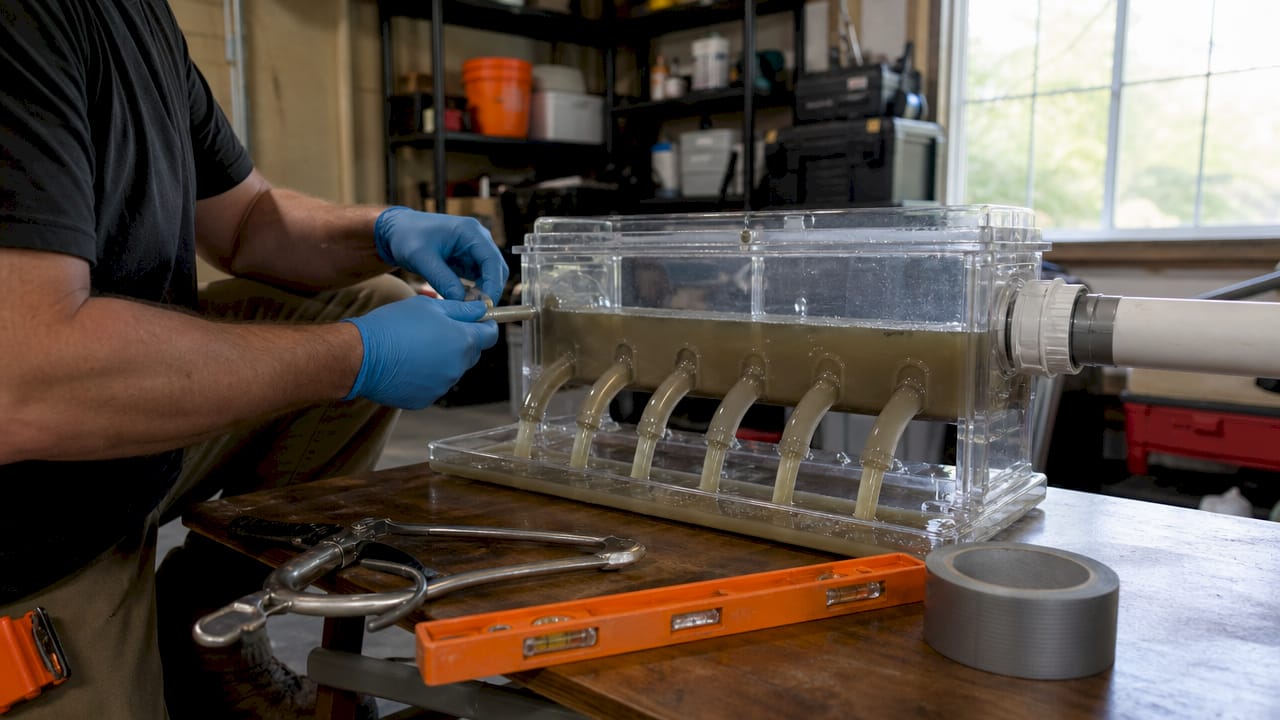
This system works only when the box sits perfectly level. Even a slight tilt sends more flow to the lower outlets and starves the higher ones. That imbalance is invisible from the surface but causes real damage underground over time.
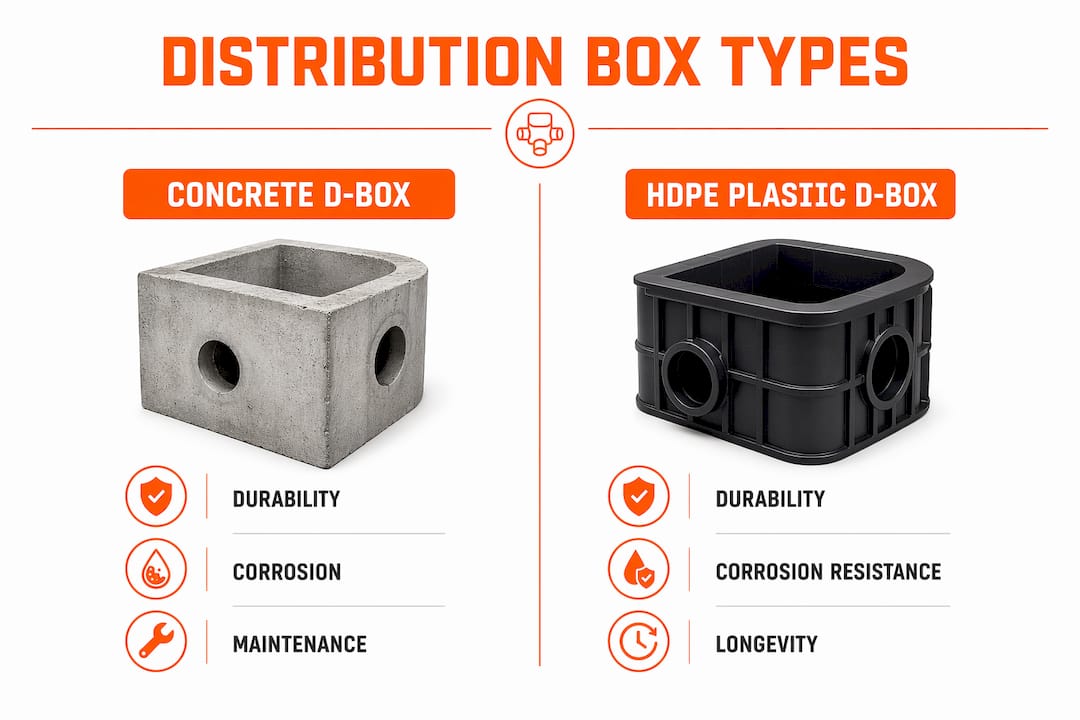
D-boxes come in two main materials: concrete and high-density polyethylene (HDPE) plastic. Both serve the same function, but their long-term performance differs significantly, which is covered in detail later in this article.
- Inlet pipe: carries effluent from the septic tank into the box
- Outlet openings: typically 2–6 ports, one per leach line
- Lid: removable for inspection and maintenance
- Watertight seal: prevents groundwater from entering and diluting effluent
Pro Tip: Ask your septic installer to photograph the D-box during installation and record its depth. That information saves time during every future inspection.
What are common signs of a broken or failing distribution box?
A broken D-box often means it has lost its level orientation rather than suffered a visible physical break. Soil settling, frost heave, and tree root pressure all shift the box over time. The result is uneven effluent flow that quietly destroys one section of your drain field before you notice anything above ground.
The most common warning signs include:
- Soggy or unusually green patches in one area of the drain field while other areas look dry
- Foul sewage odors near the drain field or around the yard
- Slow drains or gurgling pipes throughout the house, which signal a backed-up system
- Sewage backups inside the home, the most urgent sign of system failure
- Standing water over the drain field after normal household water use
Uneven wastewater distribution is a leading cause of premature drain field failure and almost always traces back to the D-box. That connection matters because drain field replacement is one of the most expensive repairs a homeowner can face. Catching a D-box problem early costs a fraction of replacing the entire field.
D-box failures follow three distinct patterns. A tilted box causes uneven saturation in one drain field section. A clogged box backs effluent up into the septic tank. A cracked or broken box leaks effluent directly into the surrounding soil before it reaches the leach lines at all. Each pattern produces slightly different surface symptoms, which is why a professional diagnosis is worth the time.
Signs of drain field failure can overlap with other septic problems, so do not assume the D-box is fine just because the tank was recently pumped. The two components are inspected separately.
How to inspect, maintain, and repair a distribution box
Visual inspections are something any homeowner can do safely. Locate the D-box lid, which is typically buried 6–12 inches below the surface between the septic tank and the drain field. Remove the lid and look for the following:
- Visible cracks or crumbling concrete
- Root intrusion through the walls or outlet pipes
- Sediment or sludge buildup at the bottom
- Water sitting unevenly inside the box, which suggests a tilt
- Outlet pipes that appear blocked or partially collapsed
What a visual check cannot tell you is whether each outlet pipe is receiving equal flow. Professional flow testing takes less than 60 minutes and is the only reliable way to confirm even distribution. A licensed technician runs water through the system and measures output at each lateral line. That test catches subtle imbalances that look fine to the naked eye.
Maintenance steps for a healthy D-box include:
- Annual visual inspection of the lid, walls, and outlet pipes
- Professional flow test every 3–5 years or whenever symptoms appear
- Hydro jetting clogged outlets to clear biofilm and sediment buildup
- Re-leveling settled boxes before tilt causes measurable flow imbalance
- Full replacement for cracked or severely deteriorated units, ideally with an HDPE box
Pro Tip: Schedule your D-box inspection at the same time as your septic tank pumping. The technician is already on site, and combining both services costs less than two separate visits.
Regular septic inspections should always include a D-box check. Many pumping services skip it unless you ask specifically. Make it a standing request every time.
Types and materials of distribution boxes and their advantages
The material your D-box is made from affects how long it lasts and how often it needs attention. Two materials dominate residential septic installations: concrete and HDPE plastic.
| Feature | Concrete D-box | HDPE plastic D-box |
|---|---|---|
| Durability | Strong initially, degrades over time | Resists corrosion and root intrusion |
| Corrosion resistance | Vulnerable to hydrogen sulfide gas | Highly resistant to gas and chemicals |
| Weight | Heavy, harder to replace | Lightweight, easier to install |
| Cracking risk | High after 15–20 years | Very low |
| Recommended for | Existing older systems | New installations and replacements |
Concrete D-boxes degrade from corrosion caused by hydrogen sulfide gas, a byproduct of anaerobic bacterial activity inside the septic system. That gas eats away at concrete from the inside, creating hairline cracks that widen over years. Groundwater then infiltrates through those cracks, diluting effluent and disrupting the flow balance.
HDPE plastic boxes resist hydrogen sulfide corrosion entirely. They hold their shape reliably, do not absorb moisture, and are far less vulnerable to root intrusion. Upgrading from concrete to HDPE is the standard recommendation when replacing a cracked or failing box.
One detail worth knowing: the material upgrade alone does not fix a leveling problem. An HDPE box installed on unstable soil will tilt just as a concrete one does. Proper bedding and compaction during installation determine long-term levelness regardless of material.
Why is the distribution box critical to drain field health?
The drain field is the most expensive component of a conventional septic system to replace. The D-box is what keeps it working evenly for decades. When the box fails, the drain field absorbs the consequences.
“Without a functioning, level D-box, wastewater floods the lowest leach line while starving others. The saturated section loses its ability to absorb and filter effluent, and the entire drain field can fail years ahead of schedule.”
Soil absorption depends on consistent, balanced loading. Each leach line needs time between doses to allow the surrounding soil to drain and recover. When one line receives all the flow, the soil becomes permanently saturated, anaerobic bacteria die off, and a biomat forms that blocks absorption entirely. That process is irreversible without physical remediation.
The cost implications are significant. Early D-box repairs catch settling, cracking, or clogging before they cascade into drain field damage. A re-leveling or replacement job is a fraction of the cost of installing a new drain field. Homeowners who include the D-box in routine septic maintenance consistently avoid the most expensive repair scenarios.
Key reasons the D-box protects your drain field:
- Balanced loading extends the useful life of every leach line equally
- Even flow prevents localized biomat formation
- Regular inspection catches soil settling before it causes measurable damage
- Proper function maintains soil filtration efficiency across the full drain field footprint
Key takeaways
A properly leveled, well-maintained distribution box is the single most cost-effective protection for your septic drain field.
| Point | Details |
|---|---|
| Core function | The D-box splits effluent equally among all leach lines using gravity alone. |
| Level installation is critical | Even slight tilting causes one leach line to flood while others go dry. |
| Failure signs to watch | Soggy patches, foul odors, slow drains, and sewage backups all point to D-box problems. |
| Material matters | HDPE plastic boxes outlast concrete by resisting hydrogen sulfide corrosion. |
| Professional testing required | Visual checks spot obvious damage, but only a flow test confirms equal distribution. |
What I’ve learned from years of D-box failures in the field
Most homeowners I talk to have never heard of a distribution box before something goes wrong. That gap in awareness is the real problem. The D-box sits underground, does its job silently, and gets skipped during routine pumping visits unless someone specifically asks for it. By the time a homeowner notices soggy patches or slow drains, the drain field has often been absorbing uneven flow for a year or more.
The failure I see most often is not a cracked box. It is a tilted one. Soil in the Piedmont Triad area shifts with seasonal moisture changes, and a box that was perfectly level at installation can be off by half an inch five years later. That half inch is enough to send 70% of the flow to one leach line. The homeowner sees a green stripe across the yard and assumes it is a good thing. It is not.
My honest advice: treat the D-box like a smoke detector. You do not wait for the alarm to go off before you check the battery. Include a D-box inspection every time you have your tank pumped, and ask for a flow test every few years. If your box is original concrete and more than 15 years old, ask about upgrading to HDPE when it is next serviced. The cost is modest. The protection is real.
The homeowners who avoid expensive drain field replacements are almost always the ones who stayed ahead of small problems. A tilted box caught early is a one-hour fix. A failed drain field is a multi-week project. That math is simple.
— Jason
Jmseptic helps protect your septic system from D-box problems
Jmseptic serves homeowners across Alamance County, including Burlington, Mebane, Graham, and Elon, with honest septic inspections, repairs, and installations. If you have noticed slow drains, soggy yard patches, or odors near your drain field, a D-box inspection is the right first call.

Jmseptic technicians perform complete D-box checks, professional flow tests, hydro jetting for clogged outlets, and full replacements when needed. Every service is built around protecting your drain field for the long term. Read the full septic installation guide to understand how every component, including the D-box, fits into your system. For urgent issues, emergency septic repair is available across Alamance County. Call Jmseptic before a small problem becomes a costly one.
FAQ
What is a distribution box in a septic system?
A distribution box (D-box) is a small concrete or plastic junction box installed between the septic tank and drain field. It splits outgoing effluent equally among multiple leach lines using gravity, with no moving parts.
What does a broken distribution box look like?
A broken D-box most often means it has tilted out of level rather than physically cracked. Visible signs include soggy patches in one area of the drain field, foul odors, and slow or gurgling drains inside the home.
How often should a distribution box be inspected?
A visual inspection should happen annually, and a professional flow test is recommended every 3–5 years. Include a D-box check every time your septic tank is pumped.
Can I inspect my distribution box myself?
You can remove the lid and check for visible cracks, root intrusion, and sediment. However, confirming equal flow to each leach line requires a professional flow test that takes less than 60 minutes and cannot be replicated with a visual check alone.
Should I replace a concrete D-box with plastic?
Yes, when a concrete box shows cracking or corrosion from hydrogen sulfide gas, upgrading to an HDPE plastic box is the standard recommendation. HDPE resists corrosion, holds its shape reliably, and requires less frequent maintenance over its lifespan.