
Daily Sewage Flow Rate: What Every Homeowner Must Know
Learn what a daily sewage flow rate is and why it’s crucial for homeowners. Ensure your septic system is properly designed to prevent failures.

What is a daily sewage flow rate, and why does it matter?
Your daily sewage flow rate is the total volume of wastewater your property discharges in a 24-hour period, typically measured in gallons per day (GPD) or liters per day. It is the single most important number in septic system design.
Here is why that matters: if a system is sized on average consumption alone, roughly half of all systems would be undersized and at risk of failure. That is not a guess. The Connecticut Department of Public Health addresses this directly, which is why design flow per bedroom is set at 150 GPD, based on two occupants each using 50 gallons per day, with a 1.5 safety factor applied to push confidence above 90%.
Key facts every homeowner should know:
- Units: Flow is expressed in gallons per day (GPD); 1 gallon equals approximately 3.785 liters.
- Design basis: Residential systems are sized by bedroom count, not actual occupants or measured water use.
- Standard rate: 150 gallons per bedroom per day is the widely adopted residential design figure.
- Safety factor: A safety factor multiplier is applied to account for occupancy changes and potential future increases in water use.
- Peak flows: Residential peak discharge is typically within manageable limits, so peak flow is generally not the critical design factor for home systems.
Table of Contents
- How to measure and monitor your home’s sewage flow
- What factors drive your daily sewage flow up or down?
- Practical flow management tips from Jmseptic
- Key Takeaways
How to measure and monitor your home’s sewage flow
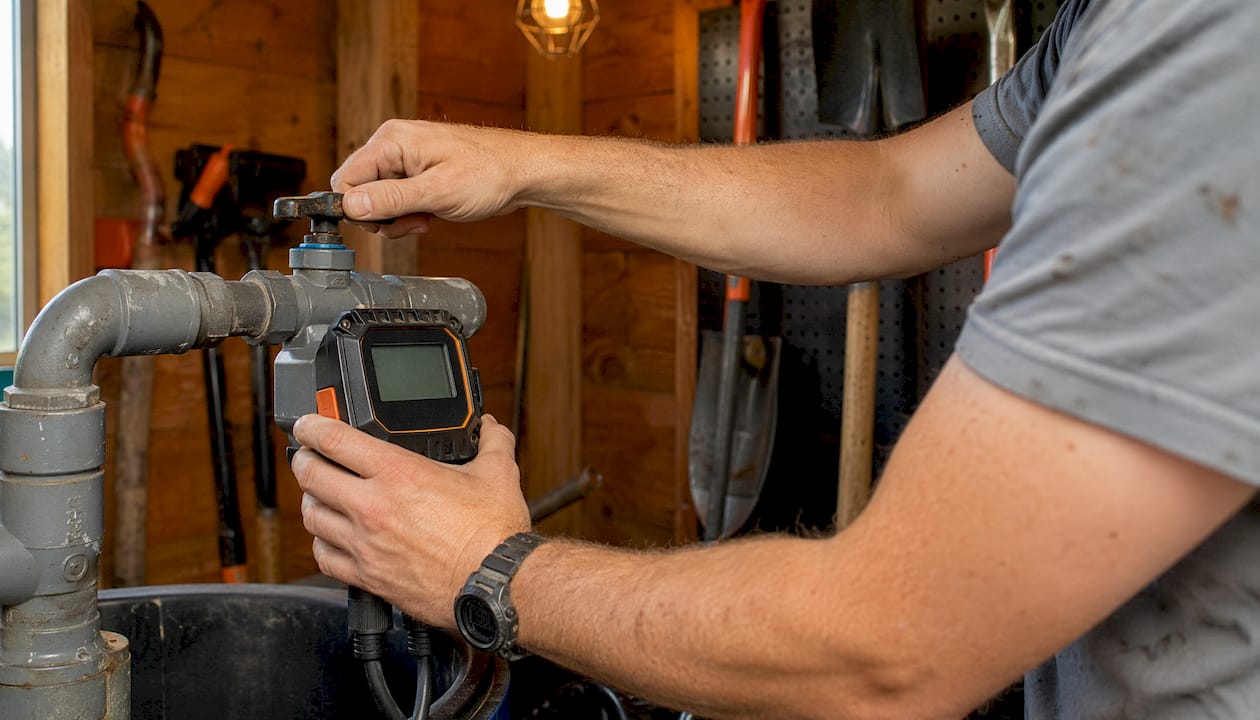
Direct measurement at a residential property usually means working with your pump system. The most reliable method uses an elapsed time meter (ETM) attached to your pump.
The Washington State Department of Health outlines a straightforward process: read your ETM monthly, subtract the previous reading from the current one to get hours run, convert to minutes, multiply by your pump’s flow rate in gallons per minute, then divide total flow by the number of days between readings. The result is your average daily flow in GPD.
- No ETM? Estimate flow using the 150 GPD per bedroom standard or your household water meter readings.
- Logbook habit: Record every reading with the date. Washington State recommends keeping this log for the life of the system.
- Variable rate pumps: Standard ETM calculations do not apply. These systems require engineering consultation to avoid false failure assessments.
- Water meter cross-check: Compare your water bill consumption against your estimated sewage flow as a sanity check.
Pro Tip: Log your ETM readings on the same day each month. Consistent intervals make your average daily flow calculation far more accurate, and you will spot abnormal spikes before they become expensive problems.
What factors drive your daily sewage flow up or down?
Flow rates are not static. Several variables push them higher or lower, and understanding them helps you protect your system.
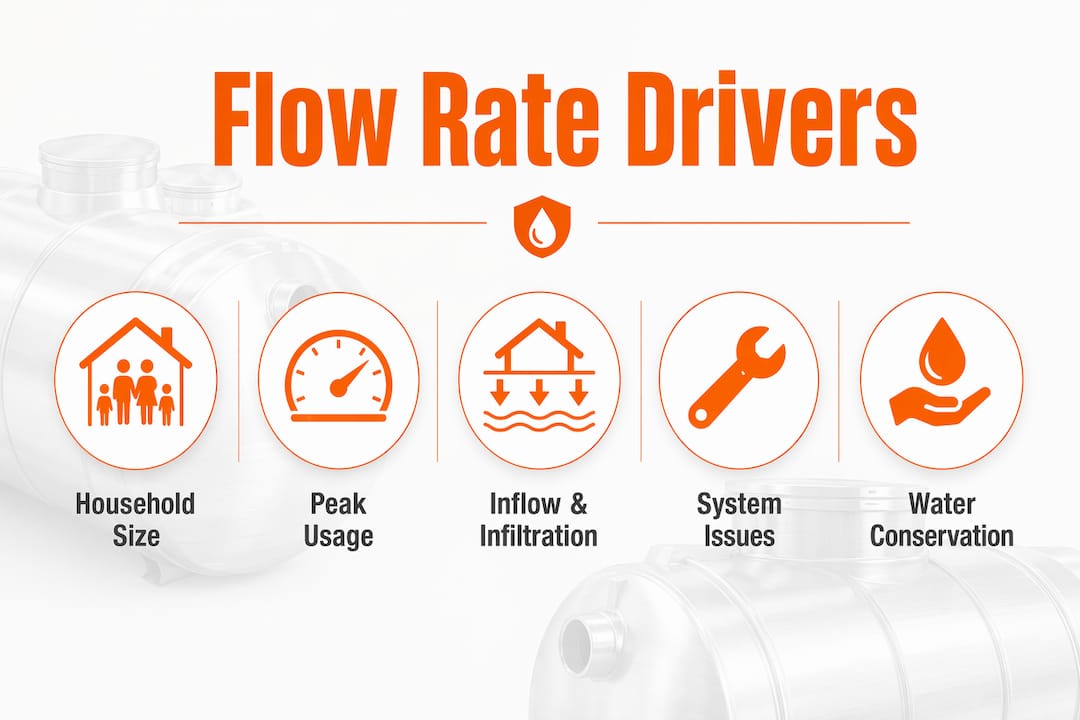
Household size is the most obvious driver. A three-bedroom home occupied by five people generates more flow than the same home with two. Water use habits compound this: long showers, running dishwashers daily, and back-to-back laundry loads all spike the daily total.
Peak diurnal flows can reach up to 2.5 times the average daily flow, concentrated in morning and evening windows. Lateral sewers can see peak flows roughly four times the daily average. Those short bursts stress your tank and leach field far more than the daily average suggests.
Inflow and infiltration (I&I) is the factor most homeowners overlook. Groundwater or stormwater entering through cracked pipes or faulty connections can push actual flow well above your design rate even when your household water use stays constant. Aging infrastructure makes this worse. A heavy rain event can temporarily overwhelm a system that handles dry-weather flow without any trouble.
Common septic system problems like standing water in your yard or slow drains often trace back to flow exceeding what the system was built to handle.
Practical flow management tips from Jmseptic
Jmseptic works with homeowners across Alamance County every week, and the same patterns show up repeatedly. Systems fail not because they were poorly built, but because flow management was never part of the maintenance conversation.
- Design with margin, not averages. A system sized to your exact current use has no buffer for a full house over the holidays or a future renovation that adds a bedroom.
- Stagger water use. Running the dishwasher, washing machine, and multiple showers within the same hour creates a peak that your tank absorbs all at once. Spread them out.
- Schedule professional inspections. An annual check catches infiltration issues and pump wear before they distort your flow data or damage your leach field.
- Fix leaks fast. A dripping faucet or running toilet adds to your daily flow total continuously. Prompt repairs protect both your water bill and your system.
- Get engineering input for variable pumps. If your system uses a variable speed pump, do not rely on standard ETM math. The flow calculation requires a specialist.
For drainage line issues that affect flow, professional drain jetting services can clear blockages that inflate back-pressure and distort your readings.
Pro Tip: If your average daily flow reading suddenly jumps without a change in household size or habits, suspect infiltration first. Call a professional before assuming your system is failing.
If you are planning a new build or an addition, understanding flow requirements from the start prevents costly redesigns. Jmseptic’s new construction septic guide walks through how flow rates shape every design decision.

Key Takeaways
Sizing and managing a septic system correctly requires knowing your daily sewage flow rate, applying a safety factor of 1.5 or greater, and monitoring peak flow events, not just daily averages.
| Point | Details |
|---|---|
| Standard design rate | Residential systems use 150 GPD per bedroom, with a 1.5 safety factor to ensure over 90% confidence against failure. |
| Measurement method | Multiply ETM hours by pump rate, then divide total flow by days between readings. |
| Peak flow risk | Diurnal peaks can reach 2.5 times average daily flow, stressing tanks and leach fields. |
| Infiltration warning | Cracked pipes can push actual flow above design rates even with unchanged water use. |