
What Does a Septic Tank Look Like Above Ground?
Discover what an above-ground septic tank looks like. Learn about its features, common colors, and what to consider before installation.

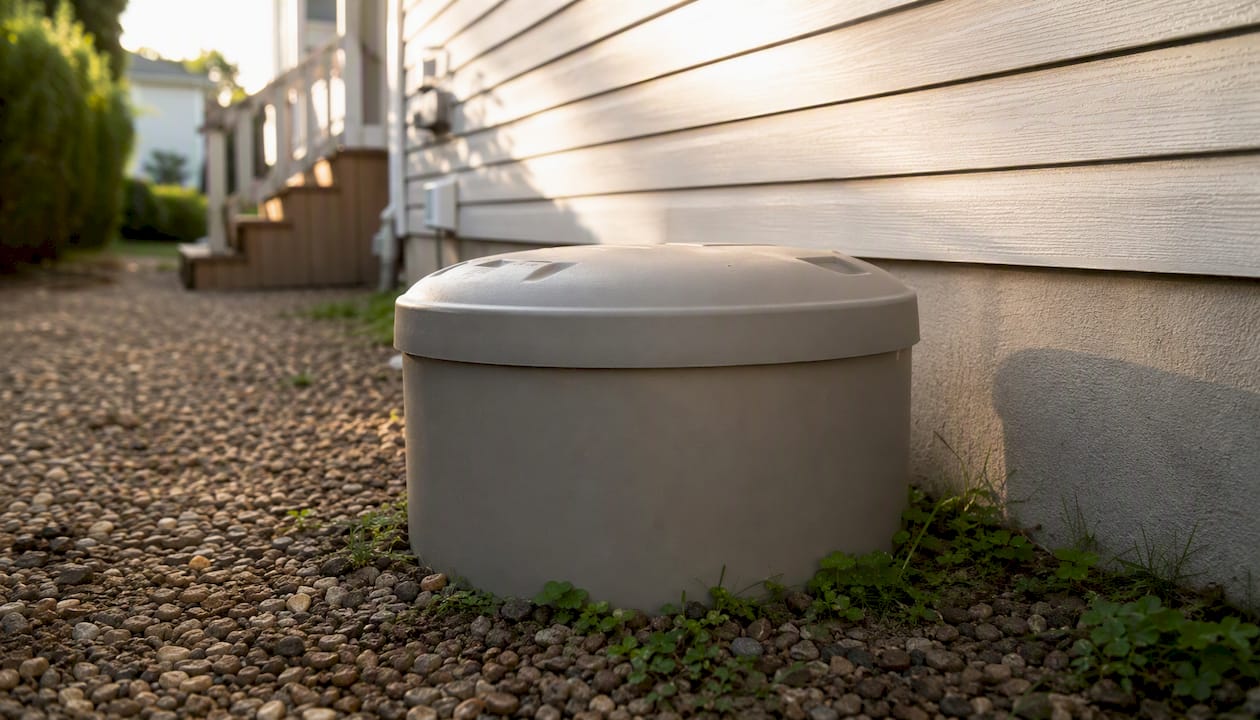
An above-ground septic tank is a low-profile polyethylene or fiberglass vessel that sits on a concrete pad or compacted gravel, with one or two visible lids, a riser or two poking up from the surface, and sometimes a pump or control box mounted nearby. You’ll typically spot it as a squat, oval or rectangular container sitting a few inches to a foot above grade, usually dark green, black, or tan, positioned somewhere between the house and the property line. If there’s a small electrical box or alarm light on a post next to it, that’s a strong sign you’re looking at a system with a pump.
A quick note before you plan anything: local health departments regulate above-ground systems, and permits are required in most jurisdictions. Check with your county before purchasing or installing any above-grade tank.
Key Takeaways
Above-ground septic tanks are polyethylene or fiberglass vessels sitting on a concrete pad or gravel, identifiable by their visible lids, risers, and vent pipes, and they require more frequent maintenance than buried systems.
| Point | Details |
|---|---|
| Visual ID at a glance | Look for a low-profile oval or rectangular tank with two lids, a vent pipe, and sometimes a nearby control box. |
| Common materials | Polyethylene (smooth, black/dark green) and fiberglass (textured, lighter colors) are the two standard materials for above-ground tanks. |
| Size range | Portable tanks are available in small sizes suitable for temporary use; residential holding and treatment tanks come in a range of sizes to suit different household needs. |
| When above-ground is chosen | High water table, shallow bedrock, remote sites, and waterfront buffer rules are the primary drivers, not preference. |
| Jmseptic | Serves Alamance County and the Piedmont Triad for inspections, installations, and repairs of above-ground and conventional septic systems. |
Table of Contents
- What does a septic tank look like above ground? Types and materials
- Above-ground parts you’ll actually see on the tank
- How big is an above-ground septic tank? Sizes and dimensions
- When and why above-ground tanks are used instead of buried systems
- How above-ground tanks are installed and what to expect
- Maintenance, lifespan, and what it actually costs to operate
- How to confirm the tank on your property is actually a septic tank
- What a Jmseptic technician inspects and when to call one
- What homeowners get wrong about above-ground septic systems
- Jmseptic serves Alamance County homeowners who need answers on-site
- Sources
What does a septic tank look like above ground? Types and materials
Not every above-ground tank looks the same, because “above-ground septic tank” covers at least three distinct things. Understanding which type you’re looking at changes what you’ll see.
Portable holding tanks are the most common surface-mounted units. These are polyethylene or fiberglass vessels sold in sizes like 250 and 350 gallons for job sites, seasonal cabins, or temporary use. They’re compact, usually oval or rectangular, and sit flat on the ground. Rotational-molded polyethylene tanks have a smooth, slightly waxy surface and are almost always black or dark green. Fiberglass tanks tend to be lighter in color, sometimes off-white or gray, with a slightly textured surface.
Mound systems look completely different. The tank itself is often still buried, but the drainfield sits above grade as a low, grass-covered hill in the yard, typically 2–4 feet tall and 20–40 feet across. A mound system includes a septic tank, a dosing chamber with a pump and alarm, and an above-grade sand and gravel distribution bed where effluent is spread through perforated pipes. What you see from the yard is the mound itself, plus a small electrical panel or alarm box near the dosing chamber.

ATUs (aerobic treatment units) sometimes sit in an enclosure above grade, though more often the tank is buried and only the air pump, control panel, and alarm are visible at the surface. The enclosure, when present, looks like a small utility cabinet or a ribbed plastic cylinder with a lid.
Concrete above-ground tanks exist but are rare for residential use. They’re blocky, heavy-looking, and typically gray. Most homeowners will never encounter one outside of an older agricultural or commercial setting. For a deeper look at how material choices affect long-term performance, the septic tank materials guide at Jmseptic covers poly, fiberglass, and concrete side by side.
Above-ground systems range from simple holding tanks to engineered mound and ATU systems, and the maintenance demands are very different between them.
Above-ground parts you’ll actually see on the tank
Knowing the parts by name helps when you’re describing what you see to a technician or county inspector. Here’s what to look for:
- Manhole lid or access lid. The most obvious feature. Usually round or rectangular, made of plastic or cast iron, and sitting flush with or slightly above the tank top. Residential tanks often have two: one over the inlet end and one over the outlet.
- Risers. Plastic cylinders (usually green or black) that extend the access opening up to grade level. On an above-ground tank, risers may only add a few inches of height, but they make the lid easy to remove without digging.
- Vent pipe. A small-diameter pipe (typically 2–4 inches) extending vertically from the tank. It allows gases to escape safely. Don’t confuse it with an irrigation riser or a conduit pipe; a vent pipe has no valve or fitting at the top, just an open end or a screened cap.
- Inspection port. A smaller access point, sometimes just a capped pipe, used to check liquid levels or insert a probe without fully opening the main lid.
- Pump chamber or dosing chamber. On mound systems and some ATUs, a second tank or compartment sits adjacent to the main tank. It houses the effluent pump and looks similar to the main tank but slightly smaller.
- Control box and alarm. A weatherproof electrical panel, usually mounted on a post or the tank wall, with indicator lights or an audible alarm. A red light or beeping alarm means the pump or float switch needs attention.
Telling a vent pipe from an irrigation riser is straightforward: vent pipes come straight up from the tank body and have no lateral connections at the base. Irrigation risers connect to a lateral line running horizontally underground.
Pro Tip: Before calling a technician, take three photos: a close-up of each lid showing any labels or serial numbers, a wide shot showing the tank’s position relative to the house, and a photo of the control box display if one is present. That alone cuts diagnostic time significantly.
How big is an above-ground septic tank? Sizes and dimensions
Scale is one of the hardest things to judge from a photo. The table below maps common capacities to typical shapes and approximate footprints so you can compare what you’re seeing in the yard to standard specs.
Retailer spec pages confirm that above-ground holding tanks are available in these capacities with low-profile rectangular and oval shapes designed to sit on a flat surface. A 1,000-gallon tank is roughly the size of a compact car. A 250-gallon portable unit is closer to a chest freezer.
State and model codes specify minimum compartment volumes and require access openings of defined sizes, which is why residential tanks always have at least one lid large enough for a technician to inspect or pump the interior.
Look for a spec plate or molded label on the side or end of the tank near the inlet fitting. It typically shows the manufacturer name, capacity in gallons, and sometimes the date of manufacture. If the label is faded, the serial number can often be traced through the manufacturer’s website.
When and why above-ground tanks are used instead of buried systems
Site constraints drive the choice far more than preference. Above-ground tanks are easier to install where excavation isn’t feasible, but they come with trade-offs in exposure and maintenance.
Common reasons a property ends up with an above-ground or above-grade system:
- High water table. Burying a tank where groundwater sits close to the surface risks flotation and contamination of the drainfield.
- Shallow bedrock. Rocky ground in the Piedmont Triad and similar regions makes deep excavation impractical or prohibitively expensive.
- Remote or seasonal sites. Cabins, hunting camps, and seasonal cottages often use portable holding tanks because the site isn’t occupied year-round and a full engineered system isn’t cost-justified.
- Temporary or job-site use. Construction sites use portable holding tanks until permanent sewer or septic is connected.
- Waterfront and environmental buffer zones. Some coastal and lakefront regulations prohibit subsurface discharge within a certain distance of the water, making a holding tank or engineered mound the only permitted option.
Mound systems and ATUs are engineered permanent solutions, not temporary workarounds. The distinction matters because a mound system requires a service contract, electricity for the pump, and regular inspections. A simple holding tank just needs pumping, but needs it frequently.
Regulatory callout: Municipalities often restrict or require permits for above-ground tanks. Before purchasing or installing any above-grade system, contact your local health department. In North Carolina, Alamance County Environmental Health handles septic permits and site evaluations. Understanding soil conditions and site constraints is the first step toward knowing which system your property can support.
How above-ground tanks are installed and what to expect
The foundation matters more than most homeowners realize. A tank that shifts or settles unevenly can crack fittings, break inlet pipes, and create leaks that are expensive to repair.
Concrete pad vs. compacted gravel. A poured concrete pad is the more stable option and is typically required for permanent installations. Compacted gravel works for portable or temporary tanks and allows some drainage beneath the unit. Either way, the base must be level and load-bearing enough to support a full tank, which can weigh several thousand pounds when filled.
Siting follows a few practical rules. The tank needs to be close enough to the house that the inlet pipe runs at a consistent downward slope (usually 1/4 inch per foot), but far enough away to allow a pump truck to pull alongside for service. Most pump trucks need a clear path within about 75 feet of the tank. A dosing chamber or pump station, when present, typically sits directly adjacent to the main tank with a short connecting pipe.
Above-ground tanks face exposure risks that buried tanks don’t: UV degradation, physical impact from lawn equipment, and freeze risk in cold climates. Manufacturers address UV exposure with inhibitors built into the resin, but physical protection still falls to the homeowner. Screening with a fence or landscaping is common. In areas with high groundwater, tanks are anchored with straps or concrete deadmen to prevent flotation during wet seasons. Indiana’s septic code, for example, specifies construction strength and watertight standards that apply to above-grade installations as well as buried ones. North Carolina’s rules follow similar principles, enforced at the county level.
Maintenance, lifespan, and what it actually costs to operate
Holding tanks and engineered above-grade systems have very different maintenance profiles. Confusing the two is one of the most common mistakes homeowners make when buying a property with an above-ground system.
Routine maintenance tasks to plan for:
- Pumping schedule. A holding tank has no treatment capacity. Everything that goes in must be pumped out. For a full-time household, that can mean pumping every few weeks to a few months depending on tank size and usage. A 1,000-gallon holding tank for a family of four fills faster than most people expect.
- Lid and riser inspection. Check annually for cracks, warping, or missing hardware. A damaged lid is a safety hazard and a contamination risk.
- Alarm and float switch testing. For mound systems and ATUs, test the high-water alarm at least once a year. A failed float switch can let the tank overflow before anyone notices.
- Pump service for ATUs and dosing chambers. Effluent pumps typically need inspection every 1–3 years. Many ATU manufacturers require a service contract as a condition of the system’s operating permit.
Lifespan varies by material. Rotational-molded polyethylene tanks generally last 20–30 years when properly maintained and protected from UV and physical damage. Fiberglass tanks can last 30–40 years. Concrete tanks, when buried, can exceed 40 years, but above-grade concrete is rare and more vulnerable to freeze-thaw cycles. For a full breakdown of how material affects longevity, Jmseptic’s guide on durable septic system materials is worth reading before you commit to a tank type.
Operational costs for a holding tank are almost entirely pumping fees, which vary by region and haul distance. Engineered systems add electricity for the pump and, often, an annual service contract. Those ongoing costs catch homeowners off guard, especially when buying a property with an existing mound or ATU system.
How to confirm the tank on your property is actually a septic tank
A lot of above-ground tanks look similar from a distance. Here’s a quick checklist to distinguish a septic or holding tank from a rainwater cistern, propane tank, or water softener brine tank.
- Multiple lids or a long oval shape. Septic tanks almost always have at least two access points. A single small lid is more typical of a water storage tank.
- Vent pipe present. Septic tanks vent gases. A pipe extending vertically from the tank with no valve or hose fitting is a strong indicator.
- Proximity to the house’s plumbing stack. Trace the main drain line from the house. It should lead directly to the inlet end of the septic tank.
- Odor. A faint sewage smell near the tank, especially after heavy use, is a reliable indicator. Propane tanks smell of mercaptan (a sharp, sulfur-like odor). Water tanks have no odor.
- Sticker or spec plate. Look for a label that says “septic,” “holding tank,” “gray water,” or lists a capacity in gallons alongside a manufacturer name.
Propane tanks are almost always cylindrical, silver or white, and have a pressure gauge and valve at one end. Rainwater tanks are often translucent or blue and connect to downspouts. Neither has a vent pipe or a pump chamber.
Pro Tip: Photograph the spec plate and any visible inlet/outlet fittings before calling a pro. If you can measure the tank’s length and width, a technician can often confirm the capacity and type before arriving on site, which saves time and sometimes a service call fee.
What a Jmseptic technician inspects and when to call one
A professional inspection covers things that a visual check from the yard simply can’t confirm. When a Jmseptic technician visits an above-ground system, the inspection typically includes:
- Lid and riser integrity. Checking for cracks, missing bolts, and proper sealing to prevent odors and unauthorized access.
- Pump function and float switch operation. Running the pump through a full cycle and verifying the float activates at the correct level.
- Alarm test. Triggering the high-water alarm to confirm it sounds and that the control panel responds correctly.
- Inlet and outlet condition. Inspecting baffles or tees for corrosion, blockage, or displacement.
- Evidence of leakage. Looking for wet spots, staining, or odor around fittings, the base of the tank, and the surrounding soil.
Call a pro when you see visible cracks or damage to the tank body, when the alarm sounds and won’t reset, when drains in the house slow down suddenly, or when you’re simply not sure what type of system you have. Uncertainty about the tank type is reason enough. A septic system inspection catches small problems before they become expensive failures.
Before the technician arrives, have ready: photos of the tank and any visible components, the property address and lot size, any permits or inspection records from previous owners, and a note of when the tank was last pumped. Ask for a written inspection summary at the end of the visit. That document becomes part of your property record and is useful if you sell.
What homeowners get wrong about above-ground septic systems
Most homeowners assume that “above ground” means simpler. Sometimes it does. A portable holding tank on a gravel pad is about as simple as septic gets. But an engineered mound system or ATU is actually more mechanically complex than a conventional buried system, with a pump, float switches, an alarm, and often a service contract requirement baked into the operating permit.
The other thing people consistently underestimate is pumping frequency for holding tanks. A 1,000-gallon tank sounds large until you realize a household of four can generate 200–300 gallons of wastewater per day. That math means pumping every few days at peak usage, which adds up fast in both cost and inconvenience. Anyone buying a property with a holding tank should run those numbers before closing.
The visual identification piece matters too. Homeowners who can recognize the parts of their system, name what they’re looking at, and photograph it accurately before calling a technician save time and communicate more clearly with service providers. That’s not a small thing when you’re dealing with a system failure.
Jmseptic serves Alamance County homeowners who need answers on-site
Reading about what an above-ground septic tank looks like is a solid start. Knowing exactly what you have on your property, whether it’s sized correctly, and whether it’s operating safely takes a trained eye.

Jmseptic serves Burlington, Mebane, Elon, Graham, Whitsett, McLeansville, and the surrounding Piedmont Triad area with septic installation, inspection, repair, and maintenance. If you’ve spotted something in your yard that you can’t identify, or if you’re planning a new build and need to understand your options, the NC homeowner installation guide is a good place to start. For urgent issues or to book a site visit, contact Jmseptic directly through Quality Service and Repair for Alamance County Septic Systems and have your photos and property details ready.
Sources
These sources are worth bookmarking depending on what you need:
- What is an above-ground septic tank?
- 410 IAC 6-8.3-40 and related septic tank construction rules
- Above Ground Septic Holding Tanks — Tank & Barrel
- Above Ground Septic System: When Conventional Doesn’t Work – Ground Stone