
What Are Septic System Laterals: A Homeowner’s Guide
Discover what septic system laterals are and how they work. Learn their crucial role in wastewater management and tips for maintenance.

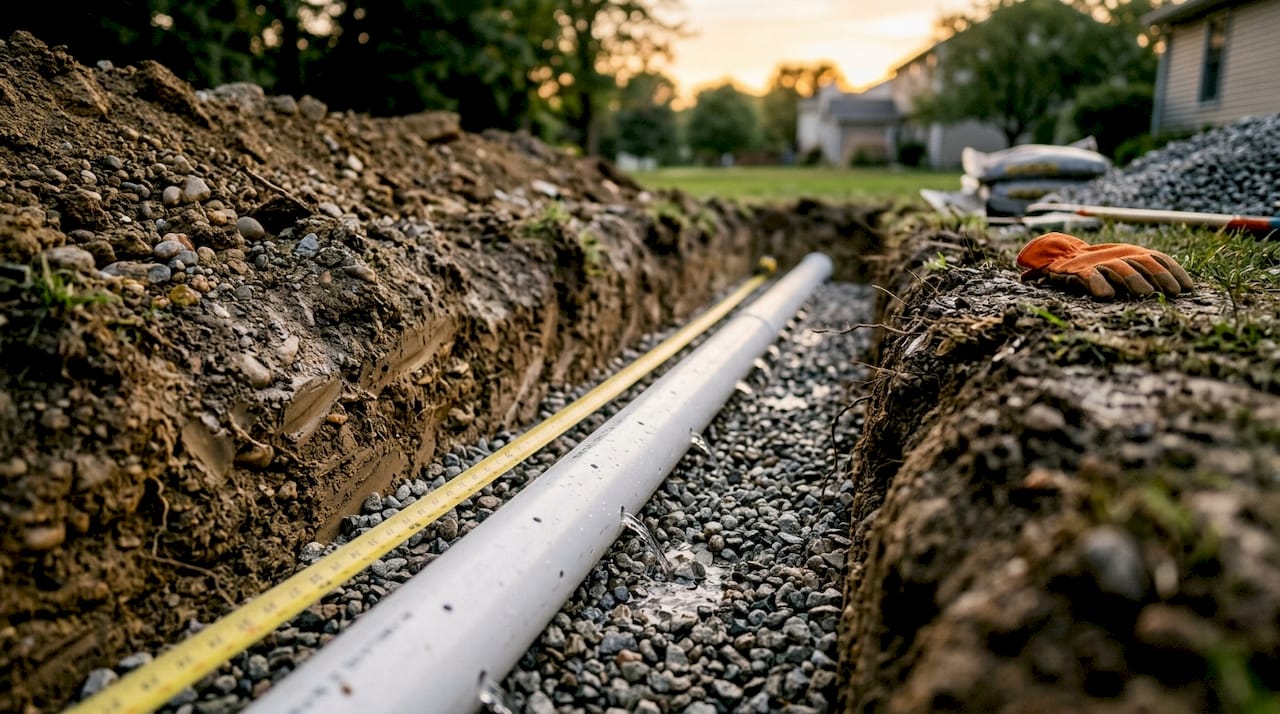
Septic system laterals are defined as perforated pipes buried in gravel-filled trenches that distribute clarified effluent from the septic tank into surrounding soil for final biological treatment. Known in the industry as drain field lines or leach lines, these pipes form the last and most critical stage of your onsite wastewater system. A typical residential drain field covers 450–1,200 square feet with 3–9 parallel lateral lines, each 25–100 feet long, buried 18–36 inches deep. Without functioning laterals, wastewater has nowhere to go. Understanding what septic system laterals do, how they fail, and how to protect them is the difference between a system that lasts decades and one that fails in years.
What are septic system laterals and how do they work?
Septic laterals are the final link in a chain that starts at your toilet and ends in the soil beneath your yard. Wastewater flows from your home into the septic tank, where solids settle and float, leaving a middle layer of clarified liquid called effluent. That effluent exits through the tank’s outlet baffle, travels through a distribution box, and enters the lateral lines.
Once inside the lateral pipes, effluent seeps out through small perforations along the pipe’s length. The liquid then moves through a gravel bed and into the native soil below. Aerobic bacteria living in the soil break down remaining pathogens and organic matter, completing the treatment process. This biological filtration is what makes the drain field a highly engineered treatment system, not just a disposal area.
A thin biological layer called the biomat forms at the soil-pipe interface. The biomat acts as the primary filter, trapping fine particles and pathogens before they reach groundwater. It is also the most vulnerable point in the system. Overload it with too much organic matter and it thickens until water can no longer pass through.
Two main distribution methods exist: gravity systems and pressure distribution systems. Gravity systems rely on a slight downhill slope to move effluent through the laterals. Pressure distribution systems use a pump to force effluent evenly across all lines, which prevents localized overloading and works better on challenging sites.
- Gravity systems are simpler and less expensive to maintain but require suitable soil and slope.
- Pressure systems distribute effluent more evenly but include a pump that needs periodic inspection.
- Even distribution across all lateral lines is the goal of both systems.
Pro Tip: If your property has shallow bedrock, high groundwater, or dense clay soil, a pressure distribution system is not optional. It is the only design that prevents localized saturation and premature failure.
What are the installation standards for septic lateral lines?
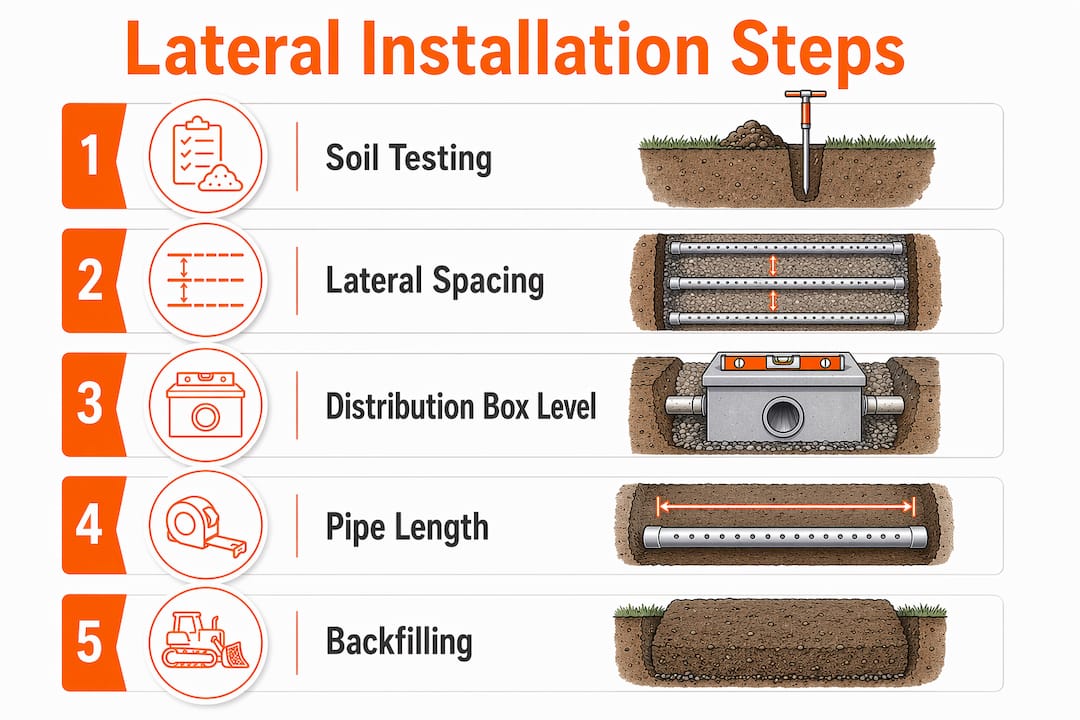
Proper lateral line installation follows specific dimensional standards that protect both performance and longevity. Standard installation requires spacing of 6–10 feet between lines, trench widths of 12–36 inches, and perfectly level trench bottoms for even effluent flow. Trench depths range from 18–30 inches, adjusted for local soil percolation rates and county codes.
The number and length of lateral lines depend on your home’s size and your soil’s absorption rate. A soil percolation test, required before installation in most jurisdictions, determines how quickly your soil absorbs water. Slow-draining soils require more lateral footage to handle the same daily wastewater volume.
| Design Factor | Standard Range | Why It Matters |
|---|---|---|
| Lateral spacing | 6–10 feet apart | Prevents trenches from competing for the same soil absorption zone |
| Trench width | 12–36 inches | Wider trenches increase surface area for effluent dispersal |
| Installation depth | 18–36 inches | Keeps laterals in the aerobic soil zone for effective treatment |
| Lateral line length | 25–100 feet each | Matched to household size and soil percolation rate |
| Number of lines | 3–9 parallel lines | Scales with daily wastewater volume and lot conditions |
The distribution box must be perfectly level. A slope difference of just 1/4 inch causes uneven effluent flow, overloading some laterals while others receive almost nothing. That imbalance accelerates failure in the overloaded trenches and wastes capacity in the underused ones.
Pro Tip: Ask your installer to confirm distribution box leveling with a precision level before backfilling. This single step prevents the most common cause of uneven lateral wear.
What are the signs of septic lateral problems?
Lateral failure rarely happens overnight. It builds gradually, and the symptoms appear above ground long before the system completely stops working. Catching those signs early saves homeowners from full drain field replacement, which costs far more than targeted repairs.
The main cause of lateral failure is hydraulic overloading combined with solids carryover from a neglected septic tank. When sludge builds past the tank’s capacity, it escapes into the lateral lines, clogs the pipe perforations, and smothers the gravel bed. Treatment stops, and backups follow.
Common signs that your lateral lines are in trouble:
- Sewage backup in toilets, showers, or floor drains, especially after heavy water use
- Soggy or spongy ground over the drain field, even during dry weather
- Pooling water or a persistently wet area in the yard above the lateral field
- Strong sewage odors near the drain field or around the house
- Slow drains throughout the home that do not clear with standard methods
- Bright green, lush grass growing directly over the lateral trenches, fed by surfacing effluent
Saturated soil increases hydraulic pressure in the trenches and prevents effluent from absorbing. This is why heavy rain following a period of high water use can push a borderline system into full failure. Soil health and drainage conditions directly determine how much stress your laterals can handle.
Diagnostic tools used by professionals include soil probes to check moisture levels, camera inspections to view pipe condition from inside, and hydraulic load tests to measure absorption rates. These tools identify whether the problem is a clog, a broken pipe, or a saturated soil condition that requires a different solution.
How can you maintain and repair septic lateral lines?
The single most effective maintenance step is pumping your septic tank on schedule. Pumping every 3–5 years prevents solids from reaching the lateral lines and is the foundation of every long-lived drain field. Skipping pumps is the fastest path to lateral failure.
Beyond pumping, daily water use habits directly affect lateral health. Spreading laundry loads across the week instead of running multiple cycles in one day reduces the hydraulic surge that overloads the system. Fixing leaky faucets and running high-efficiency appliances also cuts the daily volume entering the drain field.
Protecting the physical area above your laterals matters just as much as what goes down the drain. Driving vehicles or heavy equipment over the drain field compacts the soil, destroys oxygen exchange, and permanently impairs the system’s ability to absorb effluent. That damage cannot be reversed by cleaning or flushing.
- Pump the septic tank every 3–5 years. This is the non-negotiable baseline for lateral protection. See the 2026 pumping service guide for scheduling guidance.
- Spread water use across the day and week. Avoid running dishwashers, washing machines, and showers simultaneously.
- Keep vehicles, heavy equipment, and livestock off the drain field. Even a single pass from a riding mower loaded with a full grass catcher can begin compaction.
- Plant only shallow-rooted grass over the lateral field. Tree and shrub roots invade pipe perforations and cause physical blockages.
- Divert surface water away from the drain field. Downspouts, sump pumps, and drainage swales should direct water away from the lateral area.
- Schedule professional inspections every 1–3 years. A technician can catch early biomat buildup or distribution box settling before either causes failure.
When laterals do clog, hydraulic jetting and flushing can sometimes restore function without full replacement. Success depends on the severity of the clog and the condition of the pipe. Preventive maintenance is always more effective and less expensive than reactive cleaning. When pipes are crushed, roots have invaded, or the soil is permanently saturated, replacement is the only lasting fix.
Pro Tip: Before agreeing to full lateral replacement, ask your technician to perform a camera inspection and a hydraulic load test. Some systems that appear failed can be restored with targeted jetting and a rest period that allows the biomat to thin.
Key Takeaways
Septic lateral lines are the final treatment stage of your onsite wastewater system, and protecting them through regular pumping, careful water use, and physical protection of the drain field area is the most cost-effective septic strategy available.
| Point | Details |
|---|---|
| Laterals are the treatment endpoint | Perforated pipes in gravel trenches complete final wastewater treatment through soil filtration. |
| Installation precision matters | Trench depth, spacing, and distribution box leveling directly determine how long laterals last. |
| Early symptoms are visible | Soggy ground, odors, and slow drains signal lateral stress before full failure occurs. |
| Pumping prevents most failures | Pumping every 3–5 years stops solids from reaching and clogging lateral lines. |
| Physical protection is non-negotiable | Vehicles and heavy equipment over the drain field cause permanent, irreversible soil compaction. |
What I’ve learned after years of working on drain fields
Most homeowners think the septic tank is the heart of the system. It is not. The drain field is where the real work happens, and the lateral lines are what make it possible. The tank just separates solids from liquid. The laterals and the soil beneath them do the actual treatment.
The mistake I see most often is homeowners who pump their tank faithfully but never think about the drain field until water is pooling in the yard. By that point, the biomat has often thickened past the point of recovery. Ignoring drain field maintenance while focusing only on tank pumping leads to irreversible clogging and system failure. The two go together.
The detail that surprises most people is how little it takes to throw a system off balance. A distribution box that settles just a quarter inch out of level can overload two or three lateral lines while leaving the others barely used. I have seen fields where half the lines were saturated and the other half were bone dry, all because of a box that nobody checked after the ground settled in the first winter after installation.
The other thing I tell every homeowner: treat the ground above your laterals like you would a finished floor. Nothing heavy, no digging, no trees. The soil structure underneath is doing biological work that no piece of equipment can replicate once it is gone.
— Jason
Jmseptic serves Alamance County homeowners with expert lateral care
Jmseptic handles septic lateral installation, maintenance, and repair for homeowners across Burlington, Mebane, Graham, Elon, Whitsett, and McLeansville, North Carolina.

Whether your system needs a new lateral field installation designed to current 2026 standards or an emergency repair after signs of failure, Jmseptic brings the diagnostic tools and field experience to get it right. The team also provides hydro jetting, tank pumping, and full system inspections to keep your drain field performing year after year. If you are seeing standing water, odors, or slow drains, contact Jmseptic before the problem reaches the point of full replacement. Early intervention is always the less expensive path. Reach out for an assessment or quote at jmseptic.com.
FAQ
What are septic system laterals made of?
Septic lateral lines are typically made from perforated PVC or corrugated polyethylene pipe. Both materials are buried in gravel-filled trenches and designed to allow effluent to seep into surrounding soil.
How long do septic lateral lines last?
A well-maintained lateral field can last 25–30 years or longer. Regular tank pumping, controlled water use, and protecting the drain field from compaction are the primary factors that extend lateral lifespan.
Can septic laterals be cleaned without replacement?
Laterals can sometimes be restored using hydraulic jetting or flushing when the clog is not severe. Cleaning effectiveness depends on pipe condition and clogging severity; severely damaged or root-invaded lines require replacement.
How do I know if my septic laterals are failing?
The clearest signs are pooling water or soggy ground over the drain field, sewage odors near the yard, slow drains throughout the home, and sewage backup in fixtures. A professional camera inspection confirms the diagnosis.
How often should I pump my septic tank to protect the laterals?
The EPA and industry standards recommend pumping every 3–5 years for a typical residential system. Pumping on schedule is the most direct way to prevent solids from entering and clogging lateral lines.