
Water Softener Discharge into Septic: 2026 Guide
Discover how water softener discharge into septic systems affects your home. Learn about risks and best practices to protect your system.

Water softener discharge into septic systems is defined as the brine and rinse water released during a softener’s regeneration cycle, which flows directly into your septic tank. The good news: modern high-efficiency softeners discharge only 12–25 mg/L of sodium, well below the 1,000 mg/L threshold that harms septic bacteria. Research from the Water Quality Research Foundation and an 18-month Virginia Tech study both confirm that properly operated softeners pose minimal risk to septic function. The real danger is not the salt. It is the volume of water dumped in a short window.
How does water softener discharge affect septic tanks?
Hydraulic overload is the primary risk from softener discharge, not chemical damage. A single regeneration cycle can dump 50–150 gallons into your tank in a short interval, overwhelming the system before solids can settle. That surge pushes partially treated waste toward the drain field, where it clogs soil pores and reduces percolation over time.
The sodium story is more nuanced. Modern softeners discharge 12–25 mg/L sodium, which is far too low to kill the bacteria your tank depends on. Older or malfunctioning units that regenerate too frequently are a different matter. They produce higher sodium concentrations and larger water volumes, stressing both bacterial colonies and hydraulic capacity simultaneously.
Volume management is the clearest path to safe discharge. Discharge stays safe for about 89% of septic systems when regeneration volume stays under 15% of the system’s daily hydraulic capacity. That means a 1,000-gallon-per-day system can safely absorb up to 150 gallons from a regeneration cycle. Knowing your system’s rated capacity is the first number you need.
| Impact Factor | Primary Risk | Threshold to Watch |
|---|---|---|
| Sodium concentration | Bacterial disruption | Above 1,000 mg/L |
| Regeneration volume | Hydraulic overload | Above 15% daily capacity |
| Regeneration frequency | Combined stress | More than once per day |
| Softener age | Efficiency loss | Units over 10–15 years old |
Pro Tip: Schedule regeneration cycles for late night, when household water use is lowest. This spreads the hydraulic load over more hours and reduces peak stress on your tank.
What septic conditions and soil types affect discharge safety?
Tank size and system age are the two factors that determine how much discharge your system can absorb. A small tank paired with a high-demand household leaves little buffer for a 100-gallon regeneration surge. Older systems often have reduced effective capacity due to sludge buildup, which makes regular tank flushing a critical part of managing softener discharge safely.
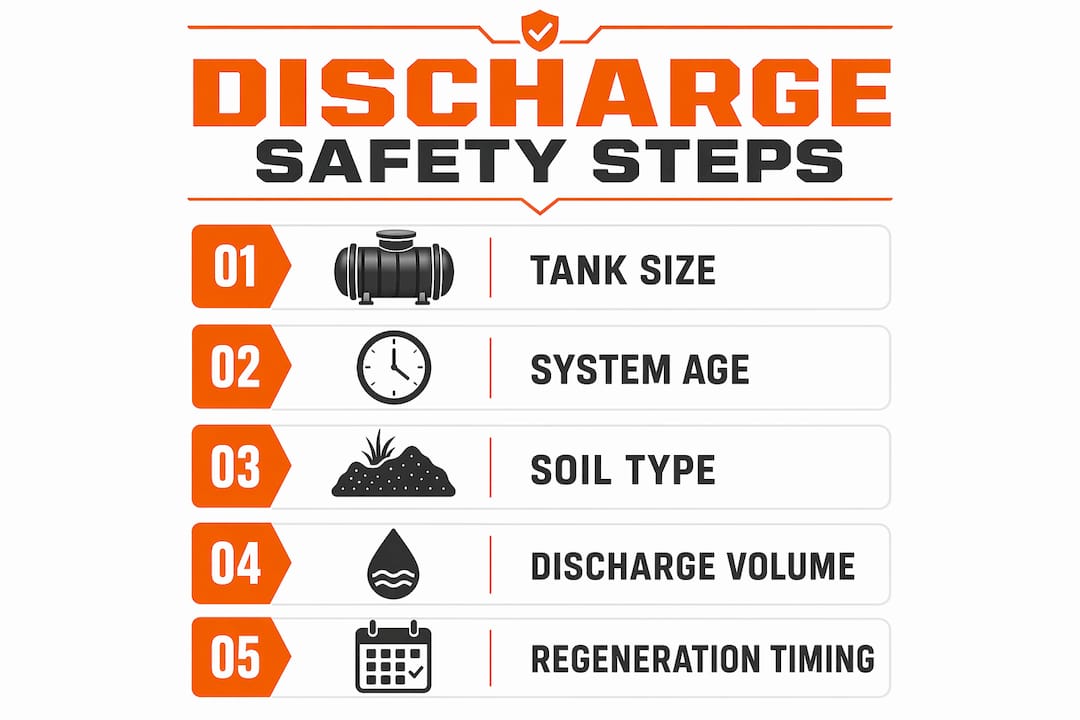
Soil type changes the equation entirely in the drain field. Sandy and loamy soils drain freely and tolerate sodium loading better than clay-heavy soils. Clay soils deflocculate when exposed to sodium over time. That means the clay particles lose their structure, collapse together, and seal off the pores that allow water to percolate. The result is a waterlogged drain field that fails slowly and expensively.
Homeowners on clay-heavy lots face the highest long-term risk from softener discharge. A percolation test, commonly called a perc test, measures how fast your soil absorbs water and tells you exactly how much hydraulic stress your drain field can handle. If your perc rate is already slow, adding softener discharge to the mix accelerates failure. Understanding drain field vulnerability before you install a softener is not optional. It is the difference between a safe setup and a $10,000 repair.
Key risk factors to assess before connecting a softener to your septic system:
- Tank size: Smaller tanks have less buffer for volume surges.
- System age: Older systems carry more sludge and less effective capacity.
- Soil type: Clay soils are far more vulnerable to sodium-driven pore collapse.
- Drain field condition: A field already showing stress will fail faster under added load.
- Regeneration frequency: Daily or twice-daily cycles compound both sodium and volume risks.
Which softener types and discharge practices protect septic systems?
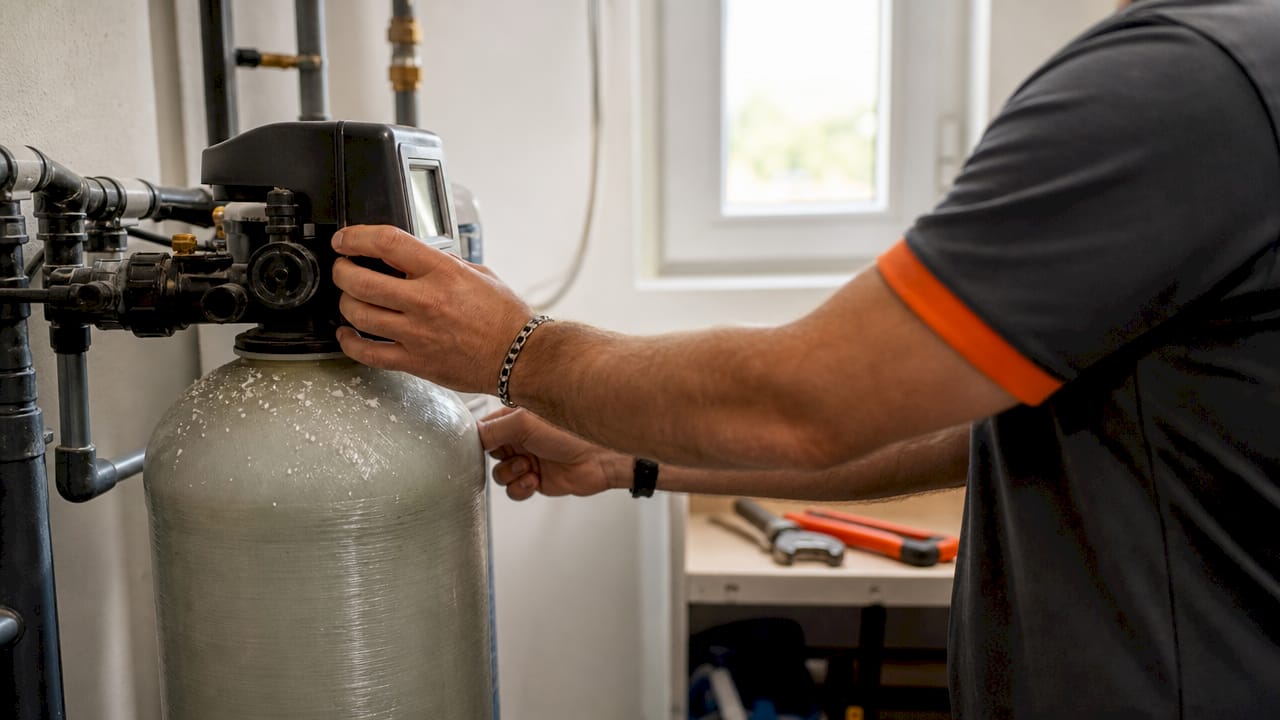
Demand-initiated regeneration (DIR) softeners are the clear choice for homes with septic systems. DIR softeners discharge significantly less salt and water than timer-based models because they only regenerate when the resin bed is actually exhausted. Timer-based units run on a fixed schedule regardless of actual water use, which means they often regenerate unnecessarily and dump excess brine into your tank.
| Softener Type | Regeneration Trigger | Salt and Water Use | Septic Risk |
|---|---|---|---|
| Timer-based | Fixed schedule | Higher | Elevated |
| Demand-initiated (DIR) | Actual water hardness | Lower | Minimal |
Salt selection matters as much as softener type. Switching from sodium chloride to potassium chloride reduces sodium accumulation in clay soils and is a practical step for homeowners on lots with poor drainage. Potassium chloride costs more per bag, but it eliminates the long-term sodium buildup that degrades drain field soil structure.
Discharge routing is the third lever you can pull. Three options exist beyond routing discharge directly into your septic tank:
- Dry well: A separate underground pit that receives softener backwash only. Installation typically runs $500–$1,500 and requires permits. This is the safest configuration where local codes allow it.
- Daylight discharge: Routing discharge to a surface outlet away from the drain field. Legal in some jurisdictions but not all.
- Municipal sewer connection: Where available, connecting softener discharge to a city sewer line bypasses the septic system entirely.
Pro Tip: Before routing discharge to a dry well, verify local codes. Some states classify softener backwash as wastewater requiring full septic treatment, which makes a separate dry well illegal without special approval.
How to safely install and manage softener discharge with a septic system
Safe installation starts before you buy the softener. These steps protect your system from the first regeneration cycle.
- Verify local regulations. Check with your county health department or building office. States like Massachusetts enforce Title 5, which restricts softener discharge without prior approval and can affect home inspections.
- Pull the right permits. Any new discharge line connection typically requires a plumbing permit. Skipping this step creates liability at resale.
- Choose a DIR softener. Select a demand-initiated regeneration model sized correctly for your household’s water hardness and daily usage.
- Calculate your system’s hydraulic capacity. Confirm that one regeneration cycle stays under 15% of your tank’s daily rated capacity.
- Connect the discharge line properly. Route the line to the inlet side of the septic tank, not the outlet. This gives solids maximum settling time before the effluent reaches the drain field.
- Set regeneration timing. Program cycles for 2:00 AM to 4:00 AM when household water use is at its lowest.
- Monitor the system for the first 90 days. Watch for slow drains, gurgling pipes, or standing water near the drain field. These are early signs of hydraulic stress.
Common mistakes that cause problems:
- Connecting the discharge line to the outlet side of the tank, which sends unsettled solids directly to the drain field.
- Ignoring tank capacity and running regeneration cycles daily on a small system.
- Using an old timer-based softener and assuming it behaves like a modern DIR unit.
- Skipping the perc test on clay-heavy lots before installation.
Good septic system dosing practices apply here too. Spreading water loads evenly across the day reduces peak stress on both the tank and the drain field. The same logic that applies to laundry loads applies to softener regeneration. Spacing out high-volume events protects the bacterial balance your tank depends on. For more on protecting your drain field from high water volumes, the guidance on managing wash water loads applies directly to softener discharge management.
Key Takeaways
Water softener discharge is safe for most septic systems when regeneration volume stays under 15% of daily hydraulic capacity and a demand-initiated softener is used.
| Point | Details |
|---|---|
| Sodium is rarely the problem | Modern softeners discharge 12–25 mg/L sodium, far below the 1,000 mg/L harm threshold. |
| Volume surges cause real damage | A single cycle dumping 50–150 gallons can overwhelm a tank and push solids to the drain field. |
| Soil type changes the risk level | Clay soils deflocculate under sodium exposure, sealing drain field pores and causing field failure. |
| DIR softeners protect septic systems | Demand-initiated regeneration units use less salt and water than timer-based models. |
| Local regulations vary significantly | States like Massachusetts restrict softener discharge under Title 5, requiring permits or alternative routing. |
What I tell every homeowner who asks me about this
The question I hear most often is: “Will my water softener ruin my septic system?” The honest answer is: probably not, if you set it up right. But I have seen drain fields fail because a homeowner installed a 20-year-old timer-based softener and let it run daily cycles without ever checking the tank capacity. That is not a salt problem. That is a volume problem that compounds quietly over years until the yard turns into a swamp.
The switch to potassium chloride is one of the easiest wins I recommend. Most homeowners resist it because it costs more per bag. But if you are on a clay lot in Alamance County or anywhere in the Piedmont, the long-term cost of sodium buildup in your drain field dwarfs the difference in salt price. I have seen drain field repairs run well past what a homeowner paid for their entire original system.
My strongest advice: do not assume your system can handle whatever you throw at it. Get a perc test if you have not had one. Know your tank’s rated capacity. And if you are adding a softener to an existing system, have a septic professional evaluate the setup before the first regeneration cycle runs. Catching a mismatch before installation costs almost nothing. Fixing a failed drain field costs a great deal. For homeowners thinking about protecting their drain field long-term, the investment in a proper evaluation pays for itself many times over.
— Jason
Jmseptic helps you get the setup right from the start
Homeowners across Alamance County and the Piedmont Triad trust Jmseptic for honest, experienced guidance on septic system design and compatibility. Whether you are adding a water softener to an existing system or planning a new installation that accounts for softener discharge from day one, Jmseptic evaluates your soil, tank capacity, and local code requirements before any work begins.

Jmseptic specializes in systems built for real-world household demands, including homes with water softeners. If you are building new or replacing an aging system, the 2026 new construction septic guide walks through how modern systems are designed to handle variable water loads safely. Call Jmseptic to schedule an evaluation and get a clear picture of what your system can handle.
FAQ
Does water softener discharge kill septic bacteria?
Modern softeners discharge sodium at 12–25 mg/L, far below the 1,000 mg/L level that harms septic bacteria. Bacterial die-off from softener discharge is not a documented risk in properly operating systems.
How much discharge is safe for a septic tank?
Regeneration volume stays safe when it remains under 15% of the system’s daily hydraulic capacity. For a system rated at 1,000 gallons per day, that means no more than 150 gallons per regeneration cycle.
Can I route softener discharge to a separate dry well?
A dry well is the safest discharge option where local codes allow it, with installation costs typically running $500–$1,500. Some states classify softener backwash as regulated wastewater, which requires permits or prohibits dry wells entirely.
What is the best salt for a septic-connected softener?
Potassium chloride is the preferred choice for homes on septic systems, particularly those with clay-heavy soils. It reduces sodium accumulation in the drain field and lowers the long-term risk of soil deflocculation and pore clogging.
Are water softeners regulated differently by state?
Yes. Massachusetts under Title 5 restricts softener discharge into septic systems without prior approval, and violations can affect home inspections and resale. Always verify your county and state requirements before installation.