
Water Quality Plumbing: What Every Homeowner Must Know
Discover essential tips on water quality plumbing to ensure safe, clean drinking water in your home. Protect your family's health today!

Water quality plumbing is the practice of selecting materials, maintaining systems, and testing water to deliver safe, clean drinking water from every tap in your home. Your pipes, fittings, and fixtures do not simply carry water. They interact with it chemically, and those interactions determine whether what comes out of your faucet is safe to drink. This guide covers how plumbing affects water chemistry, which testing methods actually work, what problems to watch for, and how filtration systems fit into a complete water safety strategy.
How does plumbing affect water quality in a home?
The plumbing inside your walls is not a neutral delivery system. Every material it contains, from copper supply lines to brass fittings to older lead solder joints, can release trace metals into your water depending on water chemistry and how long water sits in the pipes.
Water pH is the single biggest driver of metal leaching. Acidic water leaches lead and copper from pipes and fittings, sometimes showing up as blue-green stains on sinks and tubs before any visible leak appears. Those stains are not cosmetic. They signal that your water is dissolving your plumbing infrastructure and carrying those metals to your glass.
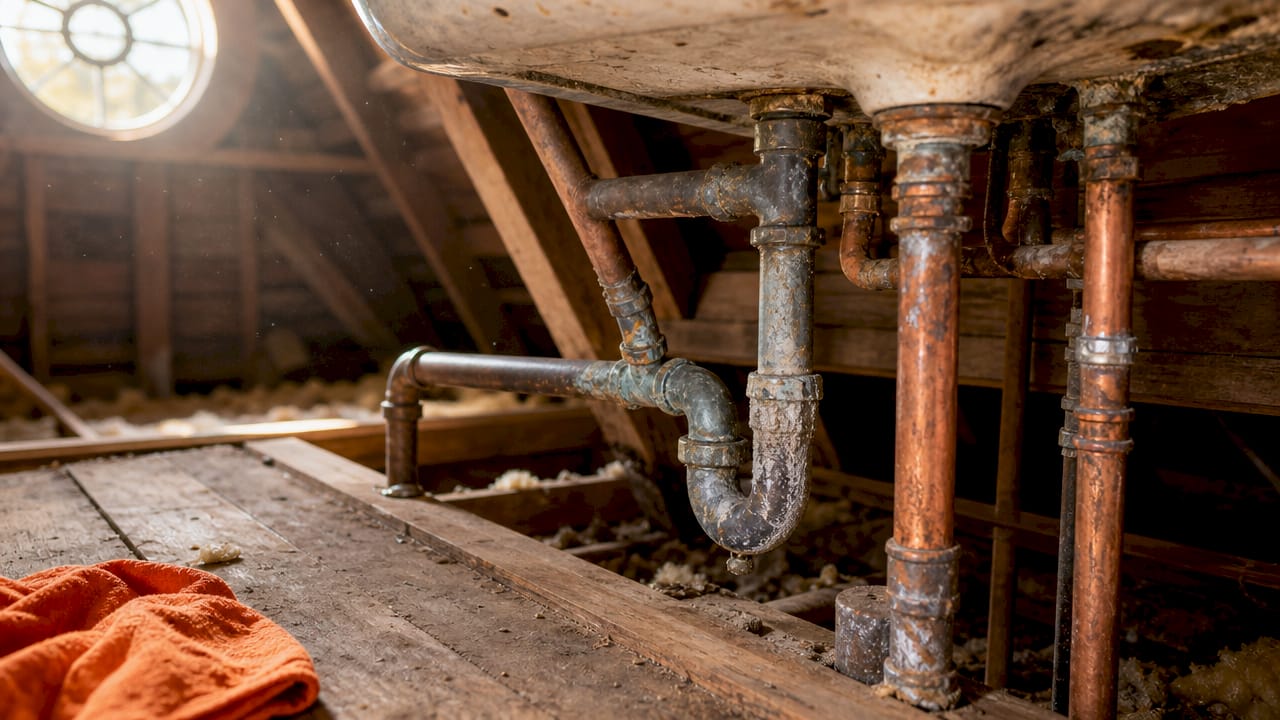
Stagnation makes the problem worse. Water that sits overnight in pipes picks up higher concentrations of metals than water that has been running for a few minutes. This is why the first draw from a tap in the morning carries the greatest contamination risk, especially in homes with older plumbing or brass fixtures.
Installation practices matter just as much as materials. Overuse of jointing compounds creates debris accumulation inside pipes and encourages biofilm growth, which is a thin layer of bacteria that clings to pipe walls and can contaminate water passing through. A plumber who applies thread sealant correctly leaves no excess inside the pipe. One who does not creates a long-term water safety problem that is invisible until it causes illness or a failed water test.
Mineral scale is a separate but related issue. Hard water deposits calcium and magnesium on the inner walls of pipes and appliances, reducing flow over time and affecting the taste of your water. Scale also insulates heating elements in water heaters and dishwashers, forcing them to work harder to reach temperature.
- Lead solder and older brass fittings are the most common sources of lead contamination in pre-1986 homes
- Copper pipes in acidic water produce blue-green staining and elevated copper levels in drinking water
- Biofilm from excess jointing compound creates a persistent bacterial contamination risk
- Scale buildup from hard water reduces appliance efficiency and affects water taste and flow
Pro Tip: Run your cold water tap for 30 to 60 seconds before using it for drinking or cooking, especially after any period of non-use. This flushes stagnant water from the supply line and reduces your exposure to leached metals.
What testing methods and standards ensure plumbing water safety?
Testing is the only way to know what is actually in your water. Guessing based on taste, color, or smell misses the most dangerous contaminants, including lead, arsenic, and PFAS, which are all colorless and odorless.
Here is how the main testing options compare:
| Testing Method | What It Detects | Accuracy Level |
|---|---|---|
| Home test strips | pH, chlorine, hardness, nitrates | Low to moderate |
| TDS meter | Total dissolved solids (mineral ions) | Mineral content only |
| Mail-in certified lab | Lead, PFAS, arsenic, bacteria, nitrates | High, legally defensible |
| Local health department | Bacteria, nitrates, basic chemistry | Moderate to high |
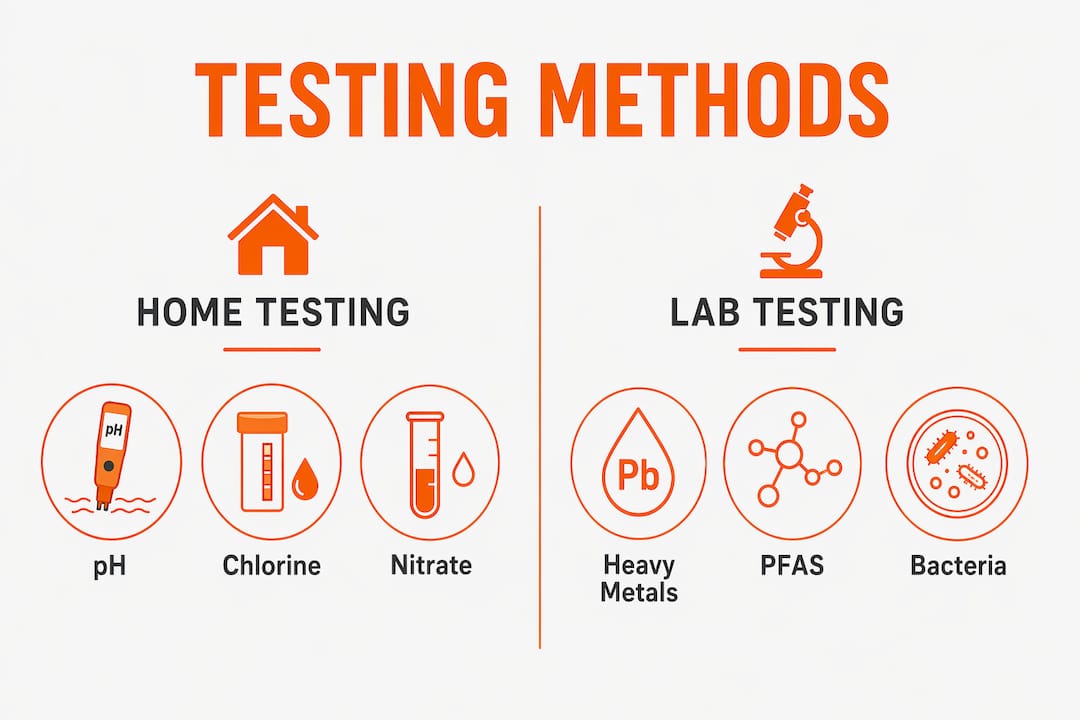
TDS meters measure conductivity and give you a number representing dissolved minerals, but they cannot detect lead, bacteria, or PFAS. A low TDS reading does not mean your water is safe. It means it has low mineral content. These two facts are not the same thing.
Certified laboratory testing is the only method that accurately detects heavy metals, PFAS compounds, and bacterial contamination. Home kits are useful for monitoring pH and hardness between lab tests, but they are not a substitute for professional analysis when health is at stake.
For lead specifically, the EPA sets its action level at 15 ppb, requiring corrective action when more than 10% of samples exceed this threshold. When testing for lead, you need a first-draw sample collected after water has sat in the pipes for at least six hours. A flushed sample will underreport lead because it comes from the municipal main rather than your household plumbing.
For private well owners, the recommended testing schedule is:
- Test for bacteria and nitrates every year, since both can change seasonally and after heavy rainfall
- Test pH and hardness every few months to track changes in water chemistry that affect your plumbing
- Run a comprehensive lab panel every three to five years covering heavy metals, PFAS, volatile organic compounds, and pesticides
- Test immediately after any nearby construction, flooding, or changes in water taste, color, or odor
Pro Tip: When submitting a mail-in lab sample for lead, collect it first thing in the morning before running any water. Label it clearly as a “first-draw” sample. Labs need this context to interpret results correctly.
What are common plumbing water quality problems and how can you prevent them?
Most water quality problems in residential plumbing fall into two categories: chemistry-driven damage and maintenance failures. Understanding which one you are dealing with determines the right fix.
| Problem | Cause | Prevention |
|---|---|---|
| Scale buildup | Hard water minerals depositing on pipe walls | Water softener, descaling maintenance |
| Metal leaching | Acidic water corroding copper or lead fittings | pH correction, pipe replacement |
| Pinhole leaks | Corrosive water thinning copper pipe walls | Regular inspection, pH monitoring |
| Biofilm contamination | Excess jointing compound, stagnant sections | Correct installation, regular flushing |
| Chlorine degradation | High chlorine levels attacking rubber seals | Activated carbon filtration |
Hard water causes appliances to consume up to 30% more energy because scale insulates heating elements and forces them to run longer cycles. That energy penalty compounds over years. A water heater that runs 30% harder than it should will fail years ahead of schedule and cost you more in utility bills every month until it does.
Corrosive acidic water is the more urgent problem. Low pH accelerates metal leaching from copper and lead-containing fittings, and the damage is cumulative. By the time you see blue-green staining or notice a metallic taste, your pipes have already been thinning for months or years.
Practical prevention strategies that work:
- Test water pH annually and treat with a calcite neutralizer filter if pH falls below 7.0
- Replace pre-1986 plumbing that may contain lead solder or lead-lined pipes, especially in older homes in Burlington, Graham, or Mebane
- Flush morning water before drinking. Daily flushing reduces metal exposure by clearing stagnant water that has been in contact with pipe surfaces overnight
- Schedule annual plumbing inspections to catch pinhole leaks, scale buildup, and fitting corrosion before they become failures
- Use NSF-certified plumbing materials for any repairs or upgrades, since NSF International certification confirms materials meet plumbing water standards for drinking water contact
How do water filtration and treatment systems complement good plumbing?
Filtration and treatment systems are not a substitute for good plumbing. They are the final layer of protection that handles what your pipes and water source cannot fully control on their own.
The right system depends entirely on what your water test reveals. Installing a water softener when your problem is bacterial contamination does nothing. Matching treatment to chemistry is the core principle of water quality improvement.
- Water softeners use ion exchange to remove calcium and magnesium, preventing scale in pipes and appliances. They are the right choice for hard water above 7 grains per gallon, which is common in much of North Carolina’s Piedmont region
- Reverse osmosis systems force water through a semipermeable membrane that removes lead, arsenic, nitrates, and PFAS. Point-of-use RO units installed under the kitchen sink are the most practical option for most homeowners
- Activated carbon filters remove chlorine, chloramines, and volatile organic compounds that affect taste and degrade rubber seals in fixtures. Whole-house carbon filters protect every tap and appliance simultaneously
- UV treatment systems use ultraviolet light to neutralize bacteria and viruses without adding chemicals. UV light technology is particularly valuable for private well owners in Alamance County where bacterial contamination is a documented risk
Maintenance is where most homeowners fail. A reverse osmosis membrane that has not been replaced on schedule stops filtering effectively and can actually harbor bacteria. Carbon filter cartridges that are overdue for replacement become saturated and release contaminants back into the water. Every filtration system has a service schedule. Following it is not optional if you want the system to work.
Pro Tip: Write the installation date on every filter cartridge with a permanent marker. Set a calendar reminder for the replacement interval. A forgotten filter is worse than no filter because it creates a false sense of security.
When you are planning a plumbing upgrade, such as replacing supply lines or adding a new bathroom, that is the right time to integrate filtration. Leading plumbers assess water chemistry before selecting materials, so the pipes, fittings, and treatment systems all work together rather than against each other.
Key takeaways
Safe water plumbing requires testing first, then matching pipe materials, maintenance schedules, and filtration systems to your specific water chemistry.
| Point | Details |
|---|---|
| Test before you treat | Certified lab testing is the only accurate method for detecting lead, PFAS, and bacteria in drinking water. |
| Plumbing materials affect water chemistry | Acidic water leaches lead and copper from pipes; pH testing and material upgrades prevent contamination. |
| Hard water costs money | Scale buildup forces appliances to use up to 30% more energy, shortening their lifespan significantly. |
| Match filtration to your water test | Reverse osmosis handles heavy metals and PFAS; UV systems address bacterial risk; softeners target hardness. |
| Flush morning water daily | Running your tap for 30 to 60 seconds before drinking removes stagnant, metal-rich water from supply lines. |
What I’ve learned after years of watching water problems get ignored
Most homeowners do not think about water quality until something goes wrong. A metallic taste, a blue stain on the porcelain, a water heater that died five years early. By then, the problem has been building for a long time.
The single most common mistake I see is treating water quality as a filtration problem rather than a plumbing problem. People install a pitcher filter or a faucet attachment and consider the issue handled. But if your pipes are leaching lead because your water is acidic, a basic carbon filter does nothing for that. You need a water test, a pH reading, and a real conversation about what your plumbing is made of and how old it is.
The second mistake is skipping the pre-upgrade assessment. Before any plumbing renovation, you need to know your water chemistry. Installing copper pipes in a home with acidic well water is a decision that will cost you in pinhole leaks and elevated copper levels within a few years. The right materials for your water depend on what your water actually is, not what you assume it to be.
Private well owners in Alamance County carry more responsibility than city water customers because there is no municipal treatment system between the aquifer and their tap. Annual bacteria and nitrate testing is not excessive caution. It is the minimum standard for responsible property management. I have seen wells test clean for years and then show bacterial contamination after a single wet season. Water does not stay the same.
The good news is that none of this is complicated once you know your baseline. Get a certified lab test. Fix the chemistry. Choose the right materials. Maintain your filtration system. That sequence, done consistently, is what keeps water safe for the long term.
— Jason
How Jmseptic helps protect your water and plumbing system

If you are a homeowner or property manager in Alamance County, Mebane, Burlington, or the surrounding Piedmont Triad area, your water quality is directly connected to the health of your septic system. A failing or overloaded septic system can contaminate groundwater and compromise your well, creating exactly the kind of bacterial and nitrate problems that show up in water tests. Jmseptic specializes in septic system maintenance and repair that protects both your plumbing and your water supply. From hydro jetting and sewer line cleaning to full system inspections, the team at Jmseptic delivers the preventative maintenance that keeps your water safe and your system running. Call today for a professional assessment.
FAQ
What is water quality plumbing?
Water quality plumbing refers to the practices, materials, and maintenance strategies used to deliver safe, clean drinking water through a home’s plumbing system. It covers pipe material selection, water chemistry management, testing, and filtration.
How often should I test my home’s water quality?
Private well owners should test bacteria and nitrates annually and run a full certified lab panel every three to five years. City water customers should test after any plumbing work or if taste, color, or odor changes.
Can a TDS meter tell me if my water is safe to drink?
No. TDS meters only measure mineral conductivity and cannot detect lead, bacteria, PFAS, or arsenic. A low TDS reading does not confirm water safety.
What is the EPA action level for lead in drinking water?
The EPA action level for lead is 15 parts per billion. Corrective action is required when more than 10% of samples from a water system exceed this threshold.
Does a water softener improve drinking water safety?
A water softener removes hardness minerals like calcium and magnesium, which protects pipes and appliances, but it does not remove lead, bacteria, or PFAS. For full drinking water safety, pair a softener with a reverse osmosis or UV treatment system matched to your water test results.