
Water Jetting Septic Lines: A Homeowner’s Safety Guide
Discover how water jetting septic lines can effectively clear clogs and restore flow in your home. Learn this safe, efficient method today!

Water jetting septic lines is defined as a high-pressure cleaning method that blasts water through your septic pipes at 1,500 to 4,000 PSI to remove grease, sludge, tree roots, and other blockages completely. The industry term for this process is hydro jetting, and it outperforms traditional snaking by scrubbing the entire pipe interior rather than just punching a hole through a clog. According to the National Association of Wastewater Technicians, hydro jetting clears 90% of common septic blockages. That figure matters because it means most homeowners dealing with slow drains or backups can restore full flow without digging up their yard or replacing pipe sections.
What is water jetting septic lines and why does it work?
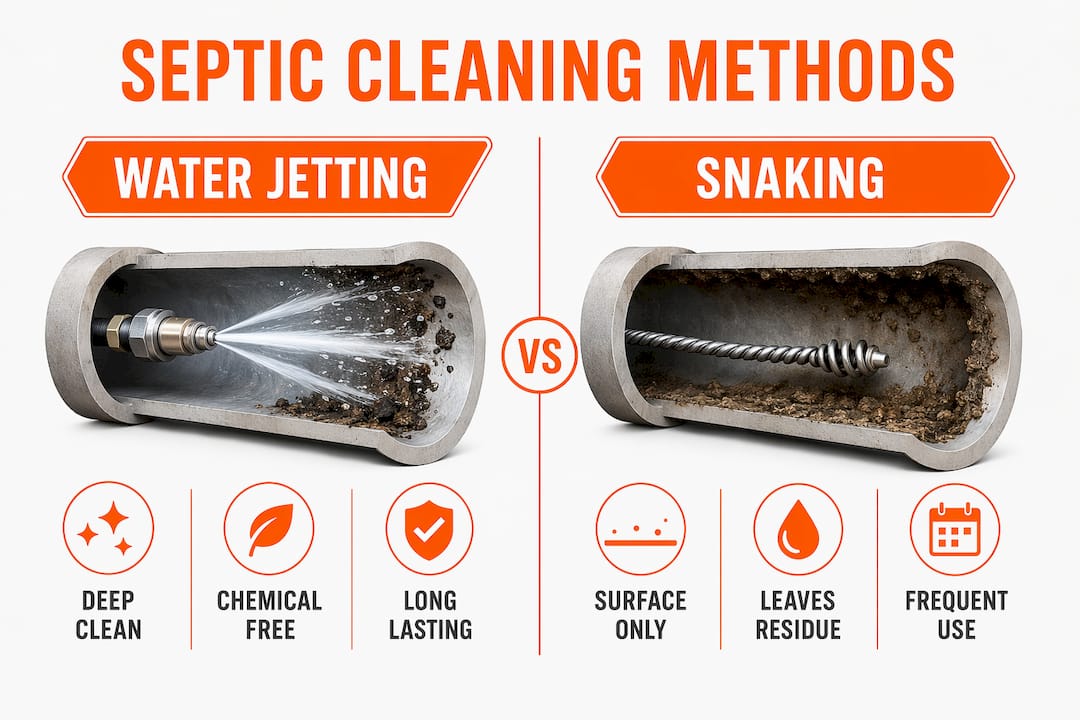
Water jetting septic lines works because pressurized water physically scours buildup from every surface inside the pipe, not just the center channel. A standard snake or auger creates a narrow opening through a clog, leaving grease film and root tendrils clinging to the pipe walls. Those remnants rebuild into the next blockage within months. Hydro jetting removes the entire mass and leaves the pipe wall clean, which is why results last significantly longer.
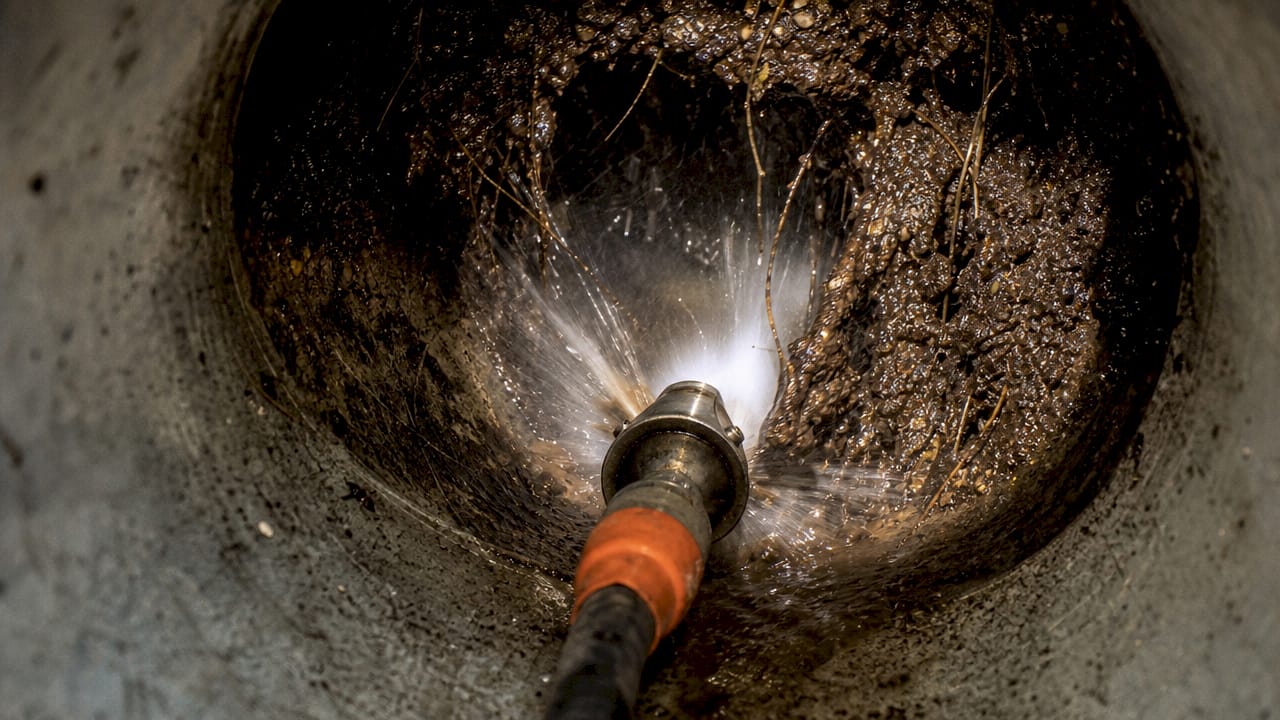
Professional equipment operates between 1,500 and 4,000 PSI, with industrial systems reaching 8,000 PSI for severe root intrusion or scale buildup. The pressure is paired with specialized nozzles: scouring nozzles for grease, chisel nozzles for hardened scale or roots, and 360-degree nozzles for final cleaning passes. The combination of correct pressure and correct nozzle is what separates a thorough clean from a pipe failure.
Drain line water jetting is also chemical-free, which matters for septic systems specifically. Chemical drain cleaners kill the beneficial bacteria inside your tank that break down waste. Hydro jetting uses only water, so your system’s biological balance stays intact after the service.
What you need before water jetting septic lines
Before any high-pressure water enters your pipes, a video camera inspection is required. Camera inspection before jetting identifies pipe condition, blockage type, and structural integrity so the technician can select the right pressure and nozzle. Skipping this step on aging or brittle pipes risks a blowout that turns a $300 cleaning into a $3,000 repair.
Here is what a professional needs on site before starting:
- A professional-grade jetter unit rated for the pipe diameter and blockage type
- Scouring, rear-facing, and 360-degree nozzles matched to the job
- A video inspection camera to assess pipe condition before pressurizing
- Access to the cleanout port or septic tank inlet
- Knowledge of the pipe material (PVC, cast iron, clay tile) to set safe pressure limits
Scheduling matters as much as equipment. Maintenance frequency for newer homes runs every 18 to 24 months, while older homes or properties with heavy tree cover near the drain field need service every 12 to 18 months. Coordinating jetting with your septic pumping cycle, which typically runs every 3 to 5 years, maximizes the value of both services.
Pro Tip: Schedule your hydro jetting appointment on the same day as your septic pump-out. The two services work together: jetting pushes debris into the tank, and pumping removes it immediately. Doing them separately means debris sits in the tank until the next pump-out.
How to jet septic lines safely: step-by-step
The sequence of steps in high pressure septic jetting is not optional. Doing them out of order can push sludge into your drain field, which is one of the most expensive septic repairs a homeowner can face.
- Run the camera inspection first. Feed the camera through the cleanout or inlet access point. Note any cracks, root intrusion points, collapsed sections, or heavy grease buildup. This determines your nozzle choice and maximum safe PSI.
- Jet the inlet line before pumping. Jetting the inlet line pre-pumping pushes loosened debris into the tank, where it gets removed during the pump-out. Never jet the inlet line after pumping, or you send debris back into a clean tank.
- Select the correct nozzle. Use a scouring nozzle for grease-heavy lines, a chisel or root-cutting nozzle for tree root intrusion, and a 360-degree nozzle for the final pass to polish the pipe wall. Nozzle selection matters more than raw pressure.
- Insert the hose and begin at low pressure. Start at 1,500 PSI and increase gradually based on what the camera showed. For PVC pipe in good condition, you can work up to 3,000 PSI. For older clay tile or cast iron, stay conservative.
- Make multiple passes. One pass rarely clears a heavily built-up line. Pull the hose back slowly while the rear-facing jets propel it forward, then repeat the pass two to three times until the camera confirms a clean pipe wall.
- Pump the tank. After the inlet line is clear, the pump truck removes the loosened material from the tank.
- Jet the outlet line post-pumping. Cleaning the outlet line after pumping prevents sludge from migrating toward the drain field. This step protects your most expensive septic component.
- Run a final camera pass. Confirm the pipe walls are clean and no structural damage occurred during jetting. Document the results for your maintenance records.
Pro Tip: Never jet directly inside the septic tank. The high-pressure water destroys the bacterial colonies that digest waste. Jetting belongs in the pipes leading to and from the tank, not inside it.
Here is a quick reference for pressure and nozzle selection by blockage type:
| Blockage type | Recommended nozzle | Starting PSI |
|---|---|---|
| Grease buildup | Scouring nozzle | 1,500 PSI |
| Tree root intrusion | Chisel or root-cutting nozzle | 2,500 PSI |
| Sludge and sediment | Rear-facing jet nozzle | 1,500 PSI |
| Final pipe polish | 360-degree nozzle | 2,000 PSI |
Common problems when troubleshooting septic line jetting
Even with proper technique, some situations require you to stop and reassess before continuing.
- Pipe damage from excess pressure. High pressure on compromised pipes causes fractures or joint separation. If the camera shows cracks, offset joints, or corrosion, reduce PSI significantly or stop and consult a professional before proceeding.
- Persistent blockages after multiple passes. If three full passes do not clear the line, the blockage may be a collapsed pipe section rather than organic buildup. Jetting cannot fix a structural failure. Call a professional for excavation and repair.
- Root intrusion that keeps returning. Tree roots grow back after jetting if the source tree is still alive and the pipe has a crack or open joint. Jetting removes the roots, but a root barrier treatment or pipe relining is needed to prevent regrowth.
- Grease buildup in kitchen drain lines. Grease is one of the most common causes of septic line blockages in residential systems. Scouring nozzles handle it well, but homes with heavy grease loads may need jetting every 12 months rather than the standard 18 to 24 month cycle.
Hydro jetting should never be performed inside the septic tank itself. The beneficial bacteria living in the tank are responsible for breaking down solid waste. Disrupting that ecosystem with high-pressure water forces the system to restart its biological cycle, which can take weeks and may cause temporary system failure.
If you notice sewage backing up into the house during jetting, stop immediately. This signals either a blockage downstream of where you are working or a drain field that is already saturated and cannot accept additional flow.
How water jetting compares to other septic line cleaning methods
Choosing the right cleaning method depends on your blockage type, pipe age, and budget. The table below summarizes the key differences.
| Method | Cleaning depth | Residue left | Typical interval | Safe for septic bacteria |
|---|---|---|---|---|
| Hydro jetting | Full pipe circumference | None | 18 to 24 months | Yes |
| Snaking or augering | Center channel only | Grease film remains | 6 to 12 months | Yes |
| Chemical drain cleaners | Partial dissolving | Chemical residue | Not recommended | No |
Snaking only punches a hole through a clog, leaving buildup on the pipe walls that rebuilds quickly. Hydro jetting scrubs the entire interior, which is why it delivers longer-lasting results and reduces how often you need service. Chemical cleaners are the worst option for septic systems specifically. They kill the bacteria your tank depends on, and the temporary clearing they provide is not worth the biological damage.
Pro Tip: If a plumber recommends snaking as your primary maintenance tool for a septic system, ask whether they also offer camera inspection. A technician who skips the camera is guessing at the blockage type, and that guess can cost you significantly if the pipe is already compromised.
The benefits of water jetting over other methods are clearest in homes with older pipes, heavy tree cover, or a history of repeat blockages. For those properties, jetting is not just the better option. It is the only option that addresses the root cause rather than the symptom.
Key takeaways
Water jetting septic lines is the most thorough and longest-lasting method for clearing blockages, and it works best when paired with a camera inspection and coordinated with your regular pump-out schedule.
| Point | Details |
|---|---|
| Hydro jetting clears 90% of blockages | It removes grease, roots, and sludge from the full pipe interior, not just the center. |
| Camera inspection is non-negotiable | Skipping it risks pipe damage from pressure applied to already-compromised sections. |
| Sequence determines success | Jet the inlet line before pumping and the outlet line after to protect the drain field. |
| Nozzle choice beats raw PSI | Match the nozzle to the blockage type for effective cleaning without pipe damage. |
| Maintenance intervals vary by home | Newer homes need service every 18 to 24 months; older or high-risk homes every 12 to 18 months. |
What I’ve learned after years of septic work in Alamance County
Most homeowners call us after a snake job failed for the second or third time. That pattern tells me something: snaking is overused as a default fix, and it trains homeowners to expect temporary relief rather than a real solution. The clog comes back, they call again, and the cycle repeats for years while grease and root mass quietly builds up toward a drain field failure.
The misconception I hear most often is that hydro jetting cleans the tank. It does not. Jetting cleans the pipes. The tank requires pumping, and those two services work together rather than substituting for each other. Homeowners who understand that distinction make better maintenance decisions and avoid the expensive surprises that come from neglecting one side of the equation.
I also want to be direct about DIY jetting: consumer-grade pressure washers do not reach the PSI or flow rate needed for effective septic line cleaning. A garden-variety pressure washer at 2,000 PSI with a narrow water supply cannot replicate what a professional jetter does. The equipment gap is real, and using the wrong tool on aging pipes creates damage that costs far more than the service would have. Coordinating jetting with septic pumping schedules is the single most cost-effective maintenance habit a homeowner can build.
The environmental case for jetting over chemicals is also stronger than most people realize. No chemicals enter your soil, your tank bacteria stay healthy, and your drain field stays protected. For homeowners in Alamance County with well water nearby, that matters.
— Jason
Get professional hydro jetting from Jmseptic in Alamance County
Jmseptic serves Burlington, Mebane, Elon, Graham, Whitsett, and McLeansville with professional hydro jetting and septic maintenance. Every job starts with a camera inspection so you know exactly what is in your pipes before any pressure is applied.

If you are dealing with slow drains, sewage odors, or a system that keeps backing up, the problem is almost always in the lines. Jmseptic’s hydro jetting service uses calibrated pressure and professional-grade nozzles to clear your lines completely, not temporarily. You can also review Jmseptic’s guidance on preventing septic failure to build a maintenance plan that keeps your system running for the long term. Call Jmseptic before a slow drain becomes a failed drain field.
FAQ
What does water jetting septic lines actually do?
Water jetting septic lines uses high-pressure water, typically between 1,500 and 4,000 PSI, to scour the full interior of your septic pipes and remove grease, sludge, roots, and buildup. Unlike snaking, it cleans the entire pipe circumference rather than just clearing a path through the center.
How often should you jet septic lines?
Newer homes need septic line jetting every 18 to 24 months, while older homes or properties with heavy tree root activity near the lines need service every 12 to 18 months. Coordinating jetting with your septic pump-out every 3 to 5 years maximizes the benefit of both services.
Can you jet a septic line yourself?
Consumer pressure washers lack the PSI and flow rate needed for effective septic line cleaning, and using the wrong pressure on aging pipes risks cracking or joint separation. Professional equipment and a camera inspection are required to do the job safely.
Is hydro jetting safe for all septic pipes?
Hydro jetting is safe for pipes in good structural condition, but camera inspection first is required to identify cracks, corrosion, or offset joints that could fail under pressure. A technician adjusts PSI based on pipe material and condition to avoid damage.
Does hydro jetting clean the septic tank?
Hydro jetting cleans only the inlet and outlet pipes, not the tank itself. The tank requires pumping to remove sludge and scum, and jetting inside the tank would destroy the beneficial bacteria responsible for breaking down waste.