
Types of Septic Systems: A Homeowner’s Guide
Discover the types of septic systems suited for your home. This guide helps you choose wisely to avoid costly mistakes and hazards.

Most homeowners assume all septic systems work the same way. They don’t. There are multiple types of septic systems built for different soil conditions, lot sizes, water table depths, and household needs. Picking the wrong one, or not understanding what you have, can lead to failures that cost thousands of dollars and create serious health hazards on your property. This guide breaks down every major system type, how they compare, what they cost, and what you need to know to make a smart decision before installation or purchase.
Table of Contents
- Key takeaways
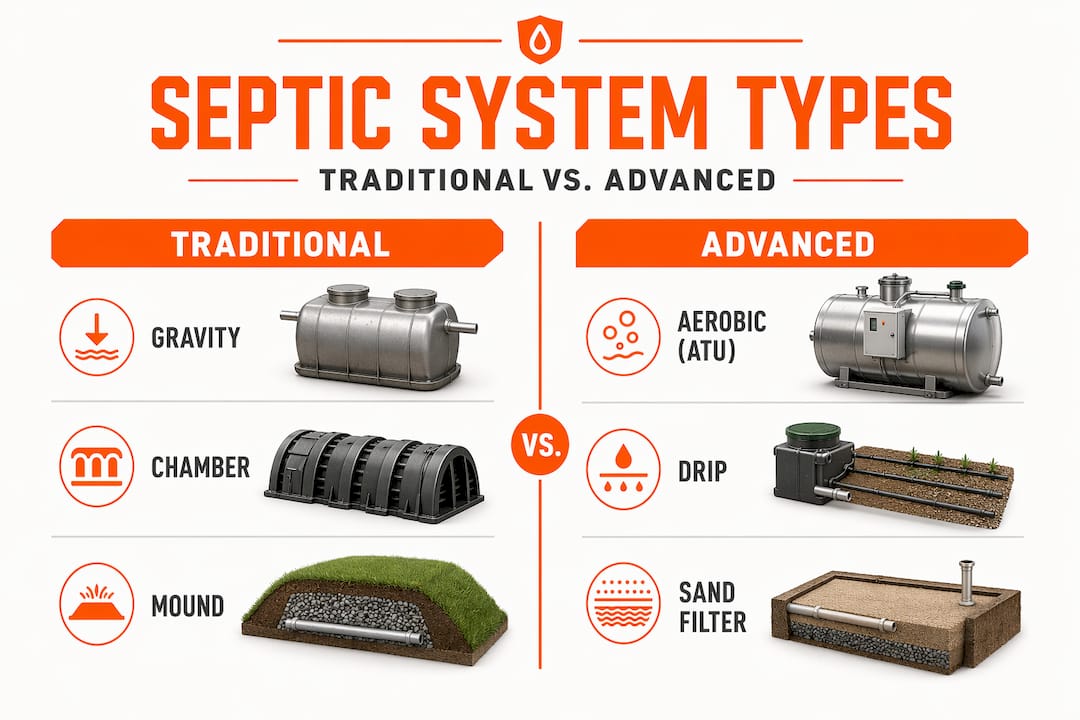
- Common types of septic systems explained
- Advanced and alternative septic system options
- How to choose and size the right system
- Maintenance basics and warning signs
- What I’ve learned from years in the field
- Ready to find the right system for your property?
- FAQ
Key takeaways
| Point | Details |
|---|---|
| Multiple system types exist | The right septic system depends on your soil, terrain, lot size, and local regulations. |
| Conventional systems dominate | Gravity-fed conventional systems handle the majority of U.S. residential installations at a lower upfront cost. |
| Advanced systems cost more | Aerobic, mound, and drip systems run $8,000 to $20,000 but are necessary for challenging sites. |
| Maintenance is non-negotiable | Pump your tank every 3 to 5 years and schedule inspections to avoid costly, preventable failures. |
| Sizing errors cause failures | Improper system sizing based on soil and household use is one of the leading causes of premature septic failure. |
Common types of septic systems explained
Understanding which system you need starts with knowing what each one actually does.
Conventional gravity systems
The conventional gravity septic system is the most widely used option in the country. Gravity-fed systems handle roughly 70 to 80% of U.S. residential septic installations, with installation costs typically ranging from $3,000 to $7,000. The concept is simple: wastewater flows from the home by gravity into a buried tank, where solids settle out and liquid effluent travels to a gravel-filled drain field for absorption into the soil. No pumps or electricity are needed under normal conditions.
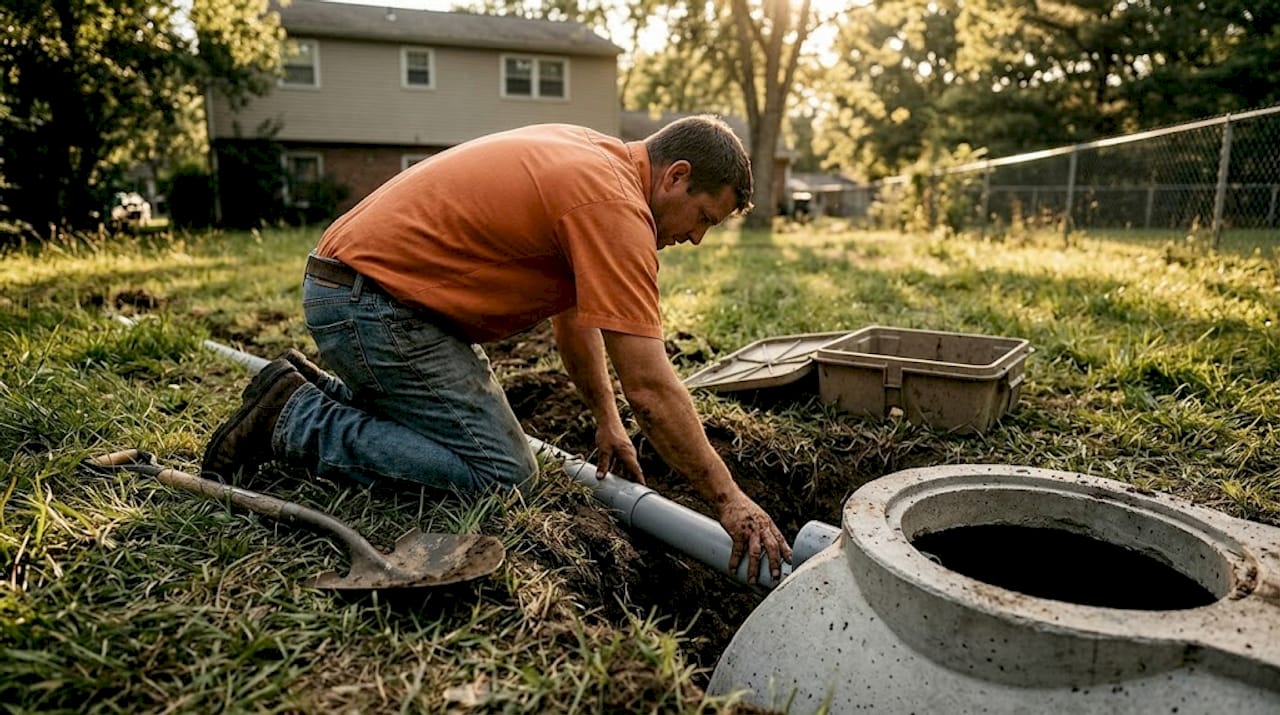
These systems work best on flat to gently sloping lots with well-draining soil and an adequate distance from the water table. They are the least expensive to install and the easiest to maintain. If your property allows for one, a conventional gravity system is usually the right starting point.
Chamber systems
Chamber systems are a gravel-less alternative to conventional systems. Instead of a gravel bed, they use a series of connected plastic arched chambers buried in the soil. Wastewater flows into the chambers and is absorbed through the open bottom directly into the surrounding soil. Because they skip the gravel, they are easier to transport and install in areas where gravel is expensive or hard to source.
They also tend to handle surge flows better. If your household uses water in heavy bursts, such as hosting guests or running multiple loads of laundry in a day, the larger volume capacity of chamber systems offers a real advantage over standard gravel drain fields.
Mound systems
When the soil is too shallow, too dense, or the water table sits too high, a mound system becomes necessary. Rather than burying the drain field below grade, a mound system builds up a raised bed of sand and gravel above the existing soil. A pump moves effluent from the tank up into the mound, where it filters down through the engineered fill before reaching native soil.
The added engineering means higher costs and more moving parts. But for properties with challenging conditions, a mound system is often the only approved option.
| System Type | Best For | Avg. Install Cost | Maintenance Frequency |
|---|---|---|---|
| Conventional gravity | Flat lots, good soil drainage | $3,000 to $7,000 | Every 3 to 5 years |
| Chamber system | Areas with gravel scarcity, surge use | $4,000 to $8,000 | Every 3 to 5 years |
| Mound system | High water table, poor soil depth | $10,000 to $20,000 | Every 1 to 3 years |
Pro Tip: Before committing to any system, ask your county health department for a copy of the site evaluation and soil test results. This one document tells you which systems are actually permitted on your lot and prevents costly surprises.
Advanced and alternative septic system options
Some properties simply cannot support a conventional or mound system. That is where advanced treatment systems come in. Advanced systems such as aerobic units and drip distribution cost between $8,000 and $20,000, but they deliver higher treatment efficiency and are designed specifically for difficult sites.
Aerobic treatment units
Aerobic treatment units, commonly called ATUs, inject oxygen into the wastewater tank to accelerate bacterial breakdown. The result is treated effluent that is significantly cleaner than what comes out of a standard septic tank. That cleaner output matters on lots with tight setbacks, poor soil, or strict local environmental regulations.
The tradeoff is maintenance. ATUs include mechanical components including air pumps, timers, and spray heads that require regular inspection and servicing, often as often as every six months. These are not systems you can ignore and hope for the best.
Drip distribution systems
Drip distribution systems use pressurized tubing placed just below the soil surface to distribute small, precise doses of treated effluent throughout the drain area. Because the doses are small and timed, the soil never becomes saturated. This makes drip systems ideal for sloped or small lots where a traditional drain field would flood or encroach on property boundaries.
They require a treatment tank upstream (often an ATU) plus control panels, filters, and pumps. That adds complexity, but for the right property, no other system handles tight or sloped terrain as well.
Sand filter systems
Sand filter systems pass effluent through a lined bed of sand before it reaches the drain field or is discharged. The sand acts as a biological and physical filter, stripping out pathogens and suspended solids that a standard tank alone cannot remove. They are common in areas with poor native soil or near sensitive water bodies where strict treatment standards apply.
Here is a quick summary of what sets these advanced systems apart:
- Aerobic treatment units deliver high-quality effluent but require semi-annual professional maintenance.
- Drip distribution works on small or sloped lots but depends on upstream treatment and reliable pumps.
- Sand filters provide extra treatment for sites near waterways or with regulatory restrictions.
- All advanced systems carry higher upfront costs and need more frequent servicing than conventional options.
Choosing the right septic system impacts long-term cost and homeowner peace of mind well beyond the installation day.
How to choose and size the right system
Choosing between septic system options is not a preference decision. Your property largely makes the choice for you. Here are the critical factors that drive that decision:
-
Soil type and percolation rate. A perc test measures how fast water drains through your soil. Slow-draining clay soils rule out conventional gravity systems. Sandy soils drain fast but may require filters to protect groundwater. Precise soil percolation testing is the foundation of every good system design.
-
Water table depth. A water table that sits close to the surface limits your drain field depth. High water tables push you toward mound systems or advanced alternatives.
-
Lot size and setback requirements. Local health departments set minimum distances between your drain field and property lines, wells, and structures. A small lot may not have room for a conventional field, which forces you into drip distribution or other compact options.
-
Household size and water usage. Tank size and drain field area must match your daily water output. A four-bedroom home generates far more wastewater than a two-bedroom one. Many homeowners overlook precise design, which leads directly to costly repairs. If you are considering a custom-designed system, understanding these variables upfront saves money and prevents failures.
-
Local regulations. Alamance County and surrounding areas have specific permitting requirements. These rules determine which systems are approved, what inspections are required, and who can install them.
Pro Tip: Never size your system for today’s household. Size it for the maximum occupancy your home could realistically hold. Undersized systems fail early, and upsizing after installation is extremely expensive.
Maintenance basics and warning signs
Even the best-designed system fails without proper upkeep. Properly maintained systems last 25 to 30 years. Neglected ones fail in a fraction of that time.
The standard recommendation is to pump your tank every 3 to 5 years, but that interval shrinks with larger households or heavy water use. Garbage disposals, frequent laundry cycles, and homes with higher usage push solids into the system faster than average. Advanced systems with ATUs or pumps need professional checks even more frequently, often twice a year.
Watch for these warning signs that your system needs attention:
- Slow drains throughout the house (not just one fixture)
- Sewage odors inside the home or near the drain field
- Wet or spongy patches of grass over the drain field area
- Gurgling sounds from pipes after flushing or draining
- Sewage backing up into tubs, toilets, or floor drains
Delaying inspections turns minor fixes into expensive damage. A sobering example: 59% of septic tanks inspected in 2025 failed due to improper construction or maintenance. That is not bad luck. That is deferred care catching up with homeowners. Scheduling regular septic inspections and staying current on pumping are the simplest ways to protect a system worth thousands of dollars.
What I’ve learned from years in the field
From my experience, the single most overlooked step in septic system ownership is the site evaluation. Homeowners focus on cost. They want the cheapest system that passes inspection. What they should be asking is: which system fits this specific piece of ground?
I have seen conventional systems installed on lots where the soil never passed a proper perc test. The drain field saturates within a few years and the whole system has to be redesigned. That “cheaper” installation ends up costing double what the right system would have cost upfront. Proper system sizing and soil testing are not optional extras. They are the whole game.
The other mistake I see constantly is treating septic maintenance like it can wait. A vehicle you never service does not last 30 years. Neither does a septic system. The homeowners I see with functioning 25-year-old systems are the ones who pumped on schedule, called when something seemed off, and never flushed things they should not have. That is genuinely the whole formula.
My honest take on cost: spending more upfront for the right system with proper sizing nearly always beats choosing the cheapest option and paying for repairs every few years. Septic is not where you cut corners.
— Jason
Ready to find the right system for your property?
Understanding the different types of septic systems is only the first step. Getting the right one installed correctly, and keeping it running well, requires local expertise and honest advice.

Jmseptic serves homeowners across Burlington, Mebane, Elon, Graham, and the surrounding Alamance County area. Whether you need a new septic installation designed around your soil and lot conditions, or you need to understand what homeowners must know about conventional systems before making a decision, the Jmseptic team is ready to help. From first-time installations to emergency repairs, call us before a small problem becomes a costly one.
FAQ
What are the most common types of septic systems?
The most common types are conventional gravity systems, chamber systems, mound systems, aerobic treatment units, drip distribution systems, and sand filter systems. Conventional gravity systems account for the large majority of residential installations across the U.S.
Is a cesspool the same as a septic tank?
No. A cesspool stores waste without treating it, while a septic system treats wastewater biologically before dispersing the effluent into a drain field. Cesspools pose higher environmental risks and are banned or heavily restricted in most U.S. states.
Septic tank vs sewer: which is better?
It depends entirely on your location. Homes in rural areas typically rely on septic systems because public sewer lines do not reach them. Urban and suburban properties connected to a municipal line use the sewer. Neither is inherently better, but septic systems require active homeowner maintenance that a sewer connection does not.
How often should a septic tank be pumped?
Most households should pump their tank every 3 to 5 years, though homes with high water usage or smaller tanks may need more frequent service. Garbage disposal use and large households accelerate solid buildup and shorten that interval.
What are signs my septic system is failing?
Key warning signs include slow drains throughout the house, sewage odors near the yard or inside the home, standing water or soggy grass over the drain field, and sewage backing up into fixtures. Any of these signals call for a professional inspection without delay.