
Tight Tank Septic Systems: What NC Homeowners Must Know
Discover the essentials of tight tank septic systems for NC homeowners. Learn costs, regulations, and when to choose this option.

A tight tank septic system is a sealed, watertight holding tank with no outlet, designed to store all household wastewater until a pump truck removes it. Unlike conventional septic tanks, a tight tank performs zero treatment and disperses nothing into the soil. North Carolina homeowners in Alamance County and across the Piedmont Triad increasingly encounter this option when lot size, soil conditions, or proximity to water sources rule out a standard drainfield. Understanding what a tight tank is, what it costs, and how NC regulations govern it will save you from expensive surprises.
What is a tight tank septic system and how does it differ from conventional systems?
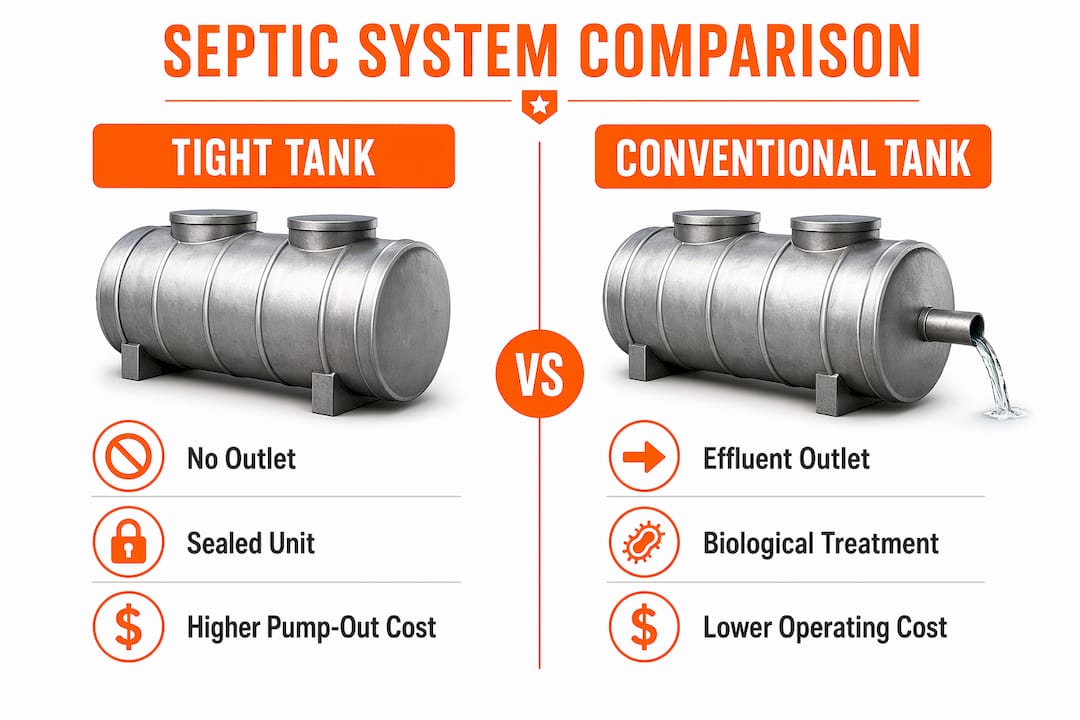
A tight tank stores all wastewater in a single sealed compartment with one lid and no effluent outlet. The industry term for this setup is a “holding tank,” and the two names are used interchangeably across North Carolina permitting documents. A conventional septic tank, by contrast, separates solids from liquid, allows treated effluent to flow into a drainfield, and only requires pumping every three to five years under normal household use.
The structural differences matter for every homeowner making this decision. A conventional septic tank has two compartments, inlet and outlet baffles, and a distribution system that moves effluent into the soil. A tight tank has none of those components. It is essentially a large, buried storage vessel. That simplicity makes installation faster and cheaper upfront, but it shifts all the ongoing work onto your pump schedule rather than onto the soil.
The environmental implications are also distinct. A conventional system treats wastewater biologically before it reaches groundwater. A tight tank holds raw sewage, so any crack, overfill, or missed pump appointment creates an immediate contamination risk. The EPA notes that alternative tanks need more frequent maintenance than conventional systems, and tight tanks sit at the far end of that spectrum.
| Feature | Tight tank | Conventional septic tank |
|---|---|---|
| Outlet to soil | None | Yes, via drainfield |
| Wastewater treatment | None | Primary biological treatment |
| Pump-out frequency | Every 2 to 4 weeks | Every 3 to 5 years |
| Number of compartments | One | Two |
| Installation cost | Lower | Higher |
| Long-term operating cost | Higher | Lower |
Pro Tip: If you are comparing systems for a small lot in Mebane or Burlington, ask your installer to run a 10-year cost projection, not just an installation quote. The pump-out costs on a tight tank can exceed the savings on installation within the first two years.
What are the North Carolina permit requirements for tight tank installation?
NC requires permits and county inspections for any septic system installation or repair, including tight tanks. The permitting pathway runs through your county environmental health department and follows three sequential steps under 15A NCAC 2H.
- Improvement Permit. You apply to your county health department with a site plan and soil evaluation. The county evaluates lot size, setbacks, soil type, and proximity to wells or water bodies. This permit authorizes you to proceed with system design.
- Construction Authorization. A certified septic system designer submits a system design that matches the site conditions from step one. For a tight tank, the design must justify why a conventional system is not feasible on the lot.
- Operation Permit. After installation and a county inspection confirming the work meets permit conditions, the county issues an Operation Permit. You cannot legally use the system until this permit is in hand.
NC septic regulations updated in 2024 clarify approved alternative systems, including holding tanks, and tighten the documentation requirements for each permitting stage. Tight tank use is not freely available as a first choice. Counties typically approve it only when site constraints make a conventional system or an approved alternative system impossible.
Certified NC septic installers must follow strict design and installation protocols, including setbacks from property lines, wells, and surface water. The installer must be licensed by the state, and the county inspector must sign off before you cover the tank. Skipping any step exposes you to fines, mandatory removal, and potential liability for groundwater contamination.
For a full walkthrough of the permitting steps specific to Alamance County, the NC septic permit process guide from Jmseptic covers each stage with local context.
How often should you pump and maintain a tight tank in North Carolina?
Tight tanks require pump-outs every 2 to 4 weeks for a typical household, compared to the three to five year interval for a conventional tank. That frequency is not a suggestion. It is the operational reality of a system that stores rather than treats. A family of four with normal water use can fill a 1,000-gallon tight tank in under two weeks.
Several factors shift that schedule in either direction:
- Tank capacity. A 1,500-gallon tank buys more time between pump-outs than a 1,000-gallon unit, but the difference is days, not weeks.
- Household water use. High-efficiency fixtures, shorter showers, and full dishwasher loads reduce daily wastewater volume and extend pump intervals.
- Number of occupants. Each additional person in the home adds roughly 50 to 75 gallons of wastewater per day.
- Seasonal variation. Guests during holidays or summer months can cut your normal pump interval in half.
During each pump-out, a good service provider should check more than just the tank level. Sludge depth, tank integrity, lid seals, and any signs of infiltration or exfiltration all matter. Maintenance records of pump-out dates and sludge depths help you and your provider spot trends before they become failures. A tank that fills faster than usual may signal a leak letting groundwater in, which is a permit violation in North Carolina.
Pro Tip: Keep a simple log on your phone or a notepad near the tank access point. Record the date, the gallons pumped, and any notes from the service provider. After six months, you will have enough data to predict your actual pump interval instead of guessing.
The consequences of a missed pump-out are not minor. Raw sewage backing up into your home or surfacing in your yard triggers both a health hazard and a regulatory violation. The cost of neglecting septic pumping extends well beyond the pump truck fee once cleanup, repairs, and potential fines enter the picture.
What does a tight tank septic system cost over time?
The upfront installation cost for a tight tank runs lower than a conventional septic system because there is no drainfield to excavate and no distribution system to install. In North Carolina, a basic tight tank installation typically costs less than a full conventional system, which can run $10,000 to $20,000 or more depending on lot conditions and system size. That initial savings is real, but it disappears quickly.
| Cost category | Tight tank | Conventional septic tank |
|---|---|---|
| Installation | Lower (tank only, no drainfield) | Higher (tank plus drainfield) |
| Pump-out frequency | Every 2 to 4 weeks | Every 3 to 5 years |
| Annual pump-out cost (estimate) | $3,000 to $8,000+ | $100 to $200 |
| Repair risk | Lower (simpler system) | Moderate (drainfield failure) |
| 10-year total cost | Often higher | Often lower |
The EPA confirms that higher ongoing pump-out costs make tight tanks expensive to operate over time despite lower installation costs. For most NC homeowners, a tight tank makes financial sense only when no other permitted option is available. If your lot qualifies for a low-pressure pipe system, a drip irrigation system, or another approved alternative under 15A NCAC 2H, those systems will almost always cost less over a 10-year horizon.
Permitting costs add to the picture as well. County fees, soil evaluations, and certified designer fees apply regardless of system type. Budget for those costs separately from the tank and installation labor.
Are tight tanks the right choice for your North Carolina property?
Tight tanks are the right choice in specific situations, not as a general preference. The cases where they make sense include lots too small for a drainfield, properties near sensitive water bodies where effluent dispersal is prohibited, and temporary installations during construction or system replacement.
Common misconceptions create real problems for homeowners. The biggest one is that “watertight” means low maintenance. The opposite is true. A watertight tank without timely pump-outs creates the same backup and contamination risks as any overloaded system, just faster. The tank does not treat anything. It only delays the problem until the pump truck arrives.
Before committing to a tight tank, consider these factors:
- Soil evaluation results. If your soil evaluation shows any feasible area for a conventional or alternative system, NC regulators will likely require you to use it instead of a holding tank.
- Proximity to wells and water bodies. Tight tanks near drinking water sources face stricter setback requirements and more frequent county inspections.
- Long-term ownership plans. If you plan to sell the property, a tight tank can complicate the transaction. Buyers and lenders sometimes view the ongoing pump costs and regulatory requirements as a liability.
- Alternative systems available under NC regulations. Options like mound systems, drip irrigation systems, and low-pressure pipe systems may fit lots that seem too constrained for a conventional drainfield.
Working with a certified installer who knows Alamance County soil conditions and county health department expectations is not optional. It is the difference between a system that passes inspection and one that requires costly redesign. The current NC septic regulations outline which alternative systems are approved and under what site conditions each applies.
Key takeaways
A tight tank septic system costs less to install but far more to operate than a conventional septic tank, making it a practical choice only when site conditions or regulations leave no other option.
| Point | Details |
|---|---|
| Definition and function | A tight tank stores raw wastewater with no treatment or soil dispersal, requiring regular pump-outs. |
| Pump-out frequency | Expect pump-outs every 2 to 4 weeks, far more often than the 3 to 5 year interval for conventional tanks. |
| NC permitting required | Three permits are required in North Carolina: Improvement Permit, Construction Authorization, and Operation Permit. |
| Long-term cost reality | Annual pump-out costs can reach $3,000 to $8,000 or more, often exceeding the upfront installation savings. |
| Maintenance records matter | Logging sludge depths and pump dates helps predict service intervals and prevents costly system failures. |
What I tell every homeowner asking about tight tanks in NC
I have worked on septic systems across Alamance County for years, and the tight tank conversation comes up more often than most homeowners expect. My honest observation is that people underestimate the operational commitment before they install one and overestimate it after they get a routine going.
The biggest mistake I see is homeowners treating the pump schedule as flexible. It is not. A tight tank is not a septic system that tolerates a little neglect. It is a storage tank that fills on a fixed timeline regardless of your schedule. Miss one pump-out and you are dealing with a backup. Miss two and you may be dealing with a county violation.
The second thing I tell people is to get the soil evaluation done before assuming a tight tank is their only option. I have seen plenty of lots in Graham and Whitsett that looked impossible for a conventional system until a proper evaluation revealed a usable soil area. A certified evaluation costs money upfront, but it can save you years of pump truck bills.
If you are already running a tight tank and struggling with the maintenance rhythm, the fix is simple. Set a recurring calendar reminder two days before your expected pump date, keep a log of every service visit, and build the annual pump cost into your household budget the same way you budget for property taxes. Treat it like a utility, not a repair.
— Jason
Ready to get your septic system handled the right way?
If you are a homeowner in Burlington, Mebane, Graham, or anywhere in Alamance County dealing with a tight tank or weighing your septic options, Jmseptic is ready to help. From soil evaluations and permit applications to installation and ongoing maintenance, the team at J&M Septic Installation & Repair handles every step with licensed professionals who know local county requirements.

Start by reviewing what conventional septic tanks involve so you can compare your options with real numbers. If you are already seeing signs of system trouble, like slow drains, standing water, or septic odors, read through the septic failure prevention guide before the problem gets worse. Call Jmseptic directly to schedule an evaluation and get a straight answer about what your lot actually needs.
FAQ
What is a tight tank septic system?
A tight tank septic system is a sealed holding tank with no outlet that stores all household wastewater until it is pumped out by a service provider. It performs no treatment and disperses no effluent into the soil.
How often does a tight tank need to be pumped in North Carolina?
Most households need pump-outs every 2 to 4 weeks, depending on tank size and daily water use. Missing a scheduled pump-out risks sewage backup and a regulatory violation under NC environmental rules.
Do I need a permit to install a tight tank in NC?
Yes. North Carolina requires an Improvement Permit, Construction Authorization, and Operation Permit from your county health department before installing or replacing any septic system component, including a tight tank.
Are tight tanks more expensive than conventional septic systems?
Installation costs are lower, but annual pump-out costs of $3,000 to $8,000 or more typically make tight tanks more expensive over a 10-year period than a conventional system with a drainfield.
Can I switch from a tight tank to a conventional septic system?
Yes, if your lot has a soil area that meets NC permitting requirements for a conventional or alternative system. A certified soil evaluation and a new permit application through your county health department are the required first steps.