
The Real Perks of Custom Septic Systems for Homeowners
Discover the perks of custom septic systems that unlock your property's potential, protect groundwater, and enhance long-term value.

Not every property plays by the same rules. If you’ve been told your lot has poor soil, a high water table, or isn’t large enough for a standard drain field, you’ve already bumped into the wall that stops most conventional septic systems cold. The perks of custom septic systems go far beyond just “making it work.” They unlock land that would otherwise sit unused, protect your groundwater, and give you a system engineered specifically for your conditions. This guide walks you through everything you need to know before making one of the biggest decisions in your home’s infrastructure.
Table of Contents
- Key takeaways
- Why site conditions determine your septic options
- The real advantages of custom septic systems
- Costs, maintenance, and what to realistically expect
- From soil test to system: the practical process
- Environmental and design benefits worth knowing
- My honest take after working with these systems
- Ready to build the right system for your property?
- FAQ
Key takeaways
| Point | Details |
|---|---|
| Custom systems unlock difficult land | Properties with poor soil or high water tables can become buildable with an engineered septic design. |
| Higher upfront cost, real long-term value | Expect to pay more initially, but gain property value and avoid failed system replacements down the road. |
| Perc testing is non-negotiable | A percolation test determines whether your lot needs a custom system and costs between $300 and $1,000. |
| Advanced treatment protects the environment | Custom systems with treatment units produce significantly cleaner effluent, protecting groundwater and nearby waterways. |
| Maintenance is more frequent but manageable | Custom systems require professional inspections every 4 to 6 months, which is a fair tradeoff for what they deliver. |
Why site conditions determine your septic options
Most homeowners assume that if there’s space in the yard, a septic system will fit. The reality is more complicated, and finding that out late in a construction project is expensive.
A conventional septic system works by pushing wastewater from a tank into a drain field, where soil naturally filters and treats it. That process depends entirely on the soil doing its job. When the soil is too dense, too sandy, too shallow, or sitting above a high water table, that natural filtration breaks down. The result is system failure, contaminated groundwater, or a county permit denial before you ever break ground.
This is where site evaluation becomes the deciding factor. Two key variables determine what type of system your property can support:
- Soil permeability. Soil that absorbs water too slowly (like heavy clay) or too quickly (like coarse sand) fails the treatment standard. Ideal percolation rates fall between 5 and 30 minutes per inch (MPI). Anything outside that range triggers the need for an engineered solution.
- Seasonal water table depth. A water table that rises within a few feet of the surface during wet months leaves no room for a drain field to treat wastewater before it reaches groundwater.
- Lot size and setbacks. Small lots may not physically have room for the required separation distances from wells, property lines, and structures.
- Slope and topography. Steep grades make gravity-fed systems impractical and introduce erosion and runoff concerns.
The percolation test, or perc test, is the standardized way to measure how your soil absorbs water. Perc tests cost between $300 and $1,000 and give you results valid for 2 to 5 years. They are required before any permit for a new installation or replacement system is issued.
Pro Tip: Get a perc test done before you finalize any land purchase. It’s the single best way to avoid buying a lot you can’t build on or that will cost far more to develop than you expected.
The real advantages of custom septic systems
When your site fails a standard perc test or presents other constraints, a custom engineered system is what turns a dead-end situation into a livable property. Here’s what that actually means in practice.
Custom systems unlock building potential on sites that conventional systems simply cannot serve. That’s not a minor perk. It’s the difference between a buildable lot and land you can’t legally put a home on. For buyers in rural Alamance County or along the Piedmont Triad, this distinction can represent hundreds of thousands of dollars in property value.
The treatment quality is also meaningfully better. Advanced treatment units (ATUs) used in many custom systems produce effluent with as little as 10 mg/L of biological oxygen demand (BOD) and total suspended solids (TSS). That’s a dramatically cleaner output than a conventional drain field, which makes these systems appropriate for sensitive areas near streams, wetlands, or drinking water wells.
Here are the core advantages worth knowing:
- Build where others can’t. Engineered designs account for soil composition, slope, proximity to water, and lot size to make previously unbuildable land viable.
- Regulatory compliance in restricted zones. Many counties and state health departments require engineered systems in sensitive areas. Custom designs meet those standards where conventional systems cannot.
- Longer system lifespan. A system built specifically for your soil and usage conditions experiences less stress, which translates directly to fewer failures and longer service life.
- Increased property value. High upfront costs are often offset by the added value of making a constrained property developable and marketable.
- Groundwater protection. Advanced treatment reduces the risk of nitrates and pathogens reaching your well or a neighboring water source.
The advantages of professional septic installation become especially clear with custom systems. These aren’t off-the-shelf components dropped in the ground. They are engineered plans, stamped by licensed professionals, tailored to what your specific lot demands.
Costs, maintenance, and what to realistically expect
Let’s be direct about the tradeoffs. Custom systems cost more, require more attention, and involve more regulatory hoops than conventional systems. Knowing this upfront saves you from sticker shock later.
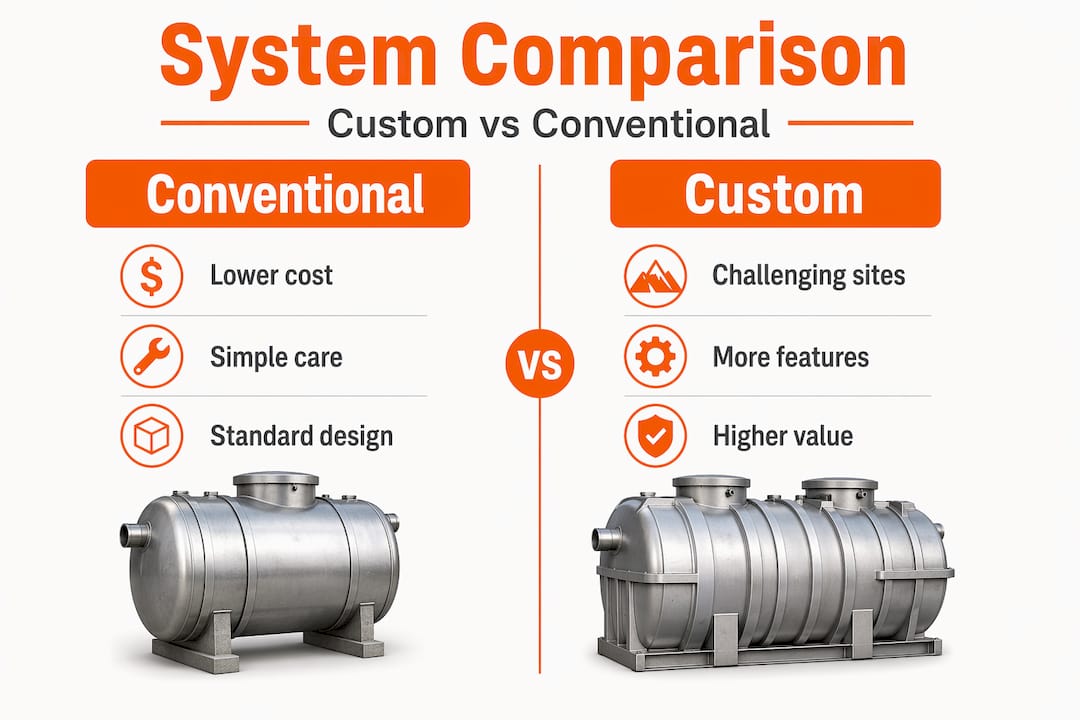
Installation costs for an engineered system range from $15,000 to $35,000, compared to $3,000 to $10,000 for a basic conventional system. That higher price reflects design fees, specialized equipment, additional permitting, and more complex labor. Engineered systems cost 2 to 3 times more than conventional, but for properties with poor soil or high water tables, there is no cheaper alternative that legally works.
| Factor | Conventional system | Custom engineered system |
|---|---|---|
| Installation cost | $3,000 to $10,000 | $15,000 to $35,000 |
| Design requirements | Minimal | Licensed engineer required |
| Permit complexity | Standard | More involved, longer timeline |
| Maintenance frequency | Every 1 to 3 years | Every 4 to 6 months for ATUs |
| Annual maintenance cost | $150 to $300 | $300 to $800 |
| Lifespan on difficult sites | May fail early | Designed for site conditions |
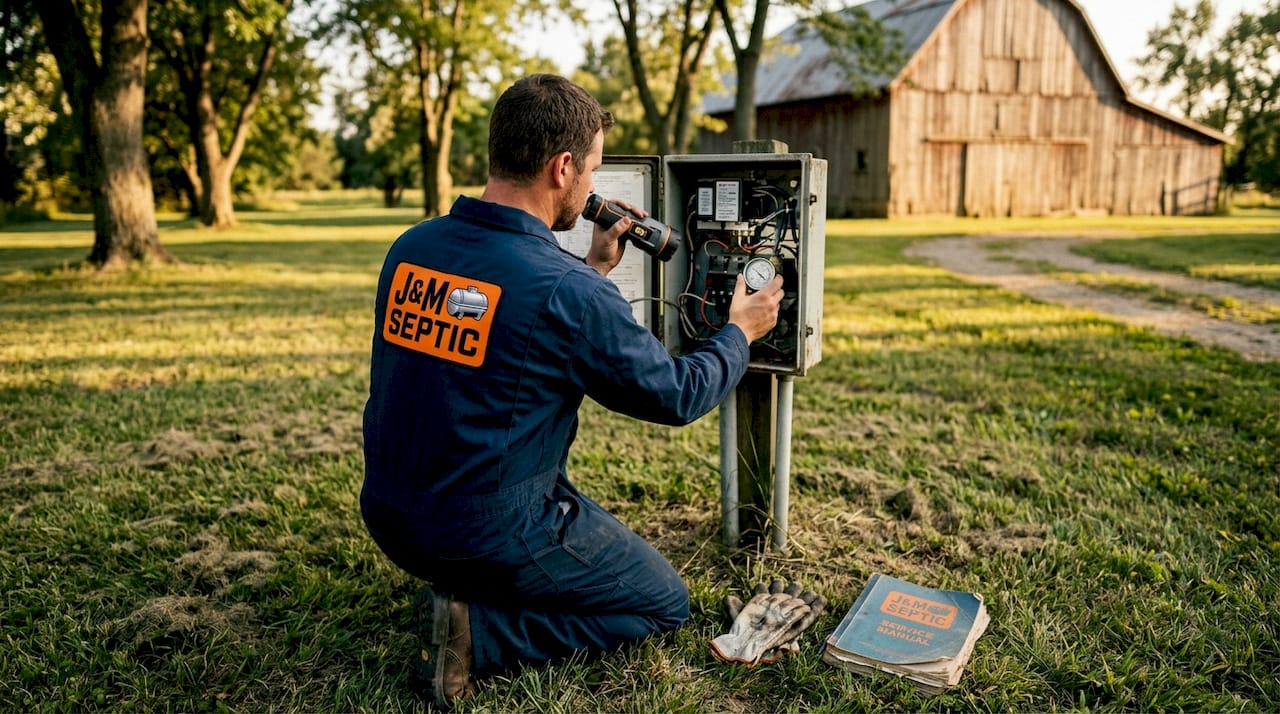
Maintenance is where the ongoing commitment shows up. Custom systems often require pumps, blowers, and electrical components that gravity-fed systems don’t. ATUs specifically require professional inspection every 6 months per NSF/ANSI standards. Annual maintenance contracts typically run $300 to $800 per year.
The advantages of regular septic inspections are especially significant with custom systems. A missed service visit on an ATU can trigger a permit violation, void your warranty, or cause premature component failure. Scheduling those visits consistently is part of owning this type of system. The benefits of regular septic cleaning and inspections also extend to catching small issues before they become expensive repairs, which matters even more with the sophisticated components in an engineered system.
Pro Tip: Ask your installer about maintenance contracts before the system is even in the ground. Locking in a service agreement with a qualified provider from day one protects your investment and keeps you in compliance with your permit conditions.
From soil test to system: the practical process
Getting a custom septic system installed involves more steps than a conventional system, and the timeline is longer. Plan for 3 to 6 months from initial testing through installation, especially if you’re building new construction. Here’s how the process typically unfolds:
- Schedule a perc test and full soil evaluation. A licensed soil scientist or engineer tests your lot’s absorption rate and profiles the soil layers. This determines what type of system your site can legally support.
- Hire a licensed engineer to design your system. Custom systems require a stamped design from a licensed professional. They account for your specific lot dimensions, soil data, household size, and local code requirements.
- Submit for permits. Your county environmental health department reviews the engineered plans. This step alone can take several weeks in busy permit seasons.
- Schedule installation with a qualified contractor. Not every septic company installs engineered systems. You need a contractor with experience in the specific system type approved for your lot. Review the homeowner septic workflow for Alamance County to understand what local approvals look like.
- Pass final inspection. A county inspector signs off after installation. This is required before the system can legally be placed into service.
- Set up a maintenance schedule immediately. Don’t wait until the first service is due. Set calendar reminders and confirm your service provider before you move in. Understanding why regular septic inspections matter will help you stay consistent with this from day one.
Environmental and design benefits worth knowing
Beyond the functional advantages, custom septic systems offer benefits that don’t always make it into the conversation.
- Build on land near sensitive water features. With advanced treatment meeting strict effluent standards, regulatory agencies often allow installation closer to streams or wetlands than conventional systems permit.
- Greater placement flexibility. Engineers can configure custom systems to work around trees, outbuildings, driveways, or irregular lot shapes that would make a conventional drain field impossible to site.
- Reduced municipal dependency. For rural properties or homes in areas without public sewer access, a custom system provides a permanent, self-contained solution that doesn’t rely on municipal infrastructure.
- Support for sustainable rural development. Custom systems allow responsible development in areas where conventional infrastructure doesn’t reach, without sacrificing environmental protection standards. Advanced treatment protects groundwater in ways that matter for communities dependent on wells and private water sources.
If you’re exploring options like aerobic treatment or UV-based disinfection as part of a custom design, the technology available today is significantly more effective than it was even a decade ago. Understanding UV light for septic systems can help you see what’s possible for your specific property in the Piedmont Triad region.
My honest take after working with these systems
I’ve talked with a lot of homeowners who didn’t discover their soil problems until they were already under contract on a piece of land. By that point, they’re looking at engineering fees, permit delays, and installation costs they didn’t budget for. It’s a stressful and avoidable situation.
What I’ve learned from working with properties across Alamance County is that the homeowners who come out ahead are the ones who invest in site evaluation early. Not because it’s cheap, but because the information it gives you is worth far more than what you pay for it. A $500 perc test before a $200,000 land purchase is one of the best calls you can make.
I’ve also seen properties that looked like write-offs before an engineered solution was designed for them. A site with heavy clay soil and a seasonal high water table isn’t a hopeless case. It’s a case for a mound system or an ATU with a pressure distribution field. The technology exists. The question is whether you’re working with someone who knows how to apply it.
My honest opinion: if your property has site constraints, don’t try to cut corners with an undersized conventional system. The failure costs and remediation expenses will exceed what a proper custom installation would have cost in the first place. Do it right the first time.
— Jason
Ready to build the right system for your property?
If you’re working with a challenging lot in Alamance County, Burlington, Mebane, or anywhere in the surrounding Piedmont Triad area, Jmseptic specializes in exactly this kind of situation. From soil evaluation support to full custom septic installation, the team at Jmseptic brings the experience and local knowledge your property needs.

Jmseptic handles everything from the initial site consultation through final inspection, working with licensed engineers to get your system designed and approved correctly. Whether you’re building new construction or replacing a failing system on a difficult lot, the goal is always a long-term solution that works for your land and your family. Call Jmseptic today to schedule your site evaluation and get a clear picture of what your property actually needs.
FAQ
What are the main perks of custom septic systems?
Custom septic systems allow you to build on lots with poor soil, high water tables, or tight dimensions where conventional systems cannot legally be installed. They also deliver superior wastewater treatment and longer system lifespan when designed correctly for your site conditions.
How much does a custom septic system cost?
Custom engineered systems typically cost between $15,000 and $35,000 for design, equipment, and installation. That’s 2 to 3 times more than a conventional system, but often the only viable option for challenging properties.
How often does a custom septic system need to be inspected?
Advanced treatment units used in most custom systems require professional inspection every 4 to 6 months per NSF/ANSI standards. Annual maintenance contracts run $300 to $800 and are worth every dollar for keeping the system compliant and functional.
What is a perc test and why does it matter?
A percolation test measures how fast your soil absorbs water and determines whether your lot qualifies for a conventional or custom septic system. It costs $300 to $1,000 and is required before any septic permit is issued.
Can a custom septic system increase my property value?
Yes. By making a previously unbuildable lot developable, a custom septic system can add significant value to a constrained property. The upfront cost is often offset by what the land becomes worth once it can legally support a home.