
Standing Water Around Septic: Causes and Fixes
Discover causes and fixes for standing water around septic explained. Learn how to diagnose issues and protect your system effectively.

Standing water around a septic system is defined as pooled wastewater or surface water that collects near the septic tank, outlet baffle, or drain field and signals a breakdown in normal treatment or drainage. This is not a weather quirk or a minor yard issue. It is a warning sign that your system is under stress or failing. The causes range from a full tank and a broken outlet baffle to drain field collapse and poor yard grading. Getting standing water around septic explained correctly means knowing which component is failing, where the wet spot sits, and how long the water has been there. Each of those clues points to a different fix.
What causes standing water over the septic system?
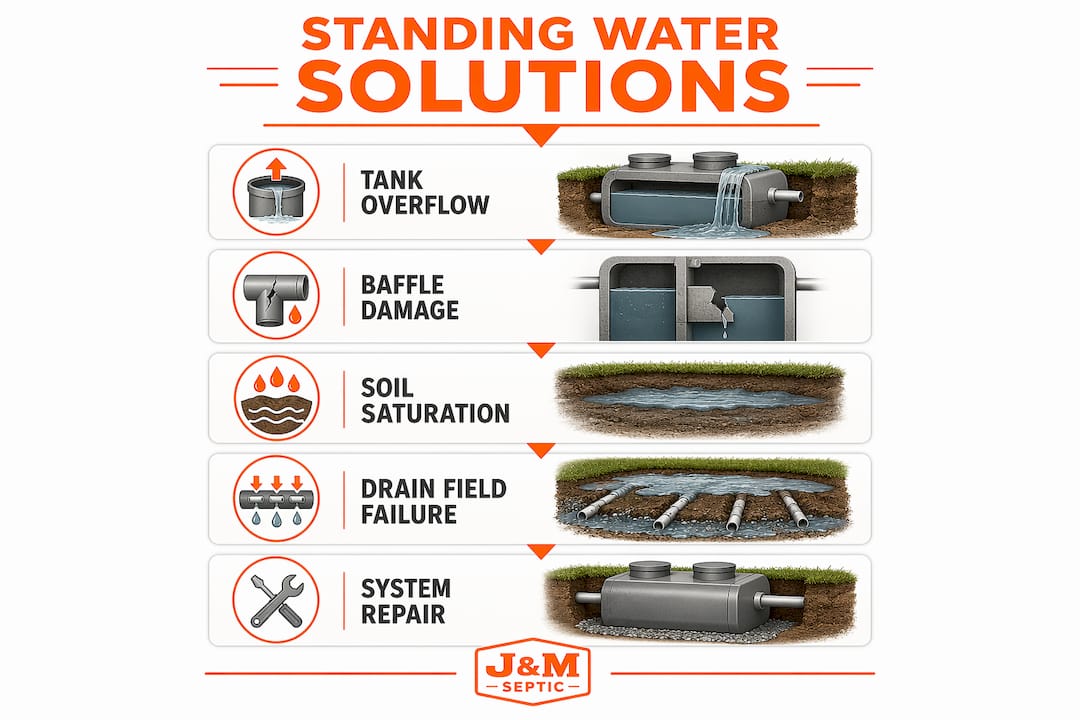
Standing water over a septic system results from four main causes: tank overflow, a damaged outlet baffle, drain field failure, or surface water pooling from poor yard grading. Each cause produces a different pattern of wet spots, and reading that pattern correctly saves you from replacing the wrong component.
Tank overflow from neglected pumping
A septic tank that has not been pumped fills with sludge until liquid has nowhere to go but up. When the tank overflows, effluent backs up through the inlet pipe and surfaces near the tank lid. The wet spot sits directly above or within a few feet of the tank. You will often notice a sewage smell alongside the pooling water. Regular pumping every three to five years prevents this entirely.
Broken or blocked outlet baffles
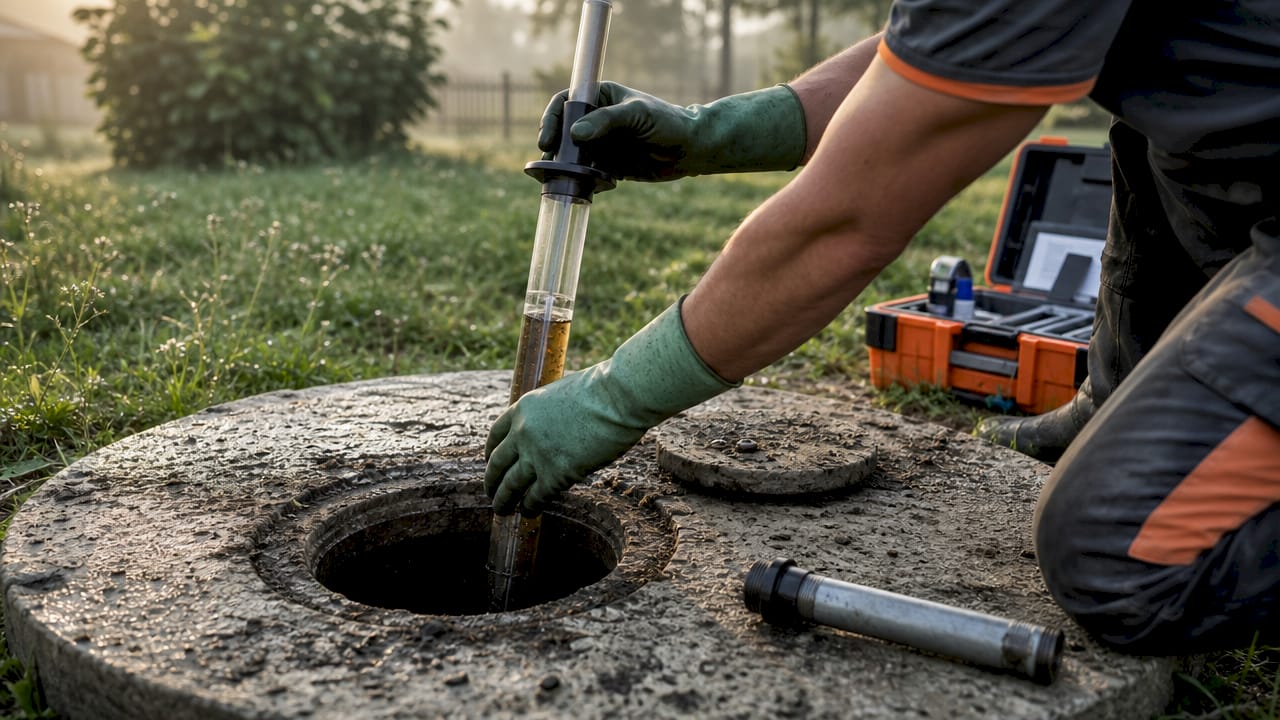
The outlet baffle is a plastic or concrete fitting inside the tank that keeps floating solids from escaping into the drain field. When it cracks or clogs, solids push through and clog the pipes leading to the drain field. The result is effluent backing up and surfacing near the tank. Wet spots within 10 feet of house foundations or over tank lids tend to indicate tank-level problems, while soggy ground farther out signals drain field issues. That location rule is the fastest diagnostic tool you have.
Soil saturation after heavy rain
Heavy rain raises the water table and saturates the soil around your tank. When the ground cannot absorb any more water, effluent has nowhere to drain and surfaces. This looks like a septic failure but is sometimes a temporary weather event. The key test is timing. If standing water disappears within 24–48 hours of rain, it is likely a landscape drainage issue. If it persists beyond 48 hours or smells like sewage, septic failure is the more likely cause.
Pro Tip: Walk the wet area and note exactly where it sits relative to your tank lid and the drain field trenches. A sketch on your phone takes 30 seconds and gives a technician a head start on diagnosis.
Other diagnostic clues to watch for include:
- Gurgling sounds from indoor drains, which indicate pressure building in the system
- Unusually lush, bright green grass over the tank or drain field, a sign of effluent fertilizing the soil
- Sewage odors indoors or outdoors near the system
- Slow drains throughout the house, not just one fixture
How does drain field failure cause standing water?
The drain field, also called a leach field, is a biological treatment zone where soil bacteria break down effluent before it reaches groundwater. Standing water blocks the oxygen that those bacteria need to survive. When bacteria die off, the soil loses its ability to treat wastewater, and the system fails from the ground up.
What kills a drain field
Drain field failure has several distinct causes, and they often compound each other over time.
- Biomat buildup: A layer of organic slime forms in the soil when solids escape the tank. This layer blocks water movement and suffocates aerobic bacteria.
- Soil compaction: Driving vehicles or heavy equipment over the drain field crushes the soil pores that allow water to percolate. Compacted soil cannot drain.
- Root intrusion: Tree and shrub roots seek moisture and grow into drain field pipes, cracking them and blocking flow.
- Hydraulic overload: Too much water entering the system at once, from large households or leaky fixtures, overwhelms the field before it can treat effluent.
How to read drain field symptoms
Drain field failure progresses from isolated wet spots to widespread surface water accompanied by sewage odors and abnormal vegetation changes. That progression matters because early intervention costs far less than full field replacement.
| Symptom | Likely cause | Urgency |
|---|---|---|
| Small wet patch over one trench | Localized biomat or root intrusion | High: inspect within days |
| Widespread soggy ground over field | Hydraulic overload or field saturation | Urgent: stop water use now |
| Sewage odor with no visible water | Early biomat, effluent near surface | High: professional inspection needed |
| Bright green grass over field | Effluent surfacing as fertilizer | Moderate: monitor and inspect |
Odor issues appear within 24–48 hours of drain field saturation. Slow drains develop over one to two weeks. Standing water over the drain field requires immediate attention. That timeline tells you how fast a small problem becomes a system failure.
Is it septic failure or just poor drainage?
Not every wet yard is a failing septic system. Poor yard grading, compacted clay soil, and blocked surface drains all create standing water that has nothing to do with your tank or drain field. Knowing the difference before you call a repair crew saves you money and time.
Here is a step-by-step diagnostic process to work through before calling a professional:
- Check the timing. Did the water appear during or right after heavy rain? Water that appears only after storms and drains within 24 hours points to a surface drainage problem, not a septic issue.
- Smell the water. Rainwater runoff has no odor. Septic effluent smells like sewage or rotten eggs. That smell is the clearest single indicator of a system problem.
- Map the location. Is the wet spot over your tank, over your drain field, or somewhere else entirely? Water pooling in a low corner of your yard far from any septic component is almost certainly a grading issue.
- Check your drains indoors. Slow drains or gurgling pipes inside the house confirm the problem is in the septic system, not the landscape.
- Monitor for 48 hours. Mark the edge of the wet area with a stick or flag. If it grows or does not shrink after two days without rain, call a professional.
Pro Tip: Use your nose before you use your phone. A sewage smell is the single fastest way to confirm a septic problem versus a drainage problem. If it smells like sewage, stop using water in the house and call a technician the same day.
You can also check the yard standing water guide for a detailed breakdown of how to separate drainage causes from septic causes specific to Alamance County soil conditions.
How to manage standing water and protect your system
Once you confirm a septic problem, your first move is to reduce the load on the system immediately. When a septic system is fully saturated, the soil cannot treat effluent, and you must stop water use to avoid sewage backing up into your home. That means no laundry, no dishwasher, and minimal toilet use until a technician evaluates the system.
Practical steps to protect your system during and after a saturation event:
- Stop all non-essential water use. Every gallon you send into a saturated system makes the problem worse and increases the risk of sewage backup indoors.
- Do not pump the tank during flooding. Empty septic tanks in saturated soil can float and crack, damaging the tank shell and pipe connections. Wait until the soil drains before scheduling a pump-out.
- Secure access lids and install backflow preventers. Properly sealed maintenance holes and backflow preventers reduce the risk of floodwater entering the tank and contaminating the system.
- Grade your yard away from the system. Slope the ground so surface water runs away from the tank and drain field. This single landscape fix prevents a large share of weather-related saturation events.
- Schedule a professional inspection after the water recedes. A technician can assess whether the drain field recovered or sustained permanent damage.
If your tank was pumped during a flood event, a technician may need to refill the tank with clean water to prevent it from floating in saturated soil. That is a counterintuitive step that most homeowners do not know about, and skipping it can crack the tank or break pipe seals.
You can find more detail on preventing costly failures before they reach the point of standing water and system replacement.
Key Takeaways
Standing water around a septic system signals active system stress and requires immediate diagnosis based on location, odor, and timing to prevent full system failure.
| Point | Details |
|---|---|
| Location identifies the problem | Wet spots near the tank lid point to tank issues; soggy ground over the drain field signals field failure. |
| Timing separates causes | Water that clears within 24–48 hours after rain is likely drainage; water that persists or smells is septic failure. |
| Stop water use immediately | Sending more water into a saturated system causes sewage backup and accelerates drain field damage. |
| Never pump a flooded tank | An empty tank in saturated soil can float and crack; wait for soil to drain before pumping. |
| Early action cuts repair costs | Catching biomat buildup or a cracked baffle early costs far less than full drain field replacement. |
What I’ve learned from years of septic calls in Alamance County
The call I get most often goes like this: a homeowner notices a wet patch in the yard after a heavy rain, waits two weeks to see if it dries up, and then calls when the smell becomes impossible to ignore. By that point, what started as a manageable outlet baffle repair has turned into a drain field problem that costs several times more to fix.
Rain does not cause septic failures. Rain reveals them. The biomat was already building. The baffle was already cracked. The soil was already compacted. The rain just pushed a stressed system past its limit and made the problem visible. That distinction matters because it changes how you respond. Waiting for the water to dry up is the wrong move. The underlying problem does not dry up with it.
The other thing I see constantly is homeowners guessing at the wrong component. They assume the drain field is dead and start pricing out replacements, when the actual problem is a blocked outlet baffle that costs a fraction of that to fix. Differentiating causes by location of wet spots can save homeowners unnecessary repair expenses by targeting the correct component. A 15-minute site visit from a qualified technician gives you that answer. Spending money on a diagnosis before a repair is always cheaper than replacing the wrong part.
My honest recommendation: if standing water has been present for more than 48 hours near any part of your septic system, call a professional that day. Do not reduce water use and hope for the best. The system is telling you something specific. Get it read correctly the first time.
— Jason
Jmseptic can diagnose and fix your standing water problem
Standing water near your septic system is not a problem that resolves on its own. If you are seeing pooled water, sewage odors, or slow drains in Burlington, Mebane, Graham, or anywhere across Alamance County, Jmseptic is ready to help.

Jmseptic provides septic tank pumping, outlet baffle repairs, drain field evaluation, and full system inspections for homeowners across the Piedmont Triad area. If your system is showing signs of septic failure, getting a professional on-site quickly is the difference between a repair and a replacement. For urgent situations, the emergency septic repair guide covers what to do before a technician arrives. Call Jmseptic today and get a clear answer about what is happening under your yard.
FAQ
What does standing water near a septic tank mean?
Standing water near the septic tank typically signals a full tank, a broken outlet baffle, or soil saturation blocking drainage. The location of the wet spot relative to the tank lid is the fastest diagnostic clue.
How do I know if standing water is from my septic system or rain?
If the water smells like sewage or persists beyond 48 hours after rain stops, the cause is almost certainly a septic system problem rather than surface drainage.
Can I use water in my house when there is standing water over the drain field?
No. Stop all non-essential water use immediately. Sending more water into a saturated system forces untreated effluent to the surface and risks sewage backup inside your home.
Why is there bright green grass over my drain field?
Unusually lush, bright green grass over the drain field is an early sign that effluent is surfacing and fertilizing the soil. It often appears before visible pooling and warrants a professional inspection.
Is it safe to pump my septic tank during a flood?
Pumping an empty tank in saturated soil is risky because the tank can float and crack. A technician may need to refill the tank with clean water after pumping to prevent structural damage.