
Soil Conditions for Septic: What Homeowners Must Know
Discover essential soil conditions for septic systems. Ensure your drainfield functions properly and avoid costly repairs. Learn more now!

Soil conditions for septic systems are defined as the physical and chemical properties of the ground that determine how safely it absorbs, filters, and treats wastewater from a drainfield. Get the soil wrong and the system fails. The drainfield is the most expensive component to repair or replace, with costs ranging from $5,000 to $15,000 depending on soil type and system design. EPA guidelines require adequate soil depth and drainage to protect groundwater and public health. Understanding what your soil can and cannot do before installation is the single most important step you can take as a homeowner.
What soil conditions for septic systems work best?
Not all soil is created equal when it comes to septic performance. The right soil type determines whether your drainfield treats wastewater properly or fails within a few years.
| Soil Type | Drainage Rate | Pros for Septic | Cons for Septic |
|---|---|---|---|
| Loam | Moderate | Balanced drainage and filtration, supports aerobic microbes | Rare in some regions |
| Sandy soil | Fast | Good drainage, easy to work with | Too fast; insufficient pathogen filtration |
| Clay soil | Very slow | Holds nutrients | Saturates quickly, causes backups and failure |
| Silt | Slow to moderate | Decent nutrient retention | Compacts easily, poor long-term drainage |
| Chalk/limestone | Variable | Natural filtration in some cases | Unpredictable drainage, fractures can bypass treatment |
Loam soil is the gold standard for septic drainfields because it balances drainage speed with enough contact time for biological treatment. That balance lets aerobic microbes break down pathogens before effluent reaches groundwater.
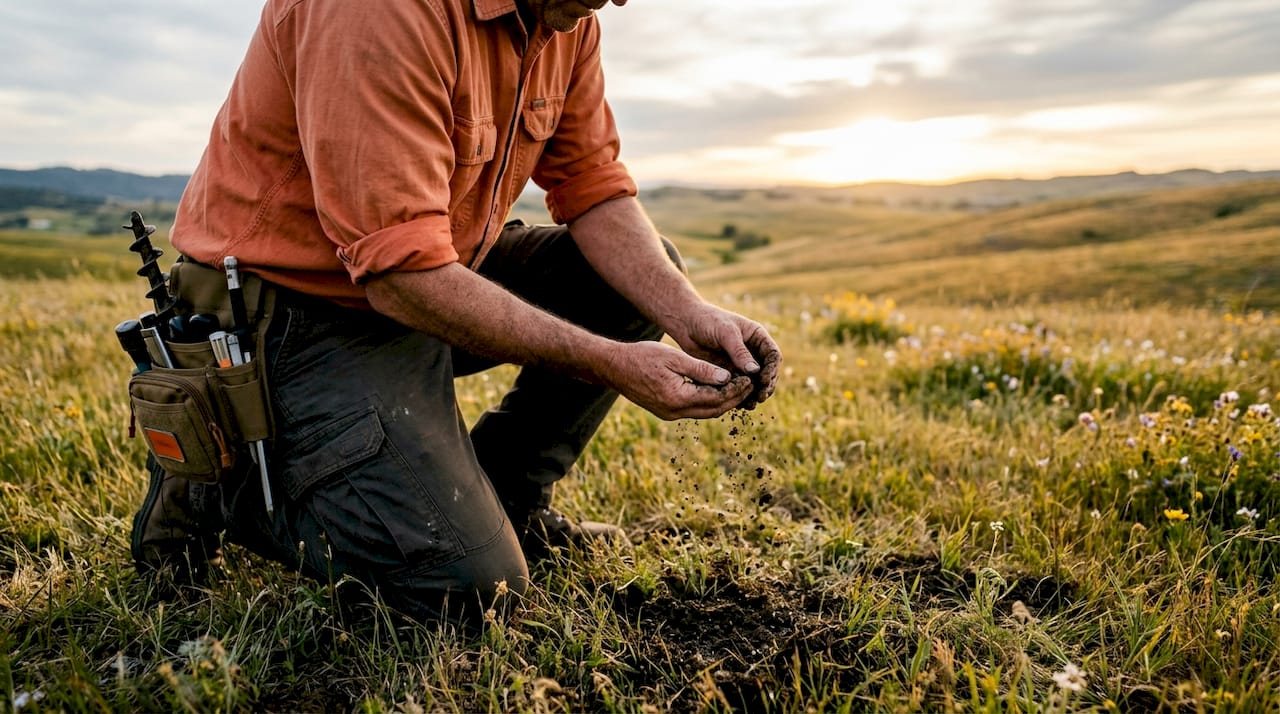
Clay soils are the most common cause of drainfield failure. They drain so slowly that effluent pools near the surface, creating standing water in your yard and sewage backups inside the house. Sandy soils sit at the opposite extreme. They drain so fast that wastewater passes through before microbes can treat it, sending pathogens and nitrates straight toward your drinking water supply.
Chalk and limestone present a unique challenge. Surface drainage may look acceptable, but fractures and fissures in the rock can channel untreated effluent directly to groundwater with no filtration at all. If your property sits on karst geology, a standard percolation test alone is not enough.
How do soil texture and percolation rates affect drainfield performance?
Soil texture refers to the ratio of sand, silt, and clay particles in your soil. That ratio controls two things that matter most for septic systems: how fast water moves through the ground and how much oxygen stays in the pore spaces.
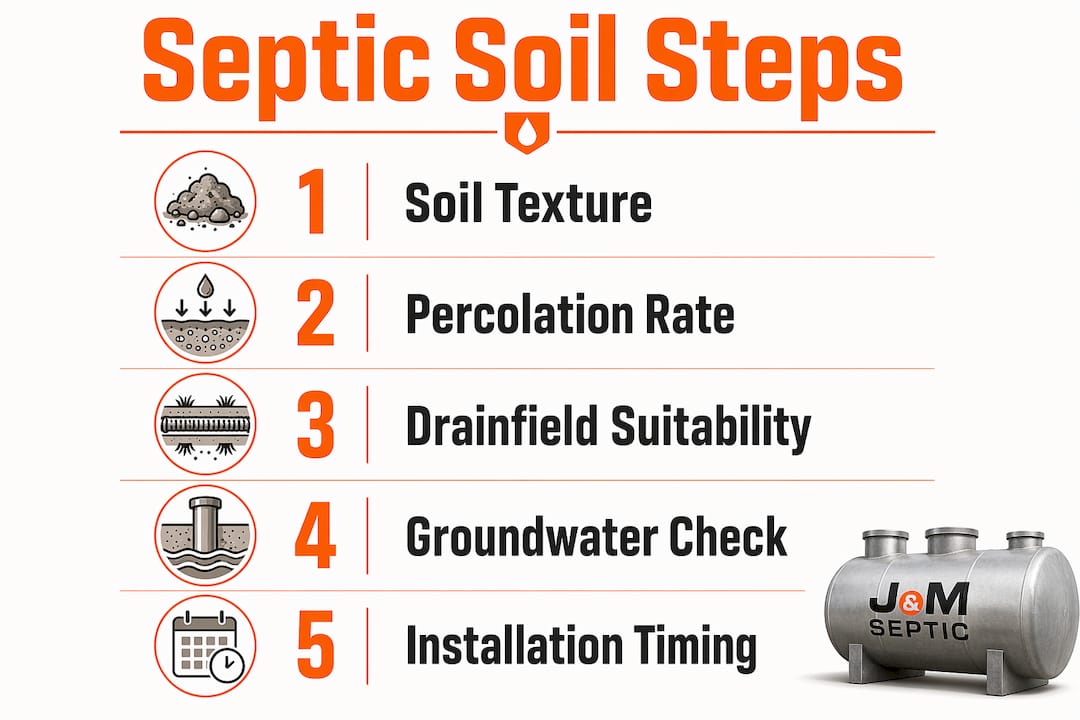
Percolation tests, commonly called perc tests, measure how quickly water drains from a test hole dug in the proposed drainfield area. Health departments across North Carolina require a passing perc test before issuing a septic permit. The results directly determine how large your drainfield needs to be.
Here is what perc test results mean in practice:
- Fast percolation (under 1 minute per inch): Soil drains too quickly. Effluent does not spend enough time in contact with soil microbes. Groundwater contamination risk is high.
- Moderate percolation (1–30 minutes per inch): The target range. Effluent disperses at a rate that supports biological treatment and prevents surface ponding.
- Slow percolation (over 60 minutes per inch): Soil is too dense or clay-heavy. Effluent cannot absorb fast enough, leading to backups and wet spots in the yard.
- Failing percolation: No permit issued for a conventional system. Alternative designs such as mound systems or aerobic treatment units may be required.
Loam supports aerobic microbes by keeping soil moist but not waterlogged, which is exactly the condition those bacteria need to thrive. Oxygen availability in soil pore spaces is what separates effective biological treatment from raw effluent leaching into the ground.
Pro Tip: A perc test done in dry summer conditions may pass easily, but the same soil can fail in wet winter months. Ask your installer to account for seasonal soil moisture when interpreting results.
Why do groundwater levels matter so much for septic safety?
The soil beneath your drainfield is the actual biological treatment plant in your septic system. The septic tank primarily settles solids; the real work of pathogen removal happens in the unsaturated soil below the drainfield pipes. That process requires oxygen, and oxygen only exists in soil that is not saturated with water.
EPA standards recommend a vertical separation of 2–4 feet of unsaturated soil between the bottom of the drainfield and the seasonal high water table. Properly designed drainfields achieve 90%–99% pathogen removal when that separation is maintained. Shrink that buffer and treatment efficiency drops sharply.
Here is why groundwater depth affects every part of your system:
- Saturated soil stops aerobic treatment. High water tables cause soil saturation around drainfields, shutting down the aerobic bacteria responsible for breaking down pathogens.
- Nitrate contamination becomes a real risk. Nitrate levels from septic effluent can exceed EPA maximum contaminant levels when soil depth between the drainfield and water table is inadequate.
- Setback distances protect your drinking water. Regulatory agencies require 50–100 feet between the drainfield and potable water wells, with larger buffers required in karst geology or shallow water table areas.
- Seasonal fluctuations change everything. A passing perc test in dry conditions does not guarantee year-round performance. The seasonal high water table must be measured and factored into system design.
The Piedmont Triad region of North Carolina, including Alamance County, has areas with clay-heavy subsoils and seasonal groundwater fluctuations that catch homeowners off guard. A system that drains perfectly in august can be completely saturated by february. Knowing your seasonal high water table before installation prevents that outcome.
How to assess your site before septic installation
Site assessment is not a single test. It is a series of evaluations that together tell you whether your land can support a conventional septic system or needs a specialized design.
The core assessments every homeowner should understand:
- Percolation test: Required by county health departments. Measures drainage rate in the proposed drainfield area. Must be conducted by a licensed soil scientist or evaluator in North Carolina.
- Soil profile analysis: A trained evaluator digs test pits to examine soil color, texture, and structure at different depths. Mottled gray or orange colors in the soil indicate seasonal water saturation.
- Groundwater monitoring: Measuring actual water table depth during wet season months gives far more reliable data than a single dry-season reading.
- Site slope evaluation: Slopes steeper than 25% complicate drainfield placement and may require engineered solutions. Flat sites with poor surface drainage can also cause problems.
- Fill dirt assessment: Imported fill dirt has unknown permeability and compaction characteristics. Drainfields placed in fill soil often fail because the fill does not match native soil performance.
Soil smearing during trench excavation is one of the most overlooked causes of early system failure. When heavy machinery digs trenches in wet soil, it compacts the trench walls and seals the pore spaces that effluent needs to pass through. The soil type may be perfect, but the installation method destroys its permeability.
Pro Tip: Schedule your site evaluation and installation during dry conditions whenever possible. Wet soil compacts under machinery weight, permanently reducing absorption capacity even in otherwise suitable ground.
Protecting your drainfield long after installation matters just as much as the initial assessment. Avoid parking vehicles, planting trees, or building structures over the drainfield area. Root intrusion and soil compaction from surface loads are two of the most common causes of drainfield failure that homeowners could have prevented.
Seasonal high water table monitoring during wet season months provides the most reliable design data. Dry-season assessments alone routinely underestimate the true groundwater risk. Pair that monitoring with a full soil profile investigation and you have the data needed to design a system that lasts decades, not years.
Understanding drain field materials also plays a role in how well your system performs across different soil types. The gravel, pipe, and fabric choices interact directly with soil texture and drainage behavior.
Key Takeaways
Soil is the primary treatment mechanism in any septic system, and getting the soil conditions right before installation determines whether your system lasts decades or fails within years.
| Point | Details |
|---|---|
| Loam is the best soil type | Loam balances drainage and filtration, supporting the aerobic microbes that treat wastewater. |
| Clay and sand both cause failure | Clay drains too slowly; sand drains too fast. Both compromise pathogen removal and risk groundwater contamination. |
| Vertical separation protects groundwater | Maintain 2–4 feet of unsaturated soil between the drainfield and the water table for 90%–99% pathogen removal. |
| Perc tests must account for wet seasons | A dry-season passing test does not reflect seasonal high water table conditions that can saturate your drainfield. |
| Soil smearing during installation causes early failure | Schedule installation in dry conditions and use proper excavation techniques to preserve soil permeability. |
What I have learned after years of septic installations in Alamance County
The most expensive septic failures I have seen were not caused by bad luck. They were caused by skipping the soil work upfront. A homeowner in Graham had a brand-new system back up within 18 months because the installer dug trenches after three days of rain. The soil looked fine on paper. The smeared trench walls told a different story.
The thing most homeowners do not realize is that the septic tank is almost irrelevant to treatment quality. The soil does the real work. A $10,000 tank sitting on top of clay-heavy, saturated ground will fail just as fast as a cheap one. The soil profile, the water table depth, and the installation conditions matter far more than the tank itself.
What I tell every homeowner I work with: do not rush the site evaluation. Wet season groundwater readings are worth waiting for. A soil profile that looks acceptable in september can be completely saturated by january in parts of Alamance County. That seasonal data changes the entire system design.
Respecting the drainfield after installation is just as critical. I have seen perfectly installed systems ruined within five years because a homeowner parked a truck over the field every weekend. Soil compaction from surface loads is slow and invisible until the system backs up. Protect that ground like it is the most valuable part of your property, because it is.
The environmental responsibility piece matters too. Nitrate contamination from a failing septic system does not stay on your property. It moves through groundwater and can reach your neighbor’s well or a local creek. Getting the soil conditions right is not just about protecting your investment. It is about being a responsible member of your community.
— Jason
Jmseptic serves Alamance County homeowners with soil-smart septic solutions
Soil conditions vary significantly across Alamance County and the surrounding Piedmont Triad. What works in Burlington may not work in Whitsett. Jmseptic designs every new installation around your specific soil profile, groundwater depth, and site conditions, not a one-size-fits-all template.

The NC septic installation guide on the Jmseptic website walks you through what to expect from site evaluation through final inspection, including how local soil types affect system design and cost. If you are planning a new installation or dealing with a system that is showing signs of trouble, Jmseptic provides honest assessments and long-term solutions for homeowners across Burlington, Mebane, Elon, Graham, Whitsett, and McLeansville. Call today to schedule your site evaluation.
FAQ
What is the best soil type for a septic drainfield?
Loam is the best soil for septic drainfields because it balances drainage speed with enough contact time for biological treatment. It supports the aerobic microbes that remove pathogens before effluent reaches groundwater.
How does groundwater depth affect a septic system?
Groundwater that sits too close to the drainfield saturates the soil and shuts down aerobic treatment, causing system failure and potential nitrate contamination. EPA standards recommend at least 2–4 feet of unsaturated soil between the drainfield bottom and the seasonal high water table.
What happens if clay soil is used for a septic drainfield?
Clay soil drains too slowly for effluent to absorb properly, causing surface ponding, sewage backups, and system failure. Homeowners with clay-heavy soil typically need alternative system designs such as mound systems or aerobic treatment units.
Do I need a percolation test before installing a septic system?
Yes. North Carolina health departments require a passing percolation test before issuing a septic permit. The test results determine drainfield size and whether a conventional or alternative system design is needed.
Can a septic system fail even if the perc test passed?
Yes. A perc test conducted during dry conditions may pass, but seasonal high water tables can rise and saturate the drainfield during wet months, causing failure. Wet-season groundwater monitoring is the only way to get a complete picture of site suitability.