
Signs of Drain Field Failure: What Homeowners Must Know
Learn the crucial signs of drain field failure. Identify problems early to save money and avoid costly replacements. Stay informed!

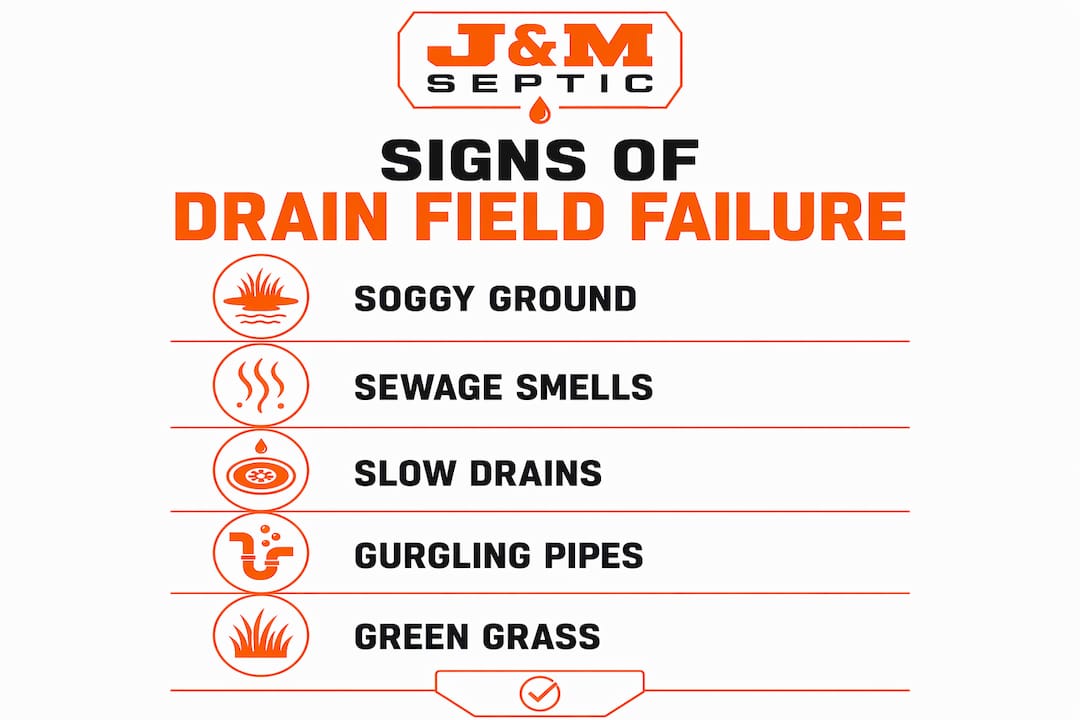
Drain field failure is defined as the loss of a septic system’s ability to absorb and filter wastewater through the soil beneath your yard. The signs of drain field failure include soggy ground over the leach field, persistent sewage odors, slow drains across multiple fixtures, gurgling pipes, and unusually green grass patches. Recognizing these symptoms early is the difference between a $300 fix and a $10,000 replacement. This guide explains each warning sign, the root causes behind them, and the exact steps to take before a manageable problem becomes a full system collapse.
What are the most reliable physical signs of drain field failure?
The five core symptoms of drain failure are soggy ground, sewage odors, slow drains, gurgling sounds, and greener grass. Each one points to the same root problem: your soil has lost its ability to absorb effluent. Knowing what each sign looks like on your property helps you act before the system reaches the point of no return.
Here is what to watch for:
- Soggy or standing water over the drain field. Water pooling directly above the leach field lines is a late-stage alarm signal. The soil is saturated and effluent is surfacing rather than filtering downward.
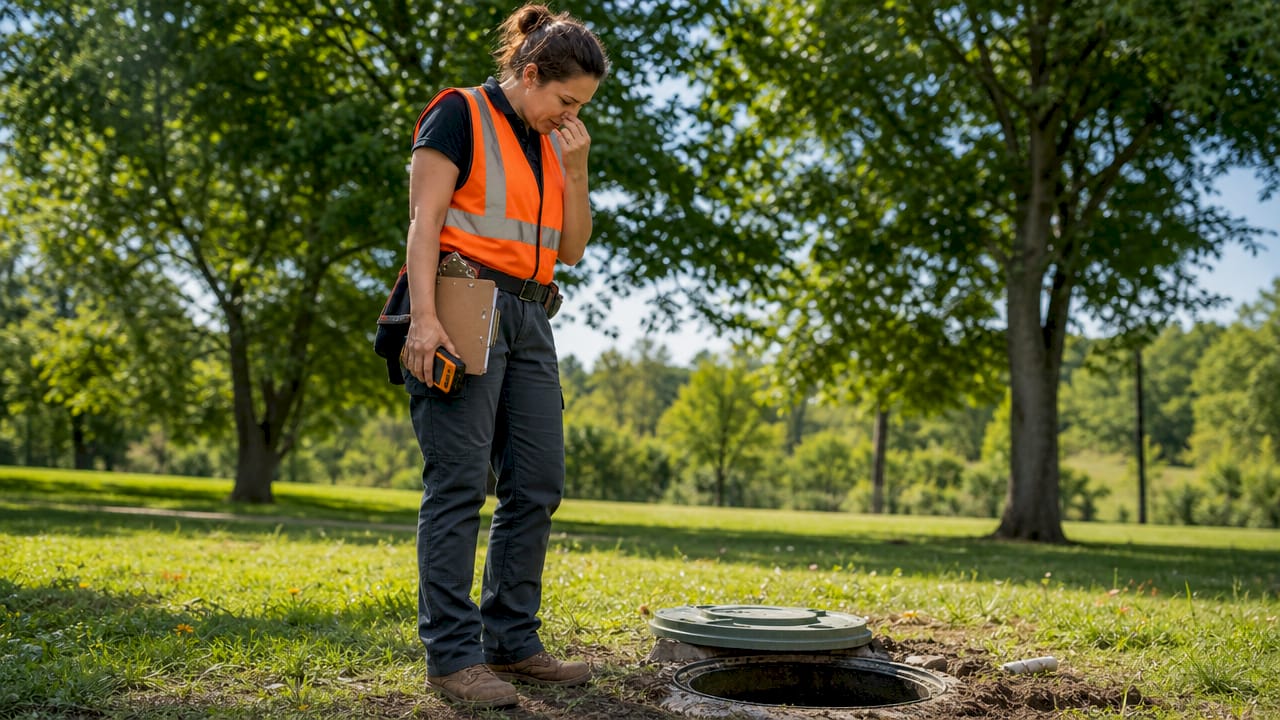
- Sewage odors outside near the field. A sulfur or rotten egg smell near the drain field area, not just near the tank, means wastewater is breaking through the soil surface.
- Slow drains across multiple fixtures simultaneously. When your kitchen sink, bathroom sink, and shower all drain slowly at the same time, the field is struggling to accept more effluent.
- Gurgling or bubbling sounds from plumbing. Gurgling pipes signal that air is being pushed back through the system because the field cannot move liquid forward fast enough.
- Greener or thicker grass over the field. A bright green strip of grass directly above the leach lines is a classic drain field issue. Nutrient-rich effluent is feeding the grass from below.
Pro Tip: Sewage odors near the tank are common and often harmless. Odors specifically over the drain field area, especially after heavy water use, are the real red flag. Walk the yard after a full laundry day and note exactly where the smell is strongest.
The most misunderstood sign is the green grass. Homeowners often assume healthy grass is a good thing. Over a drain field, it means the opposite. Effluent is reaching the root zone instead of filtering deep into the soil.
How to distinguish drain field failure from other yard or plumbing issues?
Wet ground in your yard does not always mean your drain field is failing. Poor yard grading, roof runoff, and sump pump discharge all create soggy patches that look identical to field saturation. Misreading the cause leads to unnecessary panic or, worse, ignoring a real failure.
Use this process to confirm what you are dealing with:
- Check the location. Wet ground caused by roof runoff or grading problems appears near the house foundation or at low points in the yard. Drain field saturation appears in a consistent strip or rectangle matching the field layout.
- Repeat the test after heavy water use. Run multiple loads of laundry, then check the yard within two hours. True field failure moisture returns quickly after high water use. Runoff from rain disappears faster and does not correlate with indoor water activity.
- Look for accompanying symptoms. Repeated symptoms after heavy water use combined with odors or slow drains confirm field problems. A wet yard with no odors and normal drains is almost certainly a grading or drainage issue.
- Compare fixture behavior. A single slow drain usually means a localized clog in that pipe. Systemic slow draining across multiple fixtures signals that the field itself cannot accept more liquid.
- Call for a professional load test. A technician runs a controlled volume of water into the system and measures how quickly the field responds. This two-hour evaluation includes soil saturation probes and field mapping to separate tank problems from field problems.
Pro Tip: Before calling a technician, write down when each symptom appeared and what preceded it. Did the slow drains start after a week of heavy rain? Did the odor appear after a large family gathering? That timeline cuts diagnostic time in half and helps the technician ask the right questions.
Sewage smell from a vent pipe on your roof is normal system operation. Sewage smell at ground level over the field is not. That distinction alone eliminates a common false alarm.
What causes drain field failure and why does it happen gradually?
Drain field failure is a gradual process driven by soil chemistry and biology, not broken pipes. Most homeowners assume something cracked or collapsed underground. The real culprits are invisible and slow-moving, which is exactly why the warning signs get ignored until the damage is severe.
The primary causes include:
- Biomat buildup. Anaerobic bacteria in the tank produce a dense, slimy layer called a biomat. When the tank is not pumped on schedule, this layer migrates into the drain field and blocks soil pores, preventing effluent from moving downward.
- Soil compaction and hardpan formation. Sodium from laundry detergents and water softeners binds soil particles together, creating an impermeable layer just below the field. Effluent pools above it instead of filtering through.
- Skipping tank pumping. Neglecting pumping every 3 to 5 years is the most preventable cause of field failure. Solids overflow from the tank into the field lines and accelerate biomat formation.
- Physical damage from vehicles or tree roots. Driving over the field compacts the soil and can crush distribution pipes. Tree roots seek moisture and grow directly into field lines, blocking flow.
- System overload. Adding extra bathrooms, hosting large gatherings repeatedly, or running excessive laundry pushes more water into the field than the soil can absorb.
“Most homeowners I talk to are surprised to learn their field did not fail overnight. The biomat was building for years. By the time the yard is soggy, the soil has been compromised for a long time.” — Septic system specialist observation shared during field diagnostics
The sodium compaction problem is particularly underappreciated. Switching to low-sodium detergents and eliminating water softener discharge into the septic system can slow this process significantly. It will not reverse existing hardpan, but it stops the damage from accelerating. Regular septic pumping benefits go far beyond keeping the tank clean. They protect the field from the overflow that starts the entire failure chain.
When and how to act on suspected drain field failure?
Early detection allows for low-cost treatments like hydro-jetting starting around $300. Waiting until the yard is flooded and the house drains are backing up pushes the cost to full replacement, which runs $6,000 to $10,000 depending on soil saturation and site conditions. The window between early warning and full failure is where homeowners save the most money.
Here is a comparison of symptoms, appropriate actions, and typical cost ranges:
| Symptom | Recommended action | Typical cost range |
|---|---|---|
| Slow drains in multiple fixtures | Schedule professional diagnostic | $150–$300 |
| Soggy yard with odor after water use | Load test and soil probe evaluation | $200–$400 |
| Gurgling pipes throughout the house | Hydro-jetting of field lines | $300–$600 |
| Standing water over the field | Partial field repair or line replacement | $1,500–$4,000 |
| Full surfacing of wastewater | Complete drain field replacement | $6,000–$10,000 |
The professional diagnostic process takes about two hours and distinguishes between a tank problem, a pipe clog, and true field failure. A technician uses soil saturation probes and field mapping to pinpoint the exact failure zone. That information determines whether hydro-jetting can restore absorption or whether the field needs partial or full replacement.
One critical mistake to avoid: do not pour chemical drain cleaners into your drains when you suspect septic issues. Chemical drain cleaners destroy beneficial septic bacteria that break down waste in the tank. Killing that bacterial population accelerates biomat buildup and speeds up field failure. Use enzyme-based products only, and only after consulting a technician.
Pro Tip: Ask your technician specifically whether the problem is in the tank, the distribution box, or the field lines. These are three separate components with different repair costs. A technician who cannot give you a specific answer has not done a thorough diagnosis.
Ongoing drain field maintenance tips after any repair include pumping on schedule, spreading water use across the week rather than concentrating it on weekends, and keeping vehicles and heavy equipment off the field area permanently. These habits extend field life by years. If you are buying a home with a septic system, reviewing red flags in septic homes before closing protects you from inheriting someone else’s failing field.
Key Takeaways
Catching drain field failure early is the single most effective way to avoid a $6,000 to $10,000 replacement and keep your septic system running for decades.
| Point | Details |
|---|---|
| Five core warning signs | Soggy ground, sewage odors, slow drains, gurgling pipes, and green grass over the field all signal absorption failure. |
| Systemic vs. localized drains | Slow drains across multiple fixtures at once indicate field failure, not a simple pipe clog. |
| Root causes are chemical, not mechanical | Biomat buildup and sodium soil compaction cause most failures, not cracked pipes. |
| Pump every 3 to 5 years | Skipping tank pumping is the most preventable cause of drain field failure. |
| Act early to control costs | Hydro-jetting at early signs costs around $300; full replacement runs $6,000 to $10,000. |
What I have learned from watching homeowners wait too long
The pattern I see most often is not ignorance. It is optimism. A homeowner notices the grass is greener over the field in april and thinks the lawn is finally thriving. They smell something faint in the backyard in june and assume it is a neighbor’s compost pile. By september, the yard is soggy and the toilets are gurgling, and now we are talking about a full replacement.
The uncomfortable truth about common drain field failures is that the system gives you months of warning before it gives you a crisis. Every one of those symptoms is the field asking for help. The biomat does not appear overnight. The sodium hardpan builds over years of laundry and softened water. The field is telling you something is wrong long before it stops working entirely.
What I tell every homeowner I work with: treat your septic system like your roof. You do not wait for water dripping through the ceiling to call a roofer. You inspect it, you maintain it, and you fix small problems before they become structural failures. A drain field is the same. The soil is your filter. Once it is gone, you are not repairing it. You are replacing it.
The homeowners who come out ahead are the ones who call when they first notice the gurgling pipes or the faint odor. Not the ones who wait to see if it gets worse. It always gets worse.
— Jason
Jmseptic serves Alamance County homeowners with drain field problems
Jmseptic handles drain field diagnostics, hydro-jetting, and full septic repairs across Burlington, Mebane, Graham, Elon, Whitsett, and McLeansville, North Carolina. If your yard is soggy, your drains are slow, or you are catching a sewage smell outside, the team at Jmseptic can run a full evaluation and tell you exactly what you are dealing with.

Jmseptic offers septic repair and maintenance with straightforward pricing and no upselling. Whether you need a pump-out, a hydro-jet treatment, or a full field assessment, the team gives you an honest diagnosis and a clear path forward. For urgent situations, the emergency septic repair guide for Alamance County homeowners explains what to expect and how to get help fast. Call Jmseptic before a warning sign becomes a replacement bill.
FAQ
What are the first signs of drain field failure?
The earliest signs are slow drains across multiple fixtures and faint sewage odors near the drain field area. These appear before visible yard saturation and signal that the field is losing absorption capacity.
How do I know if my wet yard is a septic problem?
Check whether the wet area matches your drain field location and whether it returns quickly after heavy indoor water use. True field failure moisture is accompanied by sewage odors or slow drains indoors.
Can a failing drain field be repaired without full replacement?
Yes, if caught early. Hydro-jetting can restore absorption in early-stage biomat cases for around $300. Full replacement is only necessary when soil saturation is extensive and irreversible.
How often should a septic tank be pumped to protect the drain field?
Pump every 3 to 5 years. Skipping pumping allows solids to overflow into the field lines, which is the leading preventable cause of drain field failure.
Are chemical drain cleaners safe to use with a septic system?
No. Chemical drain cleaners kill the beneficial bacteria inside the septic tank. That bacterial loss accelerates biomat buildup in the field and speeds up failure. Use enzyme-based products only.