
Sewer line cleaning guide for septic homeowners
Discover the essential sewer line cleaning process for septic homeowners. Learn to spot warning signs and keep your system clear for good!

Something smells wrong in your Burlington home. The drains are sluggish, and there’s a faint but unmistakable odor creeping up from the bathroom. For homeowners across Alamance County, these aren’t just annoyances — they’re early warnings that your sewer lines may need immediate attention. Sewer line cleaning is one of the most misunderstood parts of septic system care, and getting it wrong means costly repairs or even full system replacement. This guide walks you through every stage of the process, from spotting the first symptoms to keeping your lines clear long-term.
Table of Contents
- Common signs of sewer line issues
- Essential tools and preparation for sewer line cleaning
- Step-by-step cleaning process for sewer lines
- Preventing future issues and verifying results
- What most homeowners misunderstand about sewer line cleaning
- Get expert help for your sewer line cleaning
- Frequently asked questions
Key Takeaways
| Point | Details |
|---|---|
| Early detection | Recognizing signs of trouble early can prevent expensive repairs and keep your septic system healthy. |
| Proper preparation | Using the right tools and checking with a camera safeguards pipes and improves cleaning results. |
| Hydro jetting advantage | Hydro jetting offers a deeper clean for sewer lines compared to snaking or rodding. |
| Inspection is vital | Camera inspections before and after cleaning ensure thoroughness and prevent hidden damage. |
| Local expertise | Professional septic services bring the equipment and experience needed for lasting results. |
Common signs of sewer line issues
Your septic system doesn’t fail silently. It gives you signals, and learning to read them early can save you thousands of dollars. The tricky part is that many homeowners in Elon, Graham, and Mebane mistake early symptoms for minor plumbing annoyances rather than recognizing them as signs of something bigger.
Early warning signs to watch for include:
- Slow drains throughout the house (not just one fixture)
- Gurgling sounds from toilets or sinks after water runs
- Sewage odors inside the home or near the drain field
- Wet patches or unusually green, lush grass over the drain field
- Sewage backing up into tubs or floor drains
- Multiple fixtures backing up simultaneously
The key distinction here is the difference between a single slow drain and multiple slow drains happening at the same time. One slow drain usually points to a localized clog. When several fixtures back up together, the blockage is almost certainly deeper in the main sewer line connecting your home to the septic tank.
A wet, soggy patch in your yard, especially near the tank or drain field, deserves immediate attention. This often signals that waste is surfacing because it can’t flow where it should. Left alone, a saturated drain field can fail completely — and a septic system installation replacement is far more expensive than a cleaning call.
Don’t wait for a backup. The EPA’s guidance on caring for your septic system recommends camera inspection before any cleaning work to avoid causing additional pipe damage. A small symptom addressed early costs a fraction of what a failed system costs.
Small warning signs escalate quickly in septic systems. Grease, paper, and debris accumulate in layers over time. What starts as a 20% blockage becomes a full obstruction within weeks if conditions are right. Acting when you notice the first sign is always the smartest and most affordable move.
Essential tools and preparation for sewer line cleaning
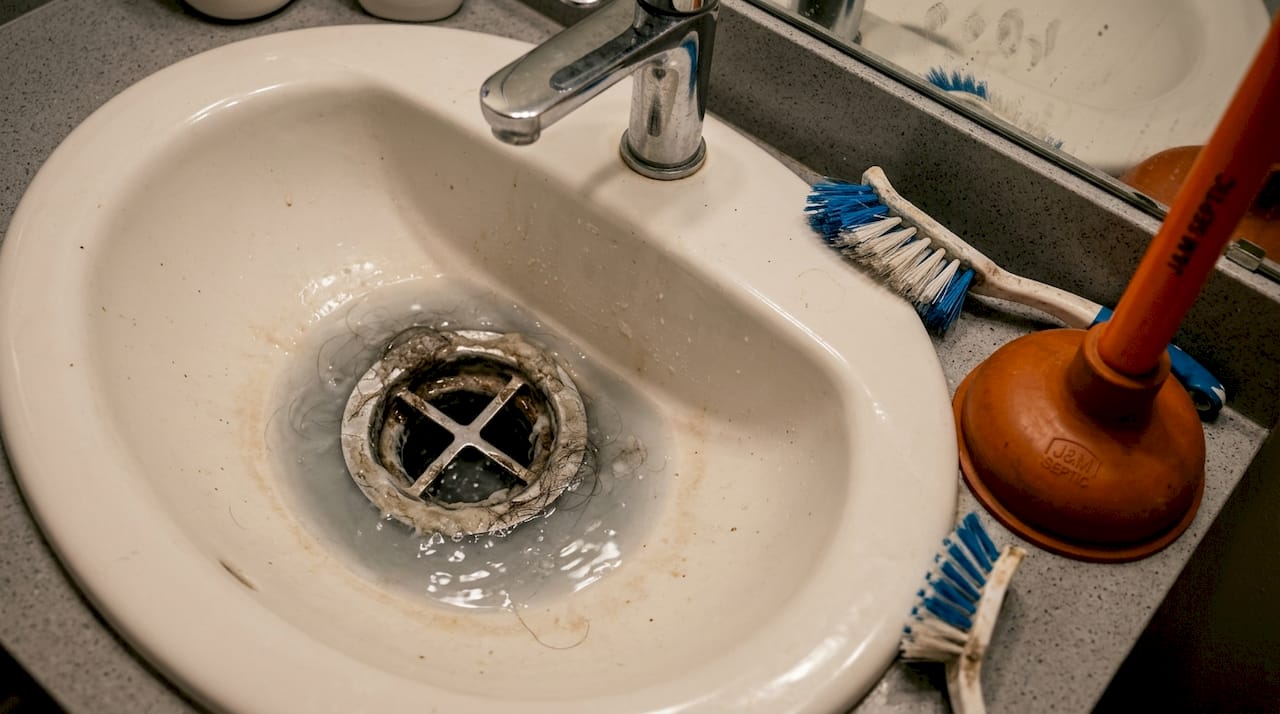
Once the signs are clear, preparation is critical. Here’s what you need in place before starting any cleaning process. Rushing into cleaning without the right tools or safety measures can damage pipes, spread contamination, or simply push the blockage further down the line without resolving it.
Primary cleaning tools
| Tool | Best use | Limitation |
|---|---|---|
| Drain snake (hand auger) | Minor clogs near the surface | Doesn’t clear grease or biofilm |
| Electric sewer snake | Moderate blockages in main line | Leaves residue behind |
| Hydro jet | Full line cleaning and maintenance | Requires camera inspection first |
| Sewer camera | Inspection and post-clean verification | Requires professional operation |
The EPA confirms that while snaking and rodding work well for the initial removal of heavy blockages, they leave residue along pipe walls. Hydro jetting is the preferred method for thorough cleaning and long-term prevention in septic system contexts. The difference in results is significant, and for most Alamance County homeowners dealing with recurring issues, hydro jetting is the smarter investment.
Essential safety gear for any cleaning work:
- Heavy-duty rubber gloves (elbow-length preferred)
- Safety goggles or a face shield
- Waterproof boots or shoe covers
- Respirator or N95 mask for enclosed spaces
- Disposable coveralls for significant jobs
Ventilation matters as much as protective gear. Hydrogen sulfide gas builds up in enclosed spaces near septic systems and can be dangerous at high concentrations. If you’re opening a cleanout access port indoors or in a crawl space, ensure the area has adequate airflow before beginning.
Pro Tip: Before any cleaning attempt, locate your cleanout access points. These are typically white or gray capped pipes near the foundation of your home or along the main sewer line path. Knowing where they are saves time and prevents unnecessary digging.
A sewer camera inspection should happen before cleaning, not after. Sending a camera down first reveals where the blockage actually sits, what caused it, and whether the pipe wall is damaged. Starting to snake or jet blind on professional installations with fragile connections risks cracking older pipe joints. Camera work eliminates guesswork entirely.
Step-by-step cleaning process for sewer lines
With preparation complete, here’s how to carry out the cleaning process step by step, comparing your options along the way. Whether you’re doing initial maintenance or responding to a backup, the sequence matters.
Cleaning steps in order
-
Locate and access the main cleanout. Find the access point closest to the blockage. This is usually a capped pipe near the home’s foundation or along the main line running toward the tank.
-
Run a camera inspection first. Feed the inspection camera through the cleanout and down the line. Note the type of blockage (grease buildup, root intrusion, solid debris), its location in feet from the access point, and any visible pipe damage. The EPA’s guidance on septic system care is direct: always camera inspect first to avoid pipe damage.
-
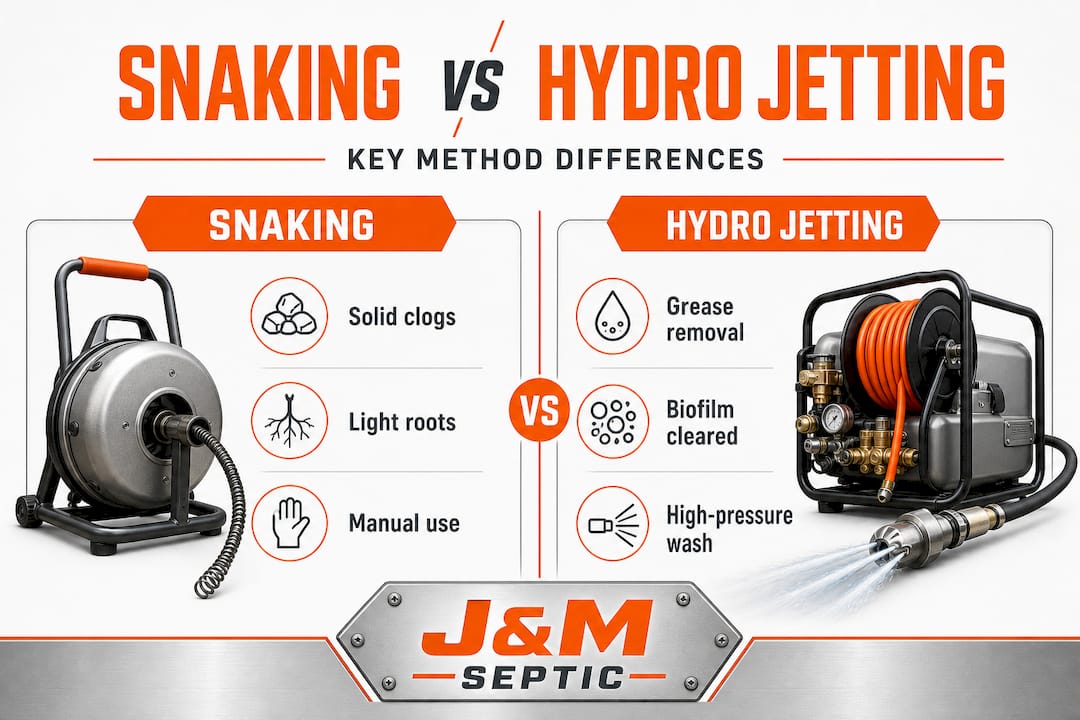
Choose your cleaning method based on what you found. Snaking works best for solid obstructions like paper buildup or small root intrusions. Hydro jetting works best for grease layers, biofilm, and full-line restoration.
-
Insert the snake or hydro jet nozzle. Feed the tool through the cleanout toward the blockage. For snaking, apply steady forward pressure while rotating. For hydro jetting, advance the nozzle slowly to let water pressure clear ahead before moving forward.
-
Work through the blockage. With a snake, you’ll feel resistance give way when the clog breaks apart. With a hydro jet, the water does the work. Keep the nozzle moving to avoid concentrating pressure on one spot, which can stress older pipes.
-
Flush the line thoroughly. After the blockage clears, run water through the system for several minutes to carry debris toward the tank. For hydro jetting, make a second pass pulling the nozzle back toward you to clean the walls you may have passed through earlier.
-
Run a post-cleaning camera inspection. Confirm the line is fully clear. The EPA guidance specifically notes that hydro jetting for grease restoration should always be followed by camera inspection to verify results and catch any hidden issues uncovered during the process.
-
Replace cleanout caps securely. Hand-tighten plus a quarter turn with a wrench. A loose cap lets gases escape and debris enter.
Snaking vs. hydro jetting: a direct comparison
| Factor | Snaking | Hydro jetting |
|---|---|---|
| Blockage type | Solid clogs, light roots | Grease, biofilm, heavy buildup |
| Pipe wall cleaning | No | Yes |
| Prevents recurrence | Partially | Much more effectively |
| Risk to old pipes | Low | Moderate (camera needed first) |
| Cost | Lower | Higher upfront, cheaper long-term |
| DIY friendly | Partially | Professional recommended |
Pro Tip: If you’ve snaked the same line more than twice in a single year, stop renting the snake. That’s a pattern, not a one-time problem. A camera inspection and hydro jetting from a local septic installation and repair team will address the root cause rather than just temporarily clearing symptoms.
The question of DIY versus professional comes down to depth and complexity. Surface-level clogs within the first 10 to 15 feet of a drain can sometimes be handled with a basic hand snake. Anything in the main line connecting your home to the septic tank, or anything involving the tank itself, calls for professional equipment and experience.
Preventing future issues and verifying results
After cleaning, it’s just as important to confirm success and establish habits that keep your system trouble-free. A cleared line that isn’t verified or maintained will simply build up again, often faster because the disturbed surface inside the pipe collects debris more easily.
Post-cleaning verification checklist:
- Run every fixture in the home to confirm normal drainage speed
- Check that no sewage odors remain inside or near the drain field
- Inspect the yard for any new wet patches
- Review the post-cleaning camera footage for any pipe cracks revealed by the cleaning process
- Record the date, method used, and technician’s findings for your home records
Documentation is underrated. Keeping a simple log of every cleaning, inspection, and repair creates a timeline that makes future diagnoses much faster and often reduces the cost of service calls. When a technician can see that you had grease buildup cleared 18 months ago, they know exactly where to look first.
The EPA states that camera inspection after cleaning is essential to ensure complete residue removal and to protect pipes from undetected damage. This isn’t optional advice for older systems.
For ongoing prevention, a few consistent habits make a meaningful difference:
- Never flush wipes, even those labeled “flushable” — they don’t break down in septic conditions
- Avoid pouring fats, oils, or grease down any drain; use a container and dispose in the trash
- Use septic-safe toilet paper, which dissolves more readily
- Schedule a professional inspection every two to three years even if no symptoms appear
- Plant trees and large shrubs away from the drain field and sewer line path, as root intrusion is one of the most common causes of repeat blockages in Alamance County’s soil conditions
Working with trusted installation experts who understand local soil types, lot layouts, and the specific demands of properties in Burlington, Whitsett, and McLeansville gives you an edge that generic maintenance advice simply can’t provide.
What most homeowners misunderstand about sewer line cleaning
Having walked through practical steps and prevention, here’s a perspective you rarely hear from professionals working locally. Most homeowners think of sewer line cleaning as an emergency service — something you call for when things go wrong. That framing leads to expensive, avoidable outcomes.
The bigger misunderstanding is treating snaking as a real solution. It feels like a complete fix because the symptom disappears. Water flows again, and the problem seems resolved. But snaking leaves residue along the pipe walls. Grease films, biofilm layers, and fine debris remain. Within weeks or months, those surfaces collect new material faster than a clean pipe would. You end up calling for service more often than if you’d done it right the first time.
Hydro jetting, while it costs more upfront, genuinely clears pipe walls. It doesn’t just punch a hole through a clog and move on. It restores flow capacity closer to what the pipe delivered when new. For homeowners in Alamance County who are dealing with older systems, clay tile pipes, or tree-lined lots with root pressure, that difference is significant.
The camera inspection piece is where we see the most resistance. People think it adds unnecessary cost to a straightforward job. In reality, it’s the only way to know you’re not making things worse. Sending a high-pressure jet into a pipe with an unseen crack doesn’t clean the system — it floods your yard or, worse, undermines your foundation. Camera work protects you. It also uncovers issues you didn’t know existed — problems you’d want to address before they become emergencies.
If there’s one shift in thinking we’d encourage, it’s this: treat sewer line cleaning the same way you treat a car oil change. You don’t wait for the engine light. You don’t stop changing oil because the car is running fine. You maintain it on a schedule because prevention is always cheaper than repair. For most homes with septic systems in this area, that means professional expert installation advice and maintenance checks every two to three years at minimum, with hydro jetting whenever buildup history suggests it’s warranted.
Get expert help for your sewer line cleaning
If you’re seeing any of the warning signs covered in this guide, or if it’s been more than three years since your last professional cleaning, now is the right time to act.

At J&M Septic Installation & Repair, we serve homeowners across Burlington, Mebane, Elon, Graham, Whitsett, and McLeansville with honest, experienced septic care. Our team handles everything from camera inspections and hydro jetting to full septic system installation services for new builds and replacements. We know Alamance County’s soil conditions, local regulations, and what it takes to keep your system running long-term. If you’re concerned about upfront costs for larger projects, we also offer financing options to make major repairs more manageable. Call us to schedule your inspection today and get ahead of problems before they become emergencies.
Frequently asked questions
How often should sewer lines be cleaned for septic systems?
Most experts recommend a professional cleaning every 2 to 3 years, or sooner when signs of slow drainage or odors appear. Regular maintenance is the most reliable way to prevent major failures and extend the life of your system.
Is hydro jetting safe for all types of pipes?
Hydro jetting is very effective but should only be performed after a camera inspection to confirm pipe condition. The EPA recommends camera inspection before hydro jetting to identify any fragile or cracked sections that could be damaged by high-pressure water.
Can I clean my sewer line myself or do I need a professional?
Minor surface clogs can sometimes be handled with a basic hand snake, but deep-line cleaning and recurring blockages need professional equipment. Snaking alone leaves residue on pipe walls, and professional hydro jetting is far more effective for lasting results.
What happens if sewer line cleaning is neglected?
Neglected sewer lines lead to backups, property damage, and eventual septic system failure. The EPA warns that skipping regular maintenance puts homeowners at serious risk of catastrophic system failure and significant repair costs.