
Sewage Backup Causes Every Homeowner Should Know
Discover key sewage backup causes every homeowner should know. Protect your home from costly damage by understanding these common triggers.

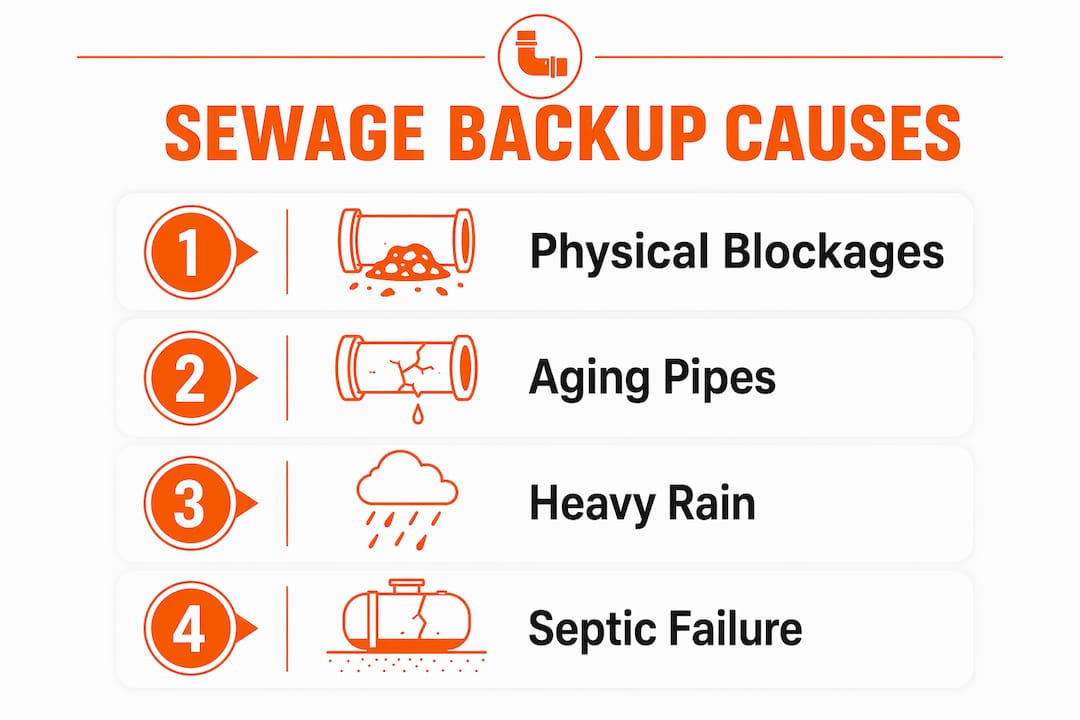
Sewage backup is defined as the reversal of wastewater flow into a home through drains, toilets, or floor fixtures. The primary sewage backup causes are physical blockages in sewer lines, deteriorating pipes, municipal system overloads during heavy rain, and septic system failures. Left unaddressed, Category 3 water damage from sewage exposes your household to hazardous pathogens and can cost tens of thousands of dollars in repairs. Knowing what triggers these events puts you in control before raw sewage reaches your floors.
What causes sewage backups in home sewer lines?
The most common sewage backup causes fall into four categories: physical blockages, pipe deterioration, external system overload, and septic failure. Most homeowners encounter at least one of these in a home older than 20 years. The good news is that each cause has a clear prevention strategy once you understand how it develops.
Tree root intrusion
Tree root intrusion is the leading cause of sewage backups in homes built before 1980, particularly those with clay tile piping. Roots seek moisture and naturally grow toward sewer line joints, where they enter and expand until they completely obstruct flow. By the time you notice slow drains, roots may have been growing inside the pipe for years.
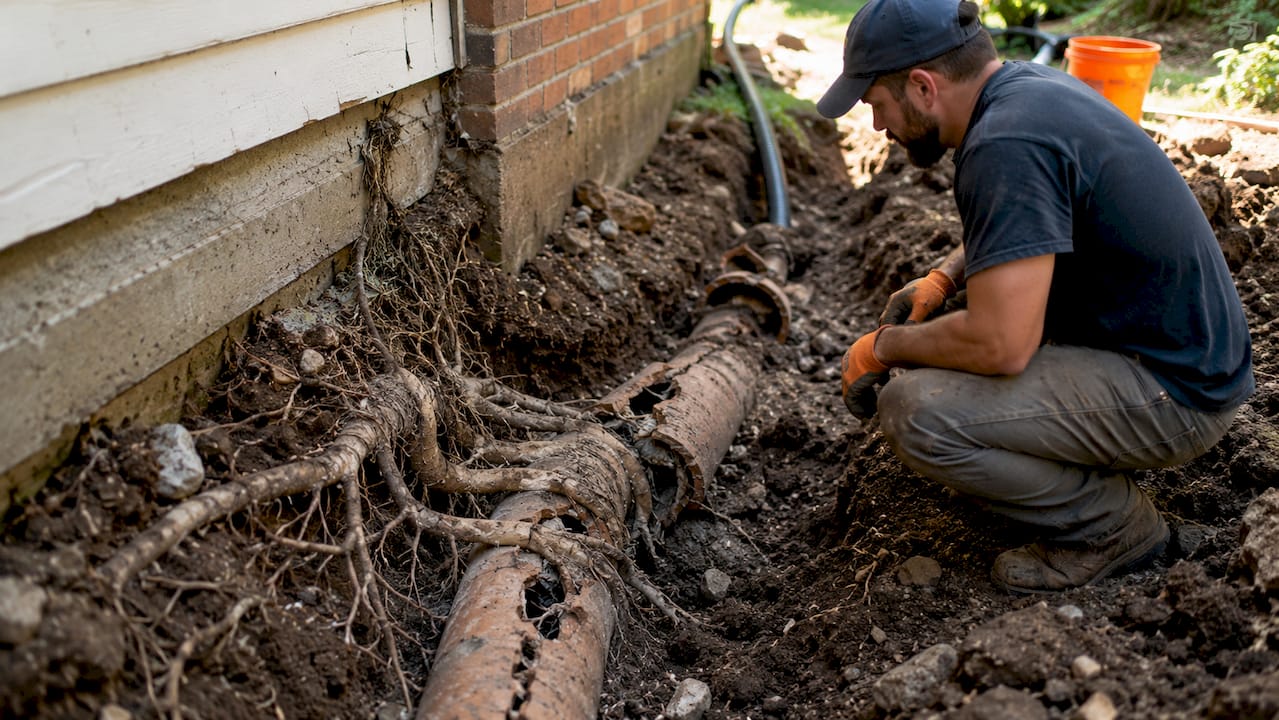
Repair costs reflect the severity. Snaking a root blockage runs $200–$500, but pipe replacement can reach $5,000–$25,000 or more depending on depth and length. Snaking only clears the blockage temporarily. Roots reclaim the space quickly, which means trenchless repair or full line replacement is often the only permanent fix.
Grease, fats, and non-flushable items
Grease and fats poured down kitchen sinks solidify as they cool inside the pipe walls. Over months and years, this buildup narrows the pipe opening and traps other debris passing through. The result is a dense, sticky blockage that resists basic snaking.
Flushable wipes are another top culprit. Despite their labeling, they do not break down the way toilet paper does. They clump together inside pipes and combine with grease deposits to form blockages that require professional removal. Other common offenders include paper towels, cotton swabs, dental floss, and feminine hygiene products.
Here is what most commonly blocks residential sewer lines:
- Tree roots growing through clay tile or cast iron pipe joints
- Grease and cooking oil solidified along pipe walls
- Flushable wipes that do not disintegrate
- Foreign objects such as paper towels, cotton balls, and toys
- Accumulation of hair and soap scum in older drain lines
Pro Tip: Pour cooled cooking grease into a sealed container and throw it in the trash. Never pour it down the drain, even with hot water running.
How do aging pipes lead to sewage backups?
Pipe age is one of the most underestimated sewage overflow reasons among homeowners. Older pipes deteriorate through cracking, corrosion, and eventual collapse, all of which restrict or fully block wastewater flow. The material your pipes are made of determines how quickly this happens.
Clay tile pipes last 50–60 years, and cast iron pipes last 75–100 years. That means millions of American homes built in the 1950s through 1970s are now running on pipes at or past their expected lifespan. Orangeburg pipe, a fiber and tar composite used from the 1940s through the 1970s, is even more problematic. It softens and deforms over time, collapsing under soil pressure without any warning signs visible from inside the home.
Soil shifting makes the problem worse. Ground movement from tree growth, drought, or frost causes pipe sections to separate or misalign at joints. Misaligned joints create low spots where solids collect and blockages form. A camera inspection is the only reliable way to identify these issues before they cause a backup.
Signs your pipes may be deteriorating:
- Slow drains throughout multiple fixtures at once
- Gurgling sounds in toilets or drains after flushing
- Recurring clogs in the same drain despite repeated clearing
- Unexplained wet spots or sinkholes in the yard above the sewer line
- Sewage odors inside the home without an obvious source
Pro Tip: If your home was built before 1980, schedule a sewer line camera inspection. Catching a cracked or collapsed section early costs far less than emergency repair after a full backup.
How does heavy rain cause sewage to back up into homes?
Heavy rainfall overloads municipal sewer systems, forcing wastewater to reverse direction and enter homes through basement floor drains and lower-level fixtures. This is especially common in cities with combined sewer systems, where stormwater and sewage share the same pipes. When those pipes hit capacity, the pressure pushes sewage back through every connected lateral line.
Many homeowners do not realize their own property can make this worse. Sump pumps and roof downspouts improperly connected to sanitary sewers add thousands of gallons of stormwater directly into a system already under strain. This is a code violation in most municipalities, but it remains common in older homes where connections were made before modern standards.
The table below shows the main external causes and their prevention options:
| External cause | How it creates a backup | Prevention option |
|---|---|---|
| Municipal sewer surcharge | Storm overflow reverses into home lateral lines | Install a backwater valve |
| Combined sewer overflow | Stormwater and sewage share pipes and exceed capacity | Disconnect downspouts from sanitary sewer |
| Improper sump pump discharge | Adds stormwater volume to sanitary lines | Redirect sump to yard or storm drain |
| Blocked street-level cleanout | Prevents pressure relief in the lateral line | Keep cleanout accessible and clear |
Backwater valves are the most effective defense against municipal surcharge backups. They allow wastewater to flow out but automatically close when pressure reverses. Many older homes lack them entirely. Installing one is a straightforward upgrade that can prevent thousands of dollars in damage during a single storm event.
Here is the sequence of events during a heavy rain backup:
- Rainfall volume exceeds the municipal sewer system’s capacity.
- Pressure builds in the main sewer line beneath the street.
- Sewage reverses direction and travels back through home lateral lines.
- Wastewater enters the home through the lowest fixtures, typically basement floor drains.
- Without a backwater valve, the flow continues until street-level pressure drops.
What role does septic system failure play in backups?
For homeowners not connected to a municipal sewer, septic system failures are the primary cause of sewage backing up into the home. The two most common triggers are an overfull tank and a saturated drain field. Both are preventable with routine maintenance.
A septic tank that has not been pumped on schedule fills with solid waste until there is no room for incoming wastewater. That wastewater has nowhere to go except back up through the pipes into the house. A saturated drain field occurs when the soil surrounding the leach lines becomes too wet to absorb effluent, which can happen after heavy rain or when the system is overloaded by excessive water use.
Septic backups behave differently than municipal sewer backups. You may notice slow drains throughout the entire house rather than just one fixture, standing water or unusually green grass over the drain field, and strong sewage odors near the tank or yard. These signs point to the septic system rather than a blocked lateral line.
Septic system neglect is the root cause in most cases, not sudden failure. Most tanks need pumping every 3–5 years depending on household size. Skipping that service leads to predictable, expensive consequences. A regular pumping schedule is the single most effective way to prevent septic backups.
Key warning signs of a failing septic system:
- Sewage backing up into the lowest drains in the home
- Gurgling sounds from multiple drains simultaneously
- Wet, soggy ground or standing water over the drain field
- Strong odors near the septic tank or in the yard
- Unusually lush, green grass directly above the leach lines
Key takeaways
The most effective way to prevent sewage backups is to address the four root causes: physical blockages, aging pipes, external system overloads, and septic neglect before they escalate.
| Point | Details |
|---|---|
| Tree roots are the top physical cause | Homes built before 1980 with clay tile pipes face the highest risk of root intrusion. |
| Grease and wipes build up silently | Cooking grease and non-degrading wipes create dense blockages that resist basic clearing. |
| Aging pipes need proactive inspection | Clay tile and Orangeburg pipes past their lifespan require camera inspection before failure. |
| Backwater valves stop storm backups | Installing a backwater valve is the most reliable defense against municipal surcharge events. |
| Septic pumping prevents most septic backups | Pumping every 3–5 years eliminates the primary cause of septic system sewage backups. |
What I’ve learned after years of septic calls in Alamance County
Most homeowners I talk to after a backup say the same thing: “I thought it was just a slow drain.” That is the pattern I see repeatedly. The warning signs were there for weeks or months, but they got dismissed as a minor inconvenience. By the time raw sewage is on the floor, the problem has been building for a long time.
The cause I see underestimated most often is grease. People know not to pour grease down the drain in theory, but they still do it because hot water seems to wash it away. It does not. It moves a few feet down the line and solidifies. Do that for five years and you have a serious blockage.
The other thing I want homeowners to understand is that preventing septic failure is almost always cheaper than fixing it. A camera inspection costs a fraction of what emergency excavation costs. A backwater valve installation is a one-time expense that can save you from a $10,000 cleanup. The math is not complicated.
If your home is on a septic system and you cannot remember the last time it was pumped, that is your starting point. If you are on municipal sewer and you have slow drains or gurgling pipes, get a camera inspection scheduled. Do not wait for the backup to tell you there is a problem.
— Jason
Get professional help before a backup gets worse
If you are seeing slow drains, gurgling pipes, or sewage odors, those are early warnings that the causes described in this article are already in progress. Jmseptic serves homeowners across Alamance County, Burlington, Mebane, Graham, and the surrounding Piedmont Triad area with septic installation, repair, and maintenance.

Whether you need a routine pump-out, a camera inspection, or emergency repair, Jmseptic handles it with honest work and long-term solutions. Check the NC homeowner septic guide to understand your system options, or review septic repair urgency to understand what is at stake when you delay. Call Jmseptic before a slow drain becomes a sewage emergency.
FAQ
What is the most common cause of a sewage backup?
Tree root intrusion is the leading cause in homes built before 1980, while grease buildup and non-flushable wipes are the top causes in newer homes. Both develop gradually and are preventable with regular maintenance and proper drain habits.
How do I know if my backup is from the septic system or the city sewer?
Septic backups typically affect all drains in the home at once and come with yard odors or wet ground near the tank. Municipal sewer backups often appear first in basement floor drains and worsen during or after heavy rain.
Can heavy rain cause sewage to back up into my home?
Yes. Heavy rainfall overloads combined sewer systems, forcing wastewater to reverse into home lateral lines through floor drains and lower fixtures. Installing a backwater valve is the most effective way to block this from happening.
How often should I pump my septic tank to prevent backups?
Most septic tanks need pumping every 3–5 years depending on household size and usage. Skipping this service is the primary reason septic systems back up, according to septic maintenance guidance.
Is sewage backup cleanup safe to do yourself?
No. Sewage backup involves Category 3 hazardous water containing pathogens that pose serious health risks. Professional remediation with proper protective equipment and antimicrobial treatment is required for safe cleanup.