
Septic Toilet Gurgling: What It Means and What to Do
If your septic toilet is gurgling, it may signal serious problems. Discover the causes and necessary actions to avoid costly issues.

A gurgling toilet on a septic system almost always means trapped air is fighting its way through the drain line, usually from a blocked vent, a partial clog, or a septic tank running under backpressure. Stop heavy water use right now and check whether other fixtures are gurgling too. Note any sewage odor or wet spots in the yard.
Call today if you notice:
- Gurgling in more than one fixture at the same time
- A sewage smell inside or outside the house
- Standing water or soggy ground over the tank or drainfield
- Slow draining across every sink, tub, and toilet
Sewage backups that persist past 24 to 48 hours, hit multiple fixtures, or come with odor and yard wetness point to a system-wide failure that needs same-day professional attention.
Key Takeaways
Toilet gurgling on a septic system usually signals trapped air from a vent blockage, a partial clog, or tank backpressure, and multi-fixture gurgling with odor or yard wetness demands same-day professional attention.
| Point | Details |
|---|---|
| Identify the pattern first | Check whether one fixture gurgles or several, since that alone tells you local clog versus system-wide issue. |
| Skip the chemical drain cleaner | Chemical cleaners damage the bacteria your septic tank needs to break down waste. |
| Know the 24 to 48 hour rule | Persistent multi-fixture gurgling past that window means a system-wide failure needing same-day help. |
| Pump on a schedule | Most tanks need pumping every 3 to 5 years, sooner for larger households or slow-draining soil. |
| Document before you call | Log which fixtures gurgle, the timing, and photos of yard wetness to speed up diagnosis. |
| Call Jmseptic for hands-on service | Jmseptic offers emergency diagnostics, pump-outs, camera inspection, and hydro-jetting across Alamance County. |
Where to Learn More About Septic Gurgling
- The EPA’s septic malfunction guidance covers the urgency thresholds and pumping intervals cited throughout this guide.
- The Texas Septic Guide explains the difference between localized and system-wide gurgling in plain terms.
- Septic Tank Guru details the diagnostic steps technicians use after a pump-out, including filter and baffle checks.
- Tampa Bay Septic breaks down how weather and appliance use trigger bubbling.
Table of Contents
- What Causes Septic System Toilet Bubbling?
- How Do You Check a Gurgling Toilet Safely?
- When Should You Call a Septic Professional?
- What Do Septic Technicians Check and Fix?
- How Often Should You Pump Your Septic Tank?
- What Should You Tell the Technician Before They Arrive?
- Need Same-Day Septic Help in Alamance County?
- Frequently Asked Questions
- Sources
What Causes Septic System Toilet Bubbling?
Most gurgling traces back to one of six mechanical or septic issues, and figuring out which one is happening usually takes less than five minutes of listening and watching.
- Blocked roof vent: A bird’s nest, leaves, or ice can seal the vent stack, so air that should escape through the roof gets pulled back through your drains instead.
- Local drain clog or P-trap issue: A partial blockage in one fixture’s line traps air behind it, and that fixture alone gurgles when others run.
- Partial main sewer line blockage: Tree roots or grease buildup narrow the pipe leading to the tank, and checking other fixtures during a flush often reveals the same gurgle everywhere.
- Full or overfull septic tank: Once solids and effluent reach the outlet pipe, incoming wastewater has nowhere to go but back up as pressure and air.
- Saturated or failing drainfield: Soil that can’t absorb any more liquid sends wastewater backward into the system.
- Failed baffles or a clogged effluent filter: These parts control flow between chambers, and a clog here mimics a full-tank backup even when sludge levels are fine.
Heavy rain saturates the drainfield fast, and running the washer and dishwasher together spikes water volume right when the system has the least reserve capacity.
How Do You Check a Gurgling Toilet Safely?
Before calling anyone, run through this short sequence. Each step narrows down whether you’re dealing with a $150 vent-cleaning or a system-wide problem.
- Stop all nonessential water use for 30 minutes. Heavy demand hides the real pattern.
- Flush a toilet and listen for gurgling elsewhere. If a bathroom sink or tub gurgles too, the issue is downstream of both fixtures, not local to one.
- Check the lowest fixture in the house. A basement floor drain or laundry tub that gurgles or rises when you flush upstairs points to a blockage deep in the main line or the tank rather than a simple trap issue.
- Sniff for sewer odor near drains and around the yard where the tank and drainfield sit.
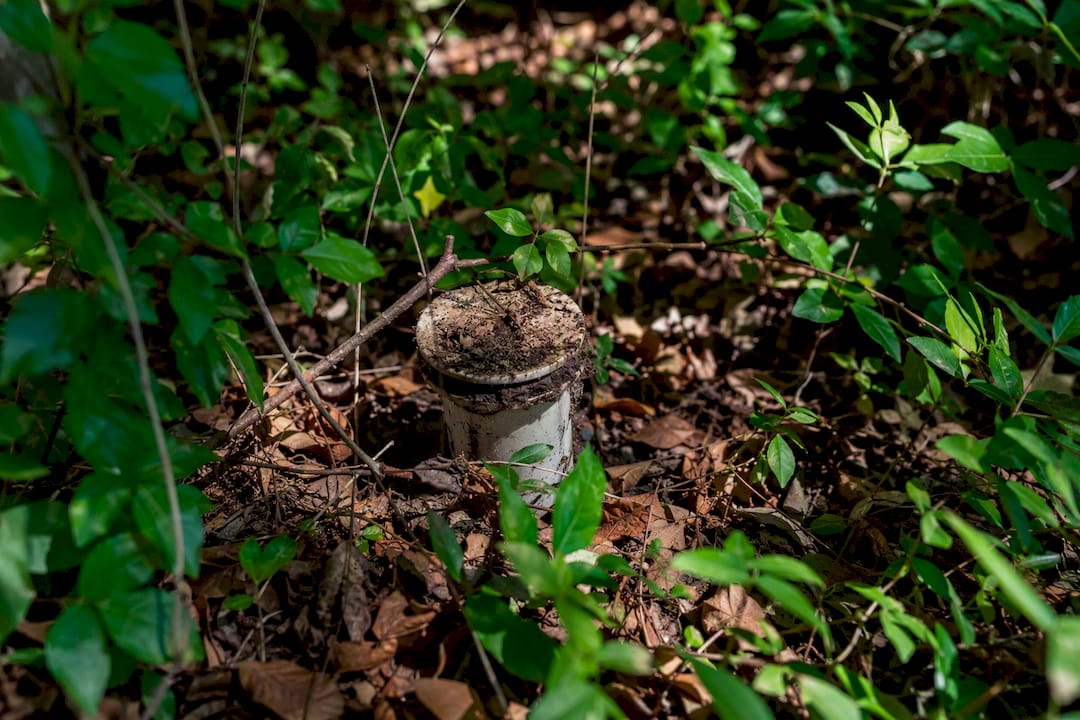
- Look at the roof vent from the ground, with binoculars if you have them, for obvious debris or a bird’s nest.
- Write down the time, weather, and what appliance was running. Gurgling that shows up right after laundry or during rain tells a technician a lot before they even arrive.
If only one fixture gurgles and it’s isolated to a single drain, you’re likely looking at a local trap or vent issue that can wait for a scheduled visit. If several fixtures gurgle together, treat it as a system-wide signal.
Pro Tip: Never pour chemical drain cleaner down a gurgling toilet. It can kill the bacteria your septic tank relies on to break down waste, turning a minor clog into a much bigger problem. Avoid digging near the tank or drainfield, and never enter or lean into a tank opening. Sewer gas exposure has caused fatalities in confined spaces, so leave excavation and tank access to trained technicians.
When Should You Call a Septic Professional?
Some gurgling can wait for a normal appointment. Some can’t. Here’s how to tell the difference.
Call today, same-day, if you see any of these:
- Gurgling in two or more fixtures at once
- A septic alarm sounding, which usually signals high water levels or a pump failure
- Sewage odor indoors or standing wastewater in the yard
- Water backing up into tubs or showers when you flush
- Gurgling that persists beyond a couple of days
That 24 to 48 hour window isn’t arbitrary. The EPA identifies persistent, multi-fixture symptoms combined with odor or yard wetness as the threshold for a system-wide malfunction rather than a minor nuisance. While you wait for a callback, stop using the washer and dishwasher, and ask everyone in the house to cut back on showers and toilet flushes. That single move buys the system time and keeps a bad situation from turning into a backup on your floor.
What Do Septic Technicians Check and Fix?
A technician runs through a fairly standard sequence, and knowing it ahead of time makes the visit faster and less confusing.
- Vent stack inspection for blockage, debris, or animal nests
- Camera inspection of the main line, which gives a definitive read on root intrusion or a collapsed joint without any guesswork
- Tank inspection and pump-out, checking sludge and scum layer depth against the outlet pipe
- Effluent filter cleaning, since a clogged filter alone can cause gurgling even when the tank isn’t dangerously full
- Baffle inspection at the inlet and outlet, replacing any that have cracked or corroded
- Hydro-jetting if a camera shows buildup or partial blockage in the line
Most visits start with the least invasive check (the vent) and move toward the tank and line only if the simple fixes don’t explain the symptoms. A pump-out plus a filter cleaning often resolves many gurgling complaints.
How Often Should You Pump Your Septic Tank?
Prevention comes down to a short list of habits, and none of them require special tools.
- Pump the tank every 3 to 5 years, following general EPA-aligned guidance, and pump sooner if your household is larger or your soil drains slowly.
- Inspect the vent stack once or twice a year, especially before and after storm season when debris blows in.
- Clean or replace the effluent filter on the schedule your installer recommends, usually alongside a pump-out.
- Skip chemical drain cleaners entirely. Our guide on Drano and septic systems breaks down exactly why they damage the bacteria your tank depends on.
- Spread out heavy water use. Running the washer, dishwasher, and three showers in the same hour taxes a tank that’s already near capacity.
- Watch for gurgling after heavy rain. A saturated drainfield during storm season is one of the most common seasonal triggers homeowners report.
For a deeper look at scheduling and what a pump-out visit actually involves, see our septic tank pump service guide.
What Should You Tell the Technician Before They Arrive?
The more specific you can be, the faster the diagnosis. Before your appointment, gather:
- Which fixtures gurgle, and whether it’s one or several
- Timing and triggers, such as right after laundry or during a rainstorm
- Photos of any wet or soggy ground near the tank or drainfield
- Your last pump-out date, if you know it
- Any septic alarm activity, including when it went off and for how long
A gurgle that only happens after laundry points toward volume overload or a partial line blockage. One that shows up during rain points toward drainfield saturation. Either detail helps a technician prioritize the right test before they even step out of the truck.
Pro Tip: Keep a simple log on your phone: date, time, which fixture, and what was running in the house. Two or three entries are usually enough to show a pattern a technician can act on immediately. Our gurgling pipes troubleshooting guide walks through how to build that log step by step.
A Local Technician’s Take on Gurgling Calls
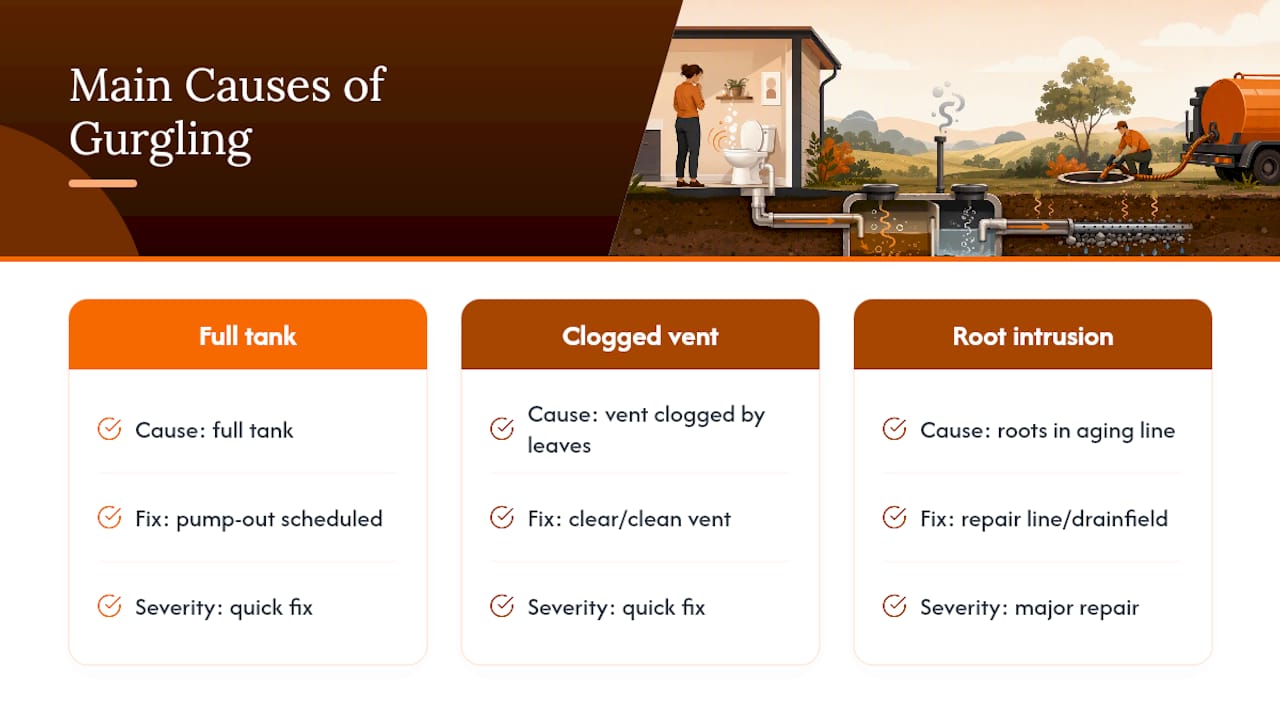
Most of the gurgling calls we get trace back to three things: a full tank nobody scheduled for pumping, a vent that got clogged by leaves, or roots working their way into an aging line. The vent and the pump-out are quick fixes. Roots and a failing drainfield take real repair work, so don’t assume every gurgle is minor, but don’t panic either.
Need Same-Day Septic Help in Alamance County?
If your toilet has been gurgling for more than a day, or you’re seeing more than one warning sign, waiting rarely makes it cheaper to fix. Jmseptic runs emergency diagnostics, tank pump-outs, camera inspections, hydro-jetting, and baffle and filter service across Burlington, Mebane, Elon, Graham, Whitsett, and McLeansville.

Bring us the details from your symptom log (which fixture, when it happens, and any photos of soggy ground) and we can often narrow down the likely cause before a technician even leaves the shop. That saves you time on-site and keeps the visit focused on the actual problem instead of a general once-over. If your tank hasn’t been pumped in the last few years, start with our septic tank pump service page to check whether that’s your fastest fix. For active backups, odor, or standing water right now, go straight to our emergency septic repair page and request same-day service.
Frequently Asked Questions
Is a gurgling toilet always a septic emergency?
No. A single fixture gurgling once, especially right after a big flush, is often just a minor air pocket. Gurgling that repeats, spreads to other fixtures, or comes with odor is when it becomes urgent.
Can I use a plunger on a gurgling toilet connected to a septic system?
Yes, a plunger is safe and won’t harm your septic system. Just skip any chemical drain cleaner, since it can damage the bacteria your tank needs to process waste properly.
Does rain make septic gurgling worse?
Yes. Heavy rain saturates the drainfield, leaving it less able to absorb wastewater, which pushes pressure back through the system and often shows up as gurgling within a day or two of a storm.
How much does it cost to fix a gurgling toilet on a septic system?
It depends entirely on the cause. A vent-clearing or filter cleaning is a minor service, while root intrusion or a failing drainfield involves more extensive repair. A camera inspection gives you a firm number before any major work starts.
What if my septic alarm goes off along with the gurgling?
Treat that as urgent and call the same day. An alarm usually means high water levels or a pump failure, both of which can lead to a backup if left unaddressed.
Sources
- Resolving septic system malfunctions | U.S. EPA
- Signs your septic system is failing | Texas Septic Guide
- Why is my Toilet gurgling after I flush? | Septic Tank Guru
- Fixing septic gurgling in drains: A Texas homeowner’s troubleshooting guide (2026) | Texas Septic Solutions
- Why Might the Toilet Start Bubbling With a Septic System? | Tampa Bay Septic