
Septic Tank Pump Service: 2026 Homeowner Guide
Ensure your system runs smoothly with expert septic tank pump service. Learn how often to pump for cost-effective maintenance!

Septic tank pump service is the process where a licensed professional uses a vacuum truck to remove accumulated sludge and scum from your septic tank, preventing system failure and protecting your drainfield. Most homeowners in Alamance County and across North Carolina need this service every three to five years, though household size and water usage shift that timeline significantly. The average cost in 2026 runs $300 to $600 for a standard 1,000 to 1,500 gallon tank. Skip it too long, and you are looking at drainfield replacement bills that start at $3,000 and climb fast.
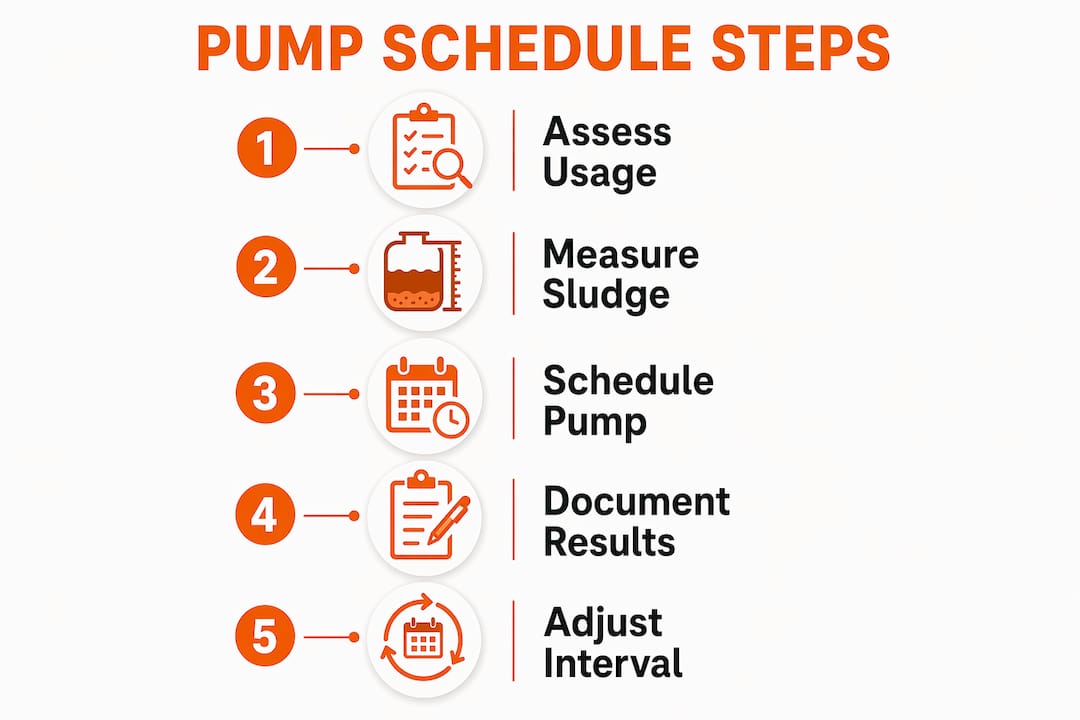
How often should you schedule septic tank pump service?
The standard pumping interval is every three to five years for an average household, but that number is a starting point, not a rule. Tank size and the number of people living in your home are the two biggest variables. A 1,000 gallon tank serving four residents fills up roughly every 2.5 years, while the same tank serving two people can go four years or more between services.
Garbage disposals accelerate sludge buildup faster than most homeowners realize. Using one regularly can shorten your pumping interval by 30 to 50 percent compared to a household that does not. High water consumption from extra laundry loads, long showers, or a home-based business adds similar pressure on the system.
The most reliable way to set your schedule is through sludge and scum measurement at each service appointment. Measuring sludge levels gives your technician real data about how fast your tank fills, so the next interval is based on your actual household, not a generic calendar. This approach prevents both over-pumping (wasting money) and under-pumping (risking failure).
Here is a practical reference for common household scenarios:
| Household size | Tank size | Estimated pumping interval |
|---|---|---|
| 2 people | 1,000 gallons | Every 4 to 5 years |
| 4 people | 1,000 gallons | Every 2.5 to 3 years |
| 4 people | 1,500 gallons | Every 3.5 to 4 years |
| 6 people | 1,500 gallons | Every 2 to 3 years |
Pro Tip: Ask your technician to record sludge depth in writing at every visit. After two or three services, you will have enough data to set a pumping schedule that fits your home exactly, rather than guessing.
What does septic tank pump service actually cost?
The average pump-out cost in 2026 is approximately $400 for a standard 1,000 to 1,500 gallon tank, with most homeowners paying between $300 and $600. That range widens quickly once you factor in tank size, location, and the condition of your access points. Understanding what drives the final number helps you compare quotes without getting caught off guard.
Several factors push costs above the baseline:
- Tank size: Larger tanks hold more waste and take longer to pump. A 2,000 gallon tank can cost $100 to $200 more than a standard 1,000 gallon unit.
- Access fees: If your tank lid is buried under soil or landscaping, technicians charge $50 to $200 extra for digging access fees before they can even start.
- Disposal fees: Some companies charge separately for waste hauling and disposal at a licensed treatment facility.
- Emergency service: After-hours or same-day calls typically carry a premium of $100 to $300 above standard rates.
- Cleaning vs. pumping: A full clean removes all residue from tank walls and baffles. A standard pump-out removes liquid and soft solids. Cleaning costs more but is not always necessary at every visit.
One of the smartest investments you can make is installing septic risers, which are extensions that bring your tank lids to ground level. The upfront cost is typically $200 to $400, but it eliminates access fees on every future service call. Over three or four pump-outs, the risers pay for themselves entirely.
Septic installation costs in North Carolina vary by soil type, lot size, and system design, so it helps to understand the full pricing picture before any major service decision.
Pro Tip: Scheduling your pump-out outside of spring can save 10 to 15 percent. Off-peak scheduling in winter or mid-summer means more technician availability and, in many cases, lower rates.
Always ask for an all-inclusive quote before work begins. A low headline price that excludes disposal, inspection, or access fees can end up costing more than a higher quote that covers everything.
What happens during a professional pump service appointment?
Knowing what to expect removes the uncertainty and helps you verify that you are getting a thorough service, not just a quick pump-out. A complete septic tank pump service appointment follows a clear sequence.
- Locating and uncovering the tank. The technician identifies the tank location, often using your property records or a probe, and uncovers the access lids. If lids are buried, this step adds time and cost.
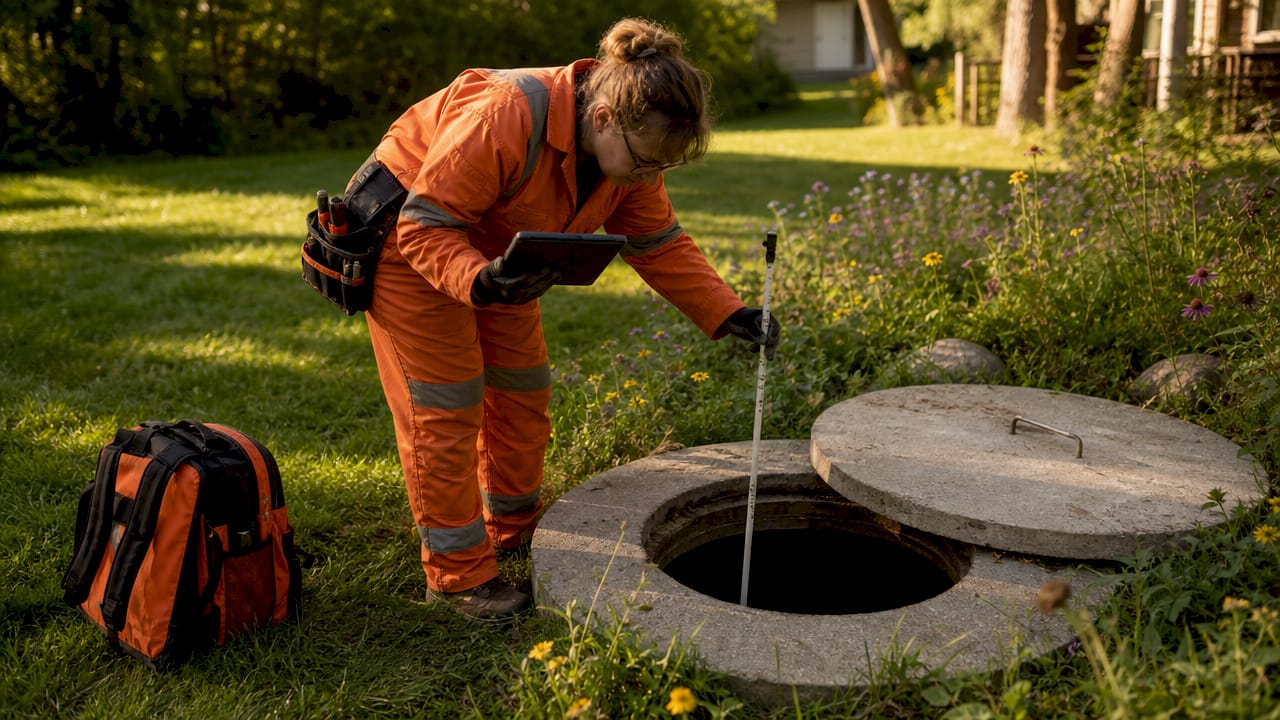
- Measuring sludge and scum layers. Before pumping begins, the technician measures the depth of both the sludge layer at the bottom and the scum layer at the top. These numbers go into your service record.
- Pumping out the tank contents. A vacuum hose is inserted and the truck removes all liquid waste, sludge, and floating solids. The typical pump-out takes 30 to 60 minutes, though total appointment time including setup and inspection runs one to two hours.
- Inspecting the tank interior. With the tank empty, the technician checks the condition of the inlet and outlet baffles, looks for cracks or damage to the tank walls, and examines the effluent filter if your system has one. Effluent filters and baffles must be inspected and cleaned during pumping to prevent solids from reaching the drainfield.
- Cleaning the effluent filter. If your tank has one, the filter gets cleaned or flagged for replacement. A clogged filter is one of the most common causes of slow drains and backups.
- Completing the written service report. A reputable company provides a written record that includes sludge measurements, inspection findings, and any recommended repairs. Keep this document. It is your maintenance history and your evidence of compliance with North Carolina septic regulations.
A technician’s inspection during pumping is often more valuable than the pump-out itself. Early detection of baffle damage or sludge issues during a routine service costs far less to fix than a drainfield failure discovered after the fact.
Pro Tip: If a company offers to pump your tank without measuring sludge levels or providing a written report, that is a red flag. A thorough service always includes documentation.
Common mistakes that lead to expensive septic repairs
Most septic failures are preventable. The problems Jmseptic sees most often in Alamance County trace back to a handful of avoidable mistakes.
- Waiting too long between pump-outs. Solids that overflow into the drainfield cause irreversible clogging. Drainfield replacement costs between $3,000 and $15,000, making a $400 pump-out look like the bargain of the decade.
- Ignoring warning signs. Slow drains throughout the house, gurgling pipes, sewage odors near the tank or yard, and standing water over the drainfield all signal that pumping is overdue. These symptoms rarely resolve on their own.
- Accepting incomplete service. A pump-out without inspection leaves problems hidden. Always confirm that the appointment includes a visual inspection of baffles, walls, and the effluent filter.
- Hiring unlicensed providers. Licensed septage waste transporters are legally required to perform septic pumping in North Carolina. DIY pumping is illegal and creates environmental contamination risks. Verify licensing before you book.
- Skipping the written record. Without documentation, you have no way to track accumulation rates, prove maintenance history for a home sale, or identify patterns that signal a developing problem.
Choosing a provider based solely on the lowest price is the mistake that costs the most in the long run. Ask whether the quote includes inspection, disposal, and a written report. A company that cannot answer those questions clearly is not the right choice.
Key takeaways
Regular, properly documented septic tank pump service is the single most cost-effective way to prevent drainfield failure and protect your home’s plumbing investment.
| Point | Details |
|---|---|
| Pump every 3 to 5 years | Adjust the interval based on household size, tank volume, and garbage disposal use. |
| Budget $300 to $600 | Factor in access fees, disposal charges, and emergency premiums when comparing quotes. |
| Demand a written report | Sludge measurements and inspection findings at every visit build a reliable maintenance record. |
| Install risers to cut costs | Bringing lids to ground level eliminates $50 to $200 in access fees on every future service. |
| Hire licensed professionals | North Carolina law requires licensed septage transporters; unlicensed pumping is illegal and unsafe. |
What I have learned after years of septic work
The homeowners who spend the least on septic repairs over a lifetime are not the ones who found the cheapest pump-out. They are the ones who treated pumping as a diagnostic appointment, not just a chore.
The biggest misconception I run into is that pumping is the whole job. It is not. The pump-out clears the tank, but the inspection tells you whether your system is healthy. A cracked baffle found during a routine service costs maybe $150 to replace. That same cracked baffle, left undetected for another three years, sends solids into the drainfield and turns a minor repair into a $10,000 replacement project.
I also see homeowners skip regular septic inspections because the system seems fine. Septic systems fail quietly. There are no dashboard warning lights. By the time you smell something or see standing water, the damage is already done. Proactive service is not overcaution. It is the only way to stay ahead of a system that works underground and out of sight.
My honest advice: find a licensed local provider you trust, ask for sludge measurements in writing every time, and do not let the calendar slip past five years no matter what. The cost of staying on schedule is predictable. The cost of falling behind is not.
— Jason
Keep your septic system running with Jmseptic
If you are seeing slow drains, yard odors, or it has been more than three years since your last service, it is time to act before a small issue becomes a major repair.

Jmseptic serves homeowners across Burlington, Mebane, Graham, Elon, Whitsett, and McLeansville with professional septic pump service, repairs, and full system installations. Every appointment includes a thorough inspection and written service record. For homeowners weighing repair versus replacement, the septic cost factors guide breaks down what drives pricing in North Carolina so you can make an informed decision. If your system is already showing signs of failure, the emergency septic repair guide for Alamance County homes explains your next steps. Call Jmseptic today for a straightforward quote with no hidden fees.
FAQ
How much does septic tank pump service cost in 2026?
Most homeowners pay between $300 and $600 for a standard pump-out, with an average around $400 for a 1,000 to 1,500 gallon tank. Additional fees for buried lids, disposal, or emergency service can push the total higher.
How often should a septic tank be pumped?
The standard interval is every three to five years, adjusted for household size and tank volume. A 1,000 gallon tank serving four people typically needs pumping every 2.5 years.
What does a complete septic pump service include?
A thorough service includes sludge and scum measurement, full pump-out, visual inspection of baffles and tank walls, effluent filter cleaning, and a written service report documenting findings.
Can I pump my own septic tank to save money?
No. North Carolina law requires licensed septage waste transporters to perform septic pumping. DIY pumping is illegal and risks environmental contamination and legal penalties.
What are signs that my septic tank needs pumping now?
Slow drains throughout the house, gurgling pipes, sewage odors near the tank or yard, and standing water over the drainfield all indicate the tank is overdue for service and should be addressed immediately.