
Septic Tank Materials Explained: What Homeowners Must Know
Discover the key differences in septic tank materials. Learn how to choose the best option for durability, cost, and installation needs.

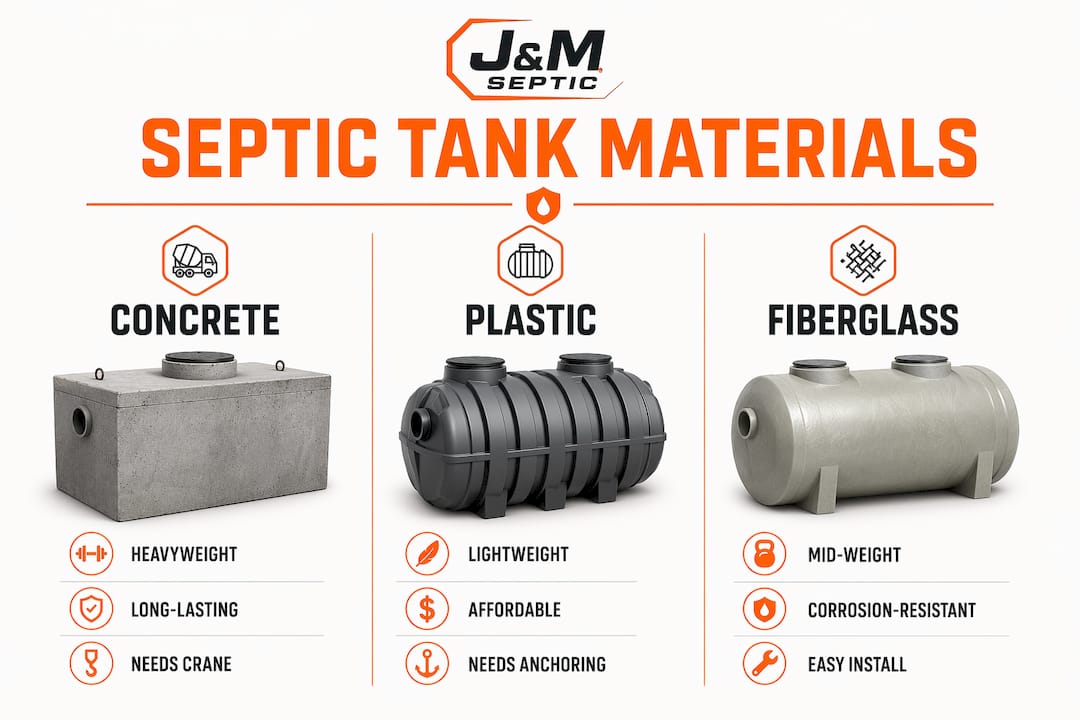
Septic tanks are manufactured from three primary materials: concrete, plastic (polyethylene), and fiberglass. Each material produces a fundamentally different tank in terms of weight, lifespan, corrosion resistance, and installation requirements. Understanding the differences in septic tank materials is the single most important step before committing to an installation or replacement. Concrete tanks last 40–50+ years, while plastic and fiberglass tanks typically last 20–40 years depending on environment and installation quality. No material is universally superior. The right choice depends on your soil, water table, site access, and local code requirements.
What are the differences in septic tank materials?
The three materials divide cleanly by weight, durability, and chemical resistance. Concrete is the heaviest and longest lasting. Plastic is the lightest and most affordable upfront. Fiberglass sits between the two in weight and cost, offering good corrosion resistance without the bulk of concrete. Each material also carries specific risks. Concrete can crack in acidic soils. Plastic can float in high water tables. Fiberglass can shift if backfilled improperly. Knowing these trade-offs before you buy protects you from expensive surprises after installation.
Concrete septic tanks: durability, installation, and suitability
Concrete is the industry standard for residential septic tanks across most of the United States. Its mass and structural strength make it the most durable option available to homeowners.
Lifespan and structural strength
Concrete tanks last 40–50+ years under normal conditions. That longevity comes from sheer mass and the ability to be repaired. Concrete tanks can be patched when cracks develop, which extends usable life without full replacement. No other material offers that repair flexibility.
Weight and installation requirements
Concrete tanks weigh 8,000–12,000 lbs per 1,000 gallons. That weight requires a crane or heavy excavation equipment for placement. Installation costs for concrete typically run $1,500–$4,000 or more, reflecting the machinery and labor involved. The upside of that weight is natural flotation resistance. Concrete resists flotation in high water table areas without anchoring systems, which plastic and fiberglass tanks require.
Corrosion and soil chemistry
Concrete has one real chemical vulnerability: sulfate attack. Acidic soils and hydrogen sulfide gas produced inside the tank can erode concrete over time. Proper concrete mix specification addresses this directly. Type II or Type V Portland cement per ASTM C1227 resists sulfate attack and extends structural longevity in corrosive soils. If your soil is acidic or your property sits near wetlands, ask your installer which cement specification they use.
Key advantages and drawbacks at a glance:
- Lifespan: 40–50+ years with proper maintenance
- Weight: 8,000–12,000 lbs per 1,000 gallons; requires heavy machinery
- Flotation risk: Very low due to mass
- Corrosion risk: Moderate; vulnerable to sulfate attack in acidic soils
- Repairability: High; cracks can be patched to extend service life
- Cost: $1,500–$4,000+ installed
Pro Tip: Ask your concrete tank supplier to confirm ASTM C1227 compliance before purchase. That standard specifies the cement mix and wall thickness required for residential septic tanks, and not every supplier meets it by default.
What makes plastic septic tanks different from concrete?
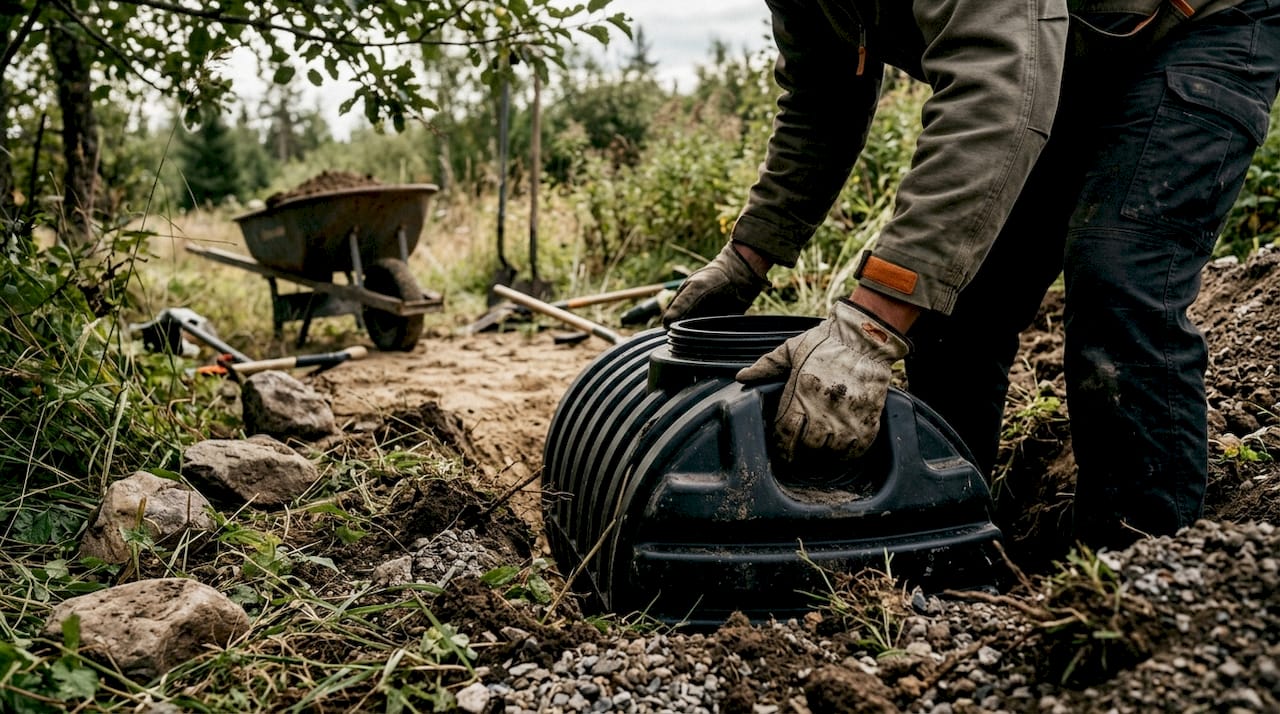
Plastic tanks, made from high-density polyethylene, are the lightest option on the market. Plastic tanks weigh 150–300 lbs, which means a two-person crew can place one without heavy machinery. That portability makes plastic the preferred choice when site access is limited, such as on steep lots or properties with narrow gate openings.
Cost and corrosion resistance
Plastic tanks typically cost $1,000–$2,500 installed, making them the most affordable entry point for homeowners on a budget. Plastic and fiberglass show excellent resistance to chemical corrosion compared to concrete. They do not react to acidic soils, hydrogen sulfide, or most household chemicals. That chemical inertness is a genuine advantage in areas with naturally acidic soil profiles.
Flotation and structural deformation risks
Plastic’s light weight creates a serious problem in saturated soils. Plastic tanks require anchoring in high water table environments to prevent the empty tank from floating out of the ground during heavy rain or flooding. Beyond flotation, structural deformation is the primary failure mode for plastic tanks. Proper backfilling is critical to prevent a condition called “egging,” where soil pressure deforms the tank walls into an oval shape. Granular backfill material placed in uniform lifts around the tank prevents this failure.
Repairability and lifespan
Plastic tanks last an estimated 20–40 years. Plastic tanks are difficult to repair and usually require full replacement if cracked or significantly deformed. Modern plastic tanks are manufactured as a single seamless unit, which reduces leakage risk at joints compared to older multi-piece concrete designs.
Key advantages and drawbacks:
- Lifespan: 20–40 years
- Weight: 150–300 lbs; manual placement possible
- Flotation risk: High in saturated soils; anchoring required
- Corrosion risk: Very low; chemically inert
- Repairability: Low; replacement typically required after damage
- Cost: $1,000–$2,500 installed
Pro Tip: If you choose a plastic tank, specify granular backfill material in your installation contract. Improper backfill with clay or large rocks is the leading cause of egging and premature structural failure.
Fiberglass septic tanks: balance of weight, strength, and corrosion resistance
Fiberglass tanks occupy the middle ground between concrete and plastic. They are lightweight enough to install without heavy machinery, yet structurally rigid enough to resist the deformation that affects plastic tanks under soil pressure.
Weight and installation ease
Fiberglass tanks are heavier than plastic but far lighter than concrete. A standard residential fiberglass tank can typically be placed with a small excavator or even by hand on accessible sites. That installation flexibility makes fiberglass a strong choice for remote properties or sites where crane access is not practical.
Corrosion resistance and chemical performance
Like plastic, fiberglass is chemically inert. It resists acids, hydrogen sulfide, and most household waste compounds without degradation. This makes fiberglass particularly well suited to properties with acidic soil or high organic content in the ground. Homeowners in areas with naturally corrosive soil conditions often find fiberglass outperforms concrete over the long term.
Flotation risk and cost
Fiberglass carries a moderate flotation risk. It is heavier than plastic, so it is less prone to floating, but it still requires anchoring in high water table environments. Cost typically falls between plastic and concrete, making it a mid-range option for homeowners who want corrosion resistance without the full weight and cost of concrete. Understanding factors that affect septic system lifespan helps homeowners evaluate whether the mid-range investment in fiberglass pays off over time.
Key advantages and drawbacks:
- Lifespan: 20–40 years in most environments
- Weight: Heavier than plastic, lighter than concrete
- Flotation risk: Moderate; anchoring needed in saturated soils
- Corrosion risk: Very low; chemically inert like plastic
- Repairability: Limited; damage typically requires replacement
- Best use cases: Remote sites, acidic soils, limited equipment access
How do you choose the right septic tank material?
The best material depends on water table, site accessibility, and local code requirements rather than any universal ranking. No single material wins every situation. Work through these factors in order before making a decision.
-
Check your water table. High water tables eliminate plastic as a simple choice. Concrete handles saturated soil conditions without additional anchoring costs. If you choose plastic or fiberglass in a high water table area, budget for an anchoring system and confirm your installer has experience with it.
-
Assess site accessibility. Narrow driveways, steep grades, and tight lot lines can make crane access impossible. Plastic and fiberglass tanks solve this problem. If your site cannot accommodate heavy machinery, lightweight materials are not just convenient. They may be your only option.
-
Test your soil chemistry. Acidic soils attack concrete over time. A basic soil test from your county extension office costs very little and tells you whether concrete’s sulfate vulnerability is a real concern on your property. If soil pH is low, plastic or fiberglass will outlast concrete without the corrosion risk.
-
Calculate total cost of ownership. Homeowners should consider total cost of ownership including installation precision, maintenance risks, and longevity rather than just material price. A concrete tank at $3,500 installed that lasts 50 years costs less per year than a plastic tank at $1,800 that requires replacement in 25 years. Run the numbers for your specific situation. Review septic installation cost factors in North Carolina to build an accurate budget.
-
Confirm local code approvals. Some counties and states have approved material lists for septic tanks. Concrete holds the broadest approval across jurisdictions. Plastic and fiberglass are widely accepted but verify with your local health department before purchasing.
-
Plan for routine maintenance. All septic tanks require inspection every 3 years and pumping when sludge reaches 30% of tank volume. Material choice does not change this schedule. A well-maintained plastic tank will outlast a neglected concrete tank every time. Understanding what a drain field does is equally important, since the tank and drain field function as a single system.
Pro Tip: Get a soil test and a water table assessment from your county health department before you contact any installer. Those two data points will immediately narrow your material options and prevent you from paying for a tank that is wrong for your site.
Key Takeaways
The right septic tank material is determined by site conditions, not by a universal ranking of materials.
| Point | Details |
|---|---|
| Concrete lasts longest | Concrete tanks last 40–50+ years and can be patched, making them the most durable option. |
| Plastic costs less upfront | Plastic tanks run $1,000–$2,500 installed but carry flotation and deformation risks in wet soils. |
| Fiberglass balances weight and resistance | Fiberglass resists corrosion like plastic but holds its shape better under soil pressure. |
| Water table drives material choice | High water tables favor concrete; plastic and fiberglass require anchoring systems in saturated soils. |
| Installation quality matters as much as material | Proper backfill, correct cement spec, and anchoring determine real-world lifespan regardless of material. |
What I’ve learned after years of septic installations
Most homeowners fixate on price when choosing a tank material. That instinct is understandable, but it leads to the wrong decision more often than not. The material cost is rarely the biggest variable. Installation quality is.
Proper installation has a greater impact on tank lifespan than material type alone. I have seen plastic tanks installed correctly that outlasted poorly installed concrete tanks by a decade. I have also seen fiberglass tanks fail in five years because the installer used the wrong backfill. The material sets the ceiling for performance. The installation determines whether you reach it.
The two risks homeowners consistently underestimate are flotation and corrosion. Flotation sounds dramatic, but it happens quietly. An empty tank in a high water table area can shift or float during a wet winter, breaking inlet and outlet pipes before you notice anything wrong. Corrosion in concrete is slower but just as damaging. A tank poured with the wrong cement mix in acidic soil will show structural deterioration within 15–20 years instead of 40.
My honest recommendation: get a soil test and a water table reading before you talk to any installer. Those two facts will tell you more about the right material than any price comparison. Then hire an installer who can explain exactly what backfill material they use, what cement specification they pour to, and how they handle flotation risk on your specific site. If they cannot answer those questions clearly, keep looking.
Regular inspection and pumping protect every material equally. A tank you never inspect will fail regardless of whether it is concrete, plastic, or fiberglass. Schedule that inspection every three years and treat it as non-negotiable.
— Jason
Jmseptic helps Alamance County homeowners choose the right tank
Choosing the right septic tank material is a site-specific decision, and getting it wrong is expensive. Jmseptic serves homeowners across Alamance County, Burlington, Mebane, Graham, and the surrounding Piedmont Triad area with professional installation and honest guidance on material selection.

The team at Jmseptic assesses your water table, soil conditions, and site access before recommending a material. That assessment protects you from flotation failures, corrosion issues, and installation errors that shorten tank life. Read the full NC septic installation guide to understand what a professional installation process looks like from start to finish. When you are ready to move forward, Jmseptic is ready to help you get it right the first time.
FAQ
What is the longest-lasting septic tank material?
Concrete is the longest-lasting septic tank material, with a typical lifespan of 40–50+ years. It also offers the unique advantage of being repairable if cracks develop.
Are plastic septic tanks safe to use?
Plastic tanks are safe and widely used, but they require proper granular backfill to prevent structural deformation and anchoring systems in high water table areas to prevent flotation.
How do I know which septic tank material is right for my property?
The right material depends on your water table level, soil chemistry, and site accessibility. A soil test and water table assessment from your county health department will narrow the options before you contact an installer.
Do all septic tanks need the same maintenance regardless of material?
Yes. All septic tanks require inspection every 3 years and pumping when sludge reaches 30% of tank volume, regardless of whether the tank is concrete, plastic, or fiberglass.
Is fiberglass better than plastic for a septic tank?
Fiberglass resists structural deformation better than plastic under soil pressure, making it more reliable in most soil conditions. Both materials offer similar corrosion resistance, but fiberglass carries a lower risk of egging from improper backfill.