
Septic Systems Without Leach Fields: Your Options
Explore your options for septic systems without leach fields. Understand alternatives, and make informed decisions for your property today!

If your property failed a perc test, sits on rocky soil, or has a high water table, you’ve probably already discovered that conventional septic systems without leach fields aren’t a simple swap. Most homeowners assume a septic tank is the whole system. It isn’t. The leach field does the heavy lifting on final treatment, and when your site can’t support one, you need an engineered replacement, not a workaround. This guide walks you through exactly what alternatives exist, what drives those decisions, and how to get the right system installed the first time.
Table of Contents
- Key Takeaways
- How conventional septic systems work
- When soil or site conditions rule out a leach field
- Engineered alternatives that replace leach fields
- Regulatory, permitting, and maintenance realities
- How to choose the right system for your property
- My take on properties that can’t fit a standard leach field
- Jmseptic handles the tough installs in Alamance County
- FAQ
Key Takeaways
| Point | Details |
|---|---|
| Leach fields are not optional by default | Most jurisdictions require a functioning drain field or an approved engineered equivalent before permits are issued. |
| Site conditions drive system selection | Soil type, water table depth, and lot size determine which alternative septic system will actually work on your property. |
| Engineered alternatives exist and work | ATUs, drip dispersal, mound systems, and sand filters all replace soil treatment when conventional drain fields aren’t feasible. |
| Advanced treatment can replace surface discharge | UV disinfection combined with aerobic treatment can allow surface discharge under regulatory approval in some states. |
| Professional site evaluation comes first | Skipping a thorough soil and site assessment before design leads to permitting failures and expensive corrections later. |
How conventional septic systems work
A standard septic system has two jobs. The tank handles primary treatment: solids settle, scum floats, and clarified liquid moves on. The leach field finishes the job by dispersing that partially treated effluent through the soil, where bacteria and filtration complete the treatment before the water reaches groundwater.
The soil in a conventional drain field isn’t just a dumping ground. It’s an active biological treatment zone. That’s why percolation rates matter. Soil that absorbs too slowly floods the field. Soil that absorbs too fast, like coarse sand or fractured rock, lets untreated effluent reach groundwater before treatment finishes. Either extreme is a problem, and soil that fails percolation testing means a conventional system cannot be approved.
Most regulatory agencies require a functioning soil drain field or a code-approved alternative. There’s no legal path to simply skipping soil treatment and calling it done. Understanding this upfront saves you from chasing options that won’t pass inspection.
Pro Tip: Before purchasing rural land or a property with an older system, always ask for the original perc test results. If those records don’t exist, budget for a new soil evaluation before closing.
Here’s where conventional systems typically fail:
- Slow percolation in clay-heavy soil causing surfacing effluent
- Inadequate vertical separation between the drain field and water table
- Insufficient lot area to meet setback requirements from wells, streams, and property lines
- Rock ledge or hardpan within the required soil depth
- Seasonal saturation that floods the field during wet months
When soil or site conditions rule out a leach field
Not every property can support conventional septic drainfields, and the reasons vary more than most homeowners expect. Clay soil is the most common culprit in Piedmont Triad properties. It absorbs water so slowly that effluent backs up and surfaces in the yard, which is a health hazard and a permit violation.
High water tables create a different problem. Regulators require at least 24 inches of separation between the bottom of the drain field and the seasonal high water table. On properties near streams or in low-lying areas, that separation simply isn’t there. Mound systems and ATUs are the standard workarounds for these sites.
Karst terrain, common in parts of Virginia and the Appalachians, presents a particularly serious challenge. Thin soils over limestone allow wastewater to move rapidly through fractures directly into groundwater. Karst terrain requires pre-treatment plus engineered dispersal to prevent contamination, and setbacks from sinkholes add additional land constraints.
Small urban or suburban lots face setback stacking problems. Your drain field must stay a minimum distance from your well, your neighbor’s property line, any streams, and structures. On a half-acre lot, there’s often no rectangle of land left that satisfies every setback simultaneously. Proper site evaluations before design are the only way to know what you’re working with before spending money on a system that can’t be permitted.
According to perc test outcomes, if your soil fails or your site scores poorly on vertical separation, you are automatically in the territory of no drain field septic systems that require engineering review.
Engineered alternatives that replace leach fields
This is where the options get specific. A septic system without a leach field doesn’t mean no treatment. It means replacing soil-based treatment with something engineered to do the same job better, in less space, or under more controlled conditions.
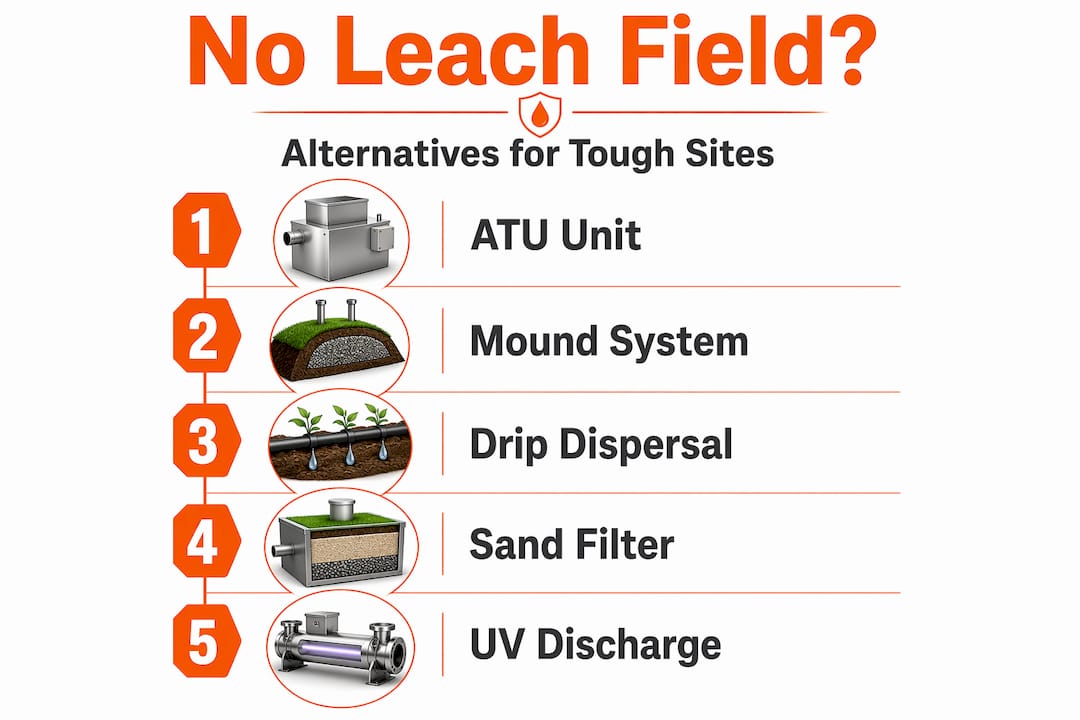
Aerobic treatment units (ATUs)
ATUs inject oxygen into the treatment process, producing effluent that is significantly cleaner than what a conventional tank delivers. That cleaner effluent can then be dispersed over a smaller area or through more restrictive soil. They’re the most common starting point for challenging sites because they upgrade the quality of what reaches the soil, reducing the burden on whatever dispersal system follows.
Mound systems
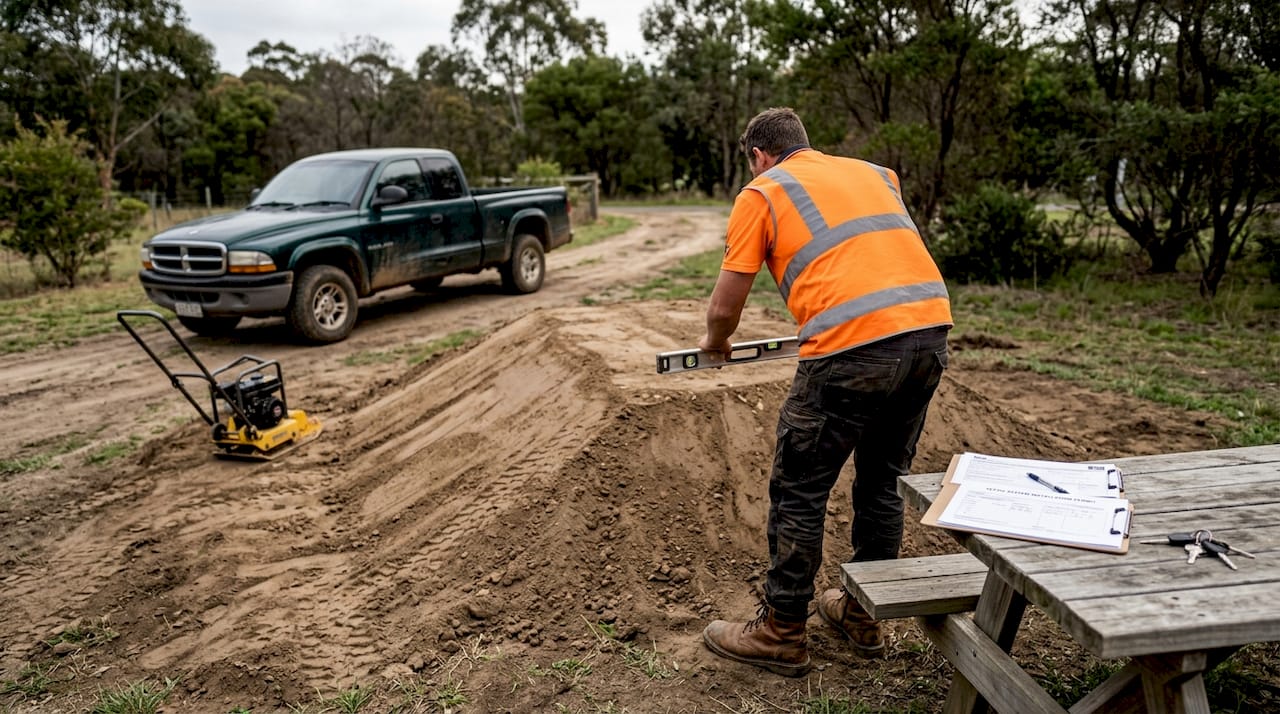
When the water table is too high or soil depth is insufficient, a mound system raises the drain field above the natural ground surface using engineered fill. Mound systems typically use 2 to 5 feet of imported soil to create the vertical separation that the native site lacks. They require more land than a standard drain field, but they work where conventional systems cannot.
Drip dispersal systems
Drip dispersal runs treated effluent through a network of small tubing just below the surface, delivering it slowly and evenly across a larger area. Combined with an ATU, drip dispersal reduces absorption footprint by 40 to 60 percent compared to a conventional field. That makes it the go-to solution for tight lots where there isn’t enough contiguous space for a standard drain field. The tubing can work around trees, setbacks, and irregular property shapes in ways that trench-and-pipe systems cannot.
Sand filter and chamber systems
Sand filter systems pass effluent through a constructed bed of sand before dispersal, adding a treatment step that compensates for poor native soil. Chamber systems replace perforated pipe with open-bottom plastic chambers, increasing infiltration surface area and reducing clogging. Both extend the life of the dispersal zone in marginal soils.
ATU with UV disinfection and surface discharge
The most advanced option treats effluent to a quality that allows permitted discharge to a surface ditch or stream. A North Carolina installation using an Orenco AdvanTex system with UV achieved exactly that, treating effluent to the standard required for permitted ditch discharge. This path requires strict regulatory approval and ongoing monitoring, but it eliminates the need for any soil dispersal when no other option exists.
Pro Tip: Combining an ATU with drip dispersal gives you the most flexibility on constrained sites. The ATU handles treatment quality; the drip handles footprint. Together, they solve the two biggest obstacles most challenging properties face.
Here’s a comparison of the main alternatives:
| System type | Best for | Approximate installed cost | Footprint vs. conventional |
|---|---|---|---|
| Mound system | High water table, shallow soil | $10,000 to $20,000 | Larger above-ground |
| ATU only | Poor soil quality, smaller dispersal needed | $8,000 to $15,000 | Reduces dispersal zone |
| Drip dispersal + ATU | Small lots, irregular sites | $12,000 to $25,000 | 40 to 60% smaller |
| Sand filter system | Moderate soil issues, adds treatment | $7,000 to $18,000 | Similar or slightly larger |
| ATU + UV surface discharge | No viable dispersal area at all | $20,000 to $40,000 | No dispersal zone needed |
Regulatory, permitting, and maintenance realities
Can you have a septic tank without a leach field and still get a permit? Yes, but only if your alternative system meets the same treatment and dispersal standards. Most jurisdictions mandate approved equivalents to the drain field and won’t approve installations that skip soil treatment without advanced replacement technology in place.
Your county health department issues the permits and defines what qualifies as an approved system in your area. In North Carolina, that process involves a site evaluation by a licensed soil scientist or environmental health specialist before any design work begins. Skipping that step doesn’t save money. It guarantees rejection.
Regulatory approval for systems without conventional drain fields also depends on your ability to demonstrate ongoing compliance, which means signed maintenance contracts, regular inspections, and records available for review. ATUs in particular have mechanical components that require servicing every six to twelve months.
Septic inspections across studied populations show failure rates as high as 59%, most tied to poor construction or neglected maintenance. Alternative systems with more moving parts carry even higher failure risk when owners treat them like conventional tanks and ignore them.
Practical tips for keeping an alternative system compliant and functional:
- Schedule professional inspections at least once per year for ATU-based systems
- Keep a maintenance log and service records on file for every inspection
- Don’t flush non-biodegradable materials; advanced systems are more sensitive to shock loads
- Check your permit conditions for required reporting periods and renewal timelines
- Ask your installer about local grants or low-interest loans for alternative system installations
Pro Tip: Ask your installer to walk you through the maintenance requirements before installation, not after. Some alternative systems require a service contract as a condition of the permit. Knowing that upfront affects your total cost picture significantly.
How to choose the right system for your property
The decision process for a septic system without a drain field starts with information, not a quote. Here’s the sequence that actually works:
- Commission a professional site evaluation. A licensed soil scientist or environmental health specialist tests your soil, measures your water table, and documents setbacks. This report drives every decision that follows.
- Get your perc test results interpreted. Understand what your soil can and cannot do before narrowing down system types. Your designer needs this data to make any recommendation that will actually pass permitting.
- Review local code requirements. Your county health department publishes or provides the approved system types for your jurisdiction. Some areas have restricted what systems qualify; others have expanded approvals for new technologies.
- Balance budget against site constraints. Alternative systems cost more upfront. Drain field replacement alone runs $5,000 to $25,000 before factoring in advanced treatment components. Get realistic numbers before committing to a design.
- Consult a licensed septic designer or installer early. A designer who knows your county’s permitting history will know which systems get approved quickly and which ones face extra scrutiny. That knowledge saves months.
- Plan for maintenance from day one. Ask specifically what the system requires, what it costs annually, and whether a service contract is a permit condition.
My take on properties that can’t fit a standard leach field
I’ve worked on a lot of sites where the first question was “can we skip the drain field?” and the honest answer every time is: you can skip the conventional one if you replace what it does. What I’ve seen fail consistently is homeowners trying to minimize the solution because the cost of an engineered system feels steep. They install something undersized or skip the ATU to save money, and two years later they’re looking at a failing system and a remediation bill that’s higher than what the right system would have cost.
The sites that end up with great outcomes are the ones where the owner gets the site evaluation done before calling a contractor for quotes. That evaluation tells you exactly what the soil will and won’t do, and it puts a licensed professional on record confirming the constraints. When you walk into a permitting conversation with that documentation, you get through it faster and with fewer surprises.
The other mistake I see regularly is treating an ATU like a conventional tank. It has an air compressor, an alarm, and dosing pumps. Those components need attention. A system that gets proper annual service outlasts a neglected one by decades, which matters when you’ve invested $15,000 to $25,000 in an engineered installation.
My advice: get the site evaluated first, then get multiple design proposals, then compare total cost of ownership including maintenance, not just install price. The right system for a challenging property protects your investment and keeps you out of trouble with the county.
— Jason
Jmseptic handles the tough installs in Alamance County
If your property has been told it can’t support a conventional system, that’s not the end of the road. It’s the beginning of a more specific conversation.

Jmseptic specializes in custom septic installations designed around your property’s actual conditions, not a one-size-fits-all approach. From site evaluation to permitted installation, we’ve worked through high water tables, tight lots, and clay-heavy soils across Burlington, Mebane, Graham, and the surrounding Piedmont Triad area. If you’re trying to figure out what system will actually work, and actually get approved, reach out to us for a consultation. We’ll give you straight answers and a realistic path forward, not a sales pitch.
FAQ
Can you have a septic tank without a leach field?
Yes, but you cannot skip soil-based treatment without replacing it. Most jurisdictions require an approved alternative, such as an ATU, drip dispersal system, or mound system, before a permit will be issued for a septic system no drain field design.
What septic system works when soil fails a perc test?
When soil fails percolation testing, aerobic treatment units combined with drip dispersal or mound systems are the most common approved replacements. The right choice depends on your water table depth, lot size, and county regulations.
How much does a no drain field septic system cost?
Costs vary widely by system type. Mound and ATU-based systems typically run $8,000 to $25,000 installed, while advanced systems with UV disinfection for surface discharge permits can reach $40,000 or more depending on site conditions and local requirements.
Do alternative septic systems require more maintenance?
Yes. Systems with aerobic treatment units have mechanical components including air compressors and dosing pumps that require professional servicing every six to twelve months. Many permits for these systems require a signed maintenance contract as a condition of approval.
What is the first step when a property can’t support a leach field?
Commission a professional site evaluation from a licensed soil scientist before contacting installers for quotes. Thorough soil testing documents exactly what your site can support and is required by most county health departments before any alternative system design will be reviewed for permitting.