
Avoid Permit Delays: Contractor First Septic Financing in North Carolina
NC septic financing: Helene covers 39 counties. Find local admins, funding routes, and a contractor first checklist to skip paperwork delays.

North Carolina homeowners facing a failed septic system have three real paths to funding: state-administered Clean Water State Revolving Fund (CWSRF) programs, low-interest nonprofit loans like SERCAP’s Individual Household Well & Septic Loan, or private financing when the situation can’t wait. Start by getting a written contractor estimate, then call the program administrator for your county the same week.
TL;DR:
- The NC CWSRF Helene program targets 39 counties, requiring applications through local non-profits, with funding windows tied to cycle deadlines, not year-round.
- Nonprofit lenders like SERCAP offer low-interest loans up to $15,000 at 1%, but funding availability depends on current cycles and allocations.
- Private loans and contractor payment plans can fund urgent repairs quickly but often come with higher interest rates or interest charges, requiring careful comparison.
- Applying for funding involves a detailed contractor estimate, proper paperwork, and understanding county-specific permitting timelines, which can add weeks to the process.
- Matching paperwork to program rules is the main delay in financing; starting documentation early and pursuing multiple funding sources simultaneously reduces overall wait times.
Table of Contents
- What Is the CWSRF Helene Decentralized Program in NC?
- Nonprofit and Regional Loan Programs Worth Calling First
- Private Financing and Contractor Payment Plans
- How to Apply for Septic Financing: Step by Step
- What Does Septic Financing Actually Cost in North Carolina?
- Local Contractor Guidance for NC Homeowners Seeking Financing
- The Real Bottleneck in Septic Financing Isn’t Money, It’s Paperwork
- Sources
What Is the CWSRF Helene Decentralized Program in NC?
North Carolina’s newest and most relevant option is the CWSRF Helene Decentralized Wastewater Treatment Systems Program, built specifically to help homeowners repair, rehabilitate, or connect septic systems damaged or strained across 39 designated counties. NC DEQ awarded funding to non-profit administrators rather than running the program itself, so applications route through those organizations, not the state directly.
Separately, the NC State Water Infrastructure Authority piloted a Decentralized Wastewater Treatment System program offering zero-percent loans targeted at qualifying local government-administered projects, with principal forgiveness possible depending on the award.
Here’s how to work the system:
- Confirm your county is one of the 39 designated under the Helene program before applying
- Contact the awarded non-profit administrator listed on the NC DEQ program page for your county
- Ask whether your local government (LGU) is participating in the SWIA pilot, since that route runs through municipal or county water authorities rather than individual applications
- Expect application windows tied to funding cycles, not a rolling year-round intake
If your county isn’t listed, that doesn’t mean you’re out of options. It usually just means you’re routed toward USDA or nonprofit loans instead.
Nonprofit and Regional Loan Programs Worth Calling First
Nonprofit lenders move faster than government agencies and often carry the lowest rates on the table. SERCAP’s Individual Household Well & Septic Loan has historically offered up to $15,000 at 1% fixed interest for eligible rural homeowners, though funding runs in cycles and can be temporarily exhausted between allocations.
A few other regional avenues worth checking:
- Water Well Trust, which serves homeowners in participating states and starts applications through its regional intake process
- Regional Councils of Governments (COGs), which sometimes administer county-level revolving loan funds separate from state CWSRF money
- County environmental health departments, which usually know which local funds are currently active even when they don’t administer the money themselves
The EPA’s own guidance on decentralized wastewater financing notes that many of these funds operate as revolving loan pools managed by local governments or nonprofits. Money comes back in through repayments, so availability shifts with the budget cycle. Call ahead rather than assuming a program is open.
Private Financing and Contractor Payment Plans
When a system fails now and grant timelines stretch months out, private credit fills the gap, but the tradeoffs matter.
Personal loans close fast, sometimes within days, but usually carry higher interest rates than a home equity option. HELOCs and home equity loans cost less overtime but typically require 15 to 20 percent home equity and take longer to underwrite, which rules them out for an emergency repair. If you’re weighing equity-based borrowing more broadly, this breakdown of why HELOCs appeal to homeowners covers the mechanics in more depth.
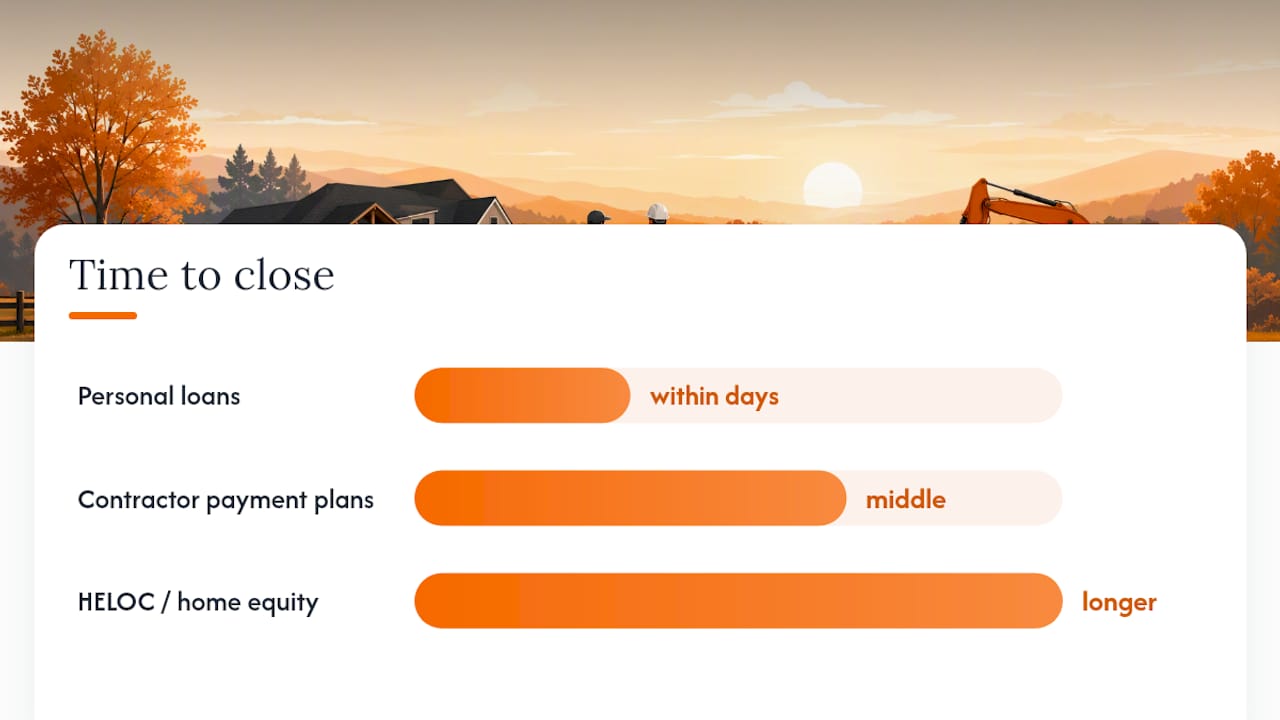
Contractor payment plans sit in the middle. Many local contractors will split a job into installments, but get every term in writing before work starts.
Before signing anything, run through this checklist:
- Pull your credit score first. It changes which personal loan rates you’ll actually qualify for.
- Ask what collateral, if any, secures the loan.
- Compare APR, not just the monthly payment, across every offer.
- Confirm whether the contractor payment plan charges interest or just splits the total cost.
Pro Tip: Start your contractor estimate and your loan pre-qualification on the same day. Most public and private lenders need a signed scope of work before they’ll approve anything, so running both tracks in parallel can shave weeks off your total wait.
How to Apply for Septic Financing: Step by Step
Getting from “my system failed” to funded work follows a fairly predictable sequence, whether you’re going through USDA, a nonprofit, or a bank.
- Get a detailed written estimate from a licensed contractor, including scope of work and total project cost.
- Identify the right program for your situation and call the administrator to confirm county-specific rules before you submit anything.
- Gather your documents: proof of ownership, photo ID, income verification, recent tax returns, and any property maps or percolation test results the county requires.
- Submit your application, follow up in writing, and schedule the inspection and permitting steps your county requires.
A few notes on paperwork friction:
- Some USDA-linked county programs charge a small application fee, which shows up in local intake instructions like Henderson County’s online loan guidance.
- Permitting timelines vary by county health department, so build in extra weeks if you’re near a deadline.
- Read our full breakdown of the NC septic permitting process before you file, so you know what your county will ask for.
What Does Septic Financing Actually Cost in North Carolina?
Repair costs and replacement costs sit on very different scales, and the gap comes down to a handful of variables: soil type, system design, site access, and permit requirements. A detailed cost breakdown shows how those factors stack, but the short version is that difficult soil or tight access can push a project well past a straightforward repair estimate.
Eligibility for public funding generally comes down to three things:
- Owner-occupancy, meaning renters and landlords of non-owner-occupied properties usually don’t qualify
- Rural population thresholds, since most USDA and CWSRF pass-through programs target non-metro areas
- Household income caps, often benchmarked against North Carolina’s median household income for the applicant’s county
Loan terms vary by program, but $15,000 caps at 1% interest over terms up to 10 years show up repeatedly across nonprofit and USDA-adjacent products, per SERCAP’s loan terms. Ongoing operation and maintenance costs are rarely covered by any of these programs.
Timelines split sharply: private loans can fund in days, while public programs often take weeks to months depending on the funding cycle.
Local Contractor Guidance for NC Homeowners Seeking Financing
Financing only solves half the problem. Getting accurate numbers from a contractor before you apply saves you from underfunding the project or getting denied for a mismatched scope.
A proper pre-bid site evaluation checks percolation rates, soil composition, access for equipment, and setback distances from wells or property lines. Skip this step and your estimate is a guess, which becomes a real problem once a lender is holding you to a fixed loan amount.
Before hiring anyone, ask:
- Is the permit pulled under your license, or am I responsible for it?
- What’s your plan for disposing of the old tank or system?
- What’s the realistic timeline, including county permit wait times?
- What warranty covers the new system or repair?
Seasonal scheduling backs up contractors every spring, and permit offices slow down around the same time. Locking in your contractor and starting the permit process early avoids the worst of that squeeze. For a fuller walkthrough of what a new install involves, see our septic system installation guide.
If your project is urgent rather than planned, our guide on emergency septic repair in Alamance County covers what to do while financing is still in process.
Ready to get a real number to bring to a lender? Request a septic system quote from Jmseptic and start your application with an accurate scope of work in hand.
The Real Bottleneck in Septic Financing Isn’t Money, It’s Paperwork
Most homeowners assume the hard part of financing a septic repair is finding a program willing to lend. It isn’t. The hard part is matching your paperwork to whichever program you land on, and most people lose weeks to that mismatch, not to underfunding.
The conventional advice tells homeowners to “apply for grants first, then figure out financing.” That’s backward. Public programs move on funding cycles you can’t control, and nonprofit pools like SERCAP’s run dry between allocations. Waiting to start a contractor estimate until a grant comes through wastes the only time you actually control.
What the research here supports is a parallel approach: get your written estimate and scope of work locked in immediately, then work every funding channel, public and private, at the same time. If a low-interest program comes through, great, you cancel the private application. If it doesn’t, you’re not starting from zero when your drain field backs up in July.
Prioritize speed of documentation over speed of decision. The money moves slower than your problem does.
— Jason
This article is general information, not a substitute for advice from a qualified financial advisor. Consult a qualified financial professional about your own circumstances before acting on anything here.
Sources
Three federal channels feed money into septic financing across North Carolina, and each works differently on the ground.
The Clean Water State Revolving Fund is the biggest lever. The EPA funds it, but North Carolina decides how the money gets used, including financing decentralized wastewater projects like individual septic systems. States can structure CWSRF dollars as low-interest loans, principal forgiveness, or pass-through grants to local governments and nonprofits, which is why the terms you find often depend more on your county than on the federal program itself.
USDA Rural Development runs the other major track. Its Water & Waste Disposal Loan & Grant Program and Single-Family Housing Repair Loans & Grants program can both cover septic work, but eligibility hinges on rural population thresholds and household income.
What this typically covers, depending on the program:
- CWSRF Helene Decentralized Wastewater Treatment Systems (Septic Systems) Program | NC DEQ
- SERCAP’s Individual Household Loan Products
- Septic tank financing and financing options | SoFi
Most of this money moves through state or local administrators rather than directly from Washington, so your first call is almost never to a federal office.