
Septic System Feasibility Study: What Homeowners Must Know
Learn what a septic system feasibility study is and how it helps homeowners ensure their property meets compliance before building or renovating.

A septic system feasibility study is a structured engineering assessment that confirms whether a property’s natural and regulatory conditions can support a compliant septic system. Before any permit gets approved or any shovel breaks ground, this evaluation examines soil percolation, topography, groundwater depth, and local regulations. Skipping it is not an option in most jurisdictions. For homeowners planning new construction or a major renovation in Alamance County or anywhere across North Carolina, understanding what a septic system feasibility study involves is the difference between a smooth build and a costly dead end.
What is a septic system feasibility study and what does it examine?
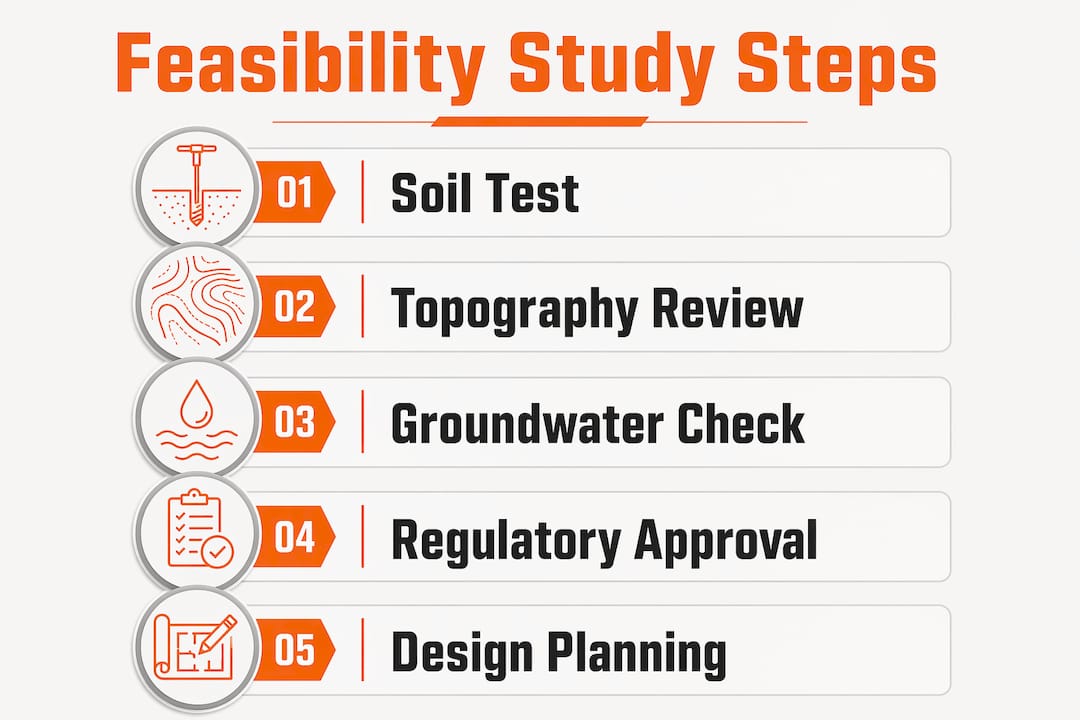
A septic system feasibility study is a required, structured evaluation completed before any septic design work begins. Its purpose is to confirm that a specific piece of land can physically and legally support a compliant wastewater treatment system. The study covers four core areas: soil percolation, site topography, groundwater conditions, and applicable regulations.
Soil testing and percolation rates
Soil permeability determines the size and placement of a leach field, making it the most critical factor in any feasibility assessment. A percolation test measures how quickly water absorbs into the ground at various depths across the property. Soil that drains too slowly will flood the leach field. Soil that drains too fast will push untreated wastewater straight into the groundwater. Both outcomes fail the test. Homeowners with clay-heavy soils common in the Piedmont Triad region often discover their lot requires a more advanced system than a standard gravity-fed design.

Pro Tip: Request the raw percolation test numbers from your engineer, not just a pass or fail summary. Those numbers directly affect which system type gets recommended and what you will pay.
Topography, groundwater, and regulatory review
Slope and elevation affect where wastewater flows naturally and where a system can physically sit on the lot. Steep grades can make standard leach field placement impossible, pushing the design toward a mound system or a pressurized distribution system. Groundwater depth matters just as much. A high water table shrinks the usable soil depth between the leach field and the saturated zone, which is the buffer that filters pathogens before they reach the aquifer. Regulatory review confirms that the proposed system location meets all setback requirements from wells, property lines, wetlands, and structures. Local county engineering offices, including those serving Alamance County, require this review as part of the permitting file.

A comprehensive feasibility report includes soil percolation data, site topography maps, groundwater assessments, and documentation of compliance with all relevant regulations. That package becomes the foundation for every design decision that follows.
Why is a septic feasibility study required before development?
Feasibility studies are mandatory prerequisites for building permits on new subdivisions and developments. A failed study can render land legally undevelopable, which is a fact many homeowners discover only after purchasing a lot. The study protects you, your neighbors, and the local water supply.
Here is why the study matters at each stage of planning:
- Permit approval. Local agencies and county engineering offices require a feasibility report for new plats before issuing any construction permit. Without it, the project stops before it starts.
- System type selection. The report determines whether a conventional system is viable or whether the site demands a Type 2 or Type 3 advanced treatment system. Advanced systems cost significantly more to install and maintain.
- Financial protection. Failing to conduct a study risks legal impossibility to service the property with a standard, affordable septic system. That outcome can make a property unsellable.
- Environmental compliance. The study confirms that the proposed system will not contaminate nearby wells, streams, or wetlands. This protects public health and keeps you out of regulatory trouble.
- Renovation planning. Adding bedrooms or increasing daily water usage changes the load on an existing system. A feasibility assessment confirms whether the current system can handle the new demand or whether an upgrade is required.
A feasibility report is not just a technical document. It is a regulatory pass or fail gate that shapes every system option available to you and determines the full cost of development before you commit a dollar to construction.
The distinction between a feasibility study and a septic inspection is one that trips up many homeowners. Inspections evaluate existing systems. Feasibility studies assess whether a future system can work at all, based on environmental data collected from the site. They are entirely different applications with different purposes.
How to interpret feasibility study results and plan next steps
A feasibility report delivers more than a simple yes or no. Understanding what each section means helps you make informed decisions about your property and your budget.
| Report component | What it tells you |
|---|---|
| Soil percolation data | Whether the soil absorbs water at a rate that supports a leach field |
| Site topography map | Where on the lot a system can physically be placed |
| Groundwater assessment | How much vertical separation exists between the leach field and the water table |
| Regulatory compliance summary | Which setbacks and rules apply and whether the site meets them |
| Recommended system type | Whether a conventional, mound, or advanced treatment system is required |
A passing result means the site supports a compliant system and the design phase can begin. A failing result does not always mean the land is worthless. Feasibility reports help determine when a site requires advanced Type 2 or Type 3 treatment systems due to site limitations. Those systems can often satisfy regulators even on challenging lots, though at a higher cost.
When a site fails for a conventional system, your options include redesigning the leach field layout, applying for a variance, installing a mound system, or using an engineered alternative system. A licensed engineer or environmental consultant interprets the report and recommends the most practical path forward. Homeowners should never attempt to read a feasibility report in isolation. The numbers only make sense in the context of local code requirements and available system types.
Pro Tip: Ask your engineer to walk you through the soil conditions report in plain language before signing off on any design. A 10-minute conversation can save months of redesign later.
Understanding NC septic system regulations is also part of interpreting your results correctly. North Carolina has specific rules about setback distances, soil morphology classifications, and system sizing that directly affect what the report recommends.
Common red flags found during septic feasibility assessments
Not every lot passes. Certain site conditions consistently cause problems during feasibility assessments, and knowing them in advance helps you evaluate a property before you buy or commit to a design.
- Impermeable clay soils. Dense clay absorbs water too slowly for a standard leach field. The percolation rate fails the minimum threshold, and the site requires a mound or alternative system.
- Excessively sandy or gravelly soils. These drain too fast, pushing wastewater through before the soil can filter pathogens. The result is groundwater contamination risk and a failed assessment.
- High groundwater table. When the seasonal high water table sits too close to the surface, there is not enough soil depth to treat effluent safely. This is a common issue in low-lying areas near streams and floodplains.
- Environmental setbacks. Proximity to protected wetlands or wells shrinks the usable area on a lot dramatically. A property that looks spacious on paper may have almost no compliant space for a leach field once setbacks are applied.
- Steep slopes. Grades above a certain threshold make gravity-fed systems impractical and increase the risk of surface breakout, where effluent reaches the ground surface before treatment is complete.
- Constrained lot size. Small lots in rural subdivisions sometimes cannot fit both the primary leach field and the required repair area. Regulations typically require space for a backup field in case the primary fails.
Environmental setbacks from wells, wetlands, and steep slopes often constrain lot usability far more than homeowners expect. Mitigation options exist, including engineered fill, alternative system designs, and lot reconfiguration, but each adds cost and time. Checking for these red flags before purchasing a property is one of the smartest moves a homeowner can make.
Key Takeaways
A septic system feasibility study is a mandatory, site-specific engineering assessment that determines whether a property can legally and physically support a compliant septic system before any design or permitting begins.
| Point | Details |
|---|---|
| Required before permitting | Most jurisdictions mandate a feasibility study before issuing any construction or septic permit. |
| Four core factors evaluated | Soil percolation, topography, groundwater depth, and regulatory setbacks all determine site suitability. |
| Distinct from an inspection | Feasibility studies assess future system viability; inspections evaluate systems already in the ground. |
| Failing does not end options | A failed conventional assessment may still allow advanced system types like mound or Type 3 designs. |
| Early planning saves money | Commissioning the study before purchasing land or finalizing renovation plans prevents costly surprises. |
What I have learned after years of septic work in Alamance County
The most common mistake I see homeowners make is confusing a septic inspection with a feasibility study. They are not the same thing, and treating them as interchangeable has cost people real money. An inspection tells you about a system that already exists. A feasibility study tells you whether a system can exist at all on a given piece of land. That distinction matters enormously when you are buying a vacant lot or planning an addition.
The second thing I have noticed is that homeowners often treat the feasibility study as a bureaucratic hurdle rather than a tool that works in their favor. A good study done early in the planning process gives you negotiating power. If a lot fails, you know before you close. If it passes with conditions, you know exactly what system type to budget for. That information is worth far more than the cost of the study itself.
My honest advice: hire a licensed engineer or environmental consultant who knows your county’s specific soil classifications and setback rules. North Carolina’s soil morphology requirements are detailed, and a consultant who works in Alamance County regularly will catch issues that a generalist might miss. Do not wait until you have already pulled a building permit to find out your lot has a groundwater problem. Get the study done first, read the results carefully, and use them to make a smarter decision about your property.
— Jason
Jmseptic helps Alamance County homeowners plan septic systems right
Jmseptic works with homeowners across Burlington, Mebane, Graham, and the surrounding Piedmont Triad area to navigate the full path from feasibility to installation.

Whether your lot is straightforward or presents real challenges, Jmseptic brings local knowledge of Alamance County soil conditions, setback requirements, and septic permitting steps to every project. The team specializes in new septic system installation and custom-designed systems built for properties where standard designs fall short. If you are planning a new build or renovation and need guidance on what comes next after a feasibility assessment, Jmseptic is ready to help you move forward with confidence.
FAQ
What is a septic system feasibility study?
A septic system feasibility study is a required engineering evaluation that determines whether a property’s soil, topography, groundwater conditions, and local regulations support installing a compliant septic system. It must be completed before any septic design or permit application begins.
How is a feasibility study different from a septic inspection?
A feasibility study assesses whether a future system can work on a given site. A septic inspection evaluates an existing system’s current condition. They serve entirely different purposes and are not interchangeable.
What happens if my property fails a feasibility study?
A failed conventional assessment does not automatically disqualify the land. The report may recommend an advanced treatment system, such as a mound or Type 3 system, which can meet regulatory standards on challenging sites at a higher cost.
Do I need a feasibility study for a home renovation?
Adding bedrooms or increasing water usage changes the load on your existing septic system. A feasibility assessment confirms whether the current system can handle the new demand or whether an upgrade or replacement is required before permits are issued.
How do building regulations affect septic feasibility?
Building regulations and planning requirements directly shape what a feasibility study must demonstrate. Local agencies require the study to confirm that the proposed system meets all setback, soil, and treatment standards before approving any development permit.