
Septic System Failure Signs Homeowners Must Know
Identify the critical signs of septic system failure, like sewage backups and strong odors. Act quickly to protect your home!

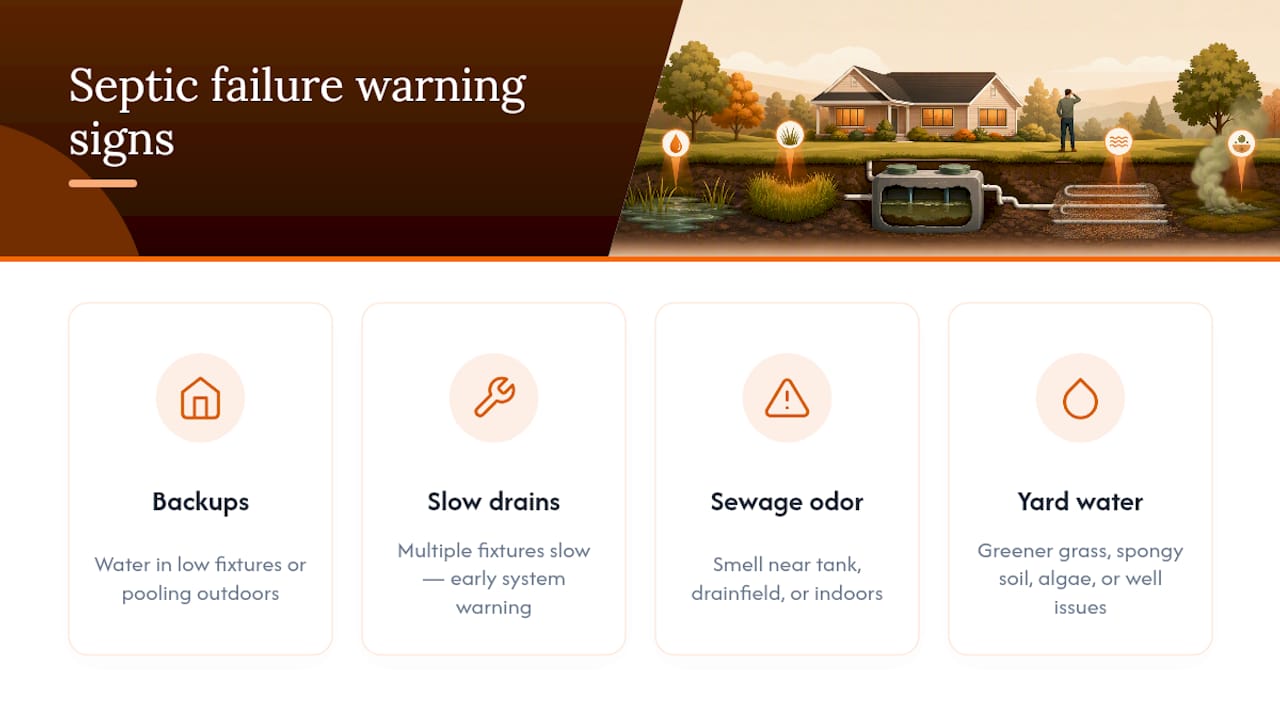
Sewage backing up into your tub, drains that slow down all over the house, a strong sewage smell, and a soggy or unusually green patch in the yard are the clearest septic system failure signs. If you notice any of these, stop running water in the house, stay off the drainfield, and call a licensed septic contractor today.
A few things not to do while you wait for help: don’t run the dishwasher, laundry, or extra showers “just to see if it clears up,” and don’t let kids or pets near standing water in the yard.
- Sewage backup in tubs, toilets, or floor drains
- Multiple slow or gurgling drains at once
- Strong sewage odor indoors or near the tank
- Wet, spongy, or bright-green grass over the tank or drainfield
- Sewage pooling or surfacing on the ground
A septic system that has started discharging effluent to the surface, or backing up into the house, is already failing. Waiting rarely makes it better. It gives the problem more time to spread into the yard, the well, or the house itself.
Pro Tip: Keep a running note of which fixtures act up and when. If it’s only the downstairs bathroom, that’s useful information for the contractor before they even arrive.
If you’re in Alamance County and need someone on-site fast, reach out for a local inspection rather than waiting to see if the problem resolves on its own.
Key Takeaways
Catching septic system failure signs early, backups, slow drains, odors, and yard changes, and acting on them immediately is what keeps a repair cheap instead of catastrophic.
| Point | Details |
|---|---|
| Watch for the big five | Backups, multiple slow drains, gurgling, sewage odor, and wet or bright-green yard spots are the core septic system failure signs. |
| Act fast, not later | Stop water use, stay off the drainfield, and call a licensed contractor as soon as signs appear. |
| Pump on schedule | Follow the 3 to 5 year pumping baseline, sooner with a garbage disposal or a full household. |
| Know rehab vs. replace | Recent saturation can often be dried out; long-term solids clogging usually means the drainfield needs replacing. |
| Test well water | Check for coliform and nitrates if you’re on a well and notice taste, odor, or nearby algae changes. |
| Call a local pro | Jmseptic serves Alamance County homeowners with inspections, pumping, and repair when these signs show up. |
Table of Contents
- What Are the Warning Signs of Septic System Failure?
- What Causes a Septic System to Fail?
- What Should You Do Right Now If You Suspect Septic Failure?
- How Often Should You Maintain a Septic System to Prevent Failure?
- Can a Failing Septic System Be Repaired, or Does It Need Replacement?
- Could a Failing Septic System Contaminate Your Well Water?
- What Does a Licensed Septic Contractor Check During an Inspection?
- Why Early Action on Septic Problems Saves Homeowners Money
- Need Help Fast? What Jmseptic Handles for Alamance County Homeowners
- Frequently Asked Questions
- Sources
What Are the Warning Signs of Septic System Failure?
Every sign points to the same underlying problem: wastewater has nowhere left to go. The question is whether it’s backing up toward your house or surfacing out in the yard, and how far along the failure already is.
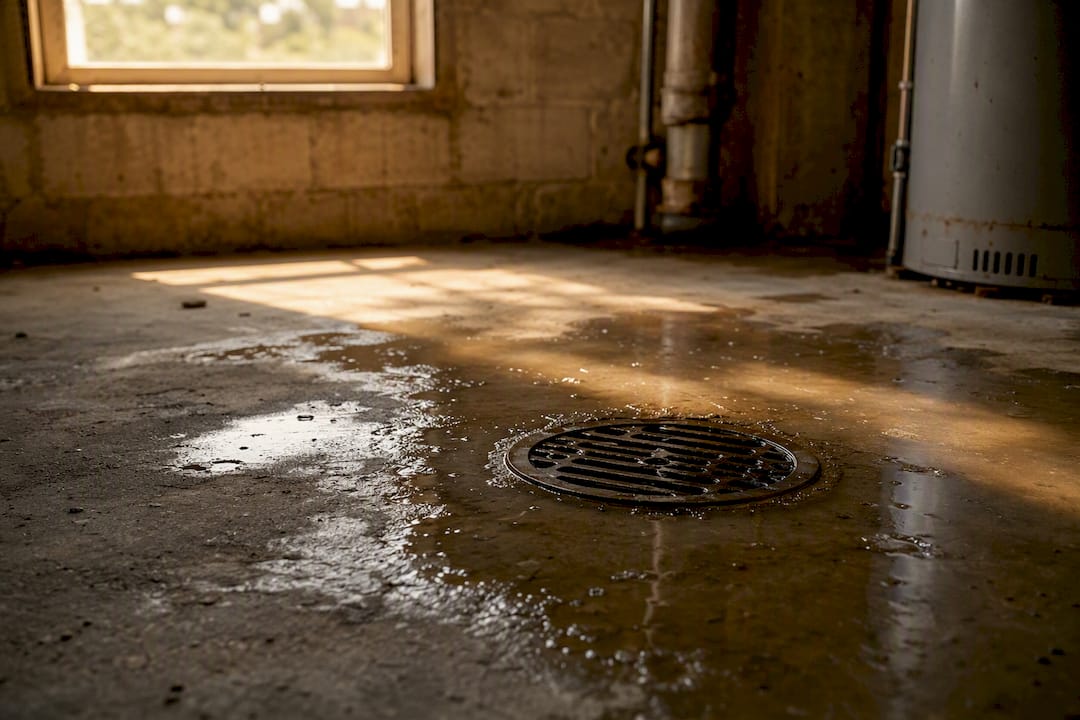
1. Sewage backups. Water or sewage rising in a low fixture (basement drain, downstairs toilet) usually means the tank is full, the outlet baffle is clogged, or the drainfield can no longer accept water. This is a late-stage sign. It rarely appears in isolation.
2. Multiple slow drains. One slow drain is probably a local clog. Slow drains in the kitchen, bathroom, and laundry all at once points to something downstream, most likely a full tank or a saturated drainfield. This is often an early warning worth acting on before it becomes a backup.
3. Gurgling or bubbling pipes. Air trapped behind a partial blockage makes this sound as water tries to push past it. Occasional gurgling after a big load of laundry can be normal. Gurgling that happens every time you run water is not.
4. Strong sewage odor. Smell near the tank, drainfield, or inside the house suggests gas is escaping somewhere it shouldn’t, often through a cracked pipe, a dry drain trap, or a failing tank seal. Before assuming the worst, check for a blocked roof vent or a frozen vent pipe. Both are simpler fixes than a failing system.
5. Wet or spongy ground, or bright green grass, can sometimes be caused by problems beyond the septic system, so knowing signs you need a drainage solution for your yard is important to rule out other issues. Grass over the drainfield growing noticeably greener and thicker than the rest of the lawn is a classic sign the soil is getting extra “fertilizer” from effluent that should be filtering underground instead. Spongy or squishy ground in dry weather is another version of the same problem.
6. Sewage surfacing. Standing liquid with a sewage odor pooling on the surface is about as advanced as it gets. The EPA lists this among the primary indicators of septic malfunction, alongside backups and slow drains.
7. Algal blooms or well contamination nearby. If you’re on well water and notice a change in taste or odor, or see algae blooms in a nearby pond or ditch, a failing system upstream could be leaching nitrates or bacteria into groundwater.
Before you call anyone, do a quick check: run water in two or three different fixtures on different ends of the house. If they’re all slow or all gurgling, that’s a system-level issue, not a single clogged drain. Washington State’s health department lists these same core symptoms as the trigger point for calling a professional.
Pro Tip: A new dip or depression in the ground over the tank is often just backfill settling. But if it’s sudden, on ground that hasn’t been disturbed in years, mark it off and get it inspected. That can be a tank starting to collapse.
What Causes a Septic System to Fail?
Signs do not appear randomly. Almost every septic failure traces back to one of a handful of root causes, and most are things a homeowner has some control over.
- Infrequent pumping. Solids build up in the tank and eventually wash into the drainfield, where they clog the soil permanently. NC State Extension recommends pumping every 3 to 5 years depending on household size and usage; needing to pump more than once a year is a red flag that something is already wrong.
- Hydraulic overload. Systems are typically designed for a wastewater flow rate based on the number of bedrooms in the house served by the system. Extra people in the house, long showers, back-to-back laundry loads, or roof runoff draining toward the tank can push flow well past what the system was built to handle.
- Clogged baffles or effluent filters. These parts are meant to stop solids from reaching the drainfield. Once they clog or fail, solids move downstream and clog the soil itself.
- Damaged or crushed pipes. Tree roots, vehicles parked over lines, or age can crack or collapse pipe runs.
- Poor original design. Systems built for the wrong soil type or undersized for the household were never going to last as long as a properly designed one.
- High groundwater. Some sites simply saturate more easily after heavy rain, leaving the drainfield with nowhere to drain.
Pro Tip: Garbage disposals send far more solids into the tank than most homeowners realize. If you have one and a big household, plan on pumping closer to every 3 years than every 5.
What Should You Do Right Now If You Suspect Septic Failure?
- Stop nonessential water use. No laundry, no dishwasher, no long showers, until you know what’s going on.
- Avoid low fixtures if backup is present. Basement drains and downstairs bathrooms are usually the first to back up. Don’t use them until a professional clears things.
- Keep people and pets off wet ground. Standing sewage is a real health hazard, not just an inconvenience.
- Mark off soggy areas over the drainfield. Don’t drive or park on them. The weight can crush pipes that are already stressed.
- Call a licensed septic contractor. If you suspect contamination is reaching a well or waterway, contact your local health department as well.
- Test well water if contamination seems possible. Especially if you notice smell, taste changes, or nearby algae growth.
A contractor’s first moves are often simpler than a full replacement: snaking a clogged house-to-tank line, pumping the tank, or clearing a clogged effluent filter can resolve a surprising number of symptom sets. Whether a quick fix or urgent repair is needed depends on how far along the failure is.
Pro Tip: Never shovel soil over a wet, smelly spot in the yard to hide it. That traps sewage under the surface and can push it back into the house instead.
How Often Should You Maintain a Septic System to Prevent Failure?
- Inspect annually. A quick visual check catches problems before they become backups.
- Pump every 3 to 5 years as a baseline, sooner if you have a garbage disposal or a full house. Regular pumping is the single most effective thing most homeowners can do.
- Clean the effluent filter on the schedule your contractor recommends.
- Never connect sump pumps or roof drains to the septic system. That’s a fast route to hydraulic overload.
- Spread out water use. Doing five loads of laundry in one afternoon stresses the system far more than spacing them across the week.
- Fix leaks and install efficient fixtures to lower daily flow into the tank.
- Protect the drainfield. No parking, no driving, and no trees planted near the lines, since roots seek out that moisture.
Pro Tip: Get to know your system’s normal behavior, how the pump sounds, how effluent smells or looks if you ever see it. That baseline makes it much easier to notice when something’s actually wrong.
Can a Failing Septic System Be Repaired, or Does It Need Replacement?
Diagnosis usually follows a set order:
- Pump and inspect the tank for sludge and scum levels.
- Open the distribution box to check flow to each line.
- Inspect the outlet baffle and effluent filter for damage or clogging.
- Probe the leach lines for saturation or ponding.
- Run dye testing if surfacing is suspected but not obvious.
- Check groundwater conditions, especially after heavy rain.
- Recent, temporary saturation from heavy rainfall or a short-term overload can often be rehabilitated. Give the drainfield a rest period and the soil may recover on its own.
- A drainfield clogged by years of solids reaching the soil, or one that’s suffered physical damage, is a different story. At that point, a full drainfield replacement is usually the only lasting fix.
Partial repairs like clearing a blocked line or fixing a baffle are almost always faster and cheaper than replacing a field. Get a couple of local quotes for repair versus replacement before committing either way. Costs and timelines vary a lot by property and soil conditions.
Could a Failing Septic System Contaminate Your Well Water?
Yes. Nitrates and bacteria from a failing system can migrate into groundwater, especially if your well sits downhill or close to the drainfield. Watch for algae blooms in nearby ponds or ditches, or a sudden change in your well water’s taste or smell.
- Test well water if you notice any of these signs, or at least annually as routine practice.
- Use a certified lab or your local health department for coliform/E. coli and nitrate testing, the two markers that matter most for septic contamination.
- Don’t drink or cook with suspect water until it’s tested. Switch to bottled water in the meantime.
Pro Tip: If your well test comes back elevated, treat both problems at once. Testing tells you there’s contamination, but it won’t fix a failing system that keeps feeding it.
What Does a Licensed Septic Contractor Check During an Inspection?
A properly done inspection follows a consistent checklist:
- Open the tank and measure scum and sludge levels.
- Inspect inlet and outlet baffles and the effluent filter.
- Check the distribution box and sample flow to each leach line.
- Probe the yard for moist or spongy areas.
- Run a dye test if surfacing is suspected but not visually confirmed.
Have your permits or as-built drawing, recent pumping records, a timeline of symptoms, any well test results, and photos of yard trouble spots ready before the contractor arrives. A good report will spell out any immediate safety concerns, the recommended next step (pump, repair, rehab, or replace), a cost estimate, and whether your local health department needs to be involved.
Why Early Action on Septic Problems Saves Homeowners Money
Most septic failures don’t start as emergencies. They start as a slow drain someone ignored for six months, or a pumping schedule that slipped from three years to seven. By the time sewage is surfacing in the yard, the fix has almost always gotten more expensive than it needed to be. A $400 pumping visit or a filter cleaning is cheap insurance against a $10,000 drainfield replacement. If there’s one thing worth taking from all of this, it’s that the early, boring signs (a slow drain, a faint odor, a greener patch of grass) deserve just as much attention as the dramatic ones.
Need Help Fast? What Jmseptic Handles for Alamance County Homeowners
If you’re seeing any of the signs above, the fastest path to peace of mind is a same-week inspection, not another week of watching and waiting. Jmseptic handles the full range of what this article covers: emergency backups, tank pumping, drainfield diagnostics, hydro jetting for stubborn clogs, and full repairs when a system has gone past the point of a quick fix.

When you call, have a few things ready: what symptoms you’re seeing, how long they’ve been happening, your address, and whether anything (parked cars, a fence, landscaping) limits access to the tank or drainfield. That alone can save a return trip. Jmseptic serves Burlington, Mebane, Elon, Graham, Whitsett, McLeansville, and the surrounding Alamance County area. If your symptoms sound urgent, start with the emergency septic repair page to see response options, or check the guide to preventing septic failure if you’re catching things early and want to stay ahead of a repair altogether.
Frequently Asked Questions
What is the very first sign of septic system failure?
Slow drains throughout the house, not just one sink, are usually the earliest widespread sign, often showing up before odors or backups do.
How do I know if it’s septic failure or just a clogged pipe?
Check two or three fixtures on different ends of the house. If they’re all slow or gurgling together, the problem is likely downstream in the tank or drainfield rather than a single clogged line.
Is bright green grass over my septic tank always a bad sign?
Not always, but grass noticeably greener and lusher than the rest of your lawn, especially in dry weather, often means effluent is surfacing close to the soil surface instead of draining underground properly.
Can a failing septic system contaminate my drinking water?
Yes, if you’re on well water near the drainfield. Elevated nitrates or bacteria from a failing system can migrate into groundwater, which is why testing matters if you notice taste or odor changes.
How much does septic tank pumping cost, and how often do I need it?
Costs vary by location and tank size, so it’s worth getting a local quote. Most households need pumping every 3 to 5 years, sooner with a garbage disposal or a large family.
Sources
- Resolving Septic System Malfunctions (U.S. EPA)
- Septic Systems and Their Maintenance (NC State Extension)
- Your Septic System: Failure and Repair Options (Cornell Cooperative Extension/CWMI)
- Signs of Septic System Failure (Washington State Department of Health)