
Septic System Dosing Explained for Homeowners
Discover how septic system dosing works with our clear guide. Learn about the benefits of septic system dosing explained for homeowners.

Septic system dosing is the controlled, timed delivery of effluent from a pump tank to a drain field in measured volumes. The industry term for this process is “pressure distribution,” and it is the foundation of how advanced septic systems protect your soil absorption area from overload. A dosing system uses a dosing tank, a sewage-rated pump, and a timer or float switch to release effluent in scheduled intervals rather than all at once. Understanding septic system dosing explained in plain terms gives you the knowledge to catch problems early, extend your system’s life, and avoid costly repairs.
How does septic system dosing work?
Septic dosing works by holding treated effluent in a dosing tank, then pumping it to the drain field in controlled bursts. The dosing tank sits between the main septic tank and the drain field. It collects effluent until the pump activates on a timer or float switch signal.
The pump then pushes a measured volume of effluent through distribution lines to the soil absorption area. This timed release gives the soil time to absorb and filter the effluent before the next dose arrives. Without this control, all wastewater from a busy morning would flood the drain field at once.
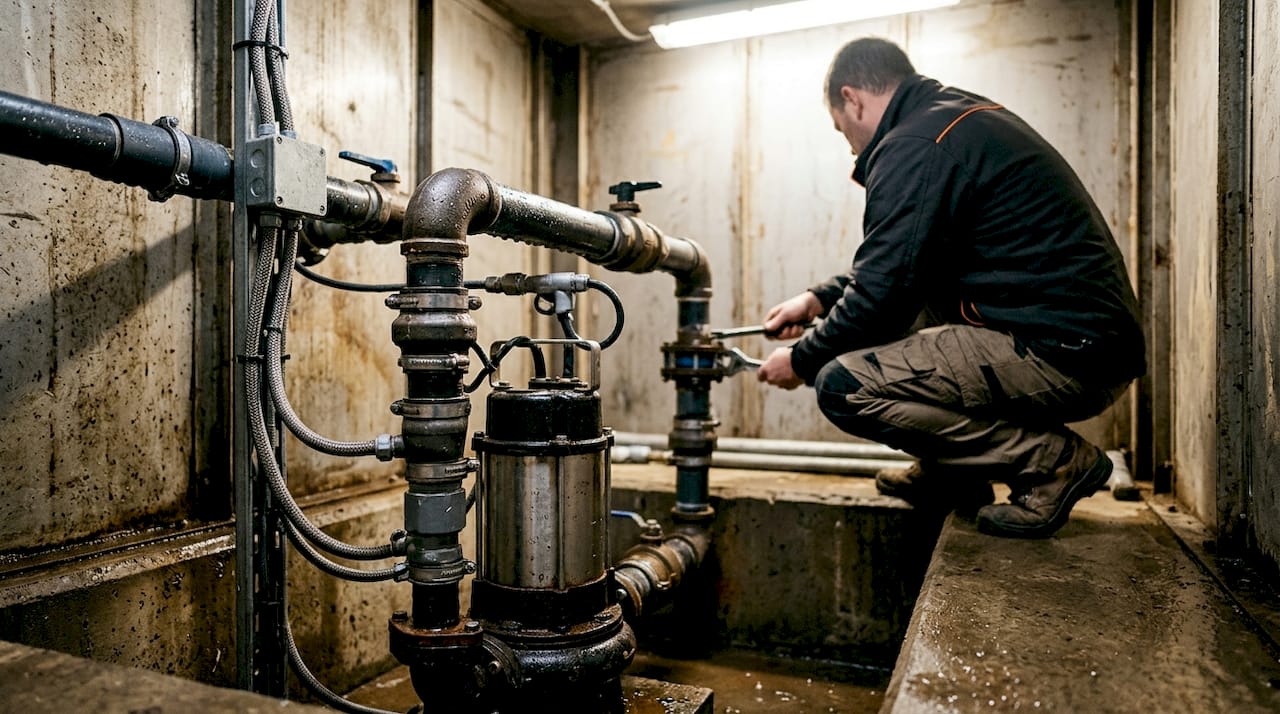
Timed dosing spreads wastewater evenly over a 24-hour period, preventing saturation during peak usage. That single function is what separates a well-designed dosing system from a basic gravity-fed setup.
How do dosing tanks and pumps work together?
The dosing tank is a smaller secondary tank that stores effluent after it leaves the main septic tank. Its job is to act as a buffer, holding wastewater until the pump is ready to deliver it. Dosing chambers are sized to hold at least one full day’s effluent volume, which protects the system during power outages or pump failures.
The pump inside the dosing tank is the workhorse of the system. It activates on a schedule set by a timer or triggered by a float switch when effluent reaches a set level. The pump then pushes a precise volume of effluent through pressurized distribution lines to the drain field.
Pump selection is not optional. Sewage-rated pumps last 7 to 15 years in a septic environment. Sump pumps, which look similar, corrode quickly in the presence of septic gases and solids. Using the wrong pump type leads to accelerated motor wear and early failure.
Key components of a dosing system include:
- Dosing tank: Stores effluent and provides a fail-safe buffer for pump downtime
- Sewage-rated pump: Delivers timed doses without corroding in the septic environment
- Float switches or timers: Trigger pump cycles based on volume or schedule
- Distribution laterals: Pressurized pipes that carry effluent to the drain field
- Effluent filter: Screens solids before they reach the pump or distribution lines
Pro Tip: Check your control panel alarm light monthly. A lit alarm often means the pump has not cycled as scheduled, which is an early warning sign before a backup occurs.
Why does timed dosing protect your drain field?
Timed dosing protects the drain field by preventing hydraulic overload, which is the single most common cause of premature drain field failure. When too much water hits the soil at once, it cannot absorb fast enough. The result is standing water, sewage odors, and eventually a failed system.
Dosing enhances septic system reliability by preventing hydraulic overload and is required at a minimum frequency of 4 doses per day on certain soil types. That requirement exists because some soils need extended rest periods between doses to drain and recover their filtering capacity.
The resting period between doses is just as important as the dose itself. Soil microbes that treat effluent need oxygen, which only returns to the soil during dry periods. Continuous flooding kills those microbes and creates a clogging layer called a biomat. A biomat is nearly impossible to reverse without replacing the drain field.
Benefits of timed dosing include:
- Even effluent distribution across the entire absorption area
- Prescribed resting periods that allow soil recovery between doses
- Reduced biomat formation from continuous saturation
- Protection against hydraulic surges from high-volume events like parties or guests
Timed dosing improves pressure distribution system performance and protects the absorption area by maximizing soak time and minimizing soil clogging. That is not a minor benefit. It is the difference between a drain field that lasts decades and one that fails in under ten years.
Pressure dosing vs. gravity dosing: which is better?
Pressure dosing actively pumps effluent through lateral lines, flushing them completely with each cycle. Gravity dosing relies on elevation and natural flow to distribute effluent, with no pump involved. The two methods perform very differently under real-world conditions.
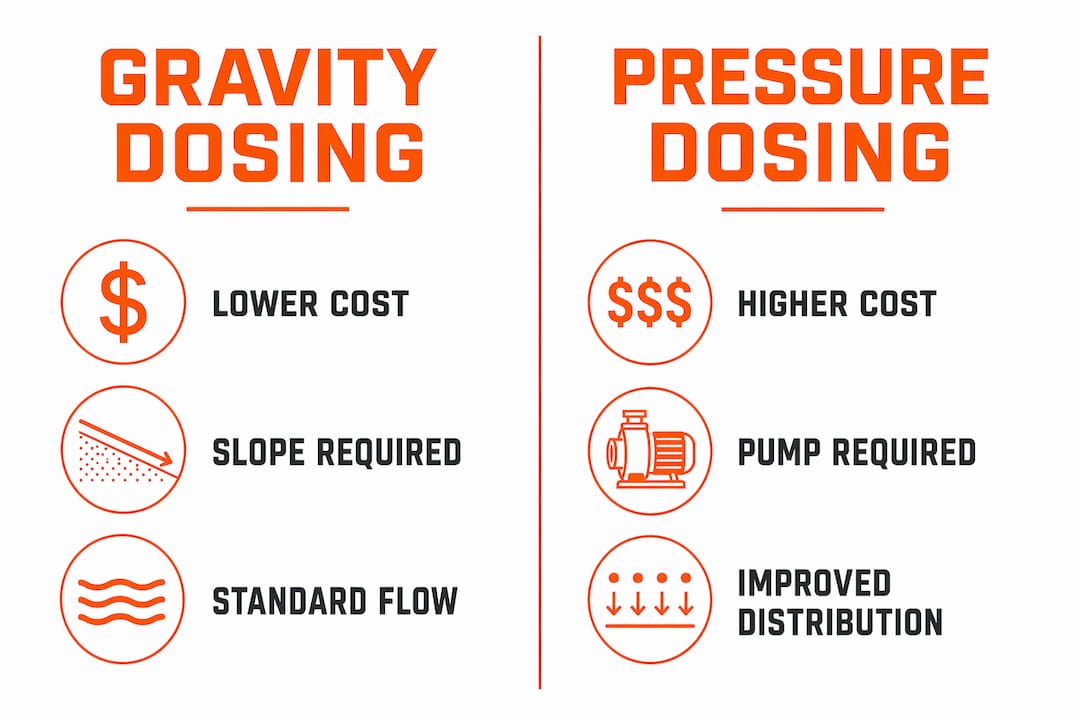
Pressurized dosing systems use doses approximately five times the volume needed to fill lateral lines, flushing pipes completely to prevent stagnation. That flushing action clears solids from the lines with every cycle. Gravity systems have no equivalent mechanism, so solids accumulate over time.
Pro Tip: If your property has flat terrain or poor-draining clay soil, pressure dosing is not just better. It may be the only code-compliant option available to you.
| Feature | Gravity dosing | Pressure dosing |
|---|---|---|
| Installation cost | Lower upfront | Higher upfront |
| Pump required | No | Yes |
| Effluent distribution | Uneven, elevation-dependent | Even across all laterals |
| Lateral line flushing | None | Full flush each cycle |
| Suitable terrain | Sloped sites only | Flat or sloped sites |
| Maintenance needs | Minimal mechanical | Pump and timer service |
| Failure risk | Higher on flat sites | Lower with proper maintenance |
Gravity dosing works well on sloped properties where elevation provides consistent flow. For most modern installations, especially on flat or clay-heavy sites, pressure dosing delivers far more reliable performance. You can read more about types of septic systems to see how these designs fit different property conditions.
How does soil type affect dosing frequency and volume?
Soil type is the primary factor that determines how often your system doses and how much effluent each dose delivers. Dense soils like clay absorb water slowly. Sandy soils drain fast but filter poorly. Both extremes require careful dosing calibration.
Clay-heavy soils need more frequent, smaller doses to avoid surface ponding. Sandy soils may need larger doses less frequently to push effluent deep enough for proper treatment. A licensed soil scientist evaluates your site before any system is designed, and those findings drive the dosing schedule.
Mound septic systems are the clearest example of soil-driven dosing design. A mound system is built above grade when native soil is too shallow or too dense for a conventional drain field. Mound systems operate dosing pumps in 15 to 30 minute cycles several times per day to evenly distribute effluent and prevent saturation. That cycle length is not arbitrary. It matches the absorption rate of the engineered sand fill used in the mound.
Dosing parameters that adjust based on soil conditions include:
- Dose volume: Smaller doses for slow-draining soils, larger for fast-draining soils
- Dose frequency: More frequent cycles for soils that need longer rest periods
- Pump run time: Calibrated to match lateral line volume and soil absorption rate
- Timer settings: Adjusted seasonally if water table or soil moisture changes
| Soil type | Absorption rate | Dosing approach |
|---|---|---|
| Clay | Slow | Frequent small doses, long rest periods |
| Loam | Moderate | Standard timed dosing, 4+ doses per day |
| Sandy | Fast | Larger doses, fewer cycles |
| Mound fill (engineered sand) | Controlled | 15–30 minute pump cycles, multiple times daily |
What maintenance does a dosing system need?
Dosing system maintenance centers on three components: the effluent filter, the pump, and the control panel. Neglecting any one of them leads to failures that are expensive to fix and disruptive to your household.
The effluent filter is the first line of defense. Effluent filters have a 0.125-inch aperture while distribution orifices measure 0.156 inches, so the filter catches any solid large enough to clog the distribution pipes. The filter is cleanable. The distribution pipe is not. Clean the filter at every pump-out, typically every 3 to 5 years for a residential system.
Pump maintenance follows a clear schedule:
- Annual inspection: Confirm the pump activates on schedule and the float switches move freely
- Every 3 to 5 years: Have a licensed technician check pump output pressure and cycle counts
- At pump replacement: Always install a sewage-rated pump, never a sump pump
- After power outages: Verify the control panel resets and the pump resumes normal cycling
- Immediately if alarm sounds: Call a septic professional. Do not reset the alarm and ignore it.
Pro Tip: Keep a log of your pump’s cycle counts if your control panel displays them. A sudden increase in cycles often signals a leak in the distribution lines before any visible symptoms appear.
Aerobic systems add one more maintenance layer. Chlorine residual levels between 0.5 and 2.0 mg/L protect the system without harming beneficial bacteria. Levels above 3.0 mg/L damage the aerobic bacteria that make the system work. Test chlorine levels at each service visit if your system uses chlorine tablets.
Pressure dosing reduces many risks, but it does not address everything. Pressure dosing does not prevent problems from fats, oils, grease accumulation, chemical toxicity, or clear water intrusion. Those issues require separate maintenance strategies, including grease trap management and fixing roof drain or sump pump connections that may be tied into the septic system illegally.
Key Takeaways
Proper septic system dosing is the single most effective way to extend drain field life and prevent hydraulic overload from destroying your soil absorption area.
| Point | Details |
|---|---|
| Dosing definition | Controlled, timed effluent delivery to the drain field using a pump and dosing tank |
| Tank sizing matters | Dosing chambers hold at least one full day’s effluent to buffer pump failures or outages |
| Minimum dose frequency | Some soil types require at least 4 doses per day to allow soil recovery between cycles |
| Pump selection is critical | Only sewage-rated pumps belong in a dosing system; sump pumps fail prematurely |
| Filter maintenance is non-negotiable | Clean the effluent filter at every pump-out to protect distribution pipes from clogging |
What years of septic work taught me about dosing
Most homeowners I talk to have never heard the word “dosing” until something goes wrong. By then, the drain field is saturated, the yard smells, and the repair bill is significant. That pattern is almost entirely preventable.
The biggest mistake I see is homeowners treating the dosing pump like a set-it-and-forget-it appliance. The pump runs hundreds of cycles a week. It lives in a corrosive environment. It needs attention. A quick annual check and a filter cleaning every few years costs very little compared to a drain field replacement, which can run into the tens of thousands of dollars.
The second mistake is assuming gravity dosing is “good enough” because it worked for the previous owner. Soil conditions change. Water tables rise. A system that performed fine for 15 years can fail quickly when conditions shift. Pressure dosing gives you far more control and far more warning time when something starts to go wrong.
My honest advice: learn your system’s cycle schedule, check the alarm panel monthly, and prevent septic failure by staying ahead of maintenance rather than reacting to emergencies. The homeowners who do that almost never end up with a failed drain field.
— Jason
Septic dosing services from Jmseptic
Jmseptic serves homeowners across Alamance County, including Burlington, Mebane, Graham, Elon, and Whitsett, North Carolina. Whether you need a new dosing system installed, a pump replaced, or a full system inspection, the Jmseptic team handles pressure and gravity dosing configurations for all property types and soil conditions.

If you are planning a new build or replacing a failing system, the NC septic installation guide covers what to expect from site evaluation through final inspection. For homeowners dealing with a pump alarm or slow drain field recovery, Jmseptic offers septic repair and maintenance with honest diagnostics and long-term solutions. Call Jmseptic for a personalized evaluation of your dosing system before a small issue becomes a full system failure.
FAQ
What is septic system dosing?
Septic system dosing is the timed, controlled release of effluent from a dosing tank to a drain field using a sewage-rated pump. It prevents hydraulic overload by spreading wastewater delivery evenly across a 24-hour period.
How often should a septic dosing pump cycle?
Dosing frequency depends on soil type and system design. Some soil conditions require a minimum of 4 doses per day, while mound systems typically run pump cycles of 15 to 30 minutes several times daily.
What is the difference between pressure dosing and gravity dosing?
Pressure dosing uses a pump to push effluent through lateral lines and flush them completely with each cycle. Gravity dosing relies on elevation for flow and provides no flushing action, which makes it less reliable on flat or clay-heavy sites.
How long do dosing pumps last?
Sewage-rated dosing pumps last 7 to 15 years with proper maintenance. Using a sump pump instead of a sewage-rated pump causes premature failure due to corrosion from septic gases and solids.
How do I know if my dosing system is failing?
Common signs include a lit alarm on the control panel, slow drains, standing water over the drain field, and sewage odors in the yard. Any of these symptoms warrants an immediate call to a licensed septic professional.