
What’s Really Causing Your Septic Odors: 9 Causes
Discover the top 9 causes of septic odors in your home. Learn how to identify and fix these issues to breathe easy again.

Most septic odors trace back to one of a handful of problems: a dry P-trap, a clogged or frozen vent stack, an overfull tank, a cracked lid seal, or a saturated drainfield pushing gases to the surface. The two primary gases involved are hydrogen sulfide (H₂S, the rotten-egg smell) and methane (CH₄, odorless but flammable). Before you call anyone or dig anything up, do two things: figure out whether the smell is strongest inside the house or outside in the yard, and run water in every drain for 15–30 seconds. That second step alone fixes a surprising number of indoor odor complaints by refilling dried P-traps.
The EPA recommends pumping your septic tank every 3–5 years, adjusted for household size and usage. If you are past that window, an overfull tank is a strong candidate. If pumping is current, the problem likely sits elsewhere: a vent, a seal, a baffle, or the drainfield. The sections below walk through each cause in order of how easy it is to check and fix, from a free 30-second drain run to a drainfield replacement.
- Determine whether the odor is strongest indoors or outdoors before doing anything else.
- Run water in every sink, shower, tub, floor drain, and utility drain for 15–30 seconds.
- Note when the smell is worst: after rain, in the morning, or only in one room.
- Check the EPA pumping guidance and confirm your last pump date.
- If the smell is strong, persistent, or accompanied by lightheadedness, ventilate immediately and call a pro.
Key Takeaways
Most septic odors trace to a dry P-trap, a blocked vent stack, an overfull tank, a leaking lid seal, or a saturated drainfield, and the fastest first step is always to run water in every drain and track where the smell is strongest.
| Point | Details |
|---|---|
| Start with dry traps | Run water in every drain for 15–30 seconds before any other check. |
| Track indoors vs. outdoors | Smell strongest inside points to traps or vents; yard-wide smell points to the tank or drainfield. |
| Pump on schedule | EPA guidance recommends pumping every 3–5 years; an overfull tank is a leading odor cause. |
| Know when to stop DIYing | Yard-wide odors, surfacing sewage, or house-wide gurgling all require a licensed septic contractor. |
| Jmseptic serves Alamance County | Diagnostic inspection, pump-out, hydro-jetting, and drainfield repair available across the Piedmont Triad. |
Table of Contents
- How to tell whether the smell is coming from inside or outside
- The common causes of septic odors and practical checks for each
- What sewer gases actually are and when they become dangerous
- Practical steps you can take right now to reduce the smell
- When to call a septic professional and what to expect
- How to prevent septic odors with routine maintenance
- What a licensed septic tech actually checks on-site
- Why septic odors deserve more than a quick fix
- Jmseptic handles septic odor problems across Alamance County
- Sources
How to tell whether the smell is coming from inside or outside
Knowing where the odor originates cuts your diagnostic list in half. InspectApedia’s septic odor track-down procedure recommends a systematic approach: start inside, move outside, and note weather and time-of-day patterns before drawing conclusions.
- Walk every room with your nose. The strongest smell points you toward the source. A smell concentrated in one bathroom usually means a dry trap or failed wax seal. A smell throughout the whole house suggests a blocked vent stack or a full tank back-venting through every drain.
- Check rarely used drains first. Guest bathrooms, basement floor drains, and utility sinks go weeks without water. Their P-traps evaporate and let sewer gas straight into the room.
- Note the timing. Smells that spike after heavy rain almost always point outside, to a saturated drainfield or a leaking tank lid. Smells that are worst first thing in the morning, before anyone uses water, often point to a dry trap or a blocked vent.
- Step outside and walk the yard. If the smell is stronger near the tank access risers or over the drainfield than it is inside, the problem is outside. Wind can carry odors, so walk the full perimeter of the drainfield.
- Check for soggy ground or unusually lush grass over the drainfield. Either sign, combined with a sewage smell, means effluent is surfacing. That is a professional repair, not a homeowner fix.
- Inspect cleanout caps and access risers. A loose or cracked cleanout cap at grade level vents gas directly into the yard or crawlspace. Press down on each cap and check for cracks.
- Look for a rocking toilet. A toilet that moves slightly when you sit on it has a failed wax ring seal. That gap lets sewer gas into the bathroom and is a common source of persistent indoor smells.
An indoor odor that clears after running water in every drain is almost certainly a dry trap. An outdoor odor that clears within 24–48 hours after heavy rain is likely temporary drainfield saturation. Anything that persists beyond that window needs a closer look.
The common causes of septic odors and practical checks for each
Theseptic: dry P-trap, blocked vent stack, full septic tank, and a damaged inlet baffle. Outdoor odors add a few more. Here is each one, how to check it, and what to do.
1. Dry P-traps
The P-trap is the curved pipe under every drain. It holds a small amount of water that physically blocks sewer gas from entering the room. When a drain goes unused for a few weeks, that water evaporates and the barrier disappears.
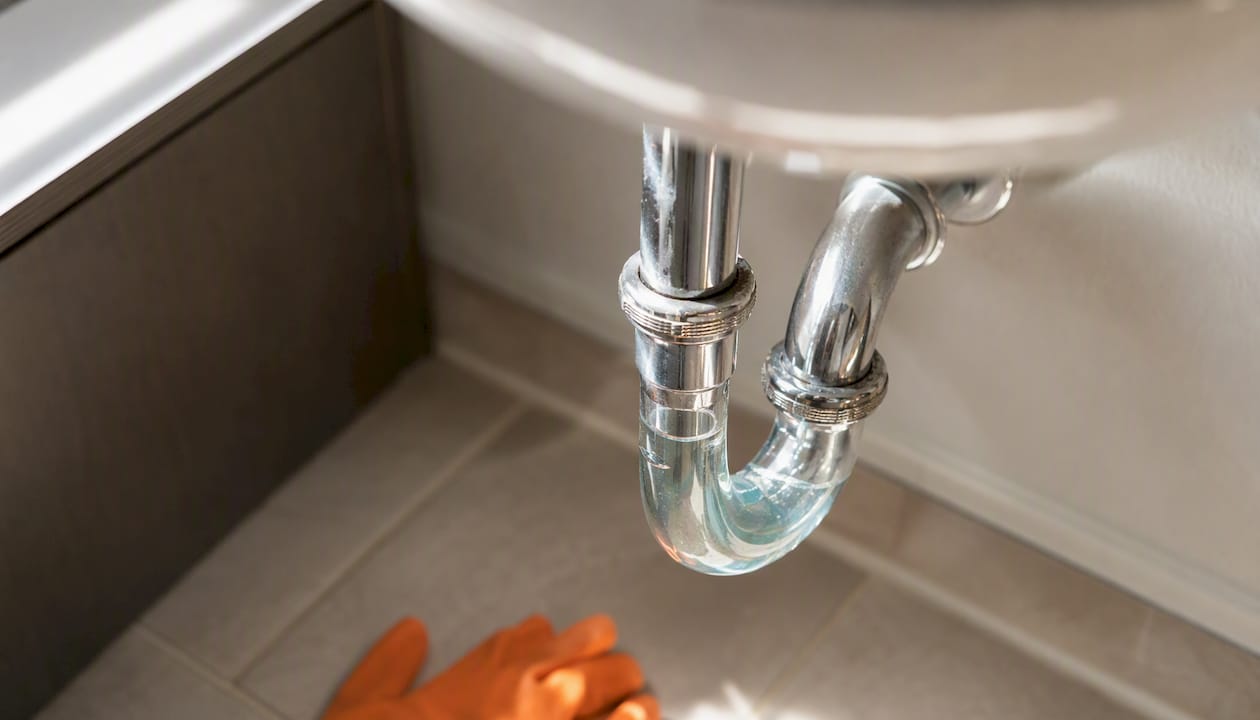
Check: Run water in every drain in the house, including floor drains and utility sinks. If the smell fades within a few minutes, a dry trap was the culprit.
Fix: Run water for 15–30 seconds in every drain weekly. For drains that are rarely used, a trap primer (a small device that automatically adds water) costs under $50 and eliminates the problem permanently.
- DIY cost: $0–$50
- Call a pro if: the smell returns quickly after running water, which may indicate a broken trap or a venting problem preventing the trap from holding its seal.
2. Blocked, frozen, or clogged vent stacks
Every drain in your house connects to a vent pipe that exits through the roof. That pipe lets air in so drains flow freely and keeps sewer gas moving up and out. When it clogs with leaves, a bird nest, or ice in winter, gas has nowhere to go except back down through your drains.
Check: Look at the vent pipe opening on your roof. Visible debris or a cap that has shifted is a clear sign. In winter, frost or ice buildup at the opening is common.
Fix: Clear debris from the vent opening. A garden hose run down the pipe from the roof often dislodges clogs. Frozen vents sometimes clear on their own as temperatures rise, but a persistent freeze may need insulation or a plumber’s attention.
- DIY cost: $0 (clearing debris yourself)
- Call a pro if: you cannot safely access the roof, or if clearing the vent does not resolve the smell. A licensed plumber can perform a smoke test or pressure test to confirm whether the vent system is fully open.
Pro Tip: A smoke test is the fastest way to find a hidden vent leak. A plumber introduces non-toxic smoke into the drain system; wherever smoke exits inside the house, that is your leak point.
3. Full or overfull septic tank
When a tank fills beyond its working capacity, solids and gases have nowhere to go. Gas back-vents through the inlet pipe and into the house. Yard odors intensify. Drains slow down or gurgle.
SepticTankHub notes that full tanks account for a large share of odor complaints and that pumping often resolves tank-related odors, but pumping will not fix a dry trap, a broken vent, or a failing drainfield. A proper diagnosis prevents unnecessary pump-outs.
Check: Slow drains throughout the house, gurgling sounds after flushing, and yard odors that have developed gradually over months all point to a full tank.
Fix: Schedule a septic tank pump-out. Typical cost varies depending on tank size and access.
- Call a pro if: the smell returns within weeks of pumping, which suggests a baffle failure or drainfield problem rather than simple overflow.
4. Damaged tank lids, failed gaskets, or loose inspection covers
Concrete tank lids and riser gaskets degrade over time. Septic, and a leaking lid vents gas at ground level, which is why yard smells are often strongest right at the tank location.
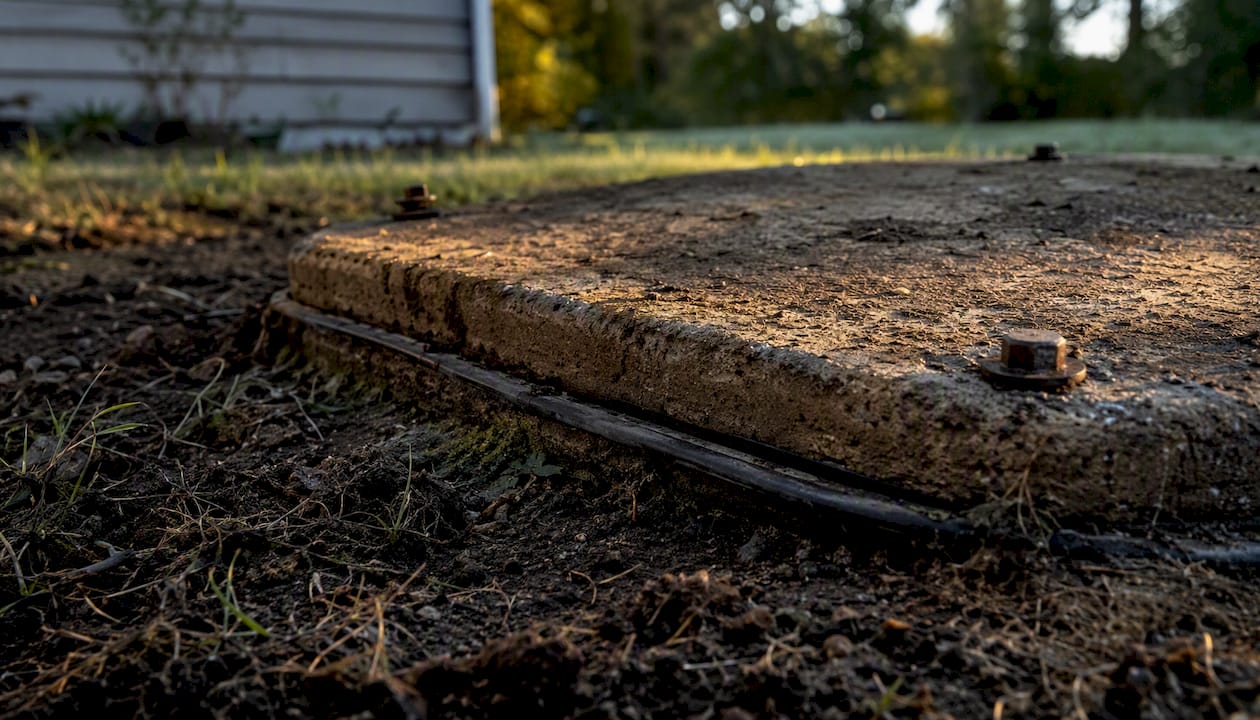
Check: Walk to your tank access risers and sniff at ground level. A noticeably stronger smell at the lid is a clear sign. Look for cracks in the concrete lid or a gasket that has pulled away from the riser.
Fix: Weather stripping can temporarily seal a leaking lid. A thin layer of mulch over the area can reduce surface odor while keeping access clear. Do not bury the lid with soil; you need to maintain access for future pump-outs and inspections. A cracked lid or failed gasket needs replacement, which runs $100–$600 depending on the riser type.
- Safety note: Never stand over an open tank. Sewer gases can accumulate in the tank headspace at dangerous concentrations.
5. Drainfield saturation or failure
The drainfield is where treated effluent disperses into the soil. When it saturates, whether from heavy rain, high groundwater, or years of hydraulic overload, effluent and gases push back toward the surface. The result is a yard-wide sewage smell, spongy ground, and sometimes visible wet patches or lush green stripes of grass over the field lines.
SepticTankHub explains that after heavy rain, a saturated drainfield can push effluent and gases toward the surface. If the smell clears within 24–48 hours, it was likely temporary saturation. If it persists or recurs, the field may be failing.
Check: Walk the drainfield area. Spongy or wet ground, a strong sewage smell that does not follow rain events, or visible effluent surfacing are all failure signs. Review the signs of drain field failure for a complete symptom list.
Fix: Stop heavy water use immediately to reduce hydraulic load. Do not drive or park over the drainfield. Call a licensed septic contractor for evaluation. Drainfield repair or replacement can cost several thousand dollars depending on severity and site conditions.
6. Failed inlet or outlet baffles
Baffles are internal tank components that direct flow and prevent scum from escaping into the drainfield. A failing inlet baffle allows gas to back-vent directly into the house through the main sewer line. A failing outlet baffle lets solids reach the drainfield, accelerating its failure and producing persistent odors.
Check: This is not a homeowner inspection. Baffles are inside the tank and require opening the access lid and using a probe or camera. A licensed tech checks them during any diagnostic visit.
Fix: Baffle repair or replacement typically costs $500 or more and requires a licensed septic contractor.
7. Partial drain clogs, loose cleanout plugs, and ejector pump issues
A partial clog in a drain line creates a slow-moving, anaerobic environment where gases build up. Loose cleanout plugs at grade level vent gas into crawlspaces or basements. Ejector pump basins in basements have gaskets that fail over time, letting gas into the lowest level of the house.
Check: Slow drains in one fixture suggest a localized clog. A slow drain throughout the house suggests a main line issue. Check that all cleanout caps are hand-tight and uncracked. In basements, check the ejector pump basin lid for a tight seal.
Fix: A sewer line cleaning with hydro-jetting clears most line clogs. Cost runs $300–$1,500 depending on line length and blockage severity. Cleanout plug replacement is generally an inexpensive DIY fix.
8. Tree root intrusion and pipe damage
Tree roots follow moisture and nutrients. Over time, they work into pipe joints and cracks, causing partial blockages, slow drains, and eventually breaks that let gas escape into the surrounding soil and back into the house.
Check: Slow drains that do not respond to standard cleaning, gurgling sounds, and a history of large trees near the sewer line or drainfield are all indicators. A camera inspection confirms root intrusion.
Fix: Hydro-jetting can clear roots from lines, but damaged pipes require excavation and replacement. Camera inspection is the fastest way to assess the problem.
9. Household chemicals disrupting tank biology
Bleach, antibacterial soaps, drain cleaners, and large doses of disinfectants kill the bacteria that break down waste in your tank. When bacterial activity drops, organic matter accumulates faster, gases build up, and odors intensify.
Commercial septic additives are not the answer either. Septic.umn.edu advises against additives because no independent research convincingly proves their effectiveness, and some products risk disrupting the bacterial balance further.
Fix: Switch to enzyme-friendly cleaning products. Reduce bleach use. Space out laundry loads rather than running multiple back-to-back cycles, which floods the tank with water and chemicals simultaneously.
What sewer gases actually are and when they become dangerous
In-Pipe’s analysis of septic odor chemistry identifies hydrogen sulfide (H₂S) and methane (CH₄) as the two primary gases in septic systems. H₂S produces the rotten-egg smell and signals biological imbalance in the tank. Methane is odorless, which makes it harder to detect, but it is flammable within a concentration range of 5–15% in air.
H₂S is detectable by smell at concentrations as low as 0.5 parts per million. That sensitivity is actually a problem at higher concentrations: above roughly 100 ppm, H₂S causes olfactory fatigue, meaning you stop smelling it even as levels continue to rise. Most household exposures are well below dangerous thresholds, but a strong, persistent indoor smell warrants prompt attention.
Carbon dioxide and ammonia are also present in septic gas mixtures, contributing to musty or sharp odors that differ from the classic rotten-egg profile.
Safety rules that are not optional:
- If the smell is strong and you feel lightheaded, nauseous, or dizzy, leave the building immediately and call emergency services.
- Never enter a septic tank or confined space near one without proper confined-space safety equipment. Residential tank interiors can reach lethal H₂S concentrations.
- Avoid open flames, sparks, or electrical switches near a strong gas smell indoors.
- Ventilate enclosed spaces by opening windows and doors before attempting any inspection.
Practical steps you can take right now to reduce the smell
Most of these cost nothing and take under 10 minutes. They will not fix a failing drainfield, but they resolve a large percentage of indoor odor complaints on the spot.
- Run water in every drain for 15–30 seconds: every sink, shower, tub, floor drain, and utility drain in the house.
- Check toilet stability. Sit on each toilet and shift your weight. Any movement means the wax ring seal is compromised. Tighten the floor bolts first; if the toilet still rocks, the wax ring needs replacement.
- Inspect all cleanout caps. Walk the perimeter of the house and check that every cleanout plug is present, hand-tight, and uncracked.
- Temporarily reseal a leaking tank lid with weather stripping if you can safely access the riser. A thin mulch layer over the area reduces surface odor. Do not cover the lid with soil.
- Stop heavy water use if the yard smells after rain. Running the dishwasher, doing laundry, and taking long showers all push more water into an already saturated drainfield.
- Ventilate the house. Open windows and run exhaust fans while you work through the checklist. Avoid pouring bleach or chemical drain cleaners into drains during this process.
Pro Tip: Before calling a tech, use the “track to strongest point” method: move from room to room, then outside, noting where the smell intensifies. A photo of any wet ground, cracked lid, or visible damage speeds up the diagnosis and can save you money on the service call.
When to call a septic professional and what to expect
Some problems have a clear homeowner fix. Others need a licensed tech from the first moment. Call a pro when:
- Odors persist after you have run water in every trap and done the immediate checks above.
- The smell is yard-wide, not localized to one drain or one corner of the house.
- Sewage is surfacing in the yard or backing up into the house.
- Drains are gurgling or slow throughout the whole house.
- You have not had the tank pumped in more than five years.
- You smell gas and feel any physical symptoms: dizziness, nausea, or headache.
What a septic tech inspects on-site:
- Confirms odor location and traces it to the strongest point indoors and outdoors.
- Runs water and observes trap response.
- Inspects the roof vent stack for blockage or damage.
- Opens tank access risers, checks for odor and visible gas escape at the lid.
- Measures sludge depth with a probe to determine whether pumping is needed.
- Inspects inlet and outlet baffles for deterioration or failure.
- Runs a camera down the main sewer line if a clog or root intrusion is suspected.
- Evaluates drainfield soil conditions for saturation, surfacing effluent, or compaction.
Typical repair costs:
- Pump-out: $300–$600
- Riser, gasket, or lid replacement: $100–$600
- Baffle repair or inlet/outlet work: $500 and up
- Sewer line cleaning or hydro-jetting: $300–$1,500
- Drainfield repair or replacement: $5,000–$20,000 or more
Diagnosis is often same-day. Simple repairs like a gasket replacement can happen the same visit. Drainfield work requires permitting, soil evaluation, and scheduling, so plan for days to weeks depending on scope. Before the tech arrives, locate your access risers, note your last pump date, and take photos of any visible damage or wet ground. Check signs your septic needs service if you want a fuller symptom checklist before the call.
How to prevent septic odors with routine maintenance
Most odor problems are preventable. The homeowners who never deal with a sewage smell in their yard are almost always the ones who stick to a simple maintenance schedule.
Maintenance schedule:
- Every year: Walk the drainfield, check risers and lids for cracks or movement, and clear the vent stack opening of leaves and debris.
- Every 3–5 years: Pump the tank (EPA guidance, adjusted for household size and usage). A pump-out that includes a baffle inspection catches early deterioration before it becomes an odor problem or a drainfield failure.
- Every few years: Have baffles inspected and consider a camera check of the main sewer line, especially if there are large trees near the line.
Dos:
- Conserve water. Spread laundry loads across the week rather than running six loads on Saturday.
- Use enzyme-friendly or septic-safe cleaning products.
- Keep gutters and surface water directed away from the drainfield.
- Keep the drainfield area clear of vehicles, heavy equipment, and deep-rooted plants.
Don’ts:
- Do not flush fats, grease, wipes (including “flushable” ones), sanitary products, or medications.
- Do not pour large amounts of bleach, antibacterial cleaners, or chemical drain openers into drains.
- Do not plant trees or large shrubs near the drainfield or sewer line.
- Do not add commercial septic additives expecting them to fix an odor problem.
Seasonal notes: Clear the vent stack in fall before leaves accumulate. In winter, watch for frost buildup at the vent opening after cold snaps. During and right after heavy rain, reduce water use to give a saturated drainfield time to recover. Learn more about preventing septic failure before it gets costly for a full maintenance framework.
What a licensed septic tech actually checks on-site
This is the real-world checklist a tech runs through on a diagnostic call, along with what you can do before they arrive to speed things up.
- Confirm odor location. Walk the property with the homeowner, note indoor vs. outdoor intensity, and identify the strongest point.
- Run water, observe trap response. If running water in a drain eliminates the smell within minutes, the tech notes a dry trap as a contributing factor.
- Inspect the roof vent stack. Check for visible blockage, damage, or ice. A smoke test or pressure test confirms whether the vent system is fully functional.
- Open tank access risers. Check for gas escape at the lid seal, measure sludge depth with a probe, and note any visible cracking in the lid or riser.
- Inspect baffles. Check inlet and outlet baffles for deterioration, displacement, or complete failure.
- Camera the main sewer line if drain behavior or root history suggests a partial blockage or pipe damage.
- Evaluate drainfield conditions. Check soil for saturation, compaction, or surfacing effluent. Note any unusually lush or dead vegetation patterns over the field lines.
Tools used: qualitative gas detector (calibrated per manufacturer guidance to avoid false positives from organic solvents or pipe joint compounds), smoke/pressure test equipment for vent lines, camera inspection equipment for drain lines, and a sludge-measuring probe for tank depth.
Before the tech arrives, gather:
- The date of your last pump-out (check your records or call the company that did it).
- Photos of any wet ground, cracked lids, or visible damage.
- A note of when the smell started and whether it is worse after rain, in the morning, or only in certain rooms.
- The location of your access risers, if you know them.
Pro Tip: Tell the tech whether the smell is rotten-egg (H₂S, likely a gas escape point) or musty/stagnant (may indicate a different gas profile or a drainfield issue). That single detail narrows the diagnosis before they even open the tank.
Why septic odors deserve more than a quick fix
Persistent septic odors are almost never just a nuisance. They are a signal that something in the system is under stress, and stress that goes unaddressed tends to compound. A dry P-trap is a five-minute fix. A dry P-trap that keeps recurring because of a blocked vent stack becomes a persistent indoor air quality problem. A leaking tank lid that gets ignored for two more years becomes a cracked concrete lid that needs full replacement. A saturated drainfield that gets dismissed as “just the rain” becomes a failed field that costs $10,000 to replace.
What I see consistently in this work is that homeowners who call early, when the smell is new and the cause is still simple, spend a fraction of what the ones who wait end up paying. The diagnostic visit that costs a few hundred dollars almost always reveals whether the fix is a $50 trap primer or a $15,000 drainfield replacement. Knowing that early is the whole point.
Local knowledge matters here more than people expect. Soil conditions in Alamance County, seasonal groundwater behavior in the Piedmont Triad, and the specific permitting requirements for drainfield work in North Carolina all affect how a repair gets designed and executed. A contractor who works this area regularly brings that context to every call. That is not a small thing when you are deciding whether to repair or replace.
Jmseptic handles septic odor problems across Alamance County
When the smell is not going away on its own, Jmseptic is the local resource for Alamance County homeowners who need a straight answer and a real fix. The team handles the full diagnostic and repair process: odor source inspection, pump-out, riser and gasket replacement, baffle repair, camera line inspection, hydro-jetting, and drainfield evaluation and repair.

A service call starts with a systematic on-site diagnosis, not a guess. You get a written estimate before any work begins, and the tech explains exactly what was found and what the repair involves. No upselling, no vague “it could be several things.” Jmseptic serves Burlington, Mebane, Elon, Graham, Whitsett, McLeansville, and the surrounding Piedmont Triad area. For urgent situations, the emergency septic repair guide for Alamance County homes covers what to do while you wait for a tech. To schedule a diagnostic inspection or a routine pump-out, visit Jmseptic’s quality service and repair page or call directly.
Sources
The following sources informed this article. Each one is worth bookmarking if you want to go deeper on a specific cause or repair type.
- InspectApedia — Septic odor track-down procedure
- Septic
- Theseptic
- SepticTankHub — Why does my septic system smell?
- In-Pipe: What does septic smell like? (2026)
This article provides general homeowner guidance and is not a substitute for a licensed septic contractor’s on-site evaluation. Regulations, permitting requirements, and system conditions vary. Confirm current rules and repair requirements with a qualified professional in your area.