
Do You Really Need a Septic Maintenance Contract?
Explore the benefits of a septic maintenance contract. Learn what it covers, its costs, and whether it's essential for your home.

A septic maintenance contract is a written agreement with a licensed provider to inspect, monitor, and report on your system on a set schedule. Most homeowners with a conventional gravity system aren’t legally required to carry one, but owners of aerobic or alternative systems often are, depending on the state. Expect to pay $150 to $350 a year for conventional systems and $300 to $500 for aerobic setups.
TL;DR:
- Maintenance contracts for aerobic systems are often required by state regulations and must include a licensed technician, regular inspections, and timely reporting.
- The typical annual cost ranges from $150 to $350 for conventional systems and $300 to $500 for aerobic systems, with contracts offering discounts for multiple visits and services.
- Pumping is usually not included in contracts and should be scheduled separately every three to five years, based on sludge and scum levels measured during inspections.
- Buyers should verify licensing, inspect sample reports, and clarify what is included or extra before signing, guarding against auto-renewals and vague line items.
- Homeowners with simple gravity systems may not need a contract if no moving parts exist, but those with mechanical components should prioritize regular inspections and documented follow-up.
Table of Contents
- What Does a Septic Maintenance Contract Cover?
- When Is a Septic Maintenance Contract Legally Required?
- What Does a Septic Maintenance Contract Cost?
- Is Pumping Included in a Septic Maintenance Contract?
- How to Choose the Right Septic Maintenance Contract
- What Good Septic Maintenance Looks Like in Practice
- The Part of This Homeowners Skip Too Often
- Get Your Septic System Evaluated by a Local Team
- Sources
What Does a Septic Maintenance Contract Cover?
A maintenance contract isn’t a vague promise to “check on your tank sometime.” It’s a defined set of tasks performed on a schedule, documented in writing, and tied to specific system components.
Most agreements include a routine inspection checklist. The technician measures sludge and scum layers, checks baffles for wear or blockage, and tests alarms, floats, and pumps on any system with mechanical parts. For systems with spray or drip distribution, the contract should also cover emitter checks, since clogged emitters are one of the most common reasons aerobic systems get flagged during inspection.
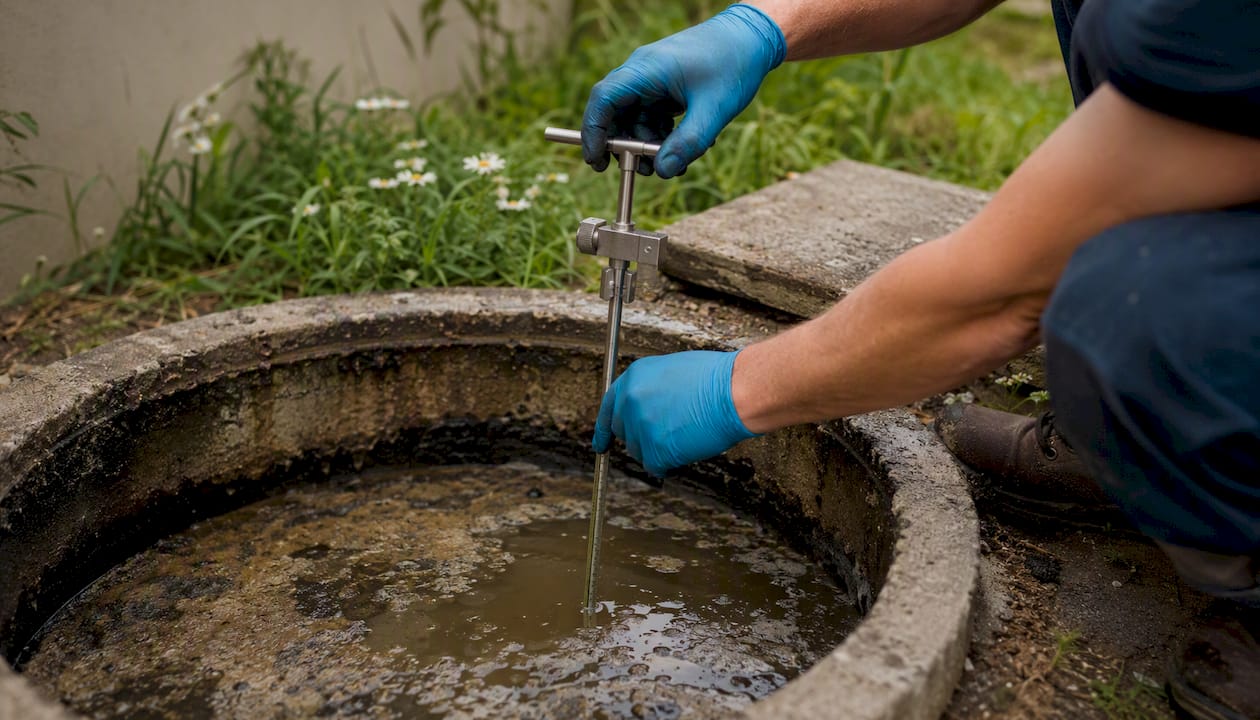
Reporting is the other half of the deal. A provider should give you a written report after every visit, and for regulated systems, they typically file that report with your permitting authority within a set window, often around 14 days. Ask to see a sample report before you sign anything. If a company can’t show you one, that’s a bad sign.
Routine service is different from add-ons. Chlorine tablet refills, effluent filter cleaning, and minor adjustments to floats or alarms are often bundled into standard contracts, while anything involving parts replacement or emergency dispatch usually costs extra.
Pricing tiers tend to break down like this:
- Basic: One or two annual inspections, a written report, and no chlorine or filter service included
- Standard: Multiple inspections per year, chlorine refills, filter cleaning, and priority scheduling
- Premium: Everything in standard plus discounted pumping, expedited emergency response, and unlimited service calls within the term
The tier you need depends almost entirely on whether your system has moving parts. A gravity-fed conventional tank rarely needs more than the basic tier.
When Is a Septic Maintenance Contract Legally Required?
The line between “nice to have” and “legally required” comes down to what kind of system sits in your yard. Conventional gravity systems, the kind that rely on soil absorption with no motors or electronics, generally don’t require a maintenance contract anywhere in the country. Aerobic and other alternative systems are a different story.
Texas offers the clearest example of how strict these rules can get. The Texas Commission on Environmental Quality requires every aerobic system owner to maintain a contract with a licensed maintenance provider. That provider must inspect the system, commonly every four months, and file reports with the local permitting authority on a set timeline. The contract has to name a specific licensed technician, not just a company.
Other states handle this differently, and some counties layer local rules on top of state ones. Before you assume you’re exempt, check with your local health department or environmental permitting office, the same body that issued your original septic permit. They’ll tell you whether your system classification triggers a contract requirement.
Whatever your system type, ask any prospective provider for:
- Their state maintenance provider license number
- A sample of the identification tag they’ll place on your system
- Copies of past service reports they’ve filed for other clients
- Written confirmation of their reporting timeline to your permitting authority
If your system falls under Texas-style aerobic rules, a written contract with a licensed provider isn’t just smart. It’s functionally necessary, since the compliance reporting involved is not something most homeowners can manage solo. For background on how your system type affects these obligations, our guide to types of septic systems breaks down the technical differences.
What Does a Septic Maintenance Contract Cost?
Price depends heavily on system type and how much is bundled in. Conventional system contracts commonly run $150 to $350 per year, while aerobic systems, with their mechanical parts and stricter reporting, land closer to $300 to $500 annually.
Here’s a quick statistic worth sitting with: state guides estimate that a bundled aerobic contract can save homeowners a meaningful amount compared to paying per visit for the same required inspections, simply because pay-per-visit pricing doesn’t include the volume discount a contract locks in.
Run the math yourself before signing anything:
- Count how many inspections your system needs per year (three for most aerobic systems under a four-month cycle)
- Multiply that by the provider’s stated per-visit rate if no contract existed
- Compare that total to the flat annual contract price
- Factor in whether the contract includes chlorine, filter cleaning, or a pumping discount the pay-per-visit rate wouldn’t cover
If the contract price beats the per-visit total and includes extras like filter service, it’s the better deal. If it doesn’t, or if the provider won’t break down what’s included, that’s a red flag.
Watch for pricing traps: automatic renewal clauses that lock you in for another full year without a reminder notice, cancellation fees that exceed a month or two of service value, and vague line items like “system maintenance” with no specific tasks attached. A legitimate contract spells out exactly what you’re paying for.
Is Pumping Included in a Septic Maintenance Contract?
Usually not, and this is where a lot of homeowners get caught off guard. Maintenance and pumping are two separate services, and most contracts treat them that way.
Maintenance is proactive, ongoing monitoring: inspections, alarm testing, and diagnostics meant to catch problems before they become failures. Pumping is the physical removal of solids from the tank and is billed separately unless the contract specifically states otherwise.
The EPA recommends pumping every three to five years for most household tanks, though some state guidance points to sooner if solids reach roughly a third to a half of tank capacity. Your maintenance provider’s job is to measure those levels during inspections and tell you when it’s time. Whether that pump-out is included or discounted depends entirely on the contract language.
Before you sign, look for these details:
- Does the contract specify pumping frequency or discount rate, or is pumping billed at full price separately?
- Are the technician’s inspection findings (sludge and scum measurements) documented in writing each visit?
- Does the contract distinguish between “maintenance visit” and “pumping visit” in its pricing table?
If you want more detail on how often your tank actually needs pumping, our homeowner’s pumping guide walks through the variables.
How to Choose the Right Septic Maintenance Contract
A good contract reads like a checklist, not a sales pitch. Before you sign anything, make sure it names a specific licensed technician (not just “a company representative”), spells out inspection frequency, states a reporting turnaround time, and lists exactly what’s excluded, whether that’s emergency calls, part replacement, or pumping.
Here’s a six-question script to run through with any provider before you commit:
- “Can you give me your state maintenance provider license number?”
- “How often will you inspect my system, and is that frequency required by my system type?”
- “How fast will I get a written report after each visit?”
- “What’s your response time for an emergency call outside the contract?”
- “What happens if I need a part replaced, tank access, or a pump service. Is that separate?”
- “What’s your cancellation policy, and is there a fee?”
Verify the license number against your state’s environmental agency database rather than taking the provider’s word for it. Most states publish a searchable list of licensed on-site sewage facility maintenance providers.
Pro Tip: Ask to see a sample service report from another client (with identifying details redacted) before you sign. If the provider hesitates or can’t produce one, that tells you more about their documentation habits than anything in the sales conversation.
Red flags that should make you walk away: a quote that seems too low compared to every other bid you’ve gotten, a provider who won’t put reporting timelines in writing, auto-renewal clauses buried in fine print, and cancellation fees that cost more than a few months of service. Homeowners juggling multiple systems on a property, or property managers overseeing several units, should also check whether the provider documents equipment issues the way they’d expect from any home system, the same instinct that applies to catching early warning signs on other mechanical home systems before they become expensive problems.
What Good Septic Maintenance Looks Like in Practice
J&M Septic, based in Mebane and serving Alamance County and the surrounding Piedmont Triad, handles the full range of work a solid maintenance contract should cover: inspections, diagnostics, and the follow-through that keeps a system from becoming an emergency.
That work typically includes:
- Sludge and scum level checks during routine visits
- Alarm, float, and pump testing on aerobic and alternative systems
- Hydro jetting and sewer line cleaning when buildup shows up during inspection
- Documented findings after every visit, so homeowners aren’t guessing about system health
- Tank replacement or repair work when an inspection turns up a failing component
When a visit uncovers something beyond routine maintenance, like a cracked baffle or a failing pump, that gets flagged and handled as its own repair job rather than buried inside a maintenance line item. That separation matters. It’s how you avoid the surprise invoices that give maintenance contracts a bad reputation.

If you’re in Burlington, Mebane, Elon, Graham, Whitsett, or McLeansville and want your system evaluated before committing to any contract, reach out for a quote.
The Part of This Homeowners Skip Too Often
Most advice on septic contracts treats them as a compliance checkbox: get one if your state says so, skip it if it doesn’t. That’s backwards. The real value of a contract has nothing to do with whether it’s mandatory and everything to do with what kind of system sits in your yard.
A conventional gravity system with no moving parts can often go years with minimal attention and no formal contract, and that’s fine. An aerobic system is a different animal entirely. It has pumps, floats, and alarms that fail quietly between visits, and those failures don’t always announce themselves until sewage is backing up into the yard. The mechanical components are the whole reason the contract exists, not the paperwork attached to them.
So here’s my actual advice: don’t ask “is a contract required in my state?” first. Ask “does my system have parts that can fail silently?” If the answer is yes, get the contract even where it’s optional, and pick a provider who documents everything without being asked. If the answer is no, put your money toward occasional inspections and a pumping schedule instead of an annual retainer you don’t need.
— Jason
Get Your Septic System Evaluated by a Local Team
Reading through contract language and state rules is useful, but it only gets you so far without someone actually looking at your tank. Jmseptic serves homeowners across Alamance County and the Piedmont Triad with the same inspection, documentation, and follow up standards this article just laid out: named technicians, honest reporting, and no surprise bills for work that should have been covered.
Whether you’re deciding if your system needs a formal contract, wondering if your aerobic setup meets state reporting rules, or just want a straight answer on whether your tank needs pumping soon, get your system inspected and priced out before you sign anything with anyone. A quick on-site look tells you more than another hour of research will.
Sources
- Maintenance of On-Site Sewage Facilities (Septic Systems) – TCEQ
- Septic Maintenance Contracts in Texas: Cost, Requirements & What’s Included (2026) | Texas Septic Guide