
$300–$600: NC Buyers & Sellers, Local Septic Contractor Tips
NC buyers and sellers: lenders often require a certified septic inspection. Expect $300–$600 for a standard check, plus timing and local repair options.

Short answer: North Carolina doesn’t universally require a septic inspection for every home sale, but lenders typically do, and any point-of-sale septic inspection in NC must be done by a NCOWCICB-certified inspector. Buyers usually order it during due diligence, expect to pay $300 to $600 for a standard check, and treat the results as a negotiation lever, not a deal-breaker.
TL;DR:
- Most North Carolina home sales do not legally require a septic inspection, but lenders often treat it as a mandatory condition for financing.
- Only certified NCOWCICB inspectors can perform legally accepted point-of-sale septic evaluations, which cover tank structure, sludge levels, drain field, and permit verification.
- Standard inspections cost between $300 and $600, with comprehensive checks including dye tests or camera work being more expensive, depending on system complexity and accessibility.
- Scheduling the inspection early in the due diligence period is crucial, as short-notice availability may be limited and delays could impact negotiations.
- The most deal-breaking issue is often permit mismatches, such as a higher bedroom count than the system is permitted for, which can require costly upgrades and lengthy approval processes.
Table of Contents
- Does North Carolina require a septic inspection for home sales?
- Who can perform a point-of-sale septic inspection in NC?
- What does a certified septic inspection check in NC?
- How much does a septic inspection cost in NC, and who pays?
- When should you schedule the septic inspection during closing?
- How should sellers prepare the septic system for inspection?
- What happens after a failed septic inspection in NC?
- Local expertise behind this guide
- An honest read on where this process actually breaks down
- Need help after your septic inspection in Alamance County?
- Sources
Does North Carolina require a septic inspection for home sales?
North Carolina’s own statutes, primarily Chapter 130A and the administrative rules under 21 NCAC 39, govern how septic systems get installed, permitted, and repaired. Neither one forces a seller to order an inspection before closing. The practical requirement comes from lenders. FHA, VA, USDA, and most conventional loan programs treat a septic evaluation as a condition of financing, which means the vast majority of NC sales end up with an inspection anyway.
Sellers still carry legal weight here through the NC Residential Property Disclosure Act. That law requires disclosing known septic defects, even without a formal inspection.
- No statewide inspection mandate, but lender policy fills the gap for financed deals
- Cash buyers can skip the requirement, though it’s rarely wise to
- Sellers must disclose known defects regardless of financing type
- Payment responsibility is a negotiable contract term, not a fixed rule
Who can perform a point-of-sale septic inspection in NC?
Only inspectors certified by the North Carolina On-Site Wastewater Contractors and Inspectors Certification Board (NCOWCICB) can legally perform a point-of-sale septic inspection tied to a home sale. General home inspectors, plumbers, and septic pumpers often know a lot about systems, but none of them meet the state’s certification standard for this specific transaction type.
Ask any inspector for their wallet card or check the board’s public registry before you hire them. Their written report should follow the Inspector Standards of Practice under 21 NCAC 39 .1004 through .1006, covering everything from tank access to drain field condition.
- Verify certification through the NCOWCICB registry, not just a business card
- Pumpers can service a tank but can’t issue a legal point-of-sale report
- A generic home inspection is not a substitute for a certified septic evaluation
Pro Tip: Ask for the inspector’s certification number in writing before scheduling. A legitimate NCOWCICB inspector will give it without hesitation.
What does a certified septic inspection check in NC?
A certified inspection covers the entire system, not just the tank. Here’s what the inspector documents:
- Tank structure and access — lids, risers, and any cracking or settling in the tank walls.
- Baffles and outlet tee — condition of inlet and outlet baffles, plus whether an effluent filter is installed and clean.
- Sludge and scum levels — measured as a percentage of tank volume, a key indicator of when pumping is due.
- Distribution box — checked for even flow to the drain field lines.
- Drain field performance — surfacing effluent, saturated soil, root intrusion, and grading problems that push water toward the house instead of away from it.
- Permit verification — the county Operation Permit and permitted bedroom count, compared against the actual bedroom count in the house.
That last item trips up more buyers than anything else. A house with more bedrooms than the permit allows can mean the system is already overloaded, and fixing that mismatch sometimes requires a capacity upgrade rather than a simple repair. Inspectors may also recommend a camera inspection, dye test, or soil probing when the visual check raises questions.
How much does a septic inspection cost in NC, and who pays?
Standard septic inspections in North Carolina typically run $300 to $600. Comprehensive inspections that add camera work or dye testing land higher, usually $550 to $1,000, and that range often depends on whether pumping is included.
The cost swing between a basic and comprehensive inspection can top $400 once pumping and diagnostics get added, so ask exactly what’s included before you book.
- Pumping adds cost but lets the inspector see below the sludge line
- System type matters: engineered or pump systems cost more to evaluate than gravity-fed conventional tanks
- Rural travel distance can affect pricing for less accessible properties
Buyers typically order and pay during due diligence, though it’s common to negotiate a seller credit if pumping or repairs turn up. Some sellers front the cost with a pre-listing inspection to head off surprises before showings even start.
When should you schedule the septic inspection during closing?
Book it the day due diligence opens, not the day before it closes. NC due-diligence periods usually run 10 to 21 days, and NCOWCICB-certified inspectors aren’t always available on short notice, especially in busy seasons.
- Request seller access and pumping records immediately after contract signing
- Coordinate the septic inspection with the general home inspection to save a trip and a fee
- Build in a buffer for repair quotes if the first inspection flags problems
Waiting until week two of a three-week window leaves no room to negotiate if the drain field turns out to be failing.
How should sellers prepare the septic system for inspection?
A little prep work speeds up the inspection and prevents disputes over what the buyer “should have known.” Sellers can knock out most of it in an afternoon.
- Locate and uncover all tank lids and risers so the inspector doesn’t have to dig or guess.
- Gather the county Operation Permit, any pumping receipts, and repair records going back several years.
- Clear brush, mulch beds, or parked vehicles off the drain field area.
- Decide whether to pump ahead of time; it allows a visual check below the sludge line, though a signed waiver is acceptable if you skip it.
Pre-listing inspections tend to pay for themselves. Sellers who fix obvious issues before listing usually avoid the last-minute renegotiations that stall or kill deals in the final week.
Pro Tip: Keep a folder with permits, pumping receipts, and any past repair invoices ready before you list. It answers half the inspector’s questions before they even ask.
What happens after a failed septic inspection in NC?
A failed or flagged inspection doesn’t automatically end the deal. It usually opens one of four paths: the seller makes repairs before closing, the seller credits the buyer for the cost, funds go into escrow for post-closing work, or the buyer cancels within the due-diligence period.
- Minor fixes like a new effluent filter or a baffle repair often run a few hundred dollars
- Drain field repair or replacement climbs into the thousands and typically needs a licensed installer
- Bedroom-count mismatches against the permit can require a capacity upgrade, not just a patch
Permit-triggered repairs change the math. Once a fix requires a county health department permit, a licensed installer has to submit designs and get approval before work starts, and that process rarely fits inside a normal closing window. Deals involving major drain field work often need an extension or an escrow holdback to bridge the gap. Buyers and agents should treat any permit-required finding as a timeline issue, not just a cost issue.
Local expertise behind this guide
This guide comes from Jason at J&M Septic, a locally owned installation and repair company serving Alamance County, including Burlington, Mebane, Elon, Graham, Whitsett, and McLeansville. J&M Septic doesn’t perform the certified point-of-sale inspection itself, but handles what comes after one: repair estimates, permit coordination with the county health department, tank replacements, and hydro jetting for line issues an inspection uncovers.
For the regulatory backdrop behind these transactions, our NC septic system regulations guide breaks down permit rules in more detail. Always verify any inspector’s NCOWCICB credentials directly and ask for references before hiring.
An honest read on where this process actually breaks down
Most guides to septic inspections focus on the checklist, tank condition, baffles, drain field saturation, and treat that as the whole story. It isn’t. The part that actually derails NC transactions is the permit mismatch: a house with four bedrooms sitting on a system permitted for three. That’s not a repair line item. That’s a capacity problem that can mean tens of thousands in upgrade costs and a permitting timeline that blows past a normal closing date.
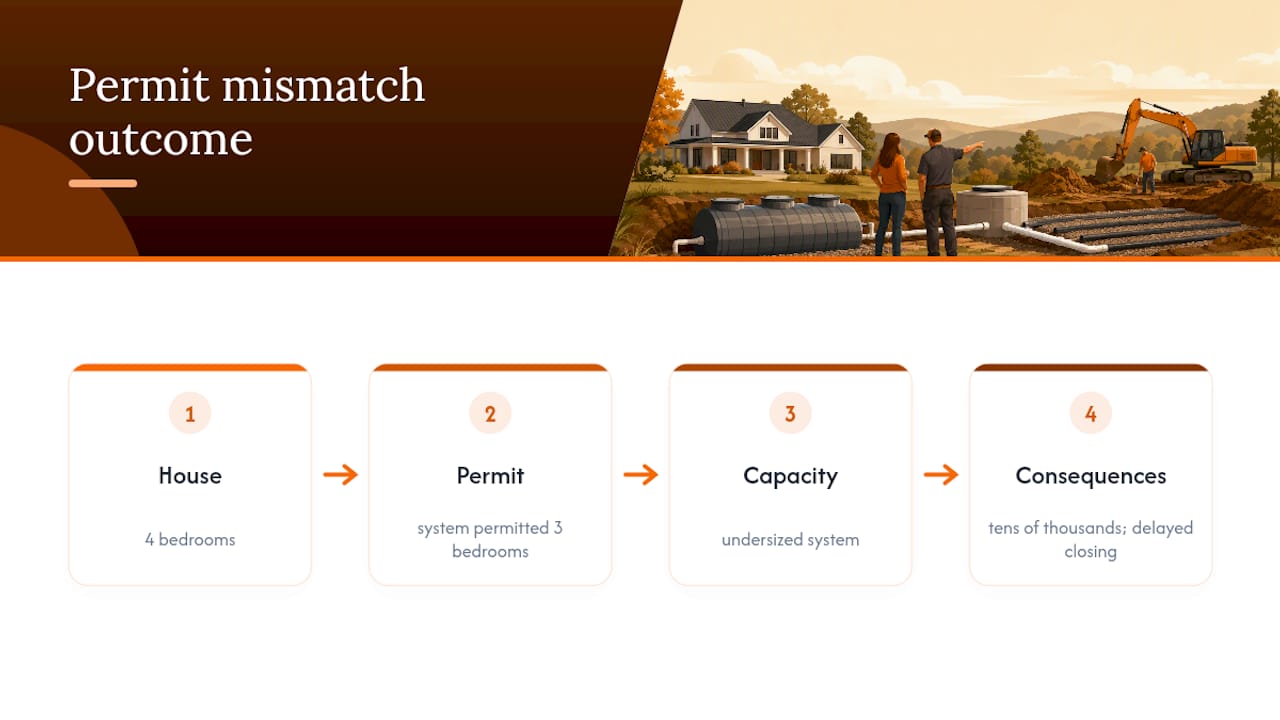
Conventional wisdom tells buyers to worry about sludge levels and pump schedules. Those matter, but they’re fixable in a weekend. Bedroom-count mismatches and permit-triggered drain field work are the findings that actually kill deals or force ugly renegotiations, and too few buyers pull the county Operation Permit before they even schedule an inspection.
If you’re buying or selling in NC, pull that permit record first. It costs nothing, takes one phone call to the county health department, and tells you in advance whether you’re dealing with a routine inspection or a structural capacity problem wearing a routine inspection’s clothes.
— Jason
Need help after your septic inspection in Alamance County?
J&M Septic is the local alternative to guessing your way through post-inspection repairs. When your NCOWCICB report flags a cracked baffle, a saturated drain field, or a bedroom-count mismatch against your county permit, you need a contractor who can quote the fix, pull the permit, and get it done before your closing date slips. That’s the gap J&M Septic fills for Alamance County buyers and sellers.

A typical visit starts with a walkthrough of the inspector’s report, a look at the system in person, and a written estimate before any work begins. Whether the fix is a simple baffle repair, an effluent filter swap, or a full drain field replacement, J&M Septic coordinates the county permitting so the repair holds up at closing, not just on paper.
If your inspection turned up a problem, or you’re a seller who wants to fix issues before they show up on a buyer’s report, start with a septic system installation and repair estimate and get a realistic timeline before your due-diligence window closes.