
Homebuyers: Why a Septic Dye Test Needs 200–250 Gallons
Learn what a septic dye test shows, why 200–250 gallons and several days of observation matter, and what to do after a positive result.

A septic dye test proves one thing and one thing only: whether dyed effluent surfaces on your property during and after a controlled flow of water through the system. It’s the fastest way to catch a leaking or overloaded drainfield before it becomes a health hazard, and it’s a common request during home sales, lender reviews, or when a yard stays soggy for no obvious reason. If dye shows up, the next call is to a septic professional, not a garden hose.
TL;DR:
- A dye test confirms whether dyed effluent surfaces on the property during a controlled water flow, indicating a potential leak or overload in the drainfield.
- Using certified fluorescein or rhodamine dyes, at least 50 gallons per bedroom, and performing multiple observations over days is critical for reliable results.
- False negatives often result from insufficient water volume, recent pumping, or soil absorption, so a negative result does not guarantee system health.
- A positive dye surface indicates a leak, requiring professional diagnostics like camera inspections and prompt repairs to prevent health hazards.
- Overloaded drainfields, missed pumping schedules, roots, and pipe failures are the most common causes of failure in local septic systems, especially in clay soil areas.
Table of Contents
- What Is a Septic Dye Test and When Should You Order One?
- Approved Dyes and Materials: What to Buy or Request From an Inspector
- How a Loading and Dye Test Is Performed
- How to Interpret Results and Why Negatives Can Be Misleading
- If Dye Appears: What to Do Next
- When a Dye Test Can Do More Harm Than Good
- What J&M Septic Sees on Real Properties Across Alamance County
- The Honest Take on Dye Testing
- What Happens When J&M Septic Comes Out After a Positive Test
- Sources
What Is a Septic Dye Test and When Should You Order One?
A septic dye test works by introducing a tracer dye into your system and running enough water through it to see whether that colored effluent breaks the surface anywhere on the property. That’s the whole mechanism: force water through, watch the ground.
Homeowners and buyers typically order one of these for a few specific reasons:
- During a real estate transaction, especially when a lender or the local health department asks for proof the drainfield is functioning
- When a yard shows persistent wet spots, unusual grass growth, or a sulfur smell near the tank or drainfield
- After a standard visual inspection turns up something questionable but not conclusive
A dye test is often bundled with a broader home inspection rather than run alone. Worth remembering: a clean result tells you the system didn’t fail during that test. It doesn’t certify the tank, the baffles, or the pipe runs as sound. That distinction trips up a lot of buyers who treat a passed dye test as a full system health certificate.
Approved Dyes and Materials: What to Buy or Request From an Inspector
Not every dye is safe or reliable for this job. Certified tracers matter because uncertified dyes can produce false readings or simply fail to fluoresce enough to spot in daylight.
- Fluorescein (green) and rhodamine (red) are the two standards most inspectors reach for, and both show up clearly under UV light in low-visibility conditions
- Stick to certified or NSF-listed tracer dyes built for wastewater testing, never food coloring or laundry dye
- Powdered fluorescein is the most common form professionals use for visibility and shelf life; liquid concentrates dissolve faster but are harder to dose precisely; tablets are convenient but less potent per unit
- Homeowners can buy basic dye packets online for a rough self-check, but a lender-required or health-department test almost always calls for an inspector-supplied dye and a documented chain of procedure
How a Loading and Dye Test Is Performed
Getting a reliable result depends less on the dye and more on how the test is run. Skip a step here and you’ll get a result that means nothing.
- Check the tank level first. Confirm the tank hasn’t been recently pumped, note any pre-existing wet areas in the yard, and verify which fixtures actually connect to the septic system before you start.
- Introduce the dye at the tank or distribution box when access allows. If you have to use a toilet or sink instead, verify that drain actually feeds the septic system first. Misconnected gray-water lines produce misleading results more often than people expect.
- Run a measured volume of water. The standard guideline is 50 gallons per bedroom, though many inspectors set a flat minimum of 200 to 250 gallons regardless of house size. Using insufficient water volume is a common reason some failing systems pass a dye test when they should not.
- Walk the property on a schedule. Check at about fifteen to thirty minutes, then again multiple times over the following day or two. Some systems may not surface dye for several days, so do not assume the test is clear after only one afternoon.
- Log everything. Note the time of each check, the weather, and take photos of any dye that appears. This record matters if you’re submitting results to a lender, health department, or seller.
Common mistakes worth avoiding: leaving a hose running unattended and flooding an area before you’ve noted the baseline conditions, or spilling concentrated dye near the observation zone, which can stain soil and fake a positive.
Pro Tip: Run your water test in the morning on a dry day. Rain within the observation window can wash away surfaced dye before you spot it, and afternoon storms are notorious for ruining an otherwise valid test.
How to Interpret Results and Why Negatives Can Be Misleading
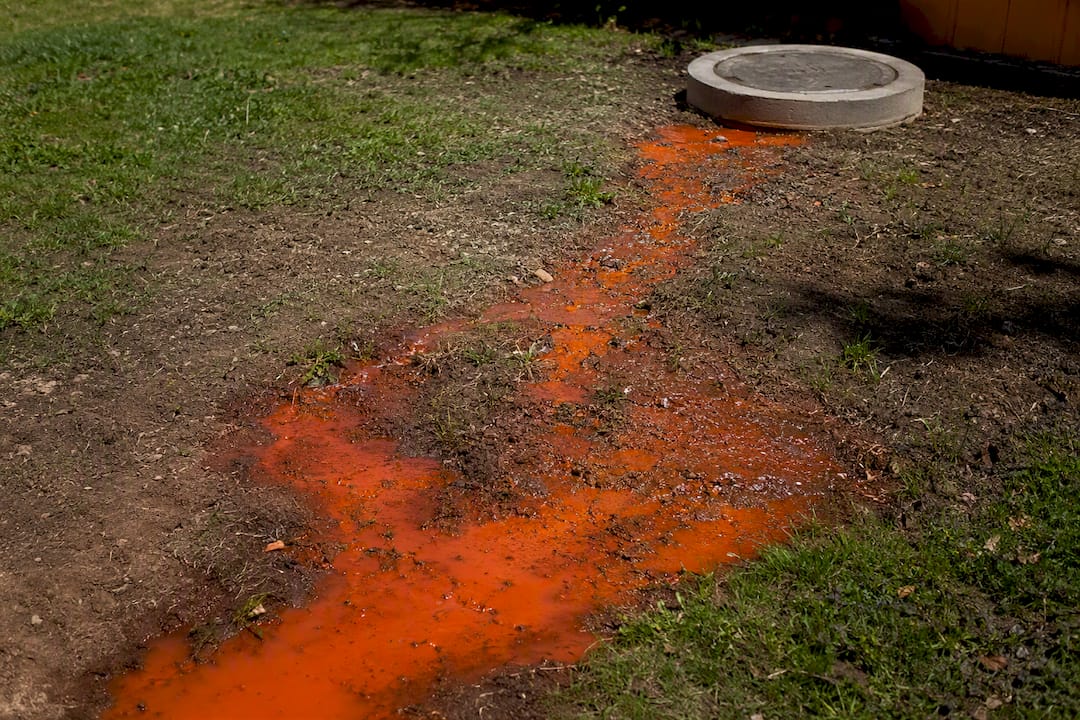
A positive result is about as close to definitive as septic testing gets. If dyed effluent surfaces anywhere on the property during or after the load, that spot is receiving discharge it shouldn’t, full stop.
A negative result is a different story. It means the dye didn’t surface during your observation window, not that the system is healthy. Several things can hide a real problem:
- Not enough water volume to stress the system the way daily use eventually would
- The tank was pumped recently, so there wasn’t enough retained effluent to trace
- Dye gets absorbed or held by soil before it reaches the surface, especially in sandy or clay-heavy ground
- Groundwater or heavy rain dilutes the dye past the point of visibility
Volume is the variable that trips up the most homeowners. Too little water gives a false sense of security precisely when you need the truth most. If your first test comes back clean but the yard still smells or stays wet, ask about lab-based charcoal-packet testing, which some health departments use for a legally defensible failure determination over a multi-week window.
If Dye Appears: What to Do Next
A positive dye test is not a DIY repair project. It’s a call to a licensed contractor.
- Contact a licensed septic professional or certified inspector to open the tank and run a camera inspection or begin excavation diagnostics on the failing section
- Report the failure to your local health department if your jurisdiction requires it, especially before a home sale closes; this often triggers a permit process for repair
- Limit water use in the house until the system is evaluated, and keep people and pets away from any surfaced effluent, which carries real bacterial risk
- Document the wet area with photos and notes while you wait for the contractor, since this speeds up diagnosis and any insurance or permitting paperwork
Repairs range widely depending on what’s actually broken, from a single pipe repair to full drainfield replacement or redistribution of the load across new lines. Cost and timeline both hinge on what the camera inspection finds, so get a written scope before you agree to anything.
When a Dye Test Can Do More Harm Than Good
Not every system tolerates a standard load test, and pushing forward anyway can create a new problem instead of diagnosing an old one.
- Mound and pressure-dosed systems need special handling. Limit test water to the pumping tank’s working capacity, sometimes as little as 125 to 150 gallons, or you risk overwhelming the dosing cycle and damaging the pump.
- Never run a load test right after pumping. An empty tank can’t demonstrate real-world behavior, and the test results won’t mean anything.
- DIY overload is a real risk. Pouring hundreds of gallons through a system that’s already struggling can back sewage into the house or burn out a dosing pump that was never designed for that volume.
- Stay away from wells and surface water during testing. Dye and effluent moving toward a water source is an environmental problem, not just a testing inconvenience.
If you’re unsure whether your system falls into a special category, ask your local health department or a certified inspector to run a calibrated test instead of guessing.
Pro Tip: If your property has a mound system, tell whoever is running the test before they show up with a hose. It changes the entire water volume calculation.
What J&M Septic Sees on Real Properties Across Alamance County
Working septic systems across Burlington, Mebane, Elon, Graham, Whitsett, and McLeansville for years turns up the same handful of failure patterns over and over.
- Overloaded drainfields are the single most common cause of a failed dye test, usually tied to a household that’s grown past what the original system was sized for
- Skipped pumping schedules show up constantly. Systems that haven’t been pumped in five or more years are far more likely to surface effluent under any real load
- Roots and pipe breaks near mature trees account for a large share of the surprise positives we find on older properties in this area
- Before ordering any dye test, a homeowner can check for easy tells first: soggy grass over the drainfield, sewage odor near the tank lid, or slow drains throughout the house
North Carolina’s clay soil doesn’t forgive an undersized or aging system the way sandier ground might, which is part of why local failure rates skew toward drainfield and pipe issues rather than tank problems.
The Honest Take on Dye Testing
A dye test is genuinely useful, and genuinely limited, and most articles on this topic lean too hard into one side or the other. The test answers exactly one question well: is effluent surfacing right now, under this load, in this window. It answers almost nothing else. Treating a clean result as a system health certificate is the biggest mistake I see buyers make, and it’s an easy mistake to make because a passed test feels conclusive.
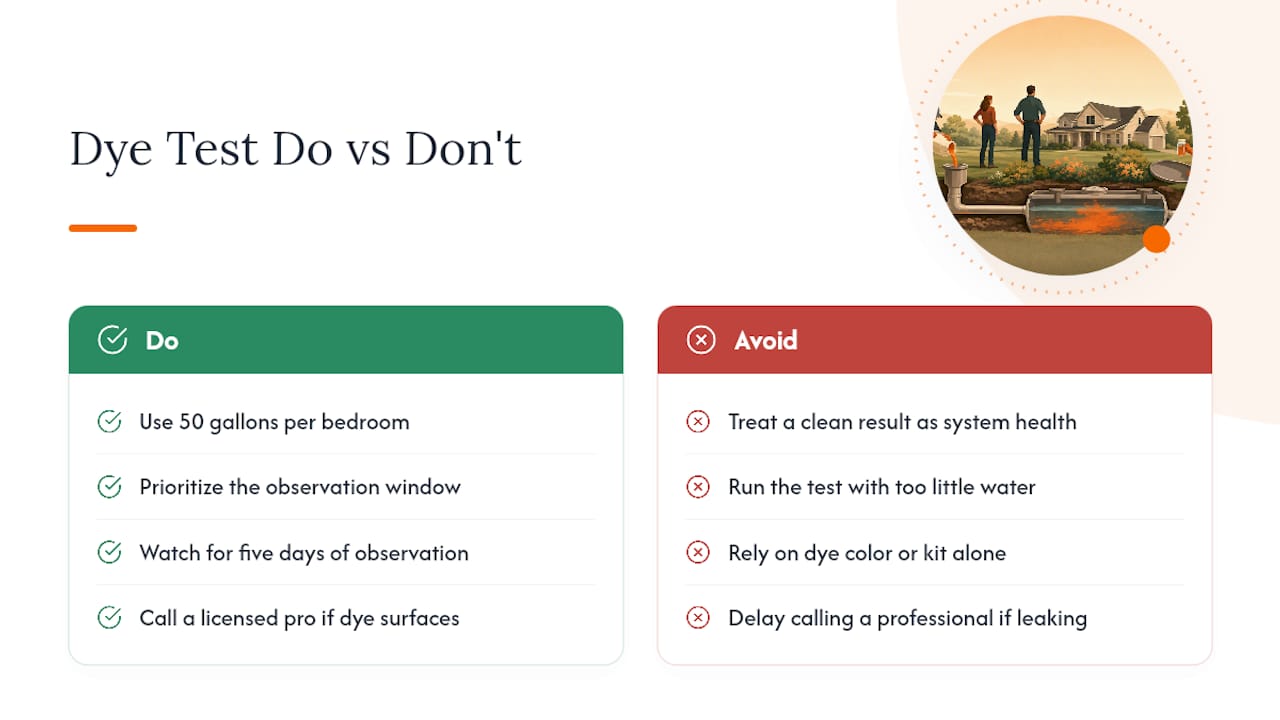
The conventional advice usually undersells water volume. Guides mention “50 gallons per bedroom” almost as a footnote, when it’s actually the variable most likely to produce a false negative. A test run with too little water isn’t a weaker version of a real test. It’s closer to not testing at all.
If you take one thing from this, prioritize the observation window over the dye color or the kit you bought. Five days of watching beats a fancier tracer every time. And if dye does surface, skip the internet research phase and call someone licensed. The clock on a leaking drainfield doesn’t pause while you read more articles about it.
— Jason
What Happens When J&M Septic Comes Out After a Positive Test
A positive dye test is the start of a diagnosis, not the end of one, and that’s exactly where our team picks up. J&M Septic handles the full sequence: opening the tank, running a camera inspection to pinpoint the break or overload, evaluating the drainfield, and walking you through permitting if your county requires it before repairs begin.

When we come out to a property in Alamance County or the surrounding Piedmont Triad, you get a straightforward written report: what we found, what it’ll take to fix it, and a real timeline instead of a vague estimate. We’ll also flag if the fix is a targeted pipe repair versus something bigger like drainfield replacement, so you’re not surprised halfway through the job.
If your dye test came back positive, or you’re staring at a wet patch in the yard and suspect it will, get in front of it now. Schedule a diagnostic visit with J&M Septic and get a written estimate before anything gets worse.
Sources
- Septic Dye Test Procedure — InspectAPedia
- Septic dye testing procedure and inspection standards — LegalClarity
- Septic system dye test procedures — Thurston County Public Health & Social Services
- Dye test training material — Pennsylvania DEP enforcement course