
Protecting Your Drain Field: 8 Proven Tips for 2026
Learn effective tips for protecting your drain field and extend its life. Discover essential maintenance and management practices for 2026.

A drain field, also called a leach field, is the underground network of perforated pipes and gravel that filters wastewater from your septic tank into the surrounding soil. Protecting your drain field through consistent maintenance, smart landscaping, and careful water management can extend its working life to 20–30 years or more. Skip those steps, and you risk a failure that costs thousands to repair or replace. The good news is that most drain field damage is preventable. These eight practices cover everything from pumping schedules to soil chemistry, giving you a clear plan to follow in 2026.
1. Pump your septic tank on schedule
Pumping every 3–5 years is the single most effective step you can take to protect your drain field. When solids build up in the tank, they overflow into the leach field pipes and clog the surrounding soil. That clog creates a layer called biomat, which blocks water absorption and eventually causes the field to fail. Households with heavy use, such as large families or frequent guests, should pump every 2–3 years instead.
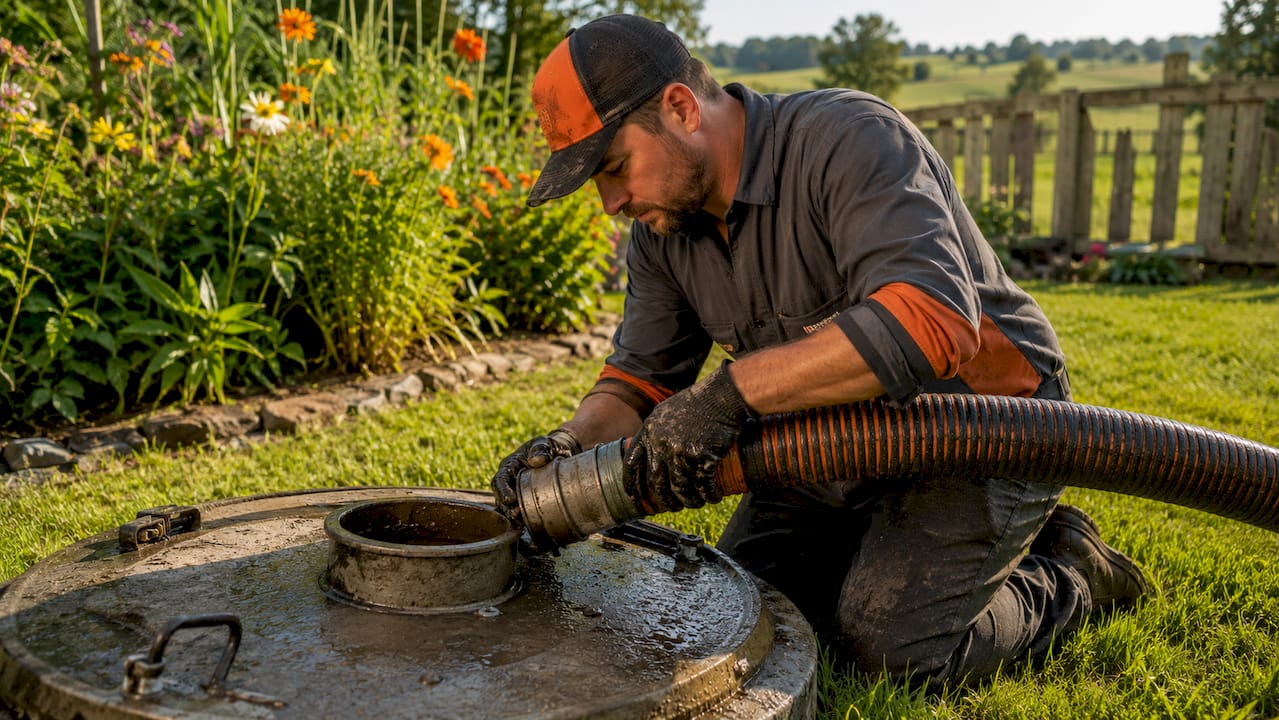
A professional pumping visit also gives a technician the chance to inspect your tank for cracks, baffle damage, and early signs of field stress. Catching those problems early costs far less than emergency excavation. Think of pumping as an oil change for your septic system. You do it on a schedule, not when something breaks.
Pro Tip: Keep a written log of every pumping date and inspection result. That record helps your technician spot trends and gives you proof of maintenance if you ever sell your home.
- Typical households: pump every 3–5 years
- Heavy use households: pump every 2–3 years
- Always request a full tank inspection at each visit
2. Keep trees and shrubs at a safe distance
Large trees and shrubs must stay at least 30 feet from your drain field to prevent root intrusion. Tree roots follow moisture, and the consistently wet soil above a leach field is exactly what they seek. Once roots enter the perforated pipes, they crack them from the inside and block flow. Willows, maples, and poplars are the worst offenders because their roots travel aggressively.
The right plants for the area directly above your drain field are shallow-rooted grasses or native meadow plants. These hold the soil in place without threatening the pipes below. You can find guidance on appropriate plants near drain fields to help you choose species that work with your system rather than against it.
Pro Tip: If you are unsure where your drain field sits, professional mapping of your system prevents accidental damage during any landscaping or construction project.
- Safe choices: fescue grass, native wildflowers, low-growing ground cover
- Avoid: willows, maples, poplars, ornamental shrubs with deep root systems
- Never plant a vegetable garden over the field due to contamination risk
3. Never build or park over the drain field
Structures and vehicles compact the soil above your leach field, and compacted soil cannot absorb water. A shed, deck, patio, or parked car sitting over the field crushes the gravel bed and collapses the pipes underneath. The damage is often invisible until the system backs up into your home.
Keep the entire drain field area free of anything heavier than a lawn mower. That means no swing sets, no storage containers, and no gravel driveways routed across the field. The soil above the pipes needs to stay loose and permeable to do its job. If you are planning a construction project near your septic system, review how everyday home actions affect your system before breaking ground.
4. Redirect water away from the field
Excess water saturates the soil and prevents your drain field from processing wastewater. Roof gutters that discharge near the field, low spots that collect runoff, and irrigation systems pointed at the leach area all add water the soil cannot handle. The result is a waterlogged field that backs up into the house.
Redirect downspouts at least 10 feet away from the drain field boundary. Grade the surrounding yard so surface water flows away from the field, not toward it. Avoid running sprinkler systems over the leach area. Your drain field already receives a steady supply of water from the septic tank. Adding more from outside sources overwhelms the system.
Allowing a saturated drain field to rest by temporarily reducing household water use gives aerobic bacteria time to break down biomat naturally, sometimes restoring minor saturation without excavation.
5. Watch what goes down your drains
Everything that enters your septic tank eventually reaches the drain field. Flushing wipes, grease, medications, or harsh chemicals kills the bacteria that break down waste and sends solids into the leach field pipes. Sodium from certain laundry detergents and water softeners is a particularly damaging offender.
Sodium binds soil particles together, creating a hardpan layer beneath the field that blocks water absorption entirely. This type of failure looks like a broken system but is actually a soil chemistry problem. Switching to low-sodium detergents and limiting water softener discharge into the septic system reduces this risk significantly. Your washing machine’s impact on your septic tank is larger than most homeowners realize.
6. Recognize the early warning signs
Catching drain field problems early is the difference between a repair and a full replacement. Soggy ground, sewage odors, and unusually lush green grass over the leach area are the three primary warning signs. Each one signals that wastewater is surfacing instead of filtering through the soil properly.
| Warning sign | What it likely means |
|---|---|
| Soggy or spongy ground over field | Soil is saturated; field cannot absorb more water |
| Sewage odors in yard or home | Wastewater surfacing or backing up through pipes |
| Unusually green or fast-growing grass | Nutrients from wastewater feeding surface vegetation |
| Slow drains throughout the house | Field is backing up into the tank and home plumbing |
| Gurgling pipes | Air displacement from a partially blocked system |
Call a professional the moment you notice any of these signs. Many drain field failures involve invisible soil chemistry issues rather than broken pipes, which means restoration may be possible without costly excavation. Early intervention is always cheaper than waiting.
7. Use bacterial treatments to support soil health
Monthly septic tank bacterial treatments help maintain the microbial activity that keeps your drain field functioning. Products like Septifix tablets introduce beneficial bacteria that break down organic buildup and support early-stage biomat recovery. These treatments work best as a preventive measure, not a cure for an already-failing system.
The bacteria in your septic tank and drain field do the actual work of treating wastewater. Antibacterial soaps, bleach, and chemical drain cleaners kill those bacteria and leave the system vulnerable. Choosing septic-safe cleaning products and using bacterial additives monthly keeps the biological process running at full strength. This is one of the lowest-cost drain field care tips available to any homeowner.
8. Correct the most common misconceptions about drain field care
Pumping is preventative, not an emergency fix. Most homeowners call for a pump-out only when something goes wrong, but by that point the drain field has often already suffered irreversible damage. Waiting for symptoms means the solids have already entered and clogged the leach pipes.
The second major misconception is that the septic tank and drain field are separate concerns. Every household action affects drain field health, from the detergent you use to the tree you plant in the backyard. Treating them as one integrated system is the foundation of effective septic care. Prevention is far more cost-effective than emergency repair, and the gap in cost between the two is significant.
“Ignoring proper pumping and care accelerates damage. Prevention is far more cost-effective than emergency repair.” — Industry professionals consistently emphasize this point across septic service guidance.
Key takeaways
Protecting your drain field requires consistent pumping, careful landscaping, and attention to soil chemistry working together as one integrated system.
| Point | Details |
|---|---|
| Pump on a fixed schedule | Pump every 3–5 years, or every 2–3 years for heavy-use households, to prevent solids from reaching the field. |
| Keep roots and structures away | Plant trees at least 30 feet from the field and never build or park over the leach area. |
| Control water flow | Redirect gutters and runoff at least 10 feet away to prevent soil saturation and field overload. |
| Watch household chemistry | Avoid sodium-heavy detergents and harsh chemicals that destroy soil structure and kill beneficial bacteria. |
| Act on warning signs fast | Soggy ground, sewage odors, and lush grass over the field require professional inspection immediately. |
What I’ve learned after years of septic work in Alamance County
Most homeowners I talk to in Burlington, Mebane, and Graham have the same blind spot. They know the septic tank needs pumping eventually, but they have no idea the drain field is the more fragile and more expensive part of the system. A tank can be replaced for a few thousand dollars. A drain field replacement can run many times that, and it disrupts your entire yard.
The thing that surprises people most is the soil chemistry issue. I have seen fields that looked completely broken, with standing water and odors, where the pipes were perfectly intact. The problem was sodium buildup from years of the wrong laundry detergent. That is a fixable problem if you catch it early. If you wait until the whole field is hardpan, you are looking at excavation.
My honest recommendation is this: treat your drain field like the most expensive appliance in your home, because it is. Schedule pumping before you need it. Walk the field area twice a year and look for the warning signs listed above. Keep a map of where your system sits so no contractor or landscaper accidentally drives equipment over it. These are not complicated steps. They are just consistent ones. The homeowners who never have a drain field emergency are almost always the ones who do the boring, regular maintenance. That is the real secret.
— Jason
How Jmseptic helps you protect your drain field
Jmseptic serves homeowners across Alamance County, including Burlington, Mebane, Elon, and Graham, with septic pumping, inspection, and repair services built around long-term system health. If you are not sure when your tank was last pumped, or if you have noticed any of the warning signs covered above, now is the right time to schedule a visit.

The Jmseptic team provides professional diagnostics that catch soil saturation, biomat buildup, and pipe issues before they become full failures. For a complete overview of what pumping involves and when to schedule it, the 2026 septic pump service guide covers everything you need to know. If you want to get ahead of potential problems entirely, start with the septic failure prevention guide to build a maintenance plan that fits your household.
FAQ
How often should I pump my septic tank to protect the drain field?
Pump every 3–5 years for a typical household, or every 2–3 years for heavy use. Skipping pumping allows solids to overflow into the drain field and cause irreversible clogging.
What plants are safe to grow over a drain field?
Shallow-rooted grasses and native ground cover are safe choices. Trees and shrubs must stay at least 30 feet away to prevent root intrusion into the leach pipes.
What are the first signs of drain field failure?
Soggy ground, sewage odors in the yard, and unusually lush green grass over the leach area are the three primary warning signs. Any one of them warrants a professional inspection.
Can a failing drain field be repaired without full replacement?
Yes, in many cases. Soil chemistry problems like sodium-induced hardpan and minor biomat buildup can sometimes be treated without excavation, especially when caught early.
Does what I flush really affect my drain field?
Flushing wipes, grease, or harsh chemicals sends solids and bacteria-killing agents directly toward the drain field. Sodium from detergents also compacts the soil beneath the field, blocking water absorption over time.