
Property Value and Septic Care: What Homeowners Need to Know
Discover how property value and septic care affect resale prices. Learn the benefits of maintaining your septic system for maximum value.

A well-maintained septic system directly supports your home’s resale price. A failing one can significantly reduce what buyers are willing to pay. Research from a Miami-Dade County study covering roughly 120,000 septic tanks found that properties with working septic systems carry a price premium of approximately 3.1%, equivalent to about $13,000 on average transaction prices. That premium comes almost entirely from lower operating costs compared to municipal sewer fees, not from buyers placing a high value on the system itself.
Here is what that means in practice for homeowners:
- A properly maintained system protects value by reducing the risk of costly repairs or replacements
- Routine maintenance costs average $250–$500 every 3–5 years, compared to repair or replacement costs of $3,000–$15,000 for a conventional system
- Buyers routinely request septic inspections, and a documented maintenance history reduces negotiation friction
- Neglected or failing systems trigger buyer concessions, inspection contingencies, and sometimes failed sales entirely
- Upgrades such as Aerobic Treatment Units and Smart Monitoring Systems can add measurable appeal for eco-conscious buyers
How property value and septic care are connected
The condition of your septic system affects your home’s value in ways that go beyond the system itself. Buyers, lenders, and real estate agents all treat a septic system as a signal of how well the property has been cared for overall.
System age and condition are the first things a buyer’s inspector will flag. An older system with no maintenance records raises immediate red flags. A system that has been pumped regularly, inspected on schedule, and repaired promptly tells a different story. The EPA recommends inspecting a conventional septic tank every 1–3 years and pumping every 3–5 years. Systems with mechanical components, like aerobic units or effluent pumps, typically need annual inspections. For homes with a garbage disposal, annual pumping is also recommended to prevent premature system failure.
Drainfield condition is often the most expensive variable in a real estate transaction. A compromised drainfield can cost as much as a full system replacement, which can be very costly, and buyers know it. Soggy ground, bright green grass strips over the field, or persistent odors near the yard are all signs that buyers and inspectors will notice immediately. These signs of system failure can stall a sale or force a seller to accept a steep price reduction.
Neighborhood expectations also shape how buyers price septic systems. In rural areas of North Carolina and similar markets, septic systems are standard and buyers expect them. In suburban areas near municipal sewer lines, a septic system may require more explanation and documentation to avoid buyer hesitation.
- Sewage odors inside or outside the home
- Slow drains throughout multiple fixtures
- Standing water or muddy soil near the tank or drainfield
- Gurgling pipes after flushing
Pro Tip: Before listing your home, pull together every pumping receipt, inspection report, and repair invoice into a single folder. Buyers and their agents will ask, and having that paper trail ready signals that the system has been treated as an asset, not an afterthought.
Septic system upgrades that boost property value
Upgrading your septic system does more than keep it functional. The right improvements reduce long-term operating costs, improve environmental compliance, and give sellers a concrete talking point during negotiations. Here are the upgrades that deliver the strongest market advantage in 2026.
Upgrades worth considering:
- Aerobic Treatment Units (ATUs) treat wastewater more thoroughly than conventional systems, producing cleaner effluent that protects the drainfield and groundwater
- High-Efficiency Effluent Pumps reduce energy consumption and extend the life of the drainfield by distributing effluent more evenly
- Secondary Treatment Filters add a layer of filtration that catches solids before they reach the drainfield, reducing clogging and extending system life
- Smart Monitoring Systems provide real-time alerts for pump failures, high water levels, and system faults, letting homeowners address problems before they escalate
- Drain Field Rejuvenation uses biological or mechanical treatments to restore soil absorption capacity without full replacement
These septic system upgrades provide both environmental and financial benefits that translate directly into buyer appeal. Eco-conscious buyers, in particular, respond well to ATUs and secondary filters because they reduce the risk of groundwater contamination. For sellers, an upgraded system is a concrete, documentable selling point rather than a vague claim about “good condition.”
Top 7 upgrades ranked by market advantage
- Aerobic Treatment Units (ATUs) produce cleaner effluent, extend drainfield life, and satisfy stricter county regulations in many parts of the U.S.
- Drain Field Rejuvenation avoids the cost of full drainfield replacement, which can run $10,000–$25,000 for a new system installation
- Smart Monitoring Systems appeal to tech-forward buyers and reduce the risk of undetected failures between inspection cycles
- Secondary Treatment Filters are low-cost additions that meaningfully extend system life and reduce pumping frequency
- High-Efficiency Effluent Pumps lower electricity costs and reduce wear on the distribution system
- Tank Risers and Access Lids make future inspections faster and cheaper, a practical detail buyers’ inspectors appreciate
- Effluent Distribution Boxes improve even distribution across the drainfield, preventing localized saturation and premature failure
For homeowners considering eco-friendly septic upgrades, ATUs and secondary filters are the most straightforward place to start. They address both regulatory compliance and buyer perception in a single investment.
How proper installation protects your home’s long-term value
The value of a septic system starts at installation. A system that was poorly sited, undersized, or installed without proper regulatory permits creates liabilities that follow the property through every future sale.
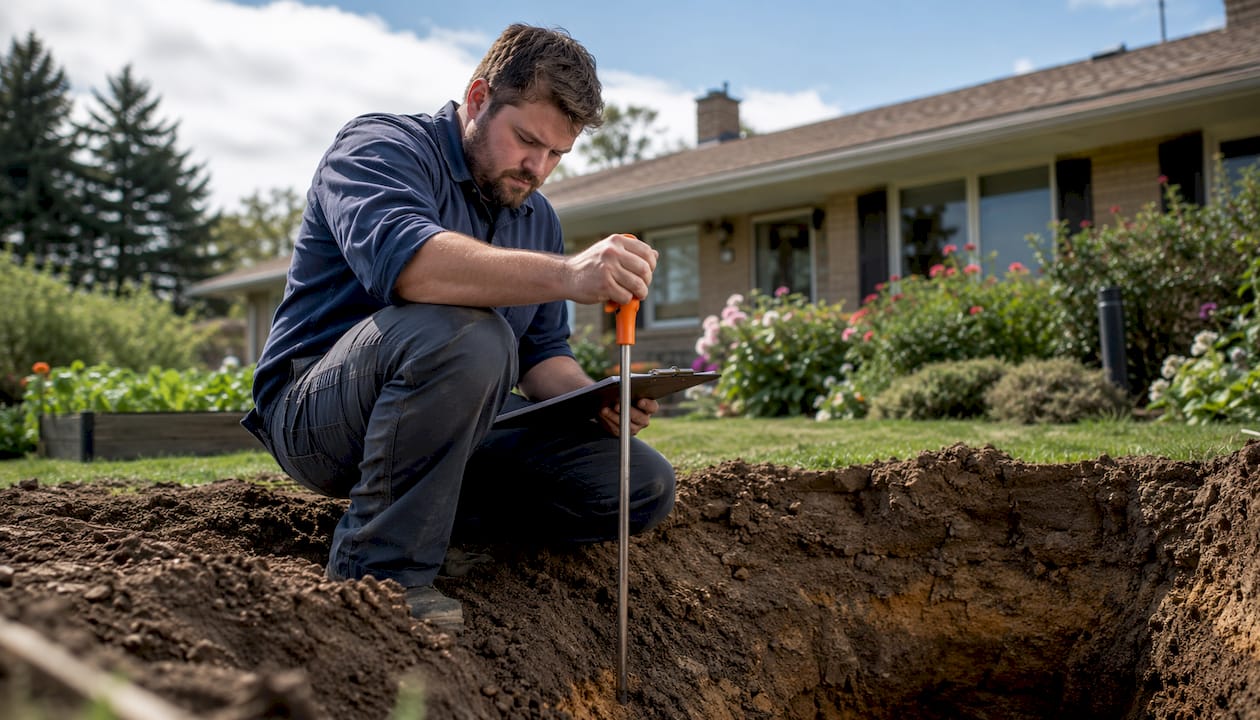
Site selection is the single most consequential decision in the installation process. Soil composition, groundwater depth, and distance from wells and water features all determine whether a system will function effectively for decades or begin failing within a few years. Poor site selection negatively affects property value, while optimal soil conditions support long-term system performance and home marketability. A proper site assessment before installation is not optional; it is the foundation of every other decision.
Regulatory compliance during installation protects the property from future legal liability. In North Carolina and across most U.S. states, septic systems must meet specific setback requirements, soil percolation standards, and permit conditions. A system installed without proper permits can trigger mandatory upgrades or replacement at the time of sale, often at the seller’s expense. Professional installation that follows state and county regulations from the start avoids those surprises entirely.
Technology selection at installation also matters more than most homeowners realize. Choosing a system type matched to the property’s soil conditions, household size, and local regulations reduces the likelihood of premature failure. Homes with professionally installed, code-compliant systems tend to move through the real estate transaction process with fewer contingencies and less negotiation friction.
- Verify that all installation permits are on file and transferable to a new owner
- Confirm the system type matches current county regulations, since requirements change over time
- Keep the original design drawings and soil test results with your maintenance records
What homeowners and sellers should do to protect septic system value
Protecting your home’s value through septic care is mostly a matter of consistency. The homeowners who get the best outcomes at sale are the ones who treated maintenance as routine, not reactive.
- Schedule inspections every 1–3 years. The EPA and state agencies including Mass.gov recommend pumping at least every 3 years for homes without a garbage disposal, and annually for homes that have one. Stick to that schedule regardless of whether you notice any problems.
- Build a paper trail of care. Keep every pumping receipt, inspection report, and repair invoice in a dedicated folder. A documented maintenance history reduces buyer-perceived risk during negotiations and can prevent a buyer from using a questionable inspection finding as leverage for a price reduction.
- Address problems immediately. A slow drain or occasional odor can seem minor, but these are often early signs of drainfield stress. Catching a problem at the $500 repair stage beats discovering it at the $15,000 replacement stage.
- Use water efficiently. Spreading laundry loads across the week rather than running multiple loads in a single day reduces the hydraulic load on the system and extends drainfield life.
- Market the system as an asset. Homes with well-maintained septic systems avoid municipal sewer fees, which is a genuine financial benefit buyers can calculate. Frame it that way in your listing and disclosure documents.
- Get a pre-listing inspection. Scheduling a professional inspection before you list gives you time to address any findings on your own terms, rather than under contract pressure. It also signals to buyers that you have nothing to hide.
Pro Tip: If your home has a garbage disposal, factor that into your pumping schedule. Garbage disposals increase the volume of solids entering the tank, which typically means annual pumping rather than the standard 3-year cycle.
For a deeper look at why regular inspections matter for resale value and buyer confidence, the maintenance schedule alone is one of the most cost-effective things a homeowner can do before listing.
Timing your septic work around a property transaction
The timing of inspections, maintenance, and upgrades relative to a sale can be the difference between a smooth closing and a deal that falls apart over a contingency.

Before listing: Schedule a full inspection and pumping at least 60–90 days before your target listing date. That window gives you time to address any findings without rushing, and it produces fresh documentation you can hand directly to a buyer’s agent. Buyers who see a recent inspection report from a licensed professional are far less likely to demand their own inspection contingency or use the system as a negotiating chip.
During the transaction: Most purchase contracts in the U.S. include a septic inspection contingency. The buyer’s inspector will check the tank, drainfield, and all accessible components. If the system fails inspection, the buyer can request repairs, a price reduction, or in some cases, walk away entirely. Failing septic systems are among the most common causes of real estate negotiation setbacks and failed sales. Having your own recent inspection on file gives you a factual basis for any counter-negotiation.
For upgrades: Major upgrades like ATU installation or drain field rejuvenation typically take 2–6 weeks from permit approval to completion, depending on the county and contractor availability. If you are planning an upgrade before a sale, build in at least 90 days to allow for permitting, installation, and final inspection sign-off. Rushing an upgrade under contract pressure increases both cost and the risk of compliance issues.
For buyers: Request the seller’s full maintenance history as part of due diligence. A septic system inspection before closing is not optional; it is one of the most cost-effective things you can do to avoid inheriting a $15,000 problem. Understanding the range of septic system alternatives available in your region also helps you evaluate whether an existing system is worth maintaining or whether an upgrade makes more financial sense.
Jmseptic serves Alamance County homeowners who want it done right
If you are buying, selling, or maintaining a home in Alamance County or the surrounding Piedmont Triad area, the condition of your septic system is a real financial variable, not a footnote. Jmseptic handles the full range of septic work that directly affects your property’s value: new installations built to your soil conditions and county regulations, repairs and tank replacements, hydro jetting for line blockages, and routine maintenance that produces the documented records buyers want to see.

Jmseptic’s advantage for homeowners in this market is straightforward. You get a locally owned team that knows Alamance County’s soil conditions, permit requirements, and inspection standards, without the overhead or scheduling delays of a larger regional company. Whether you need a pre-listing inspection, an urgent repair, or a full new system installation, the work comes with the documentation you need to protect your investment. Call Jmseptic to schedule a service visit before your next listing date or closing.
Key Takeaways
A well-maintained septic system supports property value by reducing repair risk, building buyer confidence, and avoiding the costly failures that derail real estate transactions.
| Point | Details |
|---|---|
| Maintenance costs vs. replacement | Routine maintenance runs $250–$500 every 3–5 years; replacement can cost $3,000–$15,000 or more. |
| Working systems carry a price premium | Properties with functioning septic systems show a 3.1% price premium, about $13,000 on average transaction prices. |
| Documentation reduces negotiation risk | A paper trail of pumping receipts and inspection reports lowers buyer-perceived risk and reduces contingency pressure. |
| Top upgrade for value | Aerobic Treatment Units produce cleaner effluent, extend drainfield life, and satisfy stricter county regulations. |
| Jmseptic for Alamance County homeowners | Jmseptic provides installation, repair, and maintenance with the documented records buyers and lenders require. |