
Perc Test Cost in North Carolina: $500–$1,800 for Evaluations
Find typical North Carolina soil evaluation costs: county fees run $200–$400, and combined evaluations commonly cost $500–$1,800. Schedule the test before...

A county soil evaluation in North Carolina typically runs $200 to $400, while a private evaluator adds another $300 to $800, putting most homeowners at $500 to $1,800 total depending on site complexity. That number is a rounding error compared to the septic system itself, which usually runs several thousand to tens of thousands of dollars. Get the soil evaluation done before you close on land, not after.
TL;DR:
- Soil evaluation costs in North Carolina generally range from $200 to $400 for county services and $300 to $800 for private evaluators, with total costs often between $500 and $1,800 depending on site complexity.
- The overall expense of soil testing is minor compared to septic system installation costs, which can range from $5,000 for conventional systems to over $25,000 for engineered designs on difficult sites.
- County permits include an Improvement Permit and Construction Authorization, both of which vary in fees and validity depending on the county and home size.
- If the soil evaluation fails, options include additional testing, hiring an engineered system designer, or negotiating the purchase based on contingencies, with engineered systems costing significantly more.
- Private evaluators can often schedule tests within days, whereas county assessments may take weeks, making early testing crucial before land purchase or financing deadlines.
Table of Contents
- How Much Does a Perc Test Cost in NC? Full Fee Breakdown
- Who Handles Soil Evaluations and Permits in NC?
- What Happens If the Soil Fails the Evaluation?
- How Long Does a Perc Test Take in North Carolina?
- What Should You Budget Before Making an Offer on Land?
- What Local Contractors See on the Ground in Alamance County
- Let J&M Septic Handle the Coordination for You
- Where to Verify Current Fees in Your County
- Sources
How Much Does a Perc Test Cost in NC? Full Fee Breakdown
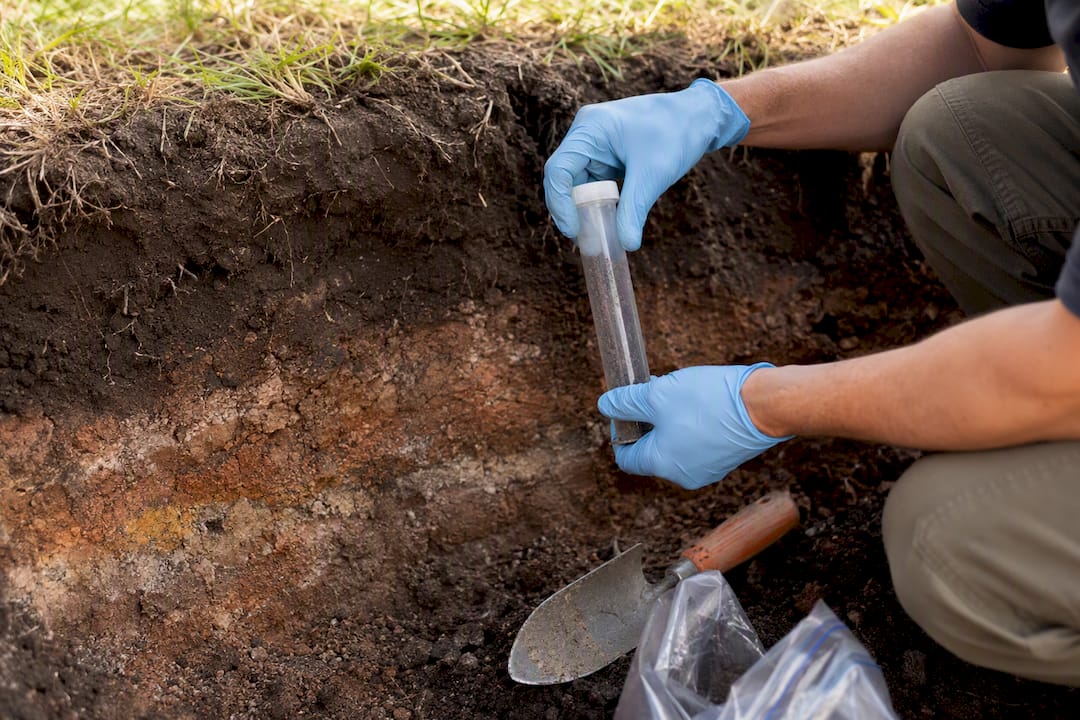
The term “perc test” is technically outdated. North Carolina’s environmental health departments now call it a soil and site evaluation, and it covers a lot more than how fast water drains through a hole in the ground. Evaluators examine soil texture, color, structure, and depth to the seasonal high water table, which tells them whether your land can support a septic system at all.
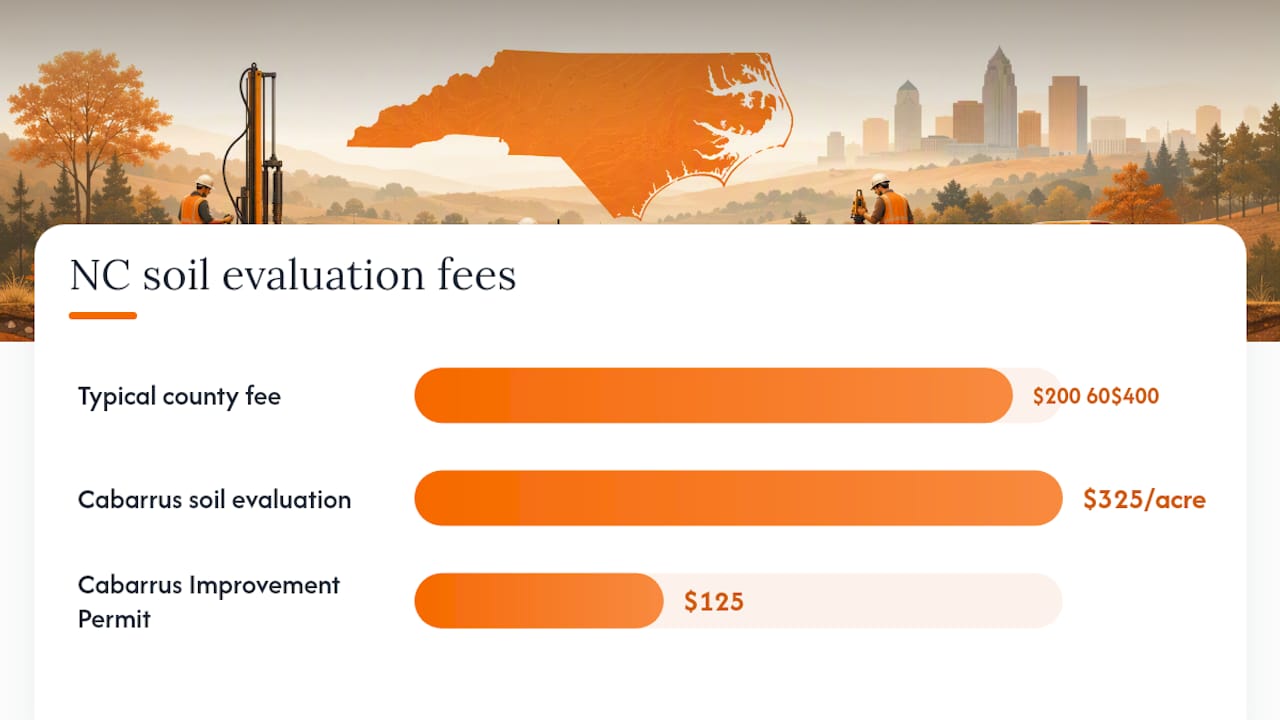
Two separate bills typically show up. The county charges a fee for the Improvement Permit application and the site visit, and county fees generally fall between $200 and $400. Cabarrus County, for example, lists a soil evaluation fee around $325 per acre plus a separate $125 Improvement Permit charge, according to Cabarrus Health Alliance’s published FAQ. Every county sets its own schedule, so the number you pay in Alamance County won’t match Wake or Mecklenburg.
Then there’s the private evaluator. A Licensed Soil Scientist or Authorized On-Site Wastewater Evaluator (AOWE) typically charges several hundreds of dollars for a faster, more detailed assessment.
Here’s roughly what three common scenarios look like:
- Simple, flat lot with good soil: county fee only, around $200 to $400
- Standard lot with a private evaluator involved: $500 to $1,200 combined
- Complex or marginal site needing extra test pits and lab work: $1,000 to $1,800
Statistic to remember: combined county and private evaluation costs commonly land between $500 and $1,800, and site complexity, not the county fee schedule, drives most of that spread. Add-ons like travel charges, backhoe work to dig test pits, or additional lab analysis on marginal soil can push costs toward the top of that range. For a fuller cost picture once you get past the evaluation stage, our guide to cost factors for septic installation in North Carolina breaks down what drives total project pricing.
Who Handles Soil Evaluations and Permits in NC?
Your county’s Environmental Health division issues two documents you need before anything gets built: the Improvement Permit, which confirms the soil can support a septic system, and the Construction Authorization, which greenlights the actual installation design. Fees and validity periods vary by county and by how many bedrooms the home has.
You can also hire a private Licensed Soil Scientist or AOWE instead of waiting on the county calendar. These professionals produce detailed written reports that lenders and county reviewers accept, which speeds up appeals if a site gets flagged as marginal.
One thing North Carolina doesn’t budge on: installations must be performed by licensed professionals, full stop. Homeowners can pull permits, but they cannot legally install their own system.
Before you call anyone, gather:
- A copy of the deed or plat map
- Any prior soil evaluation reports for the parcel
- Proof of ownership or a signed purchase contract
Our septic permitting process guide walks through what to expect at each step.
What Happens If the Soil Fails the Evaluation?
A “marginal” result usually means the site needs more testing or a modified design. An “unsatisfactory” result on the tested area means you’ll need a different approach entirely.
Your options, roughly in order of cost:
- Test additional acreage. If the lot has room, a second test pit in a different location sometimes finds suitable soil nearby.
- Hire a Licensed Soil Scientist to design an alternative system. Engineered systems like low-pressure pipe, mound, or drip systems can work on soil a conventional system can’t handle.
- Negotiate the purchase price or walk away. A failed evaluation is leverage if your offer included a contingency.
Conventional systems generally run $5,000 to $10,000. Engineered systems built for tougher soil run $15,000 to $25,000 or more, sometimes adding $10,000 to $20,000 over a conventional install according to NC Cooperative Extension.
Pro Tip: A failed county test is not always the last word. A second opinion from a private Licensed Soil Scientist sometimes finds a viable design the county’s initial pass missed, especially on larger lots with varied soil.
How Long Does a Perc Test Take in North Carolina?
County-scheduled evaluations often take several weeks to get on the calendar, especially in growing counties with permitting backlogs. Private evaluators can frequently get you scheduled within days, which is the main reason buyers pay extra for one.
The site visit itself usually takes just a few hours, though wooded or rocky lots may need a backhoe to dig test pits first, adding a few hundred dollars in site-prep costs.
Keep these timing notes in mind:
- Schedule the evaluation as early in your due diligence period as possible, ideally before your financing contingency deadline
- The field report typically documents soil type, texture, and depth to the water table at each test location
- A Construction Authorization has a set validity window before it expires and needs renewal
Our precision grading guide covers site prep steps that can shave time off this process.
What Should You Budget Before Making an Offer on Land?
Build these line items into your budget before you sign anything:
- County Improvement Permit and soil evaluation fee ($200 to $400)
- Private evaluator fee if you want faster results ($300 to $800)
- Site prep contingency for backhoe or clearing work ($200 to $600)
- Septic installation budget once you know the system type ($5,000 to $25,000)
Add a purchase contract clause making the sale “subject to satisfactory soil evaluation,” with a clear deadline. Before hiring an evaluator, ask for their license number, a sample report, how many test pits they typically dig, and their turnaround time.
Pro Tip: If you’re already planning to hire a septic contractor for installation, ask whether they coordinate soil evaluations as part of the process. It saves you from managing two separate contractors and two separate timelines.
What Local Contractors See on the Ground in Alamance County
Soil surprises show up more often on rural Piedmont Triad lots than most buyers expect. Red clay that looks fine on the surface can sit on a shallow water table just a few feet down, and that only shows up once someone digs a proper test pit.
The buyers who come out ahead almost always did their soil evaluation before closing, not after. The ones who skip it and find out during a building permit application end up scrambling for an engineered system they never budgeted for. Site access matters too. A wooded lot that needs clearing before an evaluator can even dig a pit can cost more in prep work than the evaluation itself. Buyers researching rural parcels benefit from broader due diligence practices that treat soil testing as one piece of a larger pre-purchase checklist, not an afterthought.
— Jason
Let J&M Septic Handle the Coordination for You
Jmseptic saves you the hassle of managing a soil evaluator, the county permit office, and an installation contractor as three separate relationships. We coordinate the evaluation scheduling, walk you through Improvement Permit and Construction Authorization paperwork, and handle licensed installation from grading through final backfill, all under one roof for homeowners in Alamance County and the surrounding Piedmont Triad.

If you’re still evaluating raw land, we can point you toward the right first step. If you already know your lot passed and you’re ready to build, our septic systems for new construction guide outlines what a full installation involves. Either way, call Jmseptic for a consult before you commit to a purchase price or a system design. Bring your soil evaluation report if you have one, or ask us how to get one scheduled.
Where to Verify Current Fees in Your County
Fee schedules change, so confirm numbers directly with your county before budgeting. Union County’s Environmental Health page lists current wastewater and soil evaluation charges as one example of what to expect. Note that NC Agronomic Services’ soil testing program is a separate service for farming and lawns, not septic permitting, so don’t confuse the two when researching fees.
Sources
- Rowan County – NC septic system permitting process
- NC Cooperative Extension – Investigate before you invest