
Partial Drain Field Replacement: What Homeowners Must Know
Learn what is a partial drain field replacement and how it can save you money and disruption. Get essential insights before your repair.

A partial drain field replacement is the targeted removal and reinstallation of one or two failing lateral trenches within a septic system’s drain field, leaving the healthy sections intact. The industry also calls this a “selective lateral replacement” or “partial leach field repair.” This option costs significantly less than a full system overhaul and causes far less disruption to your yard. Understanding when this repair is appropriate, what it costs, and how the process works gives you the information you need before calling a contractor.
What is a partial drain field replacement and when is it appropriate?
A drain field, also called a leach field, is a network of perforated pipes buried in gravel-filled trenches. Wastewater flows from your septic tank into these pipes, then slowly filters through the gravel and into the surrounding soil. Each pipe run is called a lateral. When one or two laterals fail while the rest of the field remains functional, partial replacement becomes a viable option.
Partial replacement is viable only when failure is limited to isolated trenches and the rest of the field soil remains absorptive. If soil saturation has spread across the entire field, full replacement is the only lasting fix. This distinction matters because replacing one trench in a field with widespread saturation only delays the inevitable by a few months.
The most common cause of localized trench failure is biomat formation. A biomat is a dense layer of biological and chemical material that builds up along the trench walls and floor, sealing the soil and cutting off oxygen. Biomat buildup seals soil and reduces absorption, which means replacing the pipe without treating the surrounding soil often produces incomplete results. A qualified technician will assess whether the soil around the failing lateral can still absorb water after excavation.
Signs that point to localized failure rather than total field failure include:
- A single soggy or wet patch in your yard while the rest stays dry
- Slow drains in one fixture but not throughout the house
- Odors concentrated near one section of the yard
- One lateral showing blockage on camera inspection while others appear clear
Pro Tip: Ask your technician to run a camera inspection on every lateral before agreeing to any repair. Skipping this step is the most common reason homeowners pay for a partial repair that fails within a year.
How is a partial drain field replacement performed?
The repair process follows a defined sequence. Skipping any step, especially the permit stage, creates legal risk and can complicate a future home sale.
-
Site evaluation and camera inspection. A technician runs a camera through each lateral to identify which ones are blocked or collapsed. Camera diagnostics confirm the exact location and scope of failure before any digging begins. This step prevents unnecessary excavation.
-
Permit acquisition. Most counties require a health department permit before any drain field work. Permit processing takes 3–14 days and fees typically run $200–$600. Skipping permits risks fines and can create serious problems when you sell your home.
-
Excavation of the failing trench. Workers dig out the identified lateral, removing old gravel, pipe, and any biomat-contaminated soil. The depth and width of excavation depend on the original installation specs and local code requirements.
-
Installation of new materials. New perforated pipe is laid in fresh gravel, typically washed stone sized to allow water movement without clogging. The trench is then covered with a geotextile fabric to prevent soil migration into the gravel layer.
-
Soil treatment if needed. If biomat is present, the exposed soil may receive an aeration treatment or biological additive to restore absorption capacity. Replacing the pipe without addressing the soil is a common mistake that shortens the repair’s lifespan.
-
Inspection and site restoration. A local inspector typically visits to verify the installation meets code before the trench is backfilled. The yard is then graded and seeded or sodded to restore the surface.
Excavation and installation for a partial replacement takes 1–2 days of active work. Full replacements require 2–5 days. That time difference translates directly into lower labor costs.
Pro Tip: Request a written quote after the camera inspection, not before. Quotes issued before diagnosis are estimates based on guesswork. A post-inspection quote reflects the actual scope of work.

What are the costs of partial drain field replacement?
Partial drain field replacement typically costs $3,000–$8,000, depending on the number of laterals replaced, local labor rates, site access, and permit fees. That range sits well below the cost of a full system replacement, which runs $6,000–$20,000 or more. The savings are real, but only if the repair is correctly targeted.
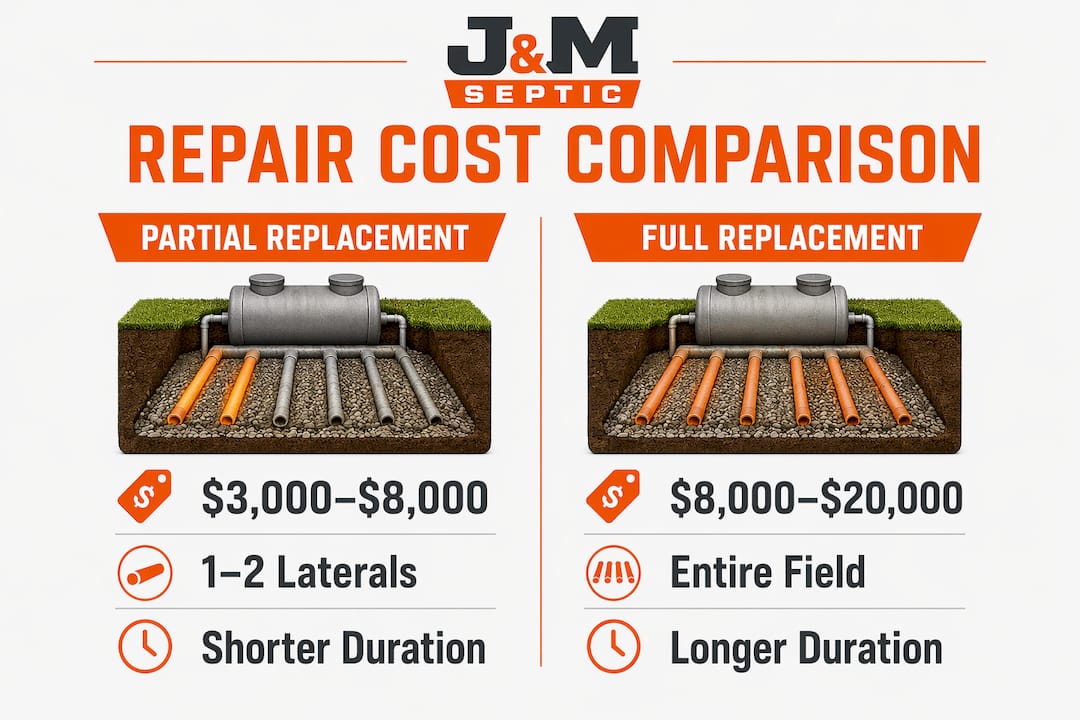
Regional pricing varies. In some markets, partial replacement runs closer to $2,000–$5,000 for a single lateral, while full replacements in those same areas cost $7,500–$15,000. Permit fees add $200–$600 on top of labor and materials regardless of project size.
Several factors push costs toward the higher end of the range:
- Number of laterals replaced. Each additional trench adds excavation time and materials.
- Site access. Tight yards, slopes, or landscaping that requires removal increases labor hours.
- Soil treatment. Adding biomat remediation or aeration to the scope raises the total.
- Local labor rates. Costs in rural North Carolina differ from urban markets.
For comparison, hydro-jetting costs $300–$1,500 and individual line repair runs $800–$3,000. These options work for minor blockages but do not address structural trench failure or severe biomat buildup.
| Repair type | Typical cost range | Best for |
|---|---|---|
| Hydro-jetting | $300–$1,500 | Recent, minor blockages |
| Individual line repair | $800–$3,000 | Single pipe damage |
| Partial replacement | $3,000–$8,000 | Localized trench failure |
| Full replacement | $6,000–$20,000+ | Widespread soil saturation |
Getting a written quote after a camera inspection reduces the risk of overpaying. Contractors who quote without inspecting are guessing at the scope.
What are the signs your drain field needs partial repair?
Catching failure early is the single most important factor in keeping your repair options open. Waiting for severe failure eliminates partial repair as an option and forces a full replacement at two to three times the cost. The signs of drain field failure that point to localized, repairable damage are distinct from those indicating total system collapse.
Signs that suggest partial repair may still be viable:
- A single wet or spongy area in the yard, not widespread saturation
- Slow drains in one part of the house while others drain normally
- Septic odors near one section of the yard but not the whole field
- Gurgling in one drain line rather than throughout the plumbing
Signs that indicate total field failure requiring full replacement:
- Sewage backing up into multiple fixtures inside the home
- Saturated ground across the entire drain field area
- Multiple laterals showing failure on camera inspection
- Persistent odors throughout the yard combined with standing water
The most common homeowner mistake is waiting. A soggy patch in the yard gets ignored for a season, then two. By the time a contractor is called, the biomat has spread from one trench to three, and partial repair is no longer on the table. Professional diagnosis using camera inspection and soil testing is the only reliable way to confirm whether partial repair is still viable. Guessing based on surface symptoms leads to either unnecessary full replacement or an incomplete repair that fails quickly.
Pro Tip: If you notice a wet spot in your yard after heavy rain, wait three days. If it dries up, it may be surface drainage. If it stays wet or smells, call for an inspection immediately.
What are the alternatives to partial replacement?
Two treatments can sometimes restore drain field function without excavation: hydro-jetting and biomat remediation. Both work best when failure is recent and not yet severe.
Hydro-jetting uses high-pressure water to clear blockages and biomat from inside the lateral pipes. It costs $300–$1,500 and can be completed in 2–4 hours. It works well for failures that are less than six months old and caused primarily by pipe blockage rather than soil saturation. Once the surrounding soil has lost its ability to absorb water, hydro-jetting the pipe does not restore function.
Biomat treatment targets the soil biology directly. Aerobic bacteria introduced into the trench consume the anaerobic biomat layer and restore oxygen levels in the soil. This approach works best as part of a maintenance plan rather than as an emergency fix. It extends system life when applied before failure becomes severe.
When these treatments are appropriate:
- Hydro-jetting: blockage is recent, pipe is structurally intact, soil absorption is still functional
- Biomat treatment: early-stage biomat, soil not yet fully saturated, used alongside reduced water usage
When these treatments are not enough:
- Pipe is collapsed or cracked
- Soil is fully saturated across one or more trenches
- Failure has been progressing for more than a year without intervention
Combining hydro-jetting with a scheduled biomat treatment and regular pumping creates a maintenance plan that can add years to a drain field’s functional life. The soil conditions around your field determine which treatments will hold and for how long.
Key Takeaways
Partial drain field replacement is the most cost-effective repair when failure is localized, soil absorption remains intact in most of the field, and a camera inspection confirms the scope before any work begins.
| Point | Details |
|---|---|
| Partial vs. full replacement | Partial repair targets one or two failing laterals; full replacement is needed when soil saturation is widespread. |
| Cost range | Partial replacement typically costs $3,000–$8,000, far below the $6,000–$20,000+ for full replacement. |
| Permit requirement | Health department permits take 3–14 days and cost $200–$600; skipping them creates legal and resale risk. |
| Biomat is the hidden problem | Replacing pipe without treating biomat-damaged soil produces repairs that fail prematurely. |
| Act early | Delaying diagnosis turns a repairable localized failure into a full system replacement. |
What I’ve learned after years of drain field repairs
The homeowners who get the best outcomes from partial replacements are the ones who called early. Not when the yard was a swamp. Not when sewage was backing up into the laundry room. They called when they noticed one soft spot in the grass that didn’t dry out after a week.
What most homeowners overlook is that the soil is the real treatment system, not the pipe. The pipe just delivers wastewater to the soil. When a trench fails, the soil around it has usually been compromised for months before any surface symptom appears. A partial replacement that skips soil assessment is a repair that buys you six months, not six years. I’ve seen fields where the pipes looked fine on camera but the soil had zero absorption capacity left. Replacing those pipes would have been a waste of money.
The other thing I’d stress is the permit step. Homeowners sometimes push back on the timeline because permits add 3–14 days to the project. Skipping permits is not worth it. I’ve seen unpermitted drain field work create real problems at closing when a home is sold. The buyer’s inspector finds it, the deal stalls, and the homeowner ends up paying for a permitted redo anyway. Do it right the first time.
A well-targeted partial replacement, done after a thorough camera inspection and soil assessment, with proper permits and soil treatment, can extend your system’s life by many years. That’s the outcome worth aiming for. Anything less is just delaying a larger bill.
— Jason
Jmseptic is ready to assess your drain field
If you’re seeing wet spots, slow drains, or septic odors in Alamance County or the surrounding Piedmont Triad area, a professional assessment is the right first step. Jmseptic handles the full process from camera inspection through permit acquisition, excavation, and site restoration.

Jmseptic serves Burlington, Mebane, Elon, Graham, Whitsett, and McLeansville with honest diagnostics and long-term repair solutions. For homeowners weighing repair options, the NC septic installation guide covers what to expect from the full process. If your situation feels urgent, the emergency septic repair guide for Alamance County homes explains when to act immediately. Call Jmseptic to schedule a camera inspection and get a written quote based on your actual system.
FAQ
What is a partial drain field replacement?
A partial drain field replacement removes and reinstalls one or two failing lateral trenches in a septic system’s drain field while leaving the functioning sections intact. It is a targeted repair option that costs less and takes less time than full system replacement.
How long does a partial drain field replacement last?
A properly executed partial replacement with soil treatment can extend system life by many years. If soil saturation is already widespread, partial replacement may only extend life 6–12 months before full replacement becomes necessary.
Do I need a permit for partial drain field repair?
Yes. Most local health departments require a permit for any drain field work. Permits typically cost $200–$600 and take 3–14 days to process. Skipping this step risks fines and complications when selling your home.
Can hydro-jetting replace the need for partial drain field replacement?
Hydro-jetting works for recent, minor blockages where the pipe is intact and the soil still absorbs water. It does not fix collapsed pipes, severe biomat buildup, or soil that has lost absorption capacity. A camera inspection determines which repair is appropriate.
How do I know if I need partial or full drain field replacement?
A camera inspection of each lateral combined with soil testing gives a definitive answer. Localized failure in one or two trenches with healthy soil elsewhere supports partial repair. Widespread soil saturation across the field means full replacement is the only lasting solution.