
No Leach Field Septic Options for Piedmont Triad Homes
Explore no leach field septic system options for Piedmont Triad homes. Discover key insights to avoid costly mistakes and ensure compliance.

If you’ve been searching for a “no leach field” septic system, you’ve probably run into a lot of confusing marketing promises that suggest you can skip underground treatment altogether. The reality is more nuanced, and understanding it can save you from costly mistakes and permit rejections. Whether you’re building a new home in Burlington, dealing with a failing system in Mebane, or planning a property upgrade near Graham, knowing exactly what “no leach field” actually means gives you a real advantage when talking to contractors and county inspectors.
Table of Contents
- What does ‘no leach field’ really mean?
- Common alternative septic systems in North Carolina
- How alternative systems disperse and treat wastewater
- What homeowners need to know for installation and repairs
- A smarter approach to septic system choices in Alamance County
- Get expert help for your septic system project
- Frequently asked questions
Key Takeaways
| Point | Details |
|---|---|
| No leach field, still dispersal | All septic solutions include some method for wastewater dispersal and treatment, even if they aren’t conventional drainfields. |
| Multiple alternatives available | Engineered options such as mound, drip, sand filter, aerobic, and constructed wetlands adapt to challenging sites in the Piedmont Triad. |
| Site and code are key | Local soil and county regulations drive which alternative septic systems can be approved for your property. |
| Professional assessment matters | Consulting local experts ensures your alternative system will pass inspection and function reliably. |
What does ‘no leach field’ really mean?
The phrase “no leach field” gets thrown around a lot online, but it often creates more confusion than clarity. A conventional leach field, also called a drainfield or absorption field, is a series of perforated pipes buried in gravel trenches that allow treated wastewater to slowly filter through the soil. When someone says “no leach field,” they usually mean a system that skips this traditional gravity-fed trench setup.
Here’s the part most homeowners miss: skipping the conventional drainfield does not mean skipping underground treatment. Wastewater still has to go somewhere after it leaves your tank, and that somewhere is almost always the soil beneath your property. The types of septic systems recognized by the EPA confirm that most “no leach field” solutions still require a dispersal and treatment area; the difference is that they use an engineered onsite system with a different dispersal method instead of a conventional gravity drainfield.
So what actually changes? The delivery method, the distribution technology, and sometimes the pre-treatment level. Instead of gravity pushing wastewater through buried pipes, alternative systems might use pressure dosing pumps, drip emitters, or engineered media like sand and peat. The soil still does the heavy lifting in most cases.
Here are the core reasons homeowners in Alamance County start exploring alternatives:
- Failed perc test: Your soil doesn’t drain fast enough for a gravity system
- Limited lot size: Not enough room for a conventional drainfield
- High water table: Saturated soils prevent effective absorption
- Rocky or clay-heavy soils: Common throughout the Piedmont Triad, these can block water movement
- Expansion or repair need: Existing drainfield is failing and there’s no room for a replacement
“No leach field” is really shorthand for “no conventional gravity drainfield.” Every approved alternative still disperses treated water into the environment through some form of engineered alternative septic installation designed to match your specific site conditions.
Having clarified why no leach field doesn’t mean no treatment, let’s explore the different alternative systems available in our area.
Common alternative septic systems in North Carolina
North Carolina approves several engineered alternatives to conventional drainfields. The EPA lists multiple alternative onsite wastewater treatment system types, including drip distribution, mound systems, aerobic treatment units, recirculating sand filters, and constructed wetlands. Each one fits a different set of site conditions, budgets, and long-term maintenance expectations.
Here’s a quick comparison to help you understand your options at a glance:
| System Type | How It Works | Typical Cost Range | Best For | Maintenance Level |
|---|---|---|---|---|
| Mound system | Elevated sand-filled mound above grade | $10,000 to $20,000 | High water table, shallow soil | Moderate |
| Drip distribution | Pressurized drip lines deliver small doses to soil | $12,000 to $25,000 | Limited space, variable soil | High |
| Aerobic treatment unit (ATU) | Uses oxygen to break down waste before dispersal | $10,000 to $18,000 | Poor soil conditions, tight lots | High |
| Recirculating sand filter | Filters effluent through sand media multiple times | $8,000 to $15,000 | Sensitive environmental areas | Moderate |
| Constructed wetland | Plants and microbes treat wastewater naturally | $15,000 to $30,000 | Rural properties, large lots | Low to moderate |
Keep in mind these ranges reflect installed costs and can shift based on labor, permitting fees, pump requirements, and site-specific conditions across Alamance County and the broader Piedmont Triad.
To figure out which system fits your property, follow these steps:
- Get a soil evaluation done. A licensed soil scientist or evaluator tests your site for permeability, texture, and depth to limiting zones like rock or seasonal water table.
- Request a site assessment from your county. Alamance County Environmental Health issues improvement permits based on your soil report and proposed system design.
- Review your lot layout. Identify available space for system components, setbacks from wells, property lines, and structures.
- Get multiple system proposals. Different contractors may recommend different systems based on experience and what they know gets approved locally.
- Ask about long-term operating costs. A cheaper upfront system might carry higher annual maintenance fees from required service contracts.
Pro Tip: When evaluating any alternative system, ask your installer about the cost and difficulty of repairing or expanding it five to ten years down the road. Some engineered systems are harder to troubleshoot than conventional setups, and parts for less common units can be expensive or hard to source in the Piedmont Triad area.
Now that you know what alternatives exist, let’s dig deeper into how they actually handle wastewater dispersal and why site conditions matter.
How alternative systems disperse and treat wastewater
One of the biggest misconceptions about “no leach field” systems is that they somehow treat wastewater through mechanical or chemical means alone, making soil contact unnecessary. That’s rarely true. Many alternative NC systems still rely on soil processes for final treatment, including biomat formation (a thin biological layer that helps filter pathogens), natural filtration through soil particles, and pathogen reduction as water moves downward. The difference is in how the wastewater gets delivered to that soil.
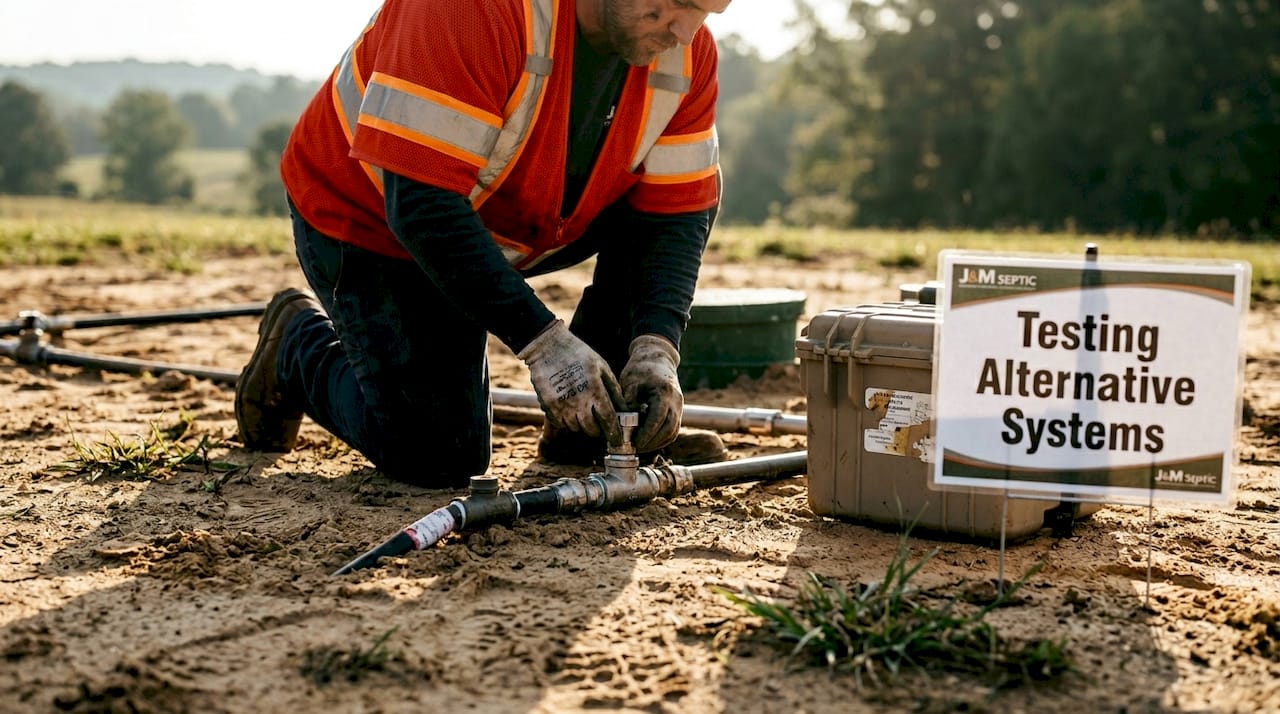
According to recognized soil-based treatment methods, many alternative systems change the dosing and distribution approach, using pressure-dosed pipes, drip emitters, or recirculating sand filters to match challenging or limiting soil conditions. This is a critical distinction. The goal isn’t to bypass the soil; it’s to deliver wastewater in a way that the soil can actually handle it without becoming overloaded or saturated.
Here’s how the main dispersal mechanics break down:
| Dispersal Method | How Effluent Reaches Soil | Key Advantage |
|---|---|---|
| Gravity drainfield (conventional) | Flows passively through perforated pipes | Lowest cost, simplest design |
| Pressure dosing | Pump delivers timed, controlled doses | Prevents soil overload, extends field life |
| Drip irrigation | Small-diameter emitters deliver micro-doses | Works in tight or variable soils |
| Sand filter recirculation | Effluent cycled through sand bed before soil | High-level pre-treatment before dispersal |
| Mound dispersal | Elevated sand medium acts as treatment buffer | Overcomes high water table or shallow soil |
Inspection and approval points matter at every stage. Before any system goes in the ground, Alamance County Environmental Health reviews the design against state rules. During installation, inspectors check pipe placement, depth, pump performance, and media specifications. After installation, some systems require a service contract with a licensed operator who submits regular maintenance reports to the county.
Here are the key inspection checkpoints you should know about:
- Improvement permit: Issued before any digging starts, based on soil report and system design
- Authorization to construct: Confirms the designed system matches the approved permit
- Construction inspection: County inspector visits the site during installation
- Operational permit: Issued when the system passes final inspection and is ready for use
- Ongoing inspection (if required): Some engineered systems need annual or semi-annual inspections
Getting this right the first time matters. A skipped inspection or unapproved design change can mean tearing out work you’ve already paid for.
Understanding these technical nuances is crucial. Let’s turn to what you should know before planning, installing, or upgrading your septic system.
What homeowners need to know for installation and repairs
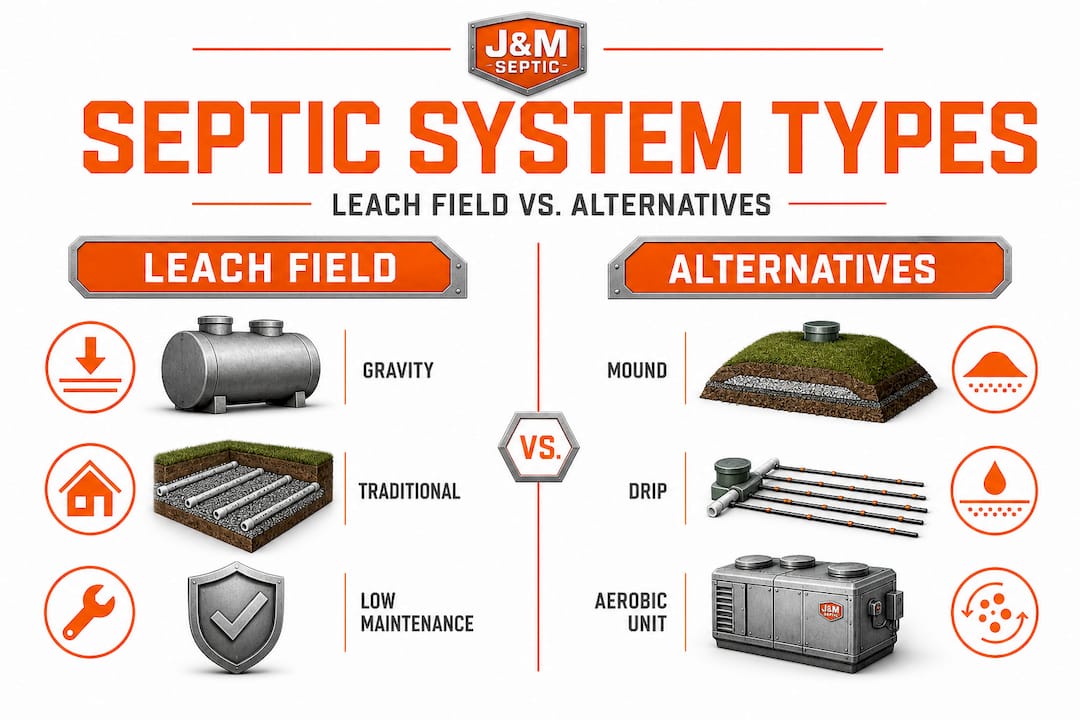
The real design question, as the EPA confirms, is not just “no leach field” but “what approved treatment and dispersal configuration will pass inspection on my site.” That shift in thinking changes everything about how you approach the process.
Here’s a practical step-by-step guide for homeowners in Alamance County and the Piedmont Triad who are starting this process:
- Contact Alamance County Environmental Health first. Before hiring anyone or spending money on soil tests, confirm what permits you need and what timeline to expect.
- Hire a licensed soil evaluator. This person’s report directly determines what systems are even eligible for your lot.
- Get at least two or three bids from licensed septic contractors. Make sure each contractor pulls permits themselves, not just handing the paperwork to you.
- Confirm your contractor’s experience with the specific system type. Installing a drip distribution system is very different from installing a mound system. Experience matters enormously.
- Ask for references from similar projects in the area. A contractor who has installed aerobic systems near Graham or drip systems in Whitsett will understand local soil conditions and inspector expectations.
- Plan for ongoing maintenance costs. Many engineered systems require annual service contracts ranging from $200 to $500 per year or more, depending on complexity.
When it comes to repairs, the approach is similar. If your existing system is failing, a septic installation guide can help you understand whether you need a full replacement or targeted repairs. Common signs of trouble include sewage backups, slow drains throughout the house, standing water in your yard, and strong septic odors near the tank or field area.
Pro Tip: Before calling for repairs, note whether the problem is constant or intermittent. A system that backs up only after heavy rain often points to a drainage or soil saturation issue rather than a mechanical failure. That distinction helps your contractor diagnose the problem faster and keeps your repair bill lower.
Avoid these common pitfalls that create expensive problems for Piedmont Triad homeowners:
- Skipping the soil evaluation and assuming any system will work on your lot
- Choosing a system based on price alone without factoring in annual maintenance
- Not confirming the contractor pulls permits before work begins
- Ignoring early warning signs like slow drains or yard odors, which often grow into full system failures
- Assuming a repair solves an undersized or mismatched system when a full replacement may be more cost-effective long-term
After understanding these practical steps, let’s consider a fresh perspective that can save you time, stress, and unexpected costs.
A smarter approach to septic system choices in Alamance County
Here’s what we’ve seen repeatedly in this industry, and it’s worth saying plainly: the “no leach field” label is more of a marketing phrase than a technical category. When homeowners chase that phrase instead of asking the right questions about their specific soil and site, they often end up frustrated.
We’ve worked on properties across Burlington, Elon, and McLeansville where homeowners came to us after getting sold a system that sounded like the perfect alternative but turned out to be the wrong fit for local soil conditions. The system wasn’t bad. It just wasn’t right for that site, and nobody had done the proper evaluation before the sale.
The smarter approach is to lead with soil data and county approval requirements, not with system brand names or marketing terms. Your soil test results, your lot dimensions, your proximity to wells or waterways, and your county’s approved system list are the real factors that narrow your choices. Everything else is secondary.
We also think homeowners underestimate how much local inspector familiarity matters. A contractor who has worked with Alamance County Environmental Health regularly knows what inspectors look for, what documentation needs to accompany permits, and which system designs tend to sail through approval versus which ones get sent back for revisions. That local knowledge is worth real money when you’re on a construction timeline.
The most cost-effective path to a permitted, working system isn’t always the cheapest quote. It’s the one that’s based on honest alternative system expertise and a thorough site evaluation before a single shovel hits the ground.
Get expert help for your septic system project
If you’re ready to move forward with an alternative septic system or you’re dealing with a failing setup that needs professional attention, J&M Septic Installation & Repair is here to help. We work with homeowners throughout Alamance County and the Piedmont Triad, and we know this region’s soil conditions, county permitting requirements, and approved system types inside and out.

Whether you’re starting from scratch or troubleshooting an existing problem, we make the process straightforward. You can schedule a septic installation consultation directly, or visit J&M Septic to learn more about everything we offer, from new installations to emergency repairs and hydro jetting. We’re based in Mebane and proud to serve Burlington, Graham, Elon, Whitsett, and the surrounding communities with honest work and long-term results.
Frequently asked questions
Can you really have a septic system with no leach field?
Most systems still require some form of dispersal and treatment area, even if the approach differs from a conventional gravity drainfield. True “no soil contact” systems are rarely approved for residential use in North Carolina because soil-based dispersal remains the most reliable and permitted method for final treatment.
What types of septic systems do not use a traditional leach field?
Approved alternatives include mound systems, drip distribution, sand filters, aerobic treatment units, and constructed wetlands. The EPA recognizes multiple engineered alternatives to conventional drainfields, and each has specific site requirements that determine whether it qualifies for your property.
How do I know which alternative system is right for my property?
Your soil conditions, county regulations, and site layout are the deciding factors, not personal preference or marketing. A licensed soil evaluator combined with a county site assessment will narrow your choices to what’s actually approvable on your specific lot.
Is a ‘no leach field’ system easier to maintain?
It depends on the system type, but many engineered alternatives require more specialized care than conventional drainfields. Engineered alternatives like aerobic units and drip systems often require annual service contracts with licensed operators, which adds to the long-term cost of ownership compared to a standard gravity system.