
Main Line Clog Symptoms in a Septic System: What They Mean
Learn to identify symptoms of a main line clog in your septic system. Recognize the signs early to avoid costly damage and keep your home safe.

If sewage is backing into your lowest drains or several fixtures are gurgling at once, you’re likely dealing with a septic main line clog, not a plumbing problem you can plunge away. That distinction matters because a septic main line clog means the blockage sits between your house and the tank, or somewhere in the tank’s internal parts, and it needs septic-specific diagnosis rather than a standard drain snake. Stop using water in the house right now if you’re seeing these signs. Shut off appliances mid-cycle if you can, keep kids and pets away from any wet or odorous areas in the yard, and call a licensed septic professional before you flush again.
Three symptoms in particular point straight at a main line clog:
- Multiple drains show slow or gurgling behavior, rather than just one sink or tub.
- Wastewater is backing up into your lowest fixtures — usually a basement drain, the lowest toilet, or a ground-floor tub.
- You notice standing sewage, unusually green patches of grass, or persistent odors near the tank or the piping to it.
Quick check: if it’s just one drain acting up, that’s usually a local clog. If it’s the whole house at once, the problem is almost always downstream in the septic system itself.
Key Takeaways
A septic main line clog reveals itself through multiple slow or gurgling drains, backups in the lowest fixtures, and yard-level signs like wet ground or persistent odor near the tank.
| Point | Details |
|---|---|
| Multiple drains signal system trouble | One slow fixture is local; several slow or gurgling fixtures at once point to the main line. |
| Lowest fixtures back up first | Basement drains and ground-floor toilets show sewage backup before upper-level fixtures do. |
| Yard signs confirm outdoor patterns | Wet strips, greener grass, and sewage odor near the tank or line indicate a service-line or drainfield issue. |
| Camera inspection prevents repeat visits | A camera pass identifies roots, bellies, or separated joints so repairs target the actual cause. |
| Jmseptic diagnoses before repairing | Jmseptic checks tank levels and runs camera inspections across Alamance County before recommending any fix. |
Table of Contents
- What Are the Main Sewer Line Clog Symptoms Inside vs. Outside?
- What Safety Checks Can You Do Before Calling a Professional?
- How Do Professionals Diagnose a Clogged Main Line?
- What Causes Main Line Drain Problems and How Are They Fixed?
- When Is a Main Line Clog a Septic Emergency?
- What J&M Septic Sees Most Often in Alamance County Homes
- Why Call J&M Septic for a Suspected Main Line Clog
- Sources
What Are the Main Sewer Line Clog Symptoms Inside vs. Outside?
Reading your symptoms correctly saves you money and saves your yard from an unnecessary excavation. The first question to ask is simple: is this one fixture, or is it everything?
- One slow drain almost always means a localized clog in that fixture’s own pipe. A slow bathroom sink with nothing else wrong is a plumbing issue, not a septic emergency.
- Multiple slow drains happening at the same time is the tell. When the toilet, the shower, and the kitchen sink all drain sluggishly within the same day or two, that pattern usually points to a septic system restriction rather than a coincidence of separate clogs.
- Gurgling sounds when you run water somewhere else in the house mean air is trapped and trying to escape past a restriction in the shared line. A toilet that burps when the washing machine drains is telling you the common pipe is partially blocked.
- Backups into your lowest drains are the clearest system-level signal you’ll get. Basements and ground-floor bathrooms sit at the bottom of the plumbing chain, so they show trouble first.
Outdoors, the signs are just as telling if you know where to look. A wet strip of ground running between the house and the tank, grass that’s suddenly greener and spongier than the rest of the lawn, or a sewage smell that won’t quit near the tank area are all outdoor markers of a service-line or drainfield issue. None of these show up overnight from a random plumbing clog. They build over days or weeks as pressure backs up somewhere in the system, and our guide to standing water around your septic system walks through what each pattern usually means.
What Safety Checks Can You Do Before Calling a Professional?
You can gather useful information without making the problem worse, as long as you stick to observation and stop before you start troubleshooting with tools you don’t need.
First, stop all water use in the house. That means no laundry, no dishwasher, no long showers, until you know what you’re dealing with. Every gallon you add pushes more pressure into a system that may already be backed up.
Next, locate your cleanout, usually a capped pipe near the foundation or along the line to the tank. Pull the cap carefully and look, don’t reach in. Standing water at or near the top of the cleanout is a strong signal of a blockage somewhere past that point, though it’s a diagnostic clue, not a diagnosis.
If your tank has an accessible inspection port and you can safely check it, look at where the water sits relative to the inlet pipe. Water at normal levels with sewage still backing up in the house suggests an inlet-side blockage. Water sitting high, at or above the inlet, points to a problem downstream, in the outlet baffle or the drainfield.
- Don’t pour chemical drain cleaners down any fixture. They rarely reach a septic-level clog and can damage your tank’s bacterial balance.
- Don’t snake the line yourself past the cleanout. You risk pushing a blockage further in or damaging pipe you can’t see.
- Don’t dig near the tank or line without knowing exactly what’s underground.
Pro Tip: Take a photo of the cleanout water level and note the time. That single detail helps a technician skip a step when they arrive.
How Do Professionals Diagnose a Clogged Main Line?
A properly run first visit does more than pump the tank. The goal is narrowing down exactly where the restriction sits before anyone recommends a repair.
Technicians start at the inspection port, checking water level against the inlet pipe. That single reading separates a full tank from an inlet clog from a downstream failure, and it’s a distinction that changes everything about the fix.
From there, they open the cleanout and run a camera down the service line. Camera footage shows what no amount of guessing can: root intrusion, a pipe belly holding standing waste, or a fitting that’s separated at a joint. This step is what keeps a repair job from becoming three repair jobs.
- Tank water level relative to the inlet pipe
- Effluent filter and baffle condition
- Distribution box function, if your system uses one
- Camera footage of the full run from cleanout to tank
A camera pass before major work cuts down on unnecessary digging because it shows technicians the exact type and location of the blockage instead of forcing them to guess between a root ball, a belly, and a separated joint.
Skipping the camera step is how homeowners end up paying for a pump-out, a snaking, and an excavation, in that order, when one camera inspection up front would have pointed straight at the real problem.
What Causes Main Line Drain Problems and How Are They Fixed?
The cause behind your symptoms determines both the cost and the disruption, so it’s worth understanding the common patterns before a technician even arrives.
Grease and nonflushable items are the most forgiving cause. A hydro-jetting or snaking service clears the material, though buildup from years of habit can mean the relief is temporary if the underlying habits don’t change.
Root intrusion is trickier. Roots find hairline cracks in older pipe and grow toward the moisture and nutrients inside, eventually choking the line. Fixing it usually means cutting the roots back and replacing the damaged section, since roots that found one weak spot will find it again.
Pipe bellies, crushed sections, and separated joints are structural, and no amount of jetting fixes them. These need targeted excavation and pipe replacement, because the pipe itself has lost its shape or its seal.
- Full tank: pumping resolves it, often the same day.
- Inlet or baffle clog: pumping buys time but doesn’t fix the actual blockage.
- Downstream or line failure: requires camera-confirmed repair, not repeated pump-outs.
Older clay or Orangeburg pipe tends to belly and crack with age, while modern PVC holds up better against roots but isn’t immune to crushing from vehicle traffic overhead. Depending on depth and access, some line sections qualify for trenchless repair, while others need full excavation, a call best made after camera footage, not before. A sewer line repair reference from Impact Plumbing covers the general excavation-versus-trenchless tradeoff in more detail.
When Is a Main Line Clog a Septic Emergency?
Some symptoms cross the line from inconvenient to urgent, and knowing the difference protects both your health and your home.
- Sewage is backing into your lowest drains, tubs, or toilets right now.
- Sewage is visibly surfacing in the yard near the tank or line.
- Odors are severe and coming from multiple fixtures at once, not just one bathroom.
- Drains that were slow yesterday have stopped working entirely today.
If you’re seeing any of these, stop all water use immediately, keep everyone away from contact with wastewater, and call a licensed septic professional rather than waiting for a scheduled slot. The first visit in an emergency typically includes a tank-level check, a camera pass on the line, and an on-the-spot estimate for whatever repair the footage reveals. Clear access to your cleanout and tank lid before the technician arrives; it shaves real time off the visit.
Pro Tip: Keep a rough log of when symptoms started and which fixtures are affected. That timeline often points a technician toward the right cause faster than the symptoms alone.
What J&M Septic Sees Most Often in Alamance County Homes
Most of the main line clogs we run into fall into one of two buckets: root intrusion in older clay pipe, or a belly that’s developed after years of soil settling around the line. Both look identical from inside the house, slow drains, gurgling, backups, which is exactly why we run a camera before quoting any repair. Guessing at a fix based on symptoms alone is how homeowners end up paying twice.
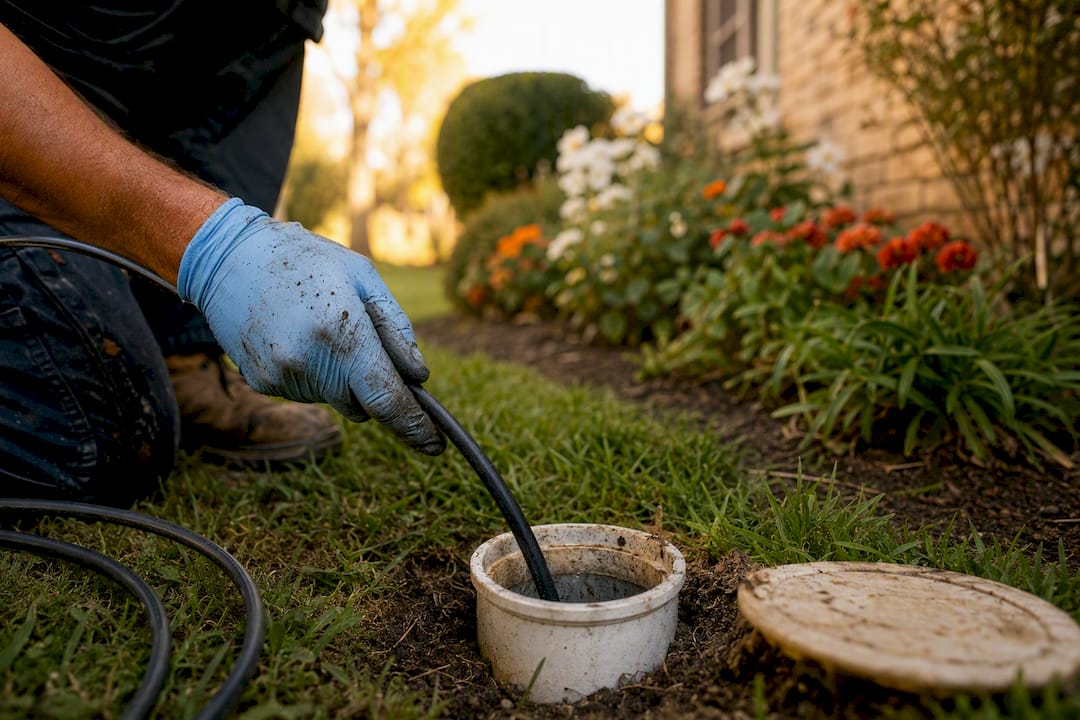
Before a technician gets to your property, walk your yard and know where your tank lid and cleanout sit. If you’ve noticed which fixtures act up first, or whether the problem started after heavy rain, that detail helps narrow the cause faster than almost anything else you can tell us.
Why Call J&M Septic for a Suspected Main Line Clog
You’ve got a few paths here: wait it out and hope the backup clears on its own, rent equipment and snake it yourself, or call a crew that diagnoses before it digs. The first risks sewage damage getting worse by the hour. The second risks pushing a root ball or a belly further into the line without the camera footage to know what you’re actually fighting.

Jmseptic runs camera inspections and tank-level checks before recommending any repair, so you’re not paying for a pump-out today and an excavation next month for the same unresolved problem. We handle everything from hydro-jetting and snaking to targeted pipe replacement and full tank service, and we serve homeowners throughout Burlington, Mebane, Elon, Graham, Whitsett, and McLeansville. If your drains are backing up right now, our emergency septic repair page for Alamance County homes has the fastest path to getting a technician out. For anything less urgent, request a scheduled diagnostic visit and we’ll walk your property, check your cleanout and tank access, and give you a real answer before any work starts.
Sources
- Resolving Septic System Malfunctions | US EPA
- Septic Tank Backing Up Into House: Causes, What to Do & How to Fix It | The Septic Guide
- Signs of septic system failure | Washington State Department of Health