
Long Term Acceptance Rate for NC Septic Systems
Learn what is a long term acceptance rate for NC septic systems and how it impacts your land purchase, home planning, or system troubleshooting.

The long term acceptance rate (LTAR) is defined as the maximum hydraulic loading rate, measured in gallons per square foot per day, that a specific soil can absorb without failing. North Carolina’s 15A NCAC 18E regulations use LTAR as the core metric for sizing drain fields and issuing septic permits. If you are buying land, planning a new home, or troubleshooting a failing system in Alamance County or the Piedmont Triad, understanding what is a long term acceptance rate is the single most important step before you spend a dollar on installation.
What is a long term acceptance rate in North Carolina septic regulations?
LTAR is the number that tells a designer exactly how large your drain field must be. North Carolina defines LTAR as the maximum hydraulic loading rate a soil can accept over time without becoming saturated or failing to treat effluent. The state assigns LTAR values based on four soil groups, from Group I with the highest absorption capacity to Group IV requiring specialized engineered designs for very low rates.
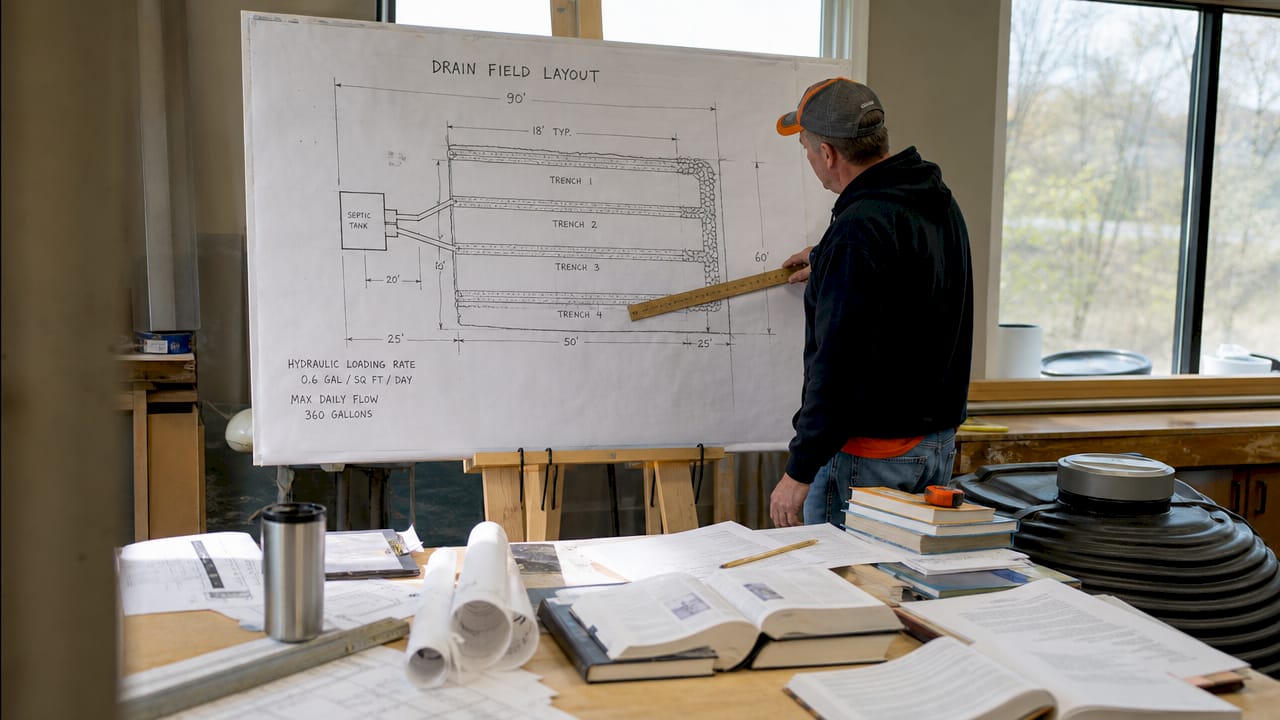
The long term acceptance rate definition matters because drain field size flows directly from it. NC systems are sized at 120 gallons per day per bedroom, and LTAR determines how many square feet of drain field are needed to handle that daily load. A high LTAR means a smaller, less expensive drain field. A low LTAR means a larger footprint, sometimes requiring a designated repair area that doubles the land set aside for the system.
The acceptance rate meaning goes beyond a single number. It represents the long-term, steady-state capacity of the soil, not a short-term drainage test. That distinction is why North Carolina moved away from percolation tests toward a more accurate evaluation method.
Pro Tip: Before you make an offer on raw land in Guilford, Alamance, or Orange County, ask the seller for any existing soil evaluation reports. A lot without a completed evaluation is a financial unknown.
How is LTAR determined under North Carolina’s evaluation process?
North Carolina replaced the old percolation test with soil morphology evaluation. Soil morphology assesses structure, color, and texture rather than just measuring how fast water drains through a hole. This shift better matches effluent loading to actual soil capacity and prevents contamination from systems that were sized on misleading perc results.
Only two types of professionals can conduct this evaluation in North Carolina:
- Licensed Soil Scientists (LSS): Evaluate soil profiles, assign soil group classifications, and recommend LTAR values based on morphological evidence.
- Environmental Health Specialists (EHS): County health department staff who review evaluations, issue Construction Authorizations, and confirm drain field sizing meets state code.
The evaluation process works like this:
- A Licensed Soil Scientist digs soil borings across the proposed drain field area.
- The scientist examines soil color, structure, and texture at multiple depths to identify limiting layers.
- The soil is assigned to one of four groups under 15A NCAC 18E, each carrying a specific LTAR range.
- The county EHS reviews the report and issues a Construction Authorization that locks in the drain field size.
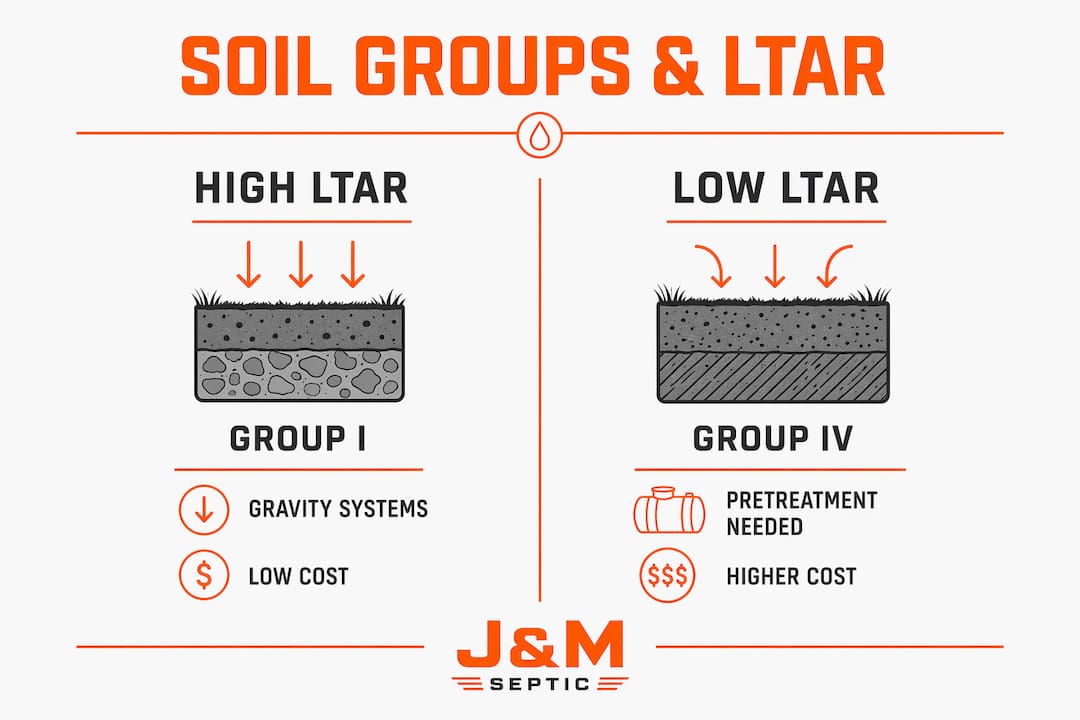
Group I soils carry the highest LTAR values and support conventional gravity systems. Group IV soils have very low LTAR values and require advanced pretreatment before effluent reaches the drain field. The soil conditions on your property determine which group applies and what system type is permitted.
Why does LTAR matter for system design, performance, and longevity?
LTAR is a strict hydraulic limit. Exceeding it causes the soil to become saturated, which stops treatment and pushes untreated effluent to the surface or into groundwater. Failing to design according to LTAR is a primary cause of septic system failure in North Carolina. A system built on undersized drain field calculations will fail, regardless of tank quality or installation workmanship.
“LTAR is not a target you aim for. It is a ceiling you must stay under. Every gallon per day above that ceiling is a gallon the soil cannot treat, and eventually the system shows it.”
The consequences of exceeding LTAR follow a predictable sequence:
- Effluent backs up into the tank and then into the home’s plumbing.
- Standing water and odors appear in the yard above the drain field.
- Untreated effluent reaches groundwater, creating a public health violation.
- The county issues a repair order, and the homeowner faces significant remediation costs.
For low LTAR soils, pretreatment units are the standard solution. These systems, including aerobic treatment units and drip irrigation systems, reduce the biological oxygen demand of effluent before it enters the drain field. LTAR is a fixed engineering parameter, but true system longevity depends on continuous maintenance and effluent pretreatment, especially in North Carolina’s clay-heavy Piedmont soils. Minimum code sizing alone does not prevent premature failure if the system is not operated and maintained correctly.
A conventional system on Group I soil, properly sized and maintained, can function for decades. An engineered system on Group III or IV soil requires regular inspections, pump maintenance, and permit renewals to stay compliant and functional.
What financial and regulatory impacts does LTAR have on NC property owners?
LTAR directly controls how much you pay for a septic system. System costs in North Carolina range from $3,000 to over $70,000 depending on soil group and system complexity. That range is not driven by contractor markup. It reflects the engineering and equipment required to match a system to the soil’s actual absorption capacity.
| Soil Group | Typical LTAR Range | System Type Required | Relative Cost |
|---|---|---|---|
| Group I | High | Conventional gravity | Lowest |
| Group II | Moderate | Conventional or pressure-dosed | Moderate |
| Group III | Low | Engineered with pretreatment | High |
| Group IV | Very low | Advanced engineered system | Highest |
The regulatory side adds another layer of cost and time. Systems requiring advanced treatment units based on low LTAR must renew Operation Permits every 60 months. That renewal cycle means ongoing fees, inspections, and documentation. Homeowners who do not budget for permit renewals can find themselves out of compliance, which affects property sales and refinancing.
Property owners often underestimate how much LTAR affects system costs. A lot that looks affordable on paper can require an engineered system costing two to three times a standard installation once the soil evaluation comes back. In the Piedmont Triad, clay-heavy soils are common, and Group III or IV classifications are not rare.
Pro Tip: Budget for a formal soil evaluation before closing on any undeveloped lot. The evaluation fee is a fraction of the cost of discovering a Group IV soil classification after purchase.
A sewer scope inspection on an existing home can also reveal whether a prior system was correctly sized for the soil’s LTAR, which is useful information before any purchase.
How do North Carolina soil groups affect LTAR values and system options?
North Carolina’s four soil groups each carry distinct characteristics that determine which septic technologies are permitted on a given lot.
Group I soils are well-drained, sandy loam or loamy sand profiles with no restrictive layers within the required depth. They support conventional gravity-fed drain fields and carry the highest LTAR values. Installation costs stay at the lower end of the range.
Group II soils show moderate drainage with some clay content or a seasonal high water table at a manageable depth. Pressure-dosed systems are common here, distributing effluent more evenly across the drain field to prevent localized saturation.
Group III soils are clay-heavy with significant drainage limitations. These soils require pretreatment before effluent reaches the drain field. Aerobic treatment units, drip irrigation systems, and low-pressure pipe systems are typical solutions. Drain fields are larger, and land requirements increase accordingly.
Group IV soils represent the most restrictive conditions. Very low LTAR values mean the soil absorbs effluent slowly. Advanced engineered systems are the only permitted option. These systems carry the highest installation costs and the most demanding maintenance and permit renewal schedules.
Key facts about soil group impacts on septic design:
- Poorer soils require larger drain fields, sometimes requiring designated repair areas that double the land set aside for the system.
- Soil morphology evaluation has made septic permitting more sustainable by preventing early system failures and protecting groundwater.
- The septic permitting process in North Carolina ties Construction Authorization directly to the soil group and LTAR assigned by the evaluating professional.
- Lots with Group IV classifications may face permit denial if no engineered solution can meet state standards for the site.
Understanding which soil group applies to your property is the foundation of every other decision in the septic installation process.
Key Takeaways
The long term acceptance rate is a fixed hydraulic ceiling that determines drain field size, system type, permit requirements, and total installation cost for every septic system in North Carolina.
| Point | Details |
|---|---|
| LTAR definition | LTAR is the maximum gallons per square foot per day a soil can absorb without failing. |
| Soil group assignment | Licensed Soil Scientists assign soil groups I–IV using morphology, which sets the LTAR for your lot. |
| Cost impact | System costs range from $3,000 to over $70,000 depending on soil group and required system complexity. |
| Permit renewals | Advanced systems on low LTAR soils require Operation Permit renewals every 60 months in North Carolina. |
| Evaluate before buying | A soil evaluation before land purchase prevents costly surprises from low LTAR classifications. |
What I’ve learned about LTAR after years of NC septic work
Most homeowners hear “LTAR” for the first time when a permit gets delayed or a system quote comes back higher than expected. That is the wrong time to learn what it means. After working on septic installations across Alamance County and the Piedmont Triad, the pattern is clear: the property owners who get into trouble are the ones who treated soil evaluation as optional paperwork rather than the first step in the process.
The Piedmont’s clay soils are unforgiving. A Group III or IV classification is not a bureaucratic inconvenience. It is a physical reality that no contractor can engineer around without the right system design and ongoing maintenance. I have seen homeowners push back on pretreatment unit costs, only to face system failure within a few years because the drain field was loaded beyond what the soil could handle.
The other misconception worth addressing: LTAR does not change with a better contractor or a different tank brand. It is a soil property. The only variables you control are system design, installation quality, and long-term maintenance. Getting those three right, starting with an honest soil evaluation, is what separates a system that lasts decades from one that fails in five years.
— Jason
Jmseptic’s resources for NC septic installation and LTAR compliance
Jmseptic serves homeowners across Alamance County, Burlington, Mebane, Graham, and the surrounding Piedmont Triad with septic installation, repair, and maintenance built around North Carolina’s soil and regulatory requirements.

The NC septic installation guide on the Jmseptic website walks through every stage of the process, from soil evaluation to Construction Authorization to final inspection. For homeowners focused on budget planning, the septic installation cost breakdown explains exactly how soil group and LTAR translate into real dollar figures for your project. If you have questions about your property’s soil classification or need a professional assessment before purchasing land, contact Jmseptic directly for guidance specific to your site.
FAQ
What is the long term acceptance rate in simple terms?
LTAR is the maximum amount of septic effluent, measured in gallons per square foot per day, that soil can safely absorb without becoming saturated or failing to treat waste.
How is LTAR calculated for a North Carolina property?
A Licensed Soil Scientist evaluates soil structure, color, and texture through soil borings, assigns the property to one of four soil groups under 15A NCAC 18E, and the corresponding LTAR value determines the required drain field size.
Why does a low LTAR increase septic system costs so much?
Low LTAR soils absorb effluent slowly, requiring larger drain fields, advanced pretreatment equipment, and more complex engineered designs. North Carolina system costs can exceed $70,000 for the most restrictive soil classifications.
Does LTAR affect how often I need to renew my septic permit?
Yes. Systems built on low LTAR soils that require advanced treatment units must renew their Operation Permits every 60 months under North Carolina regulations.
Should I get a soil evaluation before buying land in North Carolina?
A soil evaluation before purchase is the most cost-effective step a land buyer can take. Discovering a low LTAR classification after closing can require an engineered system costing two to three times a standard installation.