
Is It Safe to Put Bleach in Your Toilet Tank?
Wondering if it's safe to put bleach in your toilet tank? Discover the right way to clean without harming your septic system.

A small amount of household bleach flushed through a toilet is generally fine for a healthy septic system. That’s the short answer. The longer one is that dilution and frequency are everything — a quick scrub with a splash of bleach is a very different event for your tank than pouring in multiple cups or dropping in a continuous-release tablet that doses chlorine with every flush.
The University of Arkansas finding every septic homeowner should know: Lab and field tests estimated it takes roughly 1.85 gallons of liquid chlorine bleach in a 1,000-gallon septic tank to destroy the bacterial flora. Under normal household usage, bacterial populations recovered to original concentrations in about 30 hours. A typical toilet cleaning uses a fraction of that amount.
Three quick rules before you read further:
- Do: Use a small amount (a few tablespoons) for an occasional toilet bowl scrub, then flush promptly.
- Don’t: Pour multiple cups directly into the tank or drain, or use continuous-release bleach tablets in the tank.
- Don’t: Stack bleach-heavy chores — laundry, mopping, drain cleaning — all on the same day.
Key Takeaways
Small, occasional household bleach use is safe for a healthy septic system, but cumulative or concentrated exposures suppress tank bacteria, increase sludge, and can push a system toward failure.
| Point | Details |
|---|---|
| Single use is generally safe | A few tablespoons of bleach flushed through the bowl poses low risk to a healthy 1,000-gallon septic tank. |
| Destruction threshold found in a key laboratory study | University of Arkansas field tests found this amount destroys tank bacteria; recovery took roughly 30 hours under normal use. |
| Avoid continuous-release tablets | Bleach tablets dose chlorine with every flush, creating chronic bacterial suppression that compounds over weeks. |
| Spread cleaning tasks out | Stacking bleach laundry, mopping, and toilet cleaning on one day creates cumulative slug loads that exceed safe limits. |
| Jmseptic for local help | J&M Septic serves Alamance County with inspections, pump-outs, and emergency repair when bleach stress or system signs appear. |
Table of Contents
- Is it OK to put bleach in a toilet if you have a septic system?
- When is bleach use safe, and when does it become a real risk?
- Practical, septic-safe ways to clean your toilet
- How to tell if bleach has harmed your septic system
- Jmseptic serves Alamance County homeowners when the system needs attention
- A field perspective on bleach and septic systems
- Sources
Is it OK to put bleach in a toilet if you have a septic system?
The science comes down to two variables: how much chlorine reaches the tank, and how often. A single toilet cleaning sends a few tablespoons of diluted bleach through several gallons of flush water, then into a 1,000-gallon tank already full of wastewater. By the time it reaches the bacterial layer, the concentration is low enough that a healthy system handles it without lasting harm. InspectApedia confirms that small, normal household quantities are usually diluted enough to avoid lasting damage — but repeated or concentrated doses are a different story.
The University of Arkansas study is the most cited field measurement on this question. The 1.85-gallon threshold sounds like a lot, and it is — but the risk isn’t a single large pour. It’s cumulative. If you’re doing laundry with chlorine bleach, mopping with a bleach solution, and cleaning the toilet all on the same Tuesday, those inputs add up in the tank before the system has time to dilute and recover.
Statistic to remember: Gross (1987) tables and extension-style guidance put the conservative upper bound for liquid hypochlorite bleach at roughly 1.3 gallons per day for a 1,000-gallon tank — and practical field guidance recommends staying well below that ceiling, not treating it as a target.
Recovery also depends on your system’s condition. An older tank running near capacity is less resilient than a recently pumped one. The same bleach event that a healthy tank shrugs off in 30 hours could suppress bacterial activity for days in a stressed system.
When is bleach use safe, and when does it become a real risk?
Here’s how common household scenarios actually stack up:
- Single toilet bowl scrub (low risk): A few tablespoons of bleach, scrubbed and flushed, is heavily diluted before it reaches the tank. This is the scenario most septic guidance considers acceptable.
- Letting bleach sit in the bowl for 10–15 minutes (low to moderate risk): Still diluted on flush, but avoid doing this daily.
- Pouring bleach directly into the tank (moderate to high risk): Skips the dilution step entirely. Avoid pouring undiluted bleach into the tank or drain — always let it travel through flush water.
- Continuous-release toilet tank tablets (high risk): SepticMind flags these as a chronic-exposure problem. Every flush delivers a low-level chlorine dose, day after day, which can chronically suppress the bacteria your tank depends on.
- Multi-task bleach day — laundry, mopping, toilet, drain (high risk): Cumulative slug loads are what actually harm systems. Spread these tasks across multiple days.
SepticMind’s practical guidance suggests a conservative working limit of about 5 tablespoons per person per day across all bleach uses combined. That’s a useful mental ceiling, not a license to hit it every day.
Pro Tip: Schedule heavy disinfection tasks — bleach laundry, floor mopping, toilet deep-cleans — on separate days. Your tank needs time between inputs to dilute and recover. Clustering them into one day is the single most common mistake that tips a healthy system toward trouble.
Practical, septic-safe ways to clean your toilet
When you do use bleach, a simple protocol keeps the risk low:
- Use a small amount. A few tablespoons in the bowl is enough for disinfection. More is not better.
- Scrub, then flush promptly. Don’t let it sit longer than 10–15 minutes, and don’t flush repeatedly in quick succession.
- Never pour it into the tank directly. Always apply to the bowl so flush water dilutes it on the way out.
- Avoid same-day stacking. If you’ve already run a bleach load of laundry, skip the bleach toilet scrub that day.
For everyday freshness, several alternatives work well and carry far less risk for your septic system:
- Oxygen bleach (sodium percarbonate): Breaks down to water and oxygen, making it significantly less toxic to septic bacteria than sodium hypochlorite. Products like OxiClean or generic sodium percarbonate powder work for laundry and surface cleaning.
- Enzyme-based cleaners: Specifically formulated to be septic-safe, these support rather than suppress tank bacteria.
- Non-chlorine disinfectants: Hydrogen peroxide-based cleaners disinfect without the chlorine load.
- Manual scrubbing: A good toilet brush with a mild, septic-safe soap handles routine cleaning without any chemical risk.
For laundry, switching to a septic-safe detergent and using oxygen bleach instead of chlorine bleach is one of the most practical swaps a septic homeowner can make. For drain deodorizing, skip the bleach entirely and use baking soda and hot water.
Pro Tip: Treat your septic tank like a slow-moving biological reactor, not a chemical-resistant drain. Products that are “safe for pipes” are not always safe for the bacteria doing the real work underground.
How to tell if bleach has harmed your septic system
The warning signs of bacterial knockdown or system stress are usually hard to miss:
- Strong sewage odors inside the house or near the drainfield
- Slow drains throughout the home (not just one fixture)
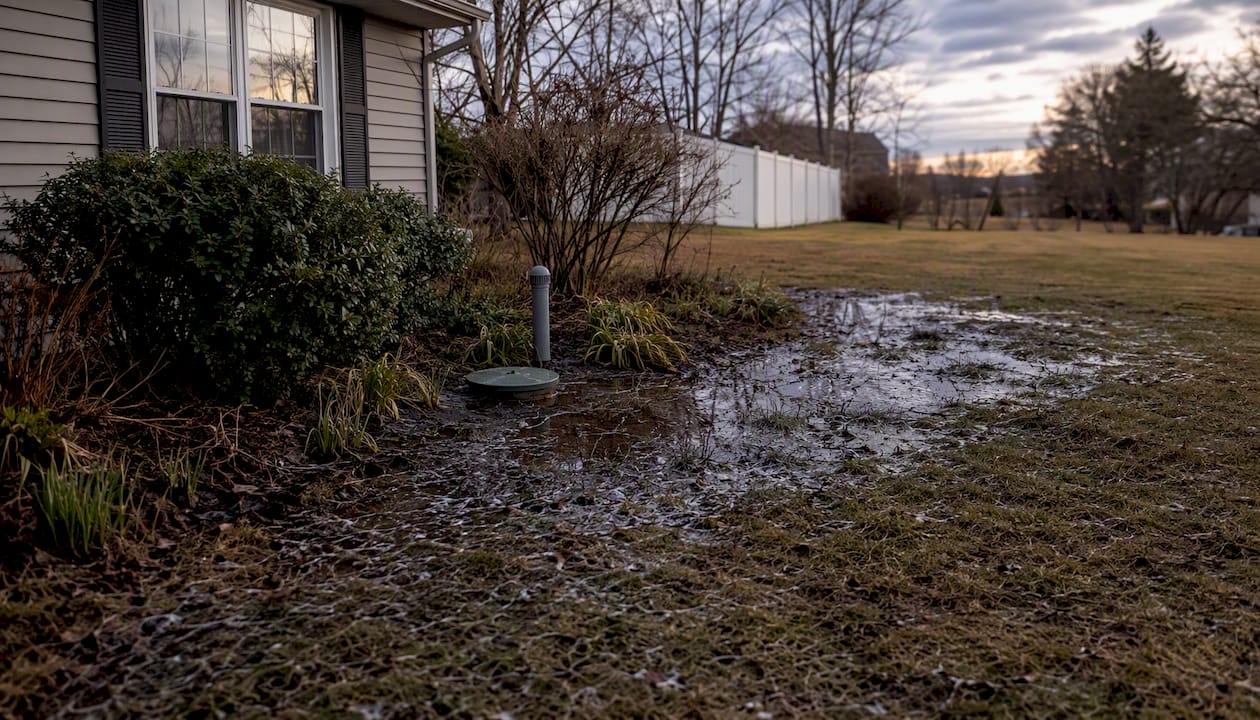
- Wet or spongy spots over the drainfield area in the yard
- Gurgling sounds from toilets or drains after flushing
- Sewage backing up into tubs, sinks, or floor drains
If you notice any of these, especially after a heavy-cleaning day or a period of frequent bleach use, take these steps immediately:
- Stop using bleach and all other disinfectants right away.
- Cut water use — short showers, no extra laundry, no dishwasher runs — to reduce the load on the tank.
- Flush only with plain water; skip enzyme additives or chemical “tank treatments” until a professional has assessed the system.
- Check whether your tank is due for pumping. An older or nearly full tank is far more vulnerable to a bleach event, and pumping it removes stressed sludge and gives bacteria a cleaner environment to re-establish.
Pro Tip: Don’t pour a bottle of “septic activator” in and hope for the best. If the system is showing signs of failure, you need eyes on it — not more chemistry. A professional inspection tells you whether the bacteria are recovering or whether the drainfield is at risk.
If signs persist beyond 48 hours, or if you’re seeing sewage backup or standing water in the yard, call a septic professional. That’s a septic bog situation that needs hands-on assessment, not a wait-and-see approach.
Jmseptic serves Alamance County homeowners when the system needs attention

If you’re in Burlington, Mebane, Graham, Elon, Whitsett, or anywhere else in Alamance County and you’re seeing signs of septic stress after a bleach event, J&M Septic Installation & Repair is the local call to make. The team handles inspections, sludge assessments, pump-outs, drainfield evaluations, and emergency septic repair for homeowners across the Piedmont Triad.
A pump-out after a suspected bleach knockdown isn’t just about removing waste. It clears the stressed environment so your tank’s bacterial population can re-establish on a clean slate. J&M Septic’s technicians can tell you whether your system is recovering on its own or whether the drainfield is taking on solids it shouldn’t be. Schedule a septic tank pump service or call for an inspection before a manageable problem becomes a drainfield replacement.
A field perspective on bleach and septic systems
Most homeowners who call us after a septic problem didn’t do one catastrophic thing. They did a dozen small things over months — bleach tablets in every toilet, chlorine laundry loads three times a week, occasional drain cleaners — and the tank quietly lost its bacterial balance. By the time the odors or slow drains showed up, the system was already struggling.
What I tell homeowners in Alamance County and across the Piedmont Triad is simple: your tank is doing biological work, and chlorine is a biological disinfectant. Respect that relationship. Occasional, diluted use is fine. Chronic low-level dosing or a single heavy day of stacked bleach tasks is what gets people into trouble. The SepticTankHub summary puts it plainly: ordinary use is low risk, but concentrated or repeated exposures increase sludge and shorten your pump interval. We see that in the field constantly. A conservative routine and a regular pump schedule — that combination keeps most systems healthy for decades.
Sources
The following sources were used to build the guidance in this article:
- Assessment of the Effects of Household Chemicals Upon Individual Septic Tank Performances
- Septic_Tank_Chemicals_Cleaners.php
- Bleach in a septic system: how much is too much? | SepticMind
- Is Bleach Safe for Septic Systems?