
Avoid Excavation: Camera Checks Homeowners Need Before Hydro Jetting
Learn when hydro jetting is safe, which pipe conditions technicians inspect with a camera scope, and when repair is the safer choice.

Hydro jetting is safe for the vast majority of homes when a trained technician inspects the line first and matches water pressure to the pipe’s condition. The real danger isn’t the water itself. It’s jetting a line that’s already cracked, offset, or made of an obsolete material without checking first. If your pipes are structurally sound, ask for a camera inspection before you book the job.
TL;DR:
- Hydro jetting is safe only if a professional inspects the pipe condition with a camera beforehand and matches water pressure to the pipe’s material and age.
- Older or damaged pipes, especially those made of Orangeburg or brittle clay, are at higher risk of cracks or collapse if jetting is attempted without proper assessment.
- Damage from jetting usually occurs on lines with pre-existing weaknesses, not on healthy pipes, and most failures involve cracks or corrosion that require repair rather than cleaning.
- Using chemical drain cleaners before jetting can cause unpredictable reactions; always inform your technician if chemicals were previously used.
- A camera inspection ensures accurate pressure adjustment and identifies issues, preventing unnecessary damage and unnecessary excavation costs.
Table of Contents
- What Is Hydro Jetting and How Does It Work?
- Is Hydro Jetting Safe for Every Pipe Material?
- What Are the Risks of Hydro Jetting?
- How Do Professionals Decide Whether Jetting Is Safe?
- When Should You Choose Repair Instead of Jetting?
- A Practical Take on Hydro Jetting Safety
- Get a Safe Hydro Jetting Assessment From Jmseptic
- Sources
- FAQ
What Is Hydro Jetting and How Does It Work?
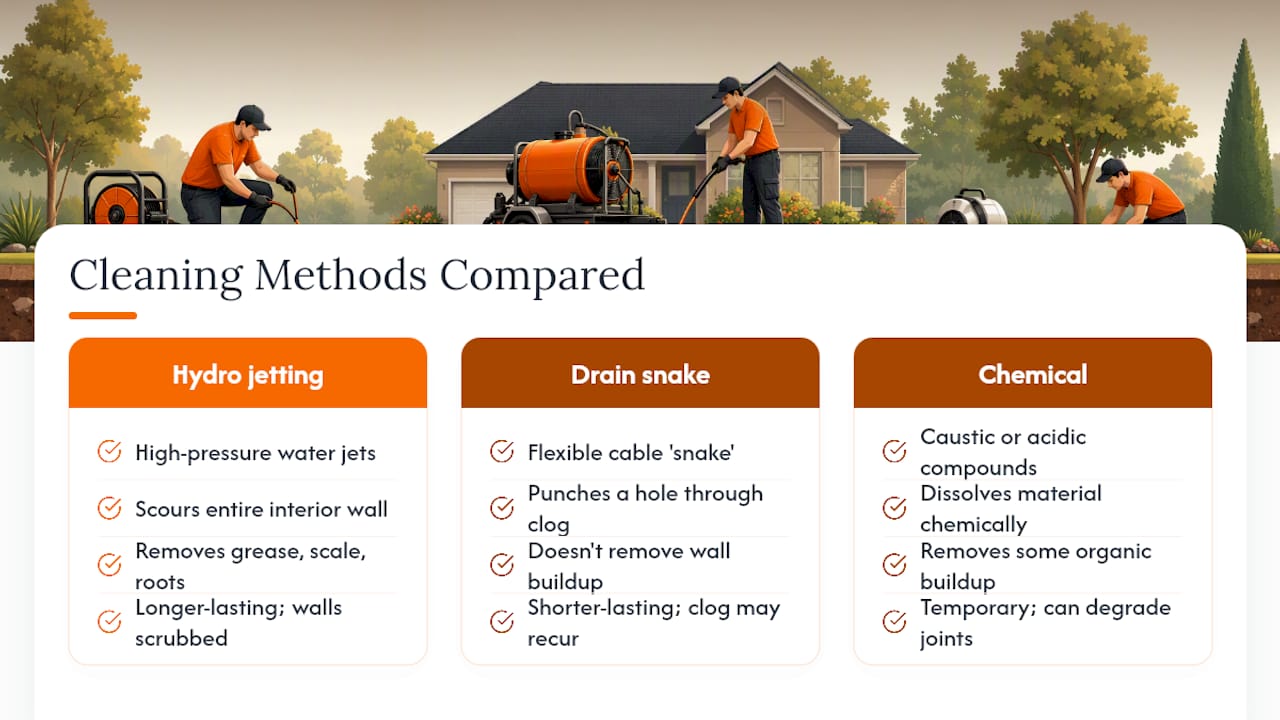
Hydro jetting uses a high-pressure hose fitted with a specialized nozzle that sprays water forward and backward as it moves through the pipe. Professional equipment typically runs at high pressure adjusted based on pipe material, diameter, and the type of blockage. The nozzle’s rear-facing jets pull the hose through the line while blasting the walls clean, and the forward jets punch through whatever is blocking the path.
That combination is why jetting outperforms a standard drain snake for tough buildup. A snake punches a hole through a clog and calls it done. Jetting scours the entire interior wall, stripping out grease, mineral scale, and root intrusion that a cable would just push past. Plumbing-industry summaries note that jetted lines tend to stay clear longer than snaked ones because the pipe walls actually get scrubbed, not just punctured.
It’s also the cleaner option chemically. Chemical drain treatments rely on caustic or acidic compounds that can degrade older pipe joints and eventually make their way into groundwater. Hydro jetting uses nothing but water, which makes it the better choice for septic systems and older plumbing where chemical exposure is already a concern.
Is Hydro Jetting Safe for Every Pipe Material?
Safety depends heavily on what your pipes are made of and how much wear they’ve already taken. Here’s how the common materials hold up:
- PVC and ABS: These modern plastics handle standard jetting pressures well, as long as the walls are intact and joints haven’t degraded from age or ground shifting.
- Cast iron: Usually safe, but decades of use can thin the pipe wall from the inside out through corrosion (a process called “cast iron rot”). A tech needs to see the interior condition before committing to full pressure.
- Clay and terra cotta: Sound sections handle jetting fine, but brittle, older clay pipe can develop hairline cracks that widen under pressure, especially where roots have already pushed through joints.
- Orangeburg: This bituminized fiber pipe, common in homes built between the 1860s and 1970s, is considered obsolete and prone to deterioration. It can delaminate or collapse under the same pressure that cleans other materials without issue, so most technicians avoid jetting it altogether.
Age and prior damage matter more than the material label on its own. A 15-year-old cast iron line in a house with aggressive tree roots nearby can be in worse shape than 40-year-old clay pipe that’s never had a root problem. That’s the entire reason inspection comes before pressure, not after.
What Are the Risks of Hydro Jetting?
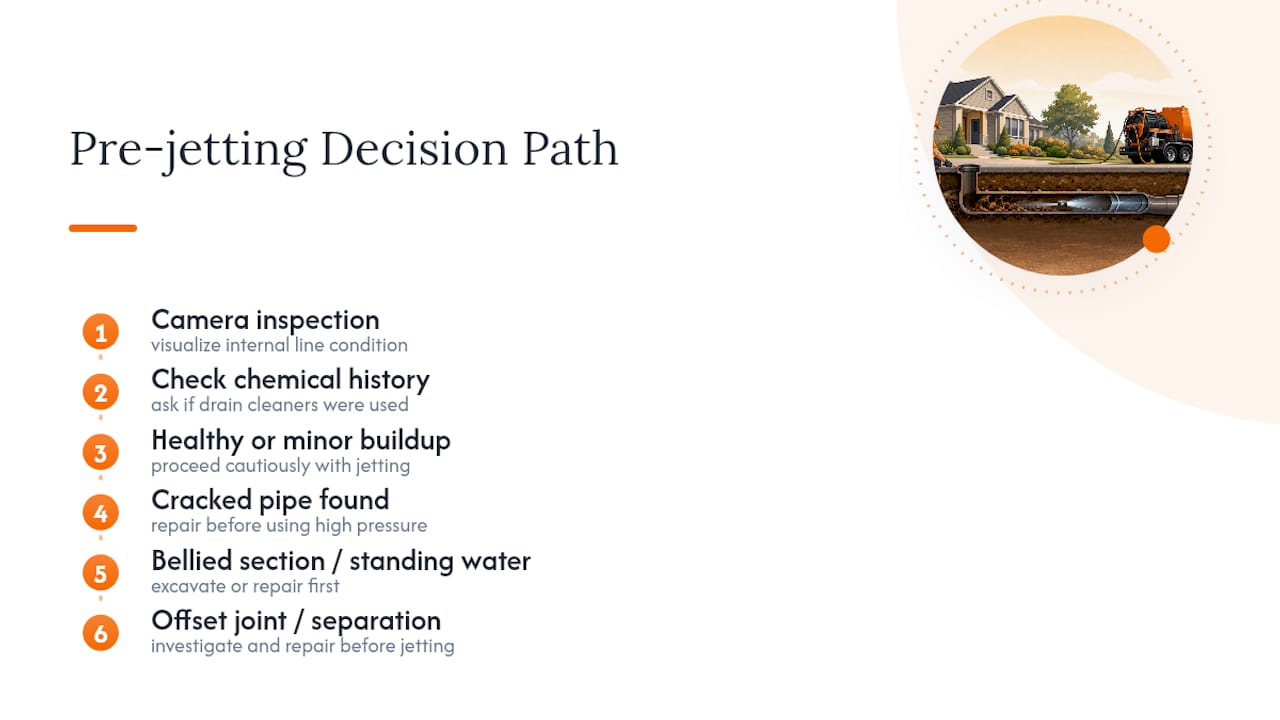
The biggest risk isn’t that jetting damages a healthy pipe. It’s that jetting reveals damage that was already there, or accelerates a failure that was coming anyway. A line with an existing crack, a bellied section holding standing water, or a joint offset from ground settling can crack further, separate, or collapse once high-pressure water hits it.
That can play out a few ways. Sometimes you get straightforward relief and a clean pipe. Other times the tech uncovers a section that now needs excavation and repair, which feels like bad news but usually beats discovering the same failure as a sewage backup in your basement. Occasionally, debris gets pushed deeper into the line instead of fully flushed out, particularly in pipes with multiple bends.
DIY jetting kits are where things get genuinely dangerous. Professional plumbing sources warn that renting high-pressure equipment without a camera to see what you’re working on risks hose entrapment, injury from the pressurized nozzle, and blasting a fragile line at commercial pressure with no idea it’s compromised. There’s also a wrinkle worth knowing: if a previous owner or a past plumber used heavy chemical drain cleaners on the line, residue can react unpredictably with water pressure, and a tech needs to know that history before starting.
Pro Tip: Ask whoever cleaned your line last, whether it was you or a previous contractor, if chemical drain cleaner was ever used. That detail changes how a technician approaches the job.
How Do Professionals Decide Whether Jetting Is Safe?
A qualified technician doesn’t guess. There’s a sequence most reputable companies follow before a nozzle ever goes into your line:
- Camera inspection first. A sewer scope reveals cracks, corrosion, offsets, bellied sections, and root intrusion before any pressure is applied.
- Pressure and nozzle matching. Techs choose pressure settings based on what the camera shows, not a one-size-fits-all default.
- Documented before-and-after footage. Recording the line before and after the job gives you proof of the pipe’s condition and confirms the work actually cleared it.
- Written recommendation. If the scope shows a compromised section, the recommendation should be repair or replacement, not jetting.
Watch for red flags before you hire anyone. A company that skips the camera and quotes a jetting price over the phone is skipping the one step that actually determines whether jetting is safe for your line. Before you sign anything, ask:
- What PSI range will you use, and why?
- Can I see the before-and-after footage?
- Are your technicians licensed and insured?
- What happens if you find damage mid-job?
A sewer camera inspection typically runs a modest, predictable cost compared to the price of guessing wrong on a sewer line.
When Should You Choose Repair Instead of Jetting?
Jetting isn’t the answer for every clogged or slow line. A mechanical snake is often enough for a single, simple clog with no deeper structural issue, and it costs less than a full jetting service.
Repair or replacement becomes the right call once the camera shows a collapsed section, severe corrosion that’s eaten through the pipe wall, or Orangeburg pipe nearing the end of its life. Jetting a line like that doesn’t fix anything. It just speeds up a failure that repair would have prevented.
For ongoing maintenance, how often you need jetting depends on a few things:
- Household size and daily water use
- Nearby trees with aggressive root systems
- How much grease regularly goes down the kitchen drain
- Age and material of the existing line
Pairing an inspection with a real repair plan, rather than jetting the same problem line every year, is usually what breaks the cycle of repeat septic failures.
A Practical Take on Hydro Jetting Safety
A professional septic service treats the camera inspection as non-negotiable, not a suggestion, before any high-pressure work starts on a home. That standard comes from a straightforward reality: skipping the scope to save an hour can turn a routine cleaning into an excavation project. Calibrated pressure, matched to what the footage actually shows, protects the pipe and the homeowner’s budget in the same move.
Local plumbing in the Piedmont Triad spans everything from newer PVC to pipe that predates most current safety standards, so a one-size-fits-all approach doesn’t hold up here. Documented footage before and after the job gives homeowners something concrete: proof the line was cleaned, not just a receipt saying it was.
— Jason
Get a Safe Hydro Jetting Assessment From Jmseptic
Jmseptic is the alternative to guessing whether your pipes can handle high pressure. We run a camera scope through your line before we touch a nozzle, match pressure and nozzle choice to what that footage actually shows, and hand you before-and-after video along with a written recommendation.

Scheduling starts with a call to walk through your symptoms, whether that’s slow drains, gurgling pipes, or a backup you’re trying to get ahead of. If the scope turns up a compromised section instead of a simple clog, we’ll tell you honestly and outline repair options rather than jetting a line that isn’t ready for it. Homeowners in this region can get hydro jetting service scheduled directly. If your line needs more than cleaning, a professional team also handles septic tank pump service and full repairs. Call before a slow drain turns into standing water in your yard.
Sources
FAQ
Does hydro jetting have any disadvantages?
Yes. It can reveal or worsen pre-existing cracks and weak joints, and it isn’t effective on collapsed sections, which need repair instead of cleaning.
What are the risks associated with hydro jetting?
The main risks are damaging an already compromised pipe, pushing debris deeper into bent sections, and, for DIY attempts, injury from mishandled high-pressure equipment.
Can hydro jetting damage sewer pipes?
It can, but almost always because the pipe was already cracked, corroded, or made of a failing material like Orangeburg. Experienced plumbing sources confirm that a pre-jet camera inspection is what prevents this in structurally sound lines.
How long does hydro jetting last?
Results depend on household habits and root activity, but a thoroughly jetted line in good condition typically stays clear longer than one cleared with a snake, since jetting scrubs the entire pipe wall rather than just punching through the clog.