
How to Prevent Septic Failure Before It Gets Costly
Learn how to prevent septic failure before it gets costly. Discover essential maintenance tips to save thousands on repairs!

Septic failure rarely announces itself. One day your drains are slow, and a week later you have raw sewage backing up into your home or pooling in your yard. Knowing how to prevent septic failure is the difference between a scheduled $400 pump-out and a $15,000 drainfield replacement. Preventive maintenance costs far less than emergency repairs or full system replacements, yet most homeowners only call a professional when something has already gone wrong. This guide covers what you actually need to do, in the right order, to keep your system running for decades.
Table of Contents
- Key takeaways
- How to prevent septic failure: know your system first
- Inspection, pumping, and water use: the core prevention steps
- Advanced protection: landscape, leaks, and seasonal awareness
- Spotting early warning signs before things get worse
- What I have learned after years of septic work
- Keep your system healthy with Jmseptic
- FAQ
Key takeaways
| Point | Details |
|---|---|
| Inspect and pump on schedule | Get your system inspected every 1 to 3 years and pumped every 3 to 5 years to prevent solid buildup. |
| Water use directly impacts failure risk | Spreading laundry loads and fixing leaks reduces the hydraulic load that leads to drainfield damage. |
| Warning signs need fast action | Slow drains, odors, and standing water over your drain field are early signals that require professional attention. |
| Landscape choices protect the drainfield | Keep vehicles, heavy equipment, and deep-rooted plants off your drain field area at all times. |
| No symptoms does not mean no problems | Sludge and filter conditions must be checked professionally even when your yard looks and smells fine. |
How to prevent septic failure: know your system first
Before you can protect something, you need to understand how it works. A conventional septic system has three main parts: the tank, the drain field (also called a leach field), and the pipes connecting them to your home.
Wastewater flows from your house into the tank, where solids settle to the bottom as sludge and lighter materials like grease float to the top as scum. The liquid in the middle, called effluent, exits through the outlet pipe and spreads across the drain field, where the soil filters and treats it naturally. Healthy bacteria inside the tank are what break down the solids. Disrupt those bacteria or overload the system with too much water or solids, and failure starts in the drainfield before you ever see a symptom inside your house.
Here is what every homeowner should know and track about their system:
- Tank size and location. Know exactly where your tank and drain field are buried. Mark them on a property sketch and keep it somewhere you will not lose it.
- Maintenance history. Keep records of every inspection and pump-out, including dates, findings, and the contractor who did the work.
- System age and design. Older systems or those built for fewer occupants than currently live in the home are at higher risk and need more frequent attention.
- Permit and design documents. These tell a technician how your system was built and help them spot problems faster during an inspection.
| Household size | Recommended pump frequency |
|---|---|
| 1 to 2 people | Every 5 years |
| 3 to 4 people | Every 3 to 5 years |
| 5 or more people | Every 2 to 3 years |
Pro Tip: Write the last pump-out date on a piece of duct tape and stick it inside a kitchen cabinet. You will always know when service is due without hunting through files.
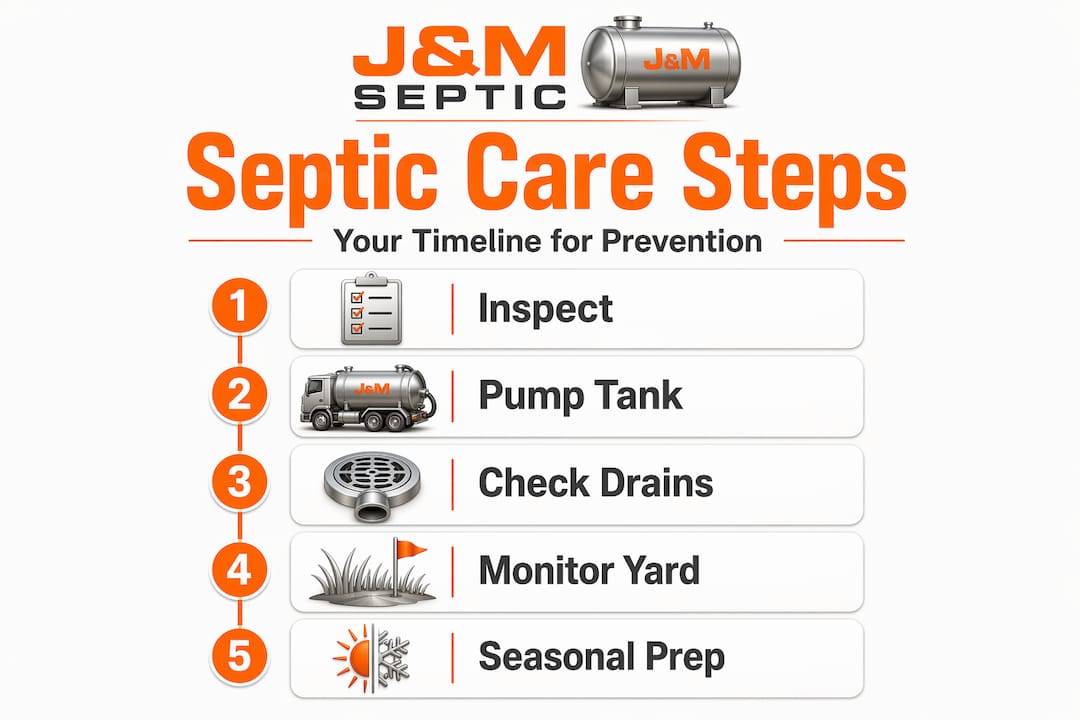
Knowing the layout of your conventional septic tank is also the first step toward spotting problems yourself between professional visits.
Inspection, pumping, and water use: the core prevention steps
These three things do more to prevent septic problems than anything else combined.
- Schedule inspections every one to three years. A proper inspection checks more than just the tank level. Routine evaluations include checking sludge and scum layers, testing effluent filters, looking for leaks, and examining the drain field for standing water or wet spots. Some inspections also involve a camera run through pipes to catch blockages before they cause a backup. Do not skip the drain field check. Hydraulic performance in the drain field can degrade long before you see tank overflow signs.
- Pump your tank on schedule. Skipping pump-outs lets solids migrate into the drain field, where they clog the soil and cause permanent damage. Once the drain field is compromised, you are looking at a very expensive repair or full replacement. Most households need pumping every three to five years, but your actual schedule depends on how many people live in the home and how much water you use.
- Manage your water use daily. One of the fastest ways to cause a septic overload is sending too much water into the system at once. Spread laundry loads across the week instead of running six loads on Saturday. Fix dripping faucets and running toilets as soon as you notice them. A single leaking toilet can waste over 100 gallons of water per day, which flows directly into your septic system. Learning how your washing machine impacts your septic load can save you from an expensive repair call.
- Flush only what belongs. Human waste and toilet paper. That is it. Wipes labeled “flushable,” paper towels, feminine products, medications, and cooking grease all cause serious problems. They either clog pipes, kill the bacteria your tank depends on, or build up as solids faster than normal pumping schedules can handle.
- Spread out high-use days. Hosting guests? Running a lot of laundry? Be mindful that your system has a daily capacity. Seasonal adjustments, like reducing water use during heavy rainfall, help avoid hydraulic overload when the soil around your drain field is already saturated.
Pro Tip: Install low-flow fixtures in bathrooms and the kitchen. They reduce your daily water input to the septic system without requiring any changes to your habits.
Advanced protection: landscape, leaks, and seasonal awareness
Routine maintenance keeps the inside of your system healthy. These practices protect the physical environment around it.
- Divert rainwater away from the drain field. Gutters, downspouts, and grading should direct surface water away from the area where your drain field sits. Wet soil cannot absorb effluent properly, and saturated drainfields are a leading cause of seasonal septic failures in areas with heavy rainfall like Alamance County.
- Never park or drive on the drain field. The weight of vehicles compacts the soil and can crush the pipes beneath it. Even large animals grazing repeatedly over the area can damage the field over time. Keep this zone clear and mark it if you need to.
- Plant only grass over the drain field. Tree roots from shrubs and trees actively seek out moisture and nutrients, and they will find your drain field pipes. Even trees planted 20 feet away can eventually cause damage depending on the species and soil conditions.
- Fix leaking fixtures without delay. This is one of the most overlooked ways to prevent septic issues. A slow drip feels minor but adds thousands of gallons of extra water to your system over a month. Repairing leaking fixtures promptly is one of the simplest and most effective things you can do.
- Pay attention during wet seasons. Heavy spring rains in North Carolina can push soil moisture levels high enough to slow drain field absorption significantly. During those periods, reducing indoor water use is not just helpful. It is necessary to avoid a backup.
Understanding the factors that affect your system’s lifespan helps you make smarter decisions year-round, not just when a problem surfaces.
Spotting early warning signs before things get worse
Knowing when something is wrong early is just as important as prevention. The septic system troubleshooting process starts with paying attention to what your home is telling you.
Common warning signs that need your immediate attention include:
- Slow drains throughout the house. One slow drain is usually a local clog. Multiple slow drains at the same time suggest the main line or tank is backing up.
- Strong septic odors indoors or outdoors. Foul smells near your drain field or inside your home are a sign that gases are escaping where they should not be. Ways to prevent septic odors long-term start with addressing the root cause, not masking the smell.
- Standing water or unusually green grass over the drain field. This means effluent is surfacing instead of absorbing into the soil. It is a health hazard and a sign of system stress.
- Gurgling sounds in pipes. This is often caused by air being pushed back through the system, which points to a blockage or pressure issue in the line.
- Sewage backup inside the home. This is the most urgent sign. Early warning signs like backups require immediate professional inspection and pumping.
When you notice any of these signs, do not reach for a bottle of chemical drain cleaner. Chemical cleaners harm septic bacteria and do nothing to fix a septic problem. They make it worse by killing the biological activity your tank depends on to function.
“If your yard looks fine and you have no odors, that does not mean your system is healthy. Sludge accumulation and filter conditions are invisible from the surface. That is why inspections matter even when nothing seems wrong.”
The importance of regular inspections is something homeowners often only appreciate after they have paid to skip one.
What I have learned after years of septic work
I have seen a pattern that repeats itself constantly. A homeowner buys a house, gets told the septic system “works fine,” and then does absolutely nothing with it for eight or ten years. No pumping, no inspection, no records. They figure if nothing is wrong, nothing needs attention.
Then one spring morning the toilets start backing up.
The honest truth is that most septic failures I have seen were completely avoidable. Not through expensive upgrades or complicated systems, but through basic scheduling. No visible problems does not guarantee system health, and that surprises people every single time I tell them.
What I always recommend is this: treat your septic system like your car. You do not wait for the engine to seize before changing the oil. You put it on the calendar and you do it. The homeowners who follow a simple inspection and pump-out schedule almost never call me for an emergency. The ones who wait until they smell something or see water in the yard? Those calls are always expensive and always stressful.
Set a reminder right now. If you cannot remember your last pump-out, that is your answer. You are probably overdue.
— Jason
Keep your system healthy with Jmseptic

If you are in Alamance County or the surrounding Piedmont Triad area and you are serious about keeping your septic system out of crisis mode, Jmseptic is ready to help. We handle everything from routine septic pumping and professional inspections to full new system installation for properties that need an upgrade or replacement. Our team serves Burlington, Mebane, Elon, Graham, Whitsett, and McLeansville with honest assessments and real solutions. If your system is showing warning signs or you just cannot remember the last time it was serviced, call us before a manageable problem becomes a costly emergency.
FAQ
How often should a septic system be inspected?
Most systems should be inspected every one to three years and pumped every three to five years. Larger households or older systems may need more frequent service.
What causes septic system failure most often?
The most common cause is skipping routine pumping, which lets solids migrate into the drain field and clog the soil. Hydraulic overload from excessive water use is the second most common cause.
What are the first signs of septic problems?
Slow drains throughout the house, gurgling pipes, strong odors near the drain field, and standing water in the yard are the most reliable early warning signs.
Can chemical drain cleaners fix a septic backup?
No. Chemical drain cleaners kill the bacteria inside your tank that break down waste. They do not clear septic blockages and make the underlying problem worse.
What should never be flushed into a septic system?
Only human waste and toilet paper should enter the system. Wipes, paper towels, grease, medications, and hygiene products all damage septic function and shorten system life.