
How to clear slow drains safely: DIY tips for homeowners
Discover how to clear slow drains safely with these DIY tips. Fix minor issues at home and avoid costly plumbing problems!

That moment when water pools around your feet in the shower, or your bathroom sink sits half-full after you’ve already dried off, is one of the most frustrating things a homeowner can deal with. Slow drains feel like a minor inconvenience at first, but they can quietly signal bigger problems hiding inside your pipes or septic system. The good news is that many slow drains are fixable at home with the right approach. This guide walks you through exactly what to do, what to skip, and when it’s time to pick up the phone and call a professional.
Table of Contents
- What causes slow drains?
- Tools and supplies you’ll need
- Step-by-step: How to clear a single slow drain
- When it’s not just one drain: Recognizing whole-house or septic problems
- How to keep drains running clear: Maintenance tips
- Beyond DIY: What most guides miss about recurring slow drains
- Need expert help with stubborn drains or septic issues?
- Frequently asked questions
Key Takeaways
| Point | Details |
|---|---|
| Try mechanical fixes first | Use plungers and snakes on single slow drains before considering other methods. |
| Avoid chemicals with septic | Chemical drain cleaners can harm both pipes and septic systems—mechanical and gentle methods are best. |
| Know when to call a pro | If more than one drain is slow or there are concerning symptoms, get a professional inspection. |
| Prevent clogs with habits | Simple kitchen and bathroom routines prevent most slow drain problems and septic stress. |
| Look for bigger system signs | Recurring or whole-house issues often point to venting or septic problems, not just simple clogs. |
What causes slow drains?
Before tackling a slow drain, it helps to spot what may be causing the problem.
Not every slow drain has the same cause, and guessing wrong can make things worse. The most common culprits behind a single slow drain are hair, soap scum, grease, and organic buildup sitting in the trap or upper pipe. These build up gradually until water can barely squeeze through. In the bathroom, hair is almost always part of the problem. In the kitchen, cooking grease and food scraps do the same kind of damage over time.
However, if more than one drain in your home is running slow, you’re dealing with something different entirely. Venting issues are one frequently overlooked cause. Your home’s plumbing relies on a vent stack (a pipe that runs up through your roof) to let air into the drainage system. When that vent gets blocked by leaves, a bird nest, or debris, blocked vent stacks can cause slow draining and gurgling even when the septic system is working perfectly fine.
The other possibility, and the one that needs the most attention, is a problem inside the septic system itself. A full tank, a failing drainfield, or a blocked outlet can slow every drain in the house at once. Here are the signs to watch for beyond just slow draining:
- Gurgling sounds from toilets or drains after water runs
- A sulfur or sewage smell near drains or outside in the yard
- Wet patches or unusually green grass over the drainfield area
- Toilets that flush slowly or partially back up
If you notice any combination of these alongside slow drains, do not grab the plunger yet. Read through the section on whole-house problems below first. And if you’ve been wondering whether your system is aging out, it may be worth reviewing septic system installation tips to understand what modern systems can handle.
Tools and supplies you’ll need
Now that you know what can cause slow drains, grab what you need to safely attempt a fix.
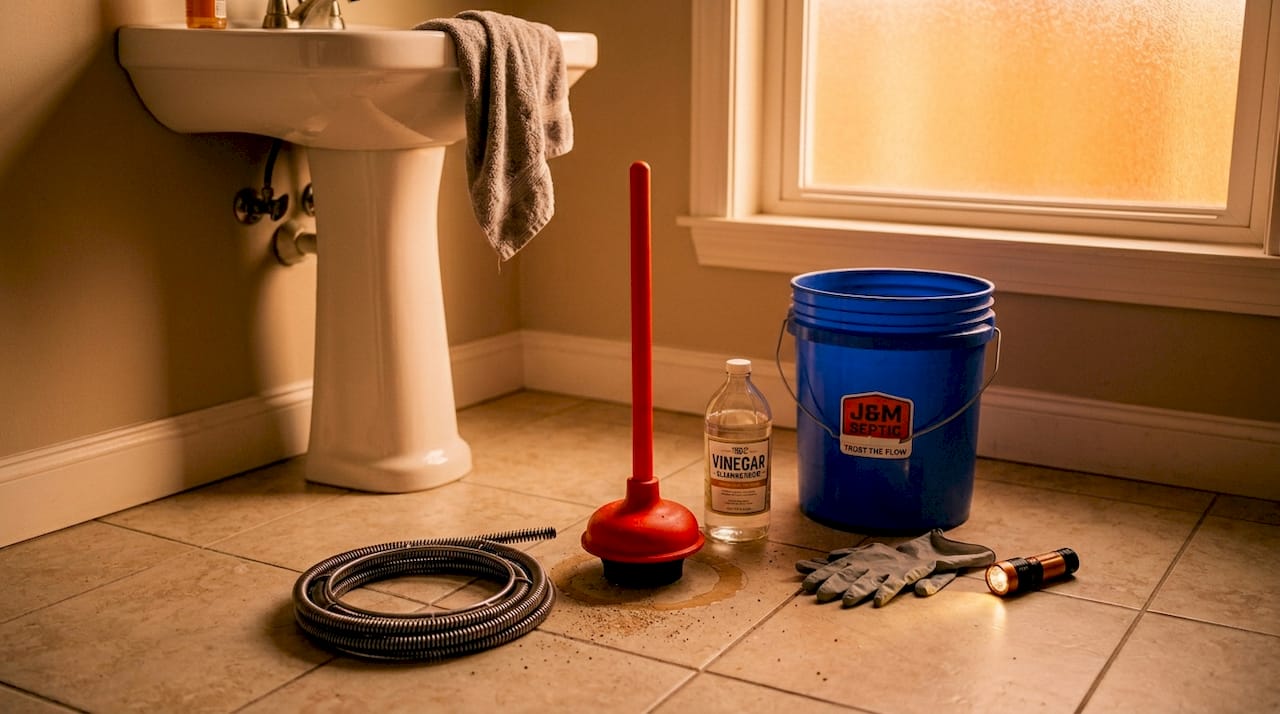
Having the right tools on hand makes this job much faster and keeps you from making a mess or damaging your pipes. Here’s a breakdown of what’s essential versus what’s nice to have:
| Tool or supply | Essential or optional | Why you need it |
|---|---|---|
| Cup plunger or flange plunger | Essential | First line of attack on most clogs |
| Drain snake (hand auger) | Essential | Reaches clogs further down the pipe |
| Bucket | Essential | Catches water when removing traps |
| Old towels or rags | Essential | Controls the mess |
| Baking soda and white vinegar | Optional | Gentle fizzing action for light buildup |
| Plumber’s wrench | Optional | Useful if you remove the P-trap |
| Drain trap brush | Optional | Cleans inside curved traps |
| Rubber gloves | Essential | Protects your hands from bacteria |
| Safety glasses | Essential | Splash protection when snaking |
One thing worth noting here is that plungers, drain snakes, and hot water flushes are the recommended septic-safe solutions over chemical products. This is a big deal if your home uses a septic system, which applies to a large number of homeowners in Alamance County.
Pro Tip: Always put on gloves and eye protection before pulling a drain cover or removing a trap. Drain water contains bacteria, and splashing is almost guaranteed the moment you loosen something.
Keep a small flashlight nearby too. Looking down into a drain or into the trap opening gives you a much clearer picture of what you’re dealing with before you start poking around.
Step-by-step: How to clear a single slow drain
With supplies ready, here’s the exact process to clear that slow drain the right way.
Follow these steps in order. The sequence matters because each method is gentler or more targeted than the next, and you want to start with the least invasive option before escalating.
- Remove the drain cover and use a flashlight to look for visible hair or debris just inside. Many bathroom clogs sit within the first six inches of the drain. Use needle-nose pliers or a plastic drain cleaning hook to pull out whatever you find.
- Plunge the drain using a firm up-and-down motion for 20 to 30 seconds. Use a cup plunger for sinks and tubs. For toilets, use a flange plunger. Plunging creates pressure that can break up or dislodge soft clogs.
- Snake the drain if plunging didn’t fix it. Feed the snake cable slowly into the drain, rotate the handle, and feel for resistance. When you hit something, continue rotating to grab or break it up, then pull back carefully. This is especially effective for hair clogs further down the line.
- Try baking soda and vinegar as an optional next step, but only with caution. Pour half a cup of baking soda down the drain, followed by half a cup of white vinegar. Let it fizz for 15 minutes, then flush. Be aware that this method has real limitations. Baking soda and vinegar can sometimes push clogs deeper or cause issues in older pipes, so mechanical fixes are generally preferred.
- Flush with hot water (not boiling) for two to three minutes. This helps carry loosened debris down and out. Skip this step if you suspect PVC pipes that are older or showing wear, since very hot water can soften them over time.
Here’s a quick comparison of methods to help you choose wisely:
| Method | Septic safe | Effectiveness | Risk level |
|---|---|---|---|
| Plunging | Yes | High for soft clogs | Low |
| Drain snake | Yes | High for hair/debris | Low |
| Baking soda and vinegar | Yes | Moderate for light buildup | Low to medium |
| Chemical drain cleaner | No | Variable | High |
| Boiling water flush | Use caution | Low to moderate | Medium |
The order recommended for septic-safe drain clearing is plunging first, then snaking, then baking soda and vinegar only if appropriate, finishing with a hot water flush. Following this order protects both your pipes and your septic system.
Pro Tip: Never use chemical drain cleaners if your home has a septic system. These products kill the beneficial bacteria that break down waste inside the tank, which can lead to costly system failures down the road. For guidance on preventing septic clogs from the start, good habits during installation and early maintenance make a real difference.
When it’s not just one drain: Recognizing whole-house or septic problems
Not all slow drains are created equal. Here’s when to step back and get help.
This is the part most homeowners skip, and it’s where things can go seriously wrong. If you’ve cleared one drain and the problem keeps coming back, or if multiple drains are slow at the same time, stop the DIY work. You may be dealing with a system-level issue that no amount of plunging will fix.
Whole-house slowdowns often point to septic or system outlet issues. Repeating DIY attempts in this situation can waste time and actually make the problem worse by pushing material further into a system that’s already struggling.
Watch for these warning signs across your home:
- Multiple slow drains in different rooms at the same time
- Gurgling noises from your toilet when you run the bathroom sink
- Sewage odors inside the house or near the tank area outside
- Standing water or soft, soggy ground near the drainfield
- Toilet backups or slow flushing that doesn’t improve
Any one of these on its own is worth paying attention to. More than one together is a clear signal to call a professional. A professional inspection is the right move when multiple fixtures slow down or gurgling and odors appear, rather than continuing DIY efforts that can compound the damage.
The cost of an inspection is a fraction of what a full septic failure or sewage backup costs to clean up. If your system is older or has never been serviced, it may also be time to think about when to install new septic systems rather than continuing to patch an aging one.
How to keep drains running clear: Maintenance tips
Once your drains are clear, a few simple habits will keep stubborn blockages away.
Prevention is genuinely easier than repair. Most clogs don’t appear overnight. They build up slowly over weeks or months of everyday habits that seem harmless in the moment. Here are the practices that make the biggest difference:
- Never pour grease down the drain. Let it cool in the pan, wipe it out with a paper towel, and throw it in the trash. Grease coats pipe walls and catches everything else that flows by.
- Keep coffee grounds out of the sink. They settle and compact inside pipes, creating dense clogs that a snake struggles to fully clear.
- Never flush wipes, even if labeled “flushable.” They do not break down in septic systems and are one of the leading causes of drain clogs and septic problems across the country.
- Put drain screens on every sink and shower. These simple mesh covers catch hair and debris before they reach the pipes. Clean them weekly.
- Flush pipes monthly with hot water. Run your hottest tap water for three to five minutes through each drain once a month. This softens and flushes light grease and soap buildup before it becomes a problem.
- Schedule regular septic checkups. A professional inspection every three to five years catches early warning signs that you can’t see from your end of the pipe.
Relying on regular mechanical cleaning and proper disposal habits is far better for long-term drain health than reaching for harsh chemicals every time something slows down. Consistent habits protect both your plumbing and your septic investment. For more on maintaining new septic systems, a little routine care goes a very long way.
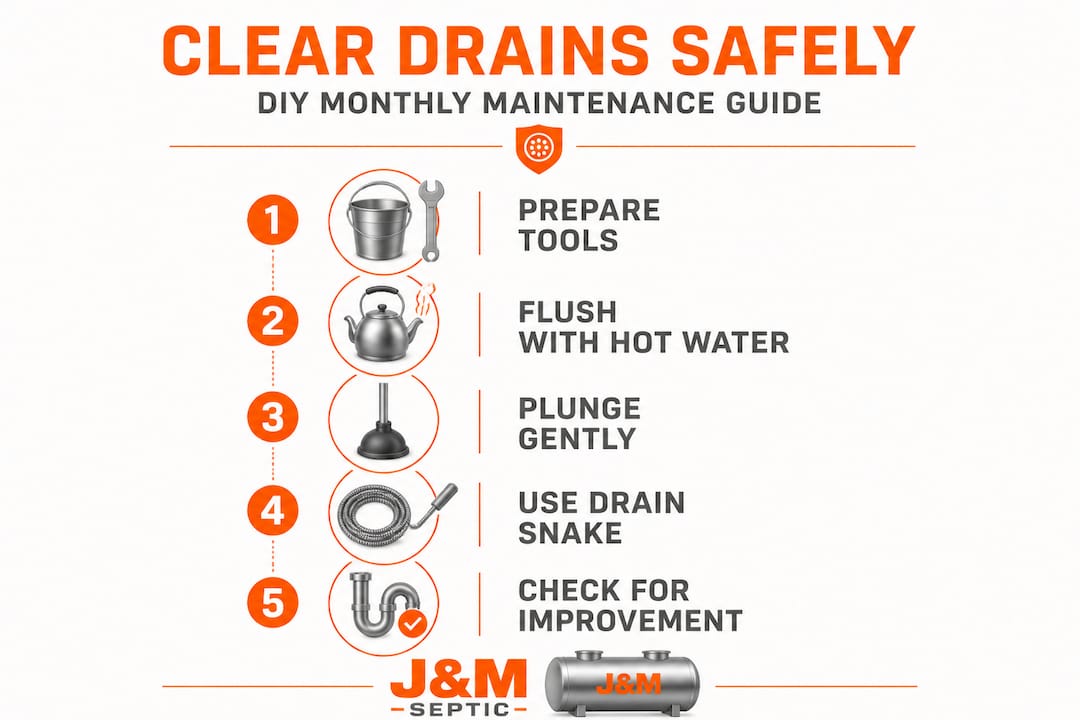
Pro Tip: Set a recurring reminder on your phone for the first of each month to do a hot water flush on your kitchen and bathroom drains. It takes less than ten minutes and can prevent hours of drain trouble.
Beyond DIY: What most guides miss about recurring slow drains
Most DIY articles about slow drains follow the same formula. Try the plunger. Try the snake. Try baking soda. Call it fixed. What they rarely tell you is that if the same drain keeps slowing down every few weeks, or if you find yourself repeating these steps several times a year, the drain is not the real problem.
In our experience working with homeowners across Alamance County, recurring slow drains are almost always a symptom, not the source. The source could be a partially blocked drainfield that’s losing absorption capacity. It could be a tank that hasn’t been pumped in a decade. It could be a cracked outlet baffle that’s letting solids escape where they shouldn’t. None of those issues respond to a plunger.
The conventional wisdom of “try everything yourself before calling a pro” sounds economical, but it can backfire in a real way. Repeated DIY attempts on a whole-house slowdown carry a genuine risk of sewer backup, yard contamination, or pipe damage. That’s a much bigger problem than a slow drain.
What we tell homeowners is this: one slow drain, try the DIY methods in order. But if it keeps coming back, or if more than one fixture is involved, that’s a conversation for a professional. Experienced eyes can spot things that a drain snake simply cannot reach. Thinking about upgrading older septic systems is not a failure. It’s a smart move that protects your property and your family’s health for years to come.
Need expert help with stubborn drains or septic issues?
If your drain fixes aren’t holding, or you’re noticing the warning signs of a bigger system problem, it’s time to connect with someone who has the right tools and experience to actually solve it.
At J&M Septic Installation & Repair, we serve homeowners throughout Alamance County, including Burlington, Mebane, Elon, Graham, Whitsett, and McLeansville. Whether you’re dealing with a stubborn single drain, whole-house slowdowns, or a system that needs a full inspection, we bring honest answers and real solutions. From hydro jetting to new septic installation, we handle it all without the runaround. Don’t wait until a slow drain becomes a sewage backup. Schedule service today and get the peace of mind that comes from having a local pro on your side.
Frequently asked questions
Can I use chemical drain cleaners with a septic system?
No, chemical drain cleaners are not recommended for septic systems because harsh chemicals kill the beneficial bacteria inside the tank that break down waste, which can lead to system failure.
What should I do if my whole house has slow drains?
Stop DIY attempts and call for a professional inspection, since whole-house slowdowns typically signal septic tank, drainfield, or main system issues that a plunger cannot fix.
Is baking soda and vinegar safe for all drains?
Not always. Baking soda and vinegar can push clogs deeper or harm fragile pipes in some cases, so mechanical methods like plunging and snaking should come first.
How often should I clean my drains to prevent clogs?
Monthly hot water flushes and weekly drain screen cleaning help prevent buildup. Avoid chemicals and stick to mechanical cleaning for the best long-term results.
Can venting problems be the reason for my slow drains?
Yes. Blocked plumbing vents can cause slow drains and gurgling sounds throughout the house even when your pipes and septic tank are completely clear.
Recommended
- New Septic System Installation – J&M SEPTIC
- Never Run Out of Ideas: Top Tips for Generating Fresh Blog Topics – J&M SEPTIC
- Maximizing Your Blog’s Reach: SEO Tips for Bloggers – J&M SEPTIC
- Crafting the Perfect Blog Structure: A Guide for Effective Blogging – J&M SEPTIC
- How to repair potholes: a complete GTA homeowner’s guide