
How to Clear Septic Line Blockages Safely
Learn how to clear septic line blockages safely and effectively. Follow our step-by-step guide to protect your system and ensure proper drainage.

A septic line blockage is defined as any obstruction in the pipes connecting your home’s drains to the septic tank or drain field, and clearing one safely requires a specific sequence of methods that protect your system’s beneficial bacteria. The industry term for this process is “septic drain line clearing,” though most homeowners search for how to clear septic line blockages when slow drains or sewage odors appear. The right approach starts with natural treatments, escalates to mechanical tools, and ends with professional intervention when needed. Skipping steps or reaching for chemical drain cleaners first causes more damage than the clog itself.
What tools and materials do you need to clear septic line blockages?
The right tools make the difference between a quick fix and a damaged pipe. Before you start, gather everything so you are not stopping mid-job to find supplies.
Basic tools and materials:
- Baking soda and white vinegar: The safest first-line treatment for minor clogs. One cup of each costs under $3 combined.
- Hot water: Used to flush the drain after the baking soda and vinegar reaction.
- Dish soap: Added to hot water to cut grease buildup in kitchen lines.
- Cup plunger: Designed for sinks and tubs. The flat-bottomed cup creates suction on flat drain surfaces.
- Flange plunger: Designed for toilets. The extended rubber flap seals the toilet bowl opening for proper pressure.
- Drain snake (hand auger): A flexible metal cable that reaches 15–25 feet into a pipe to break up or retrieve clogs. Basic models cost $10–$30.
| Tool | Best use | Septic safe? |
|---|---|---|
| Baking soda + vinegar | Minor organic clogs | Yes |
| Cup plunger | Sink and tub drains | Yes |
| Flange plunger | Toilet clogs | Yes |
| Hand auger (drain snake) | Stubborn clogs in drain lines | Yes, with care |
| Chemical drain cleaner | N/A | No |
Harsh chemical drain cleaners kill the beneficial bacteria inside your septic tank and can warp or corrode PVC and metal pipes. That means a product marketed as a fast fix can turn a $30 problem into a $3,000 repair. Always choose septic-safe products.
Pro Tip: Buy a hand auger with a rotating handle rather than a fixed T-bar. The rotating grip gives you far more control and reduces the risk of kinking the cable inside the pipe.
How do natural methods like baking soda and vinegar clear minor septic clogs?
Natural treatments work best on organic clogs caused by soap scum, grease, and hair. They are the correct first step before reaching for any mechanical tool.
The baking soda and vinegar reaction creates a fizzing action that loosens soft blockages from pipe walls without harming your septic system’s bacteria. Use exactly one cup of baking soda followed by one cup of white vinegar, and wait at least one hour before flushing. For stubborn clogs, let the mixture sit overnight.
Step-by-step natural treatment process:
- Pour one cup of baking soda directly into the clogged drain.
- Follow immediately with one cup of white vinegar. The fizzing reaction begins within seconds.
- Cover the drain opening with a cloth or stopper to direct the reaction downward into the pipe rather than up and out.
- Wait a minimum of one hour. For tough clogs, leave it overnight.
- Boil a full kettle of water and let it cool for two minutes so it is very hot but not boiling. Boiling water can soften PVC pipe joints.
- Pour the hot water slowly down the drain in two or three stages, pausing 30 seconds between each pour.
- If the drain is still slow, add one tablespoon of dish soap to the hot water before the final pour. Dish soap emulsifies grease and helps it move through the line.
- Run the cold tap for 30 seconds after the treatment to confirm the drain is flowing freely.
Pro Tip: Do this treatment weekly as a preventive measure, not just when you notice a clog. A small amount of buildup cleared every week never becomes the blockage that backs up your kitchen sink on a Sunday morning.
Avoiding chemical drain cleaners is not optional for septic homeowners. Beyond killing beneficial bacteria, the heat generated by chemical reactions inside the pipe can soften and deform plastic fittings. Once that damage occurs, you are looking at pipe replacement, not just clog removal.
Mechanical methods for stubborn blockages: plunging and snaking safely
When natural treatments do not clear the line after two attempts, a mechanical tool is the next step. The key is using the right tool for the right drain and stopping before you cause damage.
Plunging the right way
A cup plunger works on sinks, tubs, and shower drains. A flange plunger works on toilets. Using the wrong type reduces suction and makes the job harder.
- Fill the sink or tub with two to three inches of water. This water helps transmit the plunging pressure into the pipe.
- Place the plunger cup directly over the drain opening and press down to create a full seal.
- Push and pull with firm, steady strokes for 20–30 seconds without breaking the seal.
- Lift the plunger sharply on the final stroke to release suction and dislodge the clog.
- Run water immediately to test flow. Repeat up to three times if needed.
Using a drain snake safely
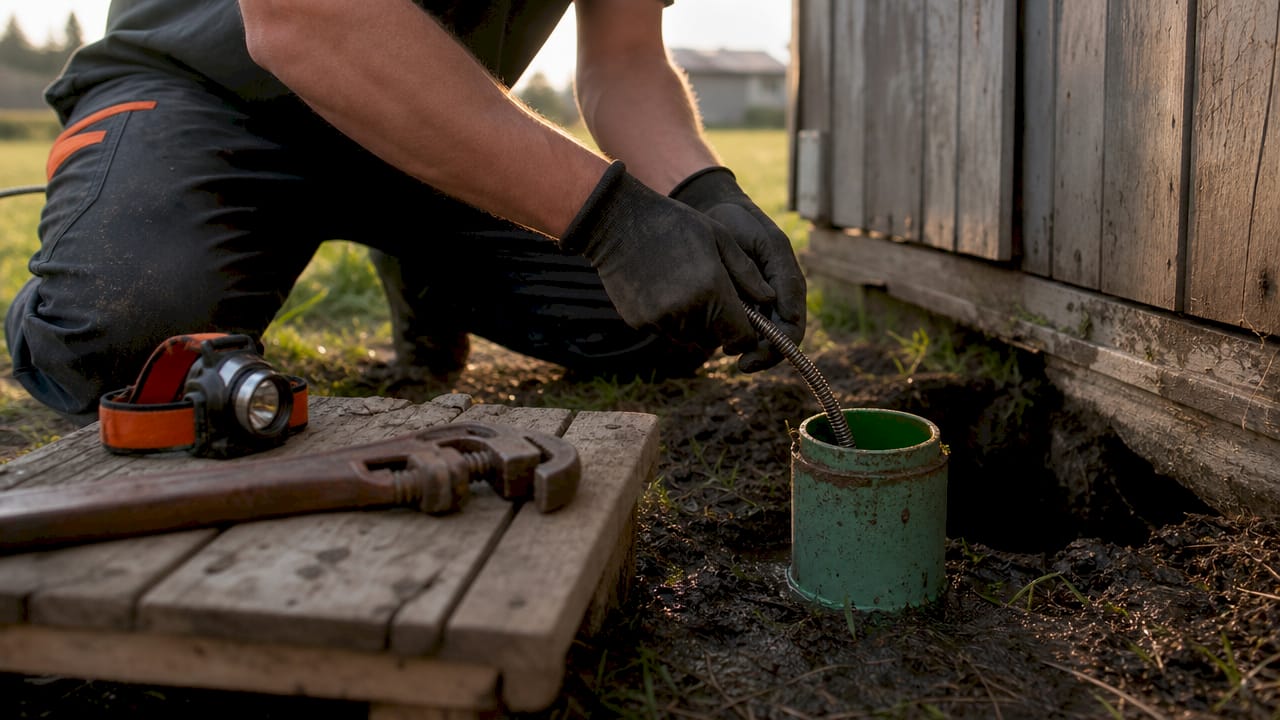
A hand auger reaches clogs that a plunger cannot. Feed the cable into the drain opening slowly, turning the handle clockwise as you push forward.
- Insert the snake cable into the drain or cleanout opening.
- Rotate the handle clockwise while pushing forward. Resistance means you have reached the clog.
- Continue rotating to break up the obstruction or hook it so you can pull it out.
- Pull the cable back slowly, still rotating, to avoid dropping debris back into the pipe.
- Flush the drain with hot water to clear any remaining material.
Always use house-side cleanouts rather than running a snake through the septic tank opening. Snaking inside the tank risks breaking inlet tees and baffles, which are the components that separate solids from liquids. Replacing a baffle costs far more than a professional drain cleaning visit.
Pro Tip: If you cannot locate your house-side cleanout, check along the foundation wall in the basement or crawl space, or look for a white or black plastic cap near the base of an exterior wall. That cleanout gives you direct access to the main drain line without touching the tank.
When should you call a professional for septic line cleaning?
DIY methods have a clear limit. Knowing when to stop and call a professional protects your pipes, your tank, and your drain field.
Signs that require professional help include multiple drains backing up at the same time, persistent sewage odors inside or outside the home, gurgling sounds from toilets or drains, and sewage surfacing in the yard. These symptoms point to a blockage deeper in the main line or a problem in the drain field itself. No hand auger reaches that far safely.
Wet or unusually lush patches of grass over your drain field area signal system saturation or failure. That condition requires professional assessment, not another round of baking soda.
Hydro jetting: the professional standard for serious clogs
Hydro jetting is the most effective method for recurring or heavy blockages. Professionals use water pressure of 3,000–4,000 PSI to blast grease, sludge, roots, and biofilm from the full interior surface of the pipe. That level of pressure cleans the pipe walls completely, not just the center channel.
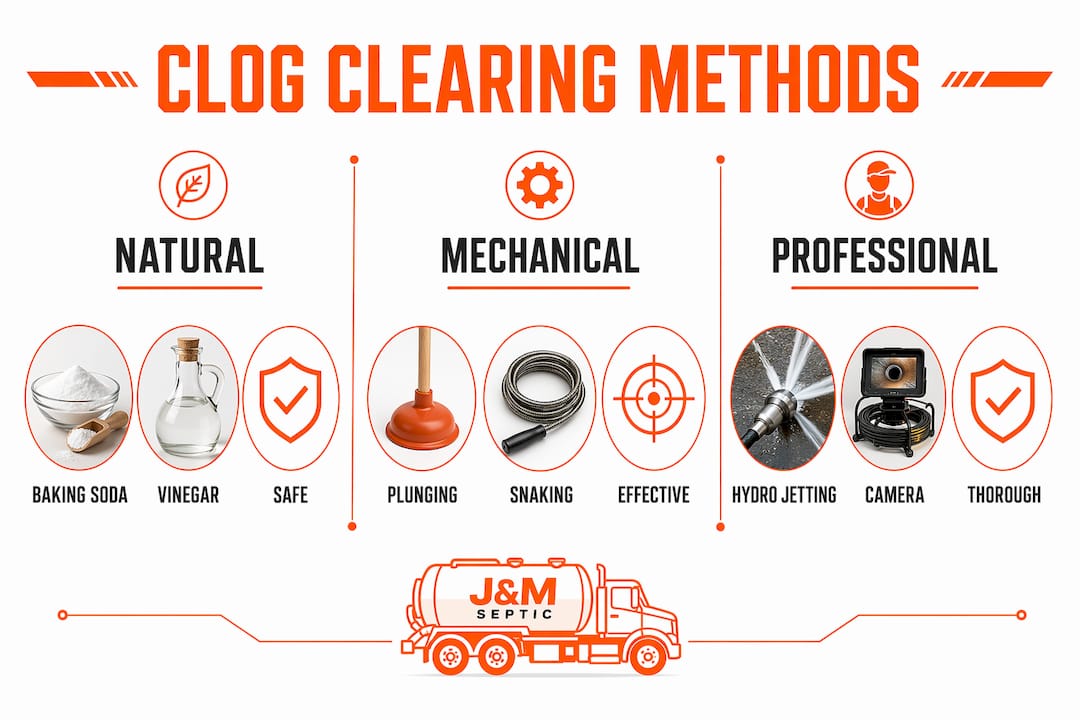
Snaking, by contrast, only punctures a hole through the clog, allowing temporary flow. The buildup on the pipe walls remains and the clog returns within weeks or months. Hydro jetting removes the entire obstruction and leaves the pipe interior clean. You can read more about how hydro jetting works before scheduling a service call.
A camera inspection before hydro jetting confirms the pipe condition and locates the exact blockage. This step matters because jetting a cracked or collapsed pipe at high pressure can worsen the damage.
| Method | Best for | Limitations |
|---|---|---|
| Baking soda + vinegar | Minor organic clogs | Does not work on grease or root blockages |
| Hand auger (snaking) | Moderate clogs in accessible lines | Only punctures the clog, not a full clean |
| Hydro jetting | Recurring clogs, heavy buildup, roots | Requires professional equipment and camera inspection first |
| Camera inspection | Diagnosing clog location and pipe condition | Diagnostic only, not a clearing method |
Pro Tip: Ask your technician to run a camera inspection before and after hydro jetting. The “after” footage confirms the pipe is fully clear and gives you a baseline for future maintenance.
Preventive maintenance practices to avoid future septic line blockages
The most cost-effective septic strategy is preventing blockages before they start. Most recurring clogs trace back to a small number of fixable habits.
What to do regularly:
- Pump your septic tank every 3–5 years. Regular pumping prevents solids from accumulating to the point where they enter and clog the drain lines.
- Run a baking soda and vinegar treatment weekly in your kitchen and bathroom drains as a low-cost preventive measure.
- Spread laundry loads throughout the week instead of running multiple loads in one day. Excess water saturates the drain field and reduces its ability to absorb effluent.
- Fix leaking faucets and running toilets promptly. A running toilet can add hundreds of gallons per day to your system.
What never to flush or pour down drains:
- Cooking grease or oil
- “Flushable” wipes (they do not break down in septic systems)
- Feminine hygiene products
- Paper towels or cotton balls
- Medications
- Coffee grounds
Keep vehicles and heavy equipment off the drain field area. Soil compaction crushes the perforated pipes underground and destroys the field’s absorption capacity. Plant only shallow-rooted grass over the field. Deep-rooted plants and trees send roots directly into the pipes. For more guidance on preventing septic failure, the steps are straightforward once you know what to watch for.
Key Takeaways
Clearing septic line blockages safely requires starting with natural treatments, escalating to mechanical tools only when needed, and calling a professional when multiple drains back up or hydro jetting is the only method that will fully clean the pipe walls.
| Point | Details |
|---|---|
| Start with natural treatments | Use one cup of baking soda and one cup of vinegar; wait at least one hour before flushing with hot water. |
| Avoid chemical drain cleaners | Chemicals kill septic bacteria and can damage pipes, turning a minor clog into a costly repair. |
| Snake from house-side cleanouts | Never run a snake through the septic tank; it risks breaking baffles and inlet tees. |
| Call a pro for multiple backups | Simultaneous drain backups, sewage odors, or yard wet spots require professional diagnosis. |
| Pump the tank every 3–5 years | Regular pumping prevents solids from entering drain lines and causing recurring blockages. |
What I’ve learned after years of clearing septic lines
Most homeowners wait too long. By the time they call, the clog has been building for months, and what started as a slow kitchen drain has turned into sewage backing up into the bathtub. The baking soda and vinegar method genuinely works on early-stage organic clogs. The mistake is using it after the problem has already progressed past that stage.
The other pattern I see constantly is homeowners snaking their own lines and feeling confident because water flows again. Snaking opens a channel through the clog. It does not clean the pipe walls. Within a few weeks, the biofilm and grease that remained on the walls close the gap again, and the homeowner is back to square one. Hydro jetting is the only method that actually cleans the pipe interior. It costs more upfront, but it eliminates the cycle of recurring clogs that costs more over time.
My honest advice: use the natural methods weekly as prevention, use a snake once if natural methods fail, and call a professional the moment you see more than one drain affected. That sequence saves money and protects the system. Proactive septic tank maintenance is always cheaper than emergency repair.
— Jason
Jmseptic is ready to help when DIY is not enough
Jmseptic serves homeowners across Alamance County, Burlington, Mebane, Graham, and the surrounding Piedmont Triad area with honest, experienced septic work.

When natural treatments and snaking have not cleared the line, or when you are seeing multiple slow drains and yard odors, Jmseptic’s team handles hydro jetting and sewer line cleaning to restore your pipes to full function. For homeowners who need a full system evaluation or are considering a new septic system installation, Jmseptic provides custom-designed solutions built for your property and soil conditions. Call before a slow drain becomes a sewage backup.
FAQ
What is the safest way to unclog a septic drain line?
The safest method is one cup of baking soda followed by one cup of white vinegar, left to react for at least one hour before flushing with hot water. This treatment clears minor organic clogs without harming the beneficial bacteria in your septic tank.
Can I use a regular drain snake on a septic system?
Yes, but only from a house-side cleanout, never through the septic tank opening. Running a snake inside the tank risks breaking inlet tees and baffles, which are critical components that keep solids separated from liquids.
How do I know when to call a professional for a septic clog?
Call a professional when multiple drains back up at the same time, when you smell sewage inside or outside the home, or when DIY methods have not worked after two attempts. These signs point to a blockage in the main line or drain field that requires professional equipment.
What is hydro jetting and when is it necessary?
Hydro jetting uses water pressure of 3,000–4,000 PSI to clean the full interior surface of a septic pipe, removing grease, roots, and biofilm. It is the right choice for recurring blockages that snaking has failed to resolve permanently.
How often should I pump my septic tank to prevent line blockages?
Pump your septic tank every 3–5 years. Regular pumping prevents solids from building up to the level where they migrate into the drain lines and cause blockages.