
Step-by-step guide to the homeowner septic workflow in Alamance County
Protect your property with our step-by-step guide to the homeowner septic workflow in Alamance County. Act fast and save money!

A septic backup does not announce itself at a convenient time. One morning you wake up to slow drains throughout the house, a foul smell rising through the bathroom, and muddy water pooling in your yard. By the time you realize what is happening, you are already staring down hundreds or even thousands of dollars in potential damage. What makes it worse is that slow drains, odors, backups, or a soggy yard demand you contact a certified professional within 2 to 4 hours for emergencies. Alamance County has strict requirements around every stage of septic work, from the first inspection to the final permit. Follow this guide and you will know exactly what to do, in the right order, to protect your property and your wallet.
Table of Contents
- Recognizing septic system problems early
- Preparing for septic service: What every Alamance homeowner needs
- Navigating permits, inspections, and legal requirements
- System types and installation: What to expect on your property
- Routine maintenance and renewal: Protect your investment
- Our expert take: The real risks of shortcuts in the Alamance County septic process
- Need help? Get fast, certified septic service in Alamance County
- Frequently asked questions
Key Takeaways
| Point | Details |
|---|---|
| Rapid response is critical | Act fast on septic issues to avoid costly damage and avoid local fines. |
| Permits and pros only | Alamance County requires all septic work to be done by licensed contractors with proper permits. |
| Soil matters in system choice | Clay-heavy local soils may mean you need advanced septic technology instead of conventional systems. |
| Routine maintenance pays off | Regular pumping and inspections prevent emergencies and keep your system legal. |
| Cutting corners leads to fines | DIY or unpermitted repairs can cost you $500 per day and reduce your property value. |
Recognizing septic system problems early
Now that you understand what is at stake, the first workflow step is knowing when trouble starts and how to react safely. Catching a septic problem early is the difference between a routine service call and a complete system replacement.
The most common warning signs include:
- Slow drains throughout multiple fixtures in the house, not just one sink
- Foul odors in the yard or near drains, especially after rain
- Sewage backups coming up through toilets or floor drains
- Soggy or unusually green patches of grass near the drainfield
- Gurgling sounds in pipes even when water is not running
As soon as you notice any of these signs, your first priority is to reduce the strain on your system. Stop running laundry, cut shower times short, and do not flush anything other than waste and toilet paper. Then call a certified septic professional right away. Ignoring these signals is not just risky for your home. Alamance County can pursue fines and enforcement actions for unaddressed system failures, which makes a small problem very expensive very fast.
For guidance on exactly what a failing system looks like and when it crosses into emergency territory, the urgent septic repair guide from J&M Septic is a useful starting point. If you are seeing standing water or soggy ground over your drainfield, septic tank bog issues are often the culprit and need professional diagnosis before you touch anything. Similarly, if you suspect a blockage in the line itself, reviewing sewer line cleaning tips can help you understand what the technician will likely do.
Pro Tip: Keep a small emergency supply kit near your utility area. Include rubber gloves, paper towels, bottled water for drinking, and basic sanitation supplies. When raw sewage backs up, you will be glad you planned ahead.
Safety warning: Do not attempt to pump your own tank, open the tank lid, or make any repairs yourself. Septic tanks produce toxic gases including hydrogen sulfide, which can cause unconsciousness within seconds. Always wait for a certified professional.
Preparing for septic service: What every Alamance homeowner needs
Once you have spotted a problem and contacted a professional, here is what you can do to be ready and help speed up the service process.
While waiting for the technician, shut off the main water supply if you can, and keep people and pets completely away from the drainfield area. Mark the location if you know it so the crew does not have to spend time locating it. And as soon as you see signs of failure, reduce water use immediately by spreading laundry over several days, taking shorter showers, and fixing any known leaks.
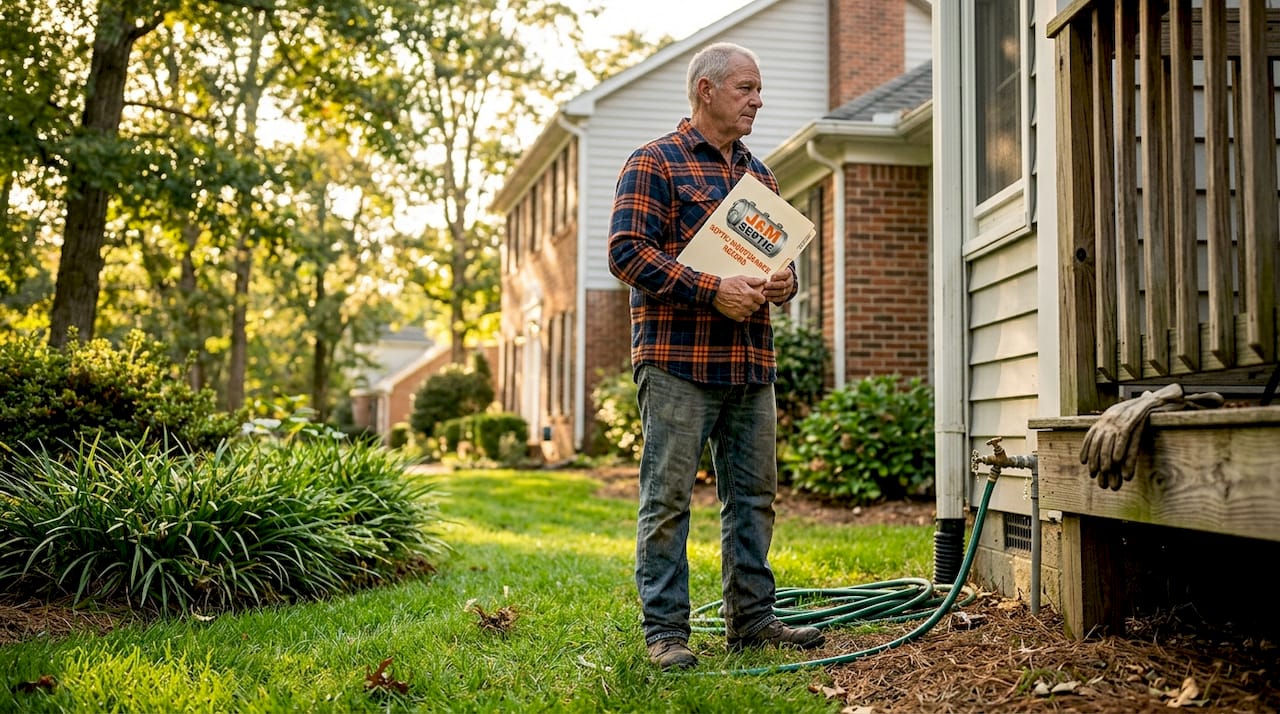
Gather the following documents and information before the technician arrives:
| Document or information | Why it matters |
|---|---|
| Previous maintenance records | Shows pump history and service frequency |
| Past permits on file | Confirms legal work history of the system |
| Property map or survey | Helps locate tank, lines, and drainfield |
| Type of system if known | Guides the technician to the right inspection approach |
| Emergency contacts | Helpful if owner cannot be present during service |
| Date of last pumping | Critical for diagnosing overload vs. mechanical failure |
When you talk to the technician, be specific. Describe exactly when symptoms started, how many people live in the house, whether water use has increased recently, and whether you have used any chemical drain cleaners. These details can cut diagnostic time significantly and get the work moving faster.
Mistakes to avoid while waiting for service:
- Do not dig around the tank or drainfield on your own
- Do not park vehicles over the drainfield, which can compact soil and crush pipes
- Do not pour bleach, drain chemicals, or additives into your toilets or drains
- Do not run more water than absolutely necessary until the system is cleared
- Do not assume the problem will resolve on its own
For a complete breakdown of what to do before the crew arrives, the emergency septic repair steps guide covers the full preparation checklist. If your property’s soil conditions or lot size mean a conventional system may not work for you, it is worth exploring biofilter septic options early in the process.
Navigating permits, inspections, and legal requirements
Before any digging or repairs can start, you must comply with local rules. Here is how the legal workflow works in Alamance County.
This is where many homeowners get tripped up. They assume a repair is a repair, that a contractor can just show up and fix the problem. But repairs and modifications require an Improvement Permit from the county Environmental Health office, while new installations or replacements require a full Operation Permit backed by a soil evaluation and design plan.
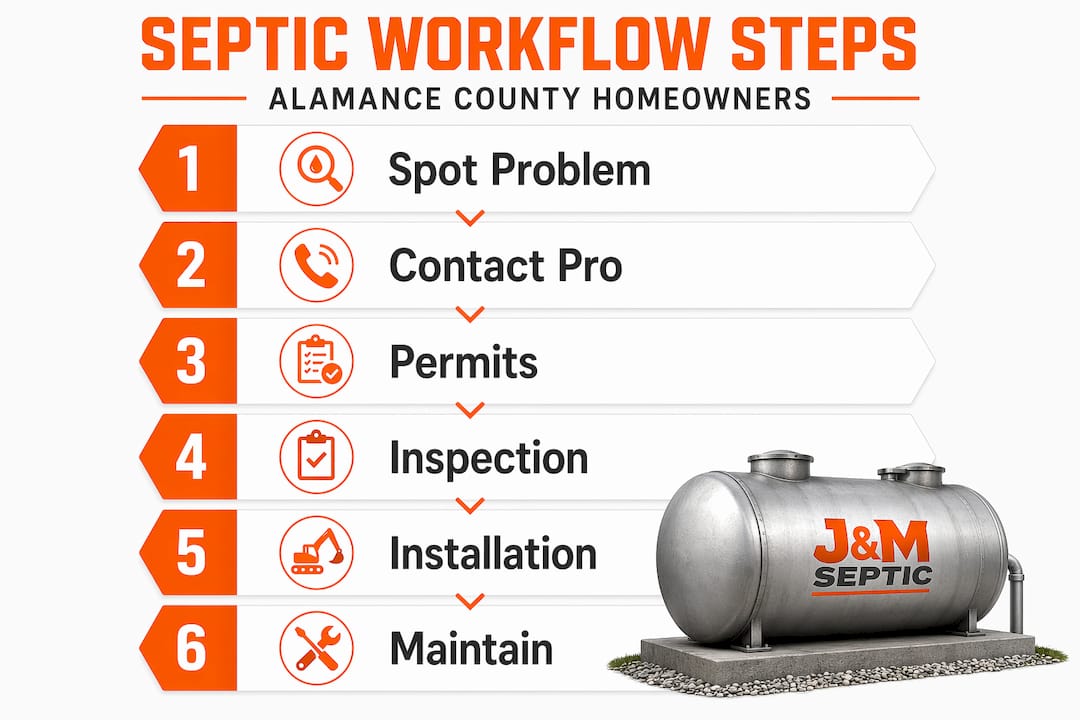
Here are the six critical steps in the legal workflow for Alamance County:
- Soil evaluation: A certified evaluator assesses your soil using morphology (structure and color), not an old-fashioned perc test. This determines what type of system your lot can support.
- Improvement Permit: Valid for five years, this permit covers repairs and modifications. For a new system, this step also initiates the design phase.
- Construction Authorization: Once a design is approved, you receive written authorization to begin construction. No contractor should break ground without this.
- Installation by a licensed contractor: All work must be performed by an NCOWCICB-licensed contractor. Homeowners cannot legally perform their own installation or repair.
- Final inspection: After installation, county Environmental Health inspects the work before the system can be covered.
- Operation Permit issued: Once the inspection passes, the Operation Permit is issued and the system can legally operate.
The NC permitting process follows this same structure and is administered locally through the Alamance County Health Department.
| Scenario | Permit required | Notes |
|---|---|---|
| Minor repair (broken pipe) | Improvement Permit | County review required |
| System modification | Improvement Permit | May require redesign |
| Full tank replacement | Improvement Permit + inspection | Soil eval may be needed |
| New system installation | Operation Permit | Full soil eval, design, inspection |
| Advanced Type V/VI systems | Operation Permit + renewal | Renewal every 60 months |
Pro Tip: Contact the Alamance County Environmental Health office before you hire a contractor. Ask what permits are needed for your specific situation. Starting the permit process early can cut weeks off your timeline and keep costs predictable.
If your property may need something other than a conventional system, reviewing the biofilter systems guide or exploring no leach field options can help you understand what alternatives exist before your soil evaluation.
System types and installation: What to expect on your property
With your permits approved, it is time to understand what sort of system you will get and what to expect as work begins.
Alamance County sits in the North Carolina Piedmont region, which means many properties have clay-heavy soils with limited drainage. Soil groups determine system type: Group I and II soils (sandier, better draining) can usually support a conventional gravity-fed system, while Group III and IV clay-heavy soils require alternatives like Low Pressure Pipe (LPP), mound systems, or Aerobic Treatment Units (ATUs). If your yard stays wet after rain or has poor drainage, expect your soil evaluation to point toward an advanced system.
After permits are approved, here is what the installation process typically looks like:
- The crew marks the approved system footprint and flags utility lines
- Heavy equipment digs trenches for drain lines and the tank area
- The tank (concrete, fiberglass, or polyethylene) is set into position
- Distribution lines, pumps, and any required treatment components are installed
- An inspector from county Environmental Health reviews the work in progress
- Once approved, the area is backfilled and graded
What you should avoid during installation:
- Do not ask the crew to make changes that were not in the approved design
- Do not allow any vehicles on the freshly graded drainfield area
- Do not plant anything over the system without checking with the contractor first
- Do not cover inspection ports or access lids during landscaping
Construction typically takes 7 to 14 days after permits are approved, with total project timelines running 2 to 4 weeks from permit application to final Operation Permit. Permits themselves usually take 5 to 10 business days for county review.
If your property needs something other than a standard drainfield system, look into alternative septic options that work well in the Piedmont Triad’s difficult soil conditions. For properties that might qualify for biofilter technology, the biofilter system options article breaks down how those systems work.
Routine maintenance and renewal: Protect your investment
Even after installation, your responsibilities continue. Here is how to protect your septic investment for years to come.
A properly maintained septic system can last 25 to 40 years. A neglected one can fail in less than 10. The difference is mostly consistency. Here is a simple maintenance schedule every Alamance County homeowner should follow:
- Every 1 to 2 years: Visual inspection of the drainfield and tank access area; check for odors, soggy ground, or alarm signals on advanced systems.
- Every 3 to 5 years: Professional pump-out and full inspection of the tank, inlet and outlet baffles, and distribution system. Advanced systems may need annual professional visits.
- Every 60 months: Renew your Operation Permit for advanced Type V or VI systems, which requires a certified inspection.
- Annually: Review household habits and water use; check for slow drains, unusual sounds, or changes in yard drainage.
Pro Tip: Write your next pump date on a sticky note inside your electrical panel or water heater closet. Set a phone reminder for 6 months before it is due. Catching it early means you schedule on your terms, not during an emergency.
Warning: Failing to maintain your system is not just a health risk. Alamance County can fine homeowners up to $500 per day for a documented system malfunction that is not addressed. A pump-out every few years costs a few hundred dollars. A fine-plus-replacement scenario can exceed $20,000.
Simple daily habits that protect your system and extend its life:
- Use high-efficiency appliances to reduce water volume per load
- Spread laundry over several days instead of doing it all at once
- Never flush wipes (even “flushable” ones), medications, or grease
- Protect the drainfield by keeping vehicles, livestock, and heavy foot traffic off of it
For a deeper look at what shortens system life, the septic system lifespan tips article covers the key factors. If you want to understand exactly why pumping is so critical, the septic pumping importance guide explains what happens when you skip it.
Our expert take: The real risks of shortcuts in the Alamance County septic process
Here is what most homeowners do not realize until it is too late: the legal workflow around septic systems is not bureaucratic red tape. It is actually there to protect your property value and your family’s health.
We see it regularly. A homeowner hires someone cheap who skips the permit, installs a system that does not match the soil conditions, and covers everything up before an inspection. It looks fine for a year or two. Then the drainfield fails, the yard turns into a bog, and now the homeowner faces full replacement costs plus has to explain to the county why there is an unpermitted system on the property. In Alamance County, emergencies require immediate certified service and all malfunctions must be reported to avoid fines that run up to $500 per day.
The math on shortcuts never works out. A licensed contractor with proper permits may cost more upfront, but the work comes with an inspection record, a legal Operation Permit, and protection if something goes wrong. An unlicensed installation leaves you holding the entire liability.
The other mistake we see is homeowners waiting too long because they do not want to deal with the permit process. They let a slow drain turn into a backup, a backup turn into a health violation. By the time they call us, what could have been a repair is now a full replacement. The factors that affect septic lifespan risks are almost always within the homeowner’s control when they stay ahead of problems. The legal process, done right, is your best investment protection.
Need help? Get fast, certified septic service in Alamance County
If you are dealing with a septic problem right now or just want to get ahead of one before it becomes a crisis, J&M Septic Installation & Repair is ready to help. We are locally based in Mebane and serve all of Alamance County, including Burlington, Elon, Graham, Whitsett, and McLeansville.

Every job we do is handled by licensed, certified professionals who know Alamance County’s soil conditions, permit requirements, and Environmental Health expectations inside and out. Whether you need emergency septic repair service today or are planning a new septic system installation for a new build or property upgrade, we handle it all including inspections, routine maintenance, hydro jetting, and full system replacements. Call us before a small problem becomes a $500-per-day fine.
Frequently asked questions
How fast should I contact a pro if I notice a septic backup?
Contact a certified professional right away. For active backups, you should aim for a response within 2 to 4 hours to prevent serious property damage, contamination, and potential county fines. The warning signs of failure can escalate quickly if not addressed by a licensed technician.
How often do I need to pump my septic tank in Alamance County?
Plan on pumping every 3 to 5 years based on how many people live in your home and the size of your tank, with visual inspections every 1 to 2 years. Advanced systems may need annual professional maintenance under their Operation Permit requirements.
Can I install or repair my septic system without a permit?
No. All septic work in NC requires proper permits issued by county Environmental Health, and every installation or repair must be performed by an NCOWCICB-licensed contractor. DIY work is not legal and creates serious liability.
How does soil type affect what septic system I need?
Soil structure is the first thing evaluators look at. Clay-heavy soils in Alamance County often cannot support a conventional system and will require a Low Pressure Pipe, mound, or aerobic system instead. Your soil evaluation determines which options are available on your specific lot.
What happens if I ignore a septic malfunction?
Ignoring a malfunction puts your household at health risk and exposes you to fines up to $500 per day under county enforcement. Beyond fines, untreated failures typically escalate into full system replacements that cost far more than timely repairs would have.