
Don’t Pump More Than Half: Fixes for Septic on High Water Table
Homeowner guide for septic on high water table lots: avoid overpumping, cut water use now, and compare mounds, ATUs, sand filters, maintenance, and permit...

A conventional septic system only works if the drain field bottom sits a safe vertical distance above the seasonal high water table. If that separation isn’t there, you need a licensed site evaluation and likely an alternative system, plus temporary management right now, like limited pumping and cutting water use, until a permanent fix is designed.
TL;DR:
- High groundwater levels eliminate the unsaturated soil zone needed for effective wastewater treatment, increasing risks of untreated effluent reaching the water table.
- Site evaluations during the wet season, including soil borings and monitoring wells, are crucial to accurately determine if the seasonal high water table compromises conventional septic systems.
- Alternative systems like mounds, aerobic treatment units, or sand filters are necessary when minimum separation distances cannot be met, though they require more maintenance and higher upfront costs.
- Immediate actions include partially pumping the tank, reducing water use, redirecting surface water, and obtaining a professional evaluation to prevent system failure.
- Proper design should focus on seasonal high water levels, use pressure dosing, and employ engineered fill materials to ensure long-term reliability on wet sites.
Table of Contents
- What Goes Wrong When Groundwater Is Too High for a Septic System
- How Do I Tell If My Water Table Is High?
- Site Evaluation, Permitting, and Minimum Separation Rules
- Long-Term System Options for Wet Sites
- What to Do Right Now If Groundwater Is High
- Maintenance, Monitoring, and Realistic Costs for Alternative Systems
- How High Groundwater Cripples Soil Absorption
- Designing Septic Systems for Wet Sites
- Environmental Rules Around High Water Table Installations
- Real-World Adaptations That Work on Wet Lots
- A Local Installer’s Take on High Water Table Septic Problems
- How J&M Septic Handles High Water Table Problems
- Sources
- FAQ
What Goes Wrong When Groundwater Is Too High for a Septic System
Septic treatment depends on an unsaturated layer of soil where aerobic bacteria break down effluent before it reaches groundwater. The EPA explains that once groundwater rises into that zone, treatment essentially stops, and untreated wastewater has a direct path into the water table.
Homeowners usually notice the symptoms before they understand the cause. Drains empty slowly throughout the house. Toilets flush sluggishly or not at all. Floor drains in the basement start backing up, sometimes with sewage odor attached. Outside, the lawn over the drain field stays soggy days after everyone else’s yard has dried out, and a persistent smell hangs in that corner of the property.
None of that is cosmetic. Pathogens and excess nutrients moving straight into groundwater or a nearby creek is a public health issue, not just a nuisance, and it’s exactly what separation standards are designed to prevent.
How Do I Tell If My Water Table Is High?
Some clues you can spot yourself. Standing water that lingers in the yard after a moderate rain, especially over or near the drain field, is a strong signal. So is a basement that stays damp regardless of season, or a low spot in the lawn that never quite dries.
Digging a test pit gives you more certainty. Soil scientists look for mottling, gray and orange streaking called redoximorphic features, which forms when soil cycles between saturated and oxygenated conditions over time. Mottled soil at a shallow depth tells you groundwater has been sitting there for a while, even on a dry day.
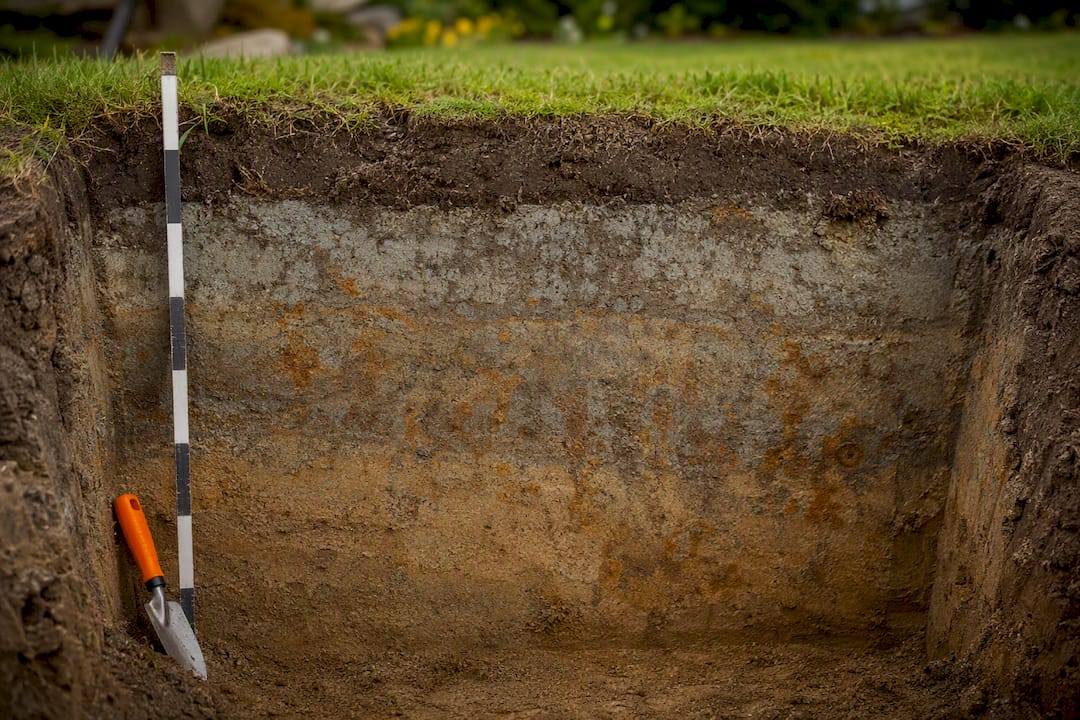
The only way to know for certain is testing during, or simulating, the wet season. Deep-hole tests, monitoring wells, and soil borings done in late winter or early spring, when regional water tables peak, catch the worst-case elevation that a July test would miss entirely. A single dry-day reading tells you almost nothing useful for design purposes.
Site Evaluation, Permitting, and Minimum Separation Rules
Every conventional system design starts with a number: how far above the seasonal high water table the drain field trench bottom needs to sit. That separation matters because it’s the buffer where aerobic treatment actually happens. Get less separation than the soil provides and you lose the treatment zone before the effluent is clean.
Separation minimums vary widely by jurisdiction. Some states use a 24-inch benchmark for standard systems, but county rules can require 3 to 4 feet or more depending on the percolation rate and whether supplemental treatment is part of the design, according to San Diego County’s LAMP groundwater guidance. There’s no universal number, which is exactly why a licensed evaluation matters more than a neighbor’s system as a reference point.
A typical site evaluation includes:
- Test borings or a deep-hole test to log soil texture and mottling depth
- A percolation test to measure how fast the soil absorbs water
- Monitoring well data or documented seasonal readings, not a one-time snapshot
- A written soil and site report a permitting office can actually evaluate
Permitting authorities generally want to see monitoring logs that demonstrate a seasonal high, not a lucky dry-day number. If the documented separation falls short, the permit gets denied for a conventional design, and the homeowner moves to alternative-system territory. That’s not a bureaucratic inconvenience. It’s the system telling you, in advance, that a standard trench would fail within a year or two.
Long-Term System Options for Wet Sites
Once a site can’t meet conventional separation, the design goal shifts: either create the missing vertical clearance artificially, or treat the effluent to a higher standard so it needs less soil depth to finish the job safely. Every option below solves that problem a different way, and each comes with its own cost and upkeep profile.
Mound systems build an engineered sand mound above natural grade, essentially manufacturing the separation the native soil lacks. They need a fairly generous footprint and a pump chamber to push effluent up into the mound, which adds both equipment and electrical dependency to the mix.
Aerobic treatment units (ATUs) inject oxygen into the treatment process, producing effluent clean enough that it needs less soil depth to finish treatment safely. That’s useful on tight sites, but ATUs need continuous power and a service contract, since the aeration components are mechanical and do wear.
Sand filter and at-grade systems sit in the middle: more expensive up front than a standard trench, less demanding than a full mound, and a solid fit for moderate rather than severe groundwater problems. They filter effluent through an engineered sand layer before it reaches native soil.
Drip distribution and curtain drains are tactical tools, not standalone systems. Drip lines spread effluent thinly across a wider, shallower area, which helps avoid the localized mounding that continuous discharge to one spot can cause. Curtain drains intercept lateral groundwater flow before it reaches the drain field. Both need a licensed designer to integrate them into a complete system rather than bolt them on as an afterthought.
Choosing among these comes down to lot size, measured perc rate, setback requirements, how much maintenance you’re willing to commit to, and what your local health department will actually permit. Alternative systems for sites with no usable leach field footprint are worth reviewing in detail before you commit to a design direction.
Pro Tip: Ask any installer bidding on a mound or ATU system for their annual maintenance contract cost up front, not just the installation price. On a wet site, the maintenance line item over ten years can rival the install cost.
What to Do Right Now If Groundwater Is High
- Have the tank pumped, but not fully emptied. In saturated soil, an empty tank can float and pop out of the ground, snapping the inlet and outlet pipes. NDSU Extension advises never removing more than half the tank volume when the ground around it is waterlogged.
- Cut water use hard. Fix running toilets and dripping faucets immediately, spread laundry loads across days instead of running three in a row, and skip long showers until the ground dries out.
- Redirect surface water away from the drain field. Extend downspouts, regrade obvious low spots, and if water is clearly draining downhill onto your field from a neighboring property, a temporary curtain drain upslope can buy real time.
- Line up a professional evaluation now, not after the next big storm. A pumping service can also flag early warning signs during a routine visit.
Maintenance, Monitoring, and Realistic Costs for Alternative Systems
Alternative systems cost more than a standard gravity system, and the gap is real. Mounds, ATUs, sand filters, and at-grade systems all run higher up front than a conventional trench, largely because of the engineered materials and, for ATUs, mechanical components involved, per the cost breakdowns SepticTankHub outlines for wet-site systems. ATUs add ongoing electrical costs and typically require a service contract with a certified provider for routine testing and part replacement.
Inspection frequency should be tighter than a conventional system, particularly for the first two years after installation while you confirm the design is handling seasonal peaks the way it was engineered to. Many jurisdictions attach an operating permit to ATUs and other alternative systems specifically because they require that ongoing oversight.
A simple, low-cost monitoring step homeowners can set up themselves: a capped observation well positioned near the drain field. Checking it after heavy rain gives an early read on rising groundwater, often days before symptoms show up inside the house, so you can cut water use before the system actually backs up.
How High Groundwater Cripples Soil Absorption
A leach field works because effluent percolates down through unsaturated soil, where oxygen-loving bacteria consume the organic material and pathogens before the water ever reaches the aquifer. That process needs air pockets in the soil structure. Saturated soil has none.
When the water table rises into the absorption trenches, two things happen at once. First, the soil simply has nowhere to send new effluent, since the pore space is already full of groundwater. Second, the bacterial treatment that would normally happen in that unsaturated zone doesn’t happen at all, so whatever effluent does move through the soil arrives at the water table largely untreated, a mechanism the EPA describes as the core function the whole system depends on.
There’s a secondary trap worth knowing about: a drain field can create its own localized high water table even when the regional groundwater is lower than expected. Continuous discharge to the same spot saturates the soil directly beneath the trenches, an effect Hendricks County’s design guidance calls a mounded water table. That’s why dosing schedules and distribution design matter as much as the raw groundwater elevation. A poorly timed dosing pump can drown a field that would otherwise have adequate clearance.
Designing Septic Systems for Wet Sites
Design for a high water table site starts by treating the seasonal high, not the current reading, as the baseline elevation. Every dimension in the design, trench depth, fill height on a mound, distribution layout, works backward from that number.
A few adjustments show up repeatedly in wet-site designs. Shallow, wide trenches replace deep narrow ones, spreading effluent over more surface area instead of concentrating it where soil is already saturated. Pressure distribution and dosing pumps deliver effluent in timed pulses rather than a continuous gravity flow, giving the soil recovery time between doses and reducing the mounding risk described above. Fill material, in mound and at-grade designs, is specified sand rather than native soil, chosen for a proven, more consistent percolation rate.
Power dependency is the tradeoff most homeowners underestimate going in. Any design that needs a pump, mounds, ATUs, pressure-dosed at-grade systems, stops working in a power outage unless there’s a backup plan. That’s worth discussing directly with whoever handles your new system installation, especially if you’re on a property with a history of extended outages.
Environmental Rules Around High Water Table Installations
Regulations around wet-site septic installations exist because the failure mode is an environmental one, not just a plumbing inconvenience. Untreated effluent reaching groundwater can carry pathogens and excess nitrogen into drinking water wells and nearby surface water, which is precisely the scenario minimum separation standards are built to prevent.
That’s why permitting offices lean so heavily on documented monitoring rather than a homeowner’s word or a single test. A seasonal high water table has to be demonstrated with logged data across a wet period, and permitting authorities generally require that pattern before approving anything, conventional or alternative.
Historical context matters too. Rainfall records and test logs from neighboring properties can reveal worst-case groundwater elevations that a single season of monitoring on your own lot might not fully capture, an insight county guidance increasingly builds into its evaluation criteria. If your neighbor two lots over had a permit denied for insufficient separation, that’s information worth having before you design around an optimistic assumption.
Real-World Adaptations That Work on Wet Lots
The pattern that shows up again and again on genuinely wet lots isn’t one silver-bullet fix. It’s layering: pick the alternative system that matches the severity of the groundwater problem, then add the tactical pieces, drainage, dosing control, monitoring, that keep it working through the wettest month of the year, not just the average one.
A lot with moderate seasonal saturation and decent percolation often does fine with a sand filter or at-grade system paired with pressure dosing, avoiding the expense of a full mound. A lot with genuinely shallow bedrock or a water table that sits high year-round usually needs the mound’s engineered elevation, sometimes combined with a curtain drain upslope to intercept water before it ever reaches the field. Sites with limited usable area but strong power reliability lean toward an ATU, trading electrical dependency for a smaller footprint.
What separates a wet-site system that lasts fifteen years from one that fails in three usually isn’t the technology chosen. It’s whether the design was based on documented seasonal highs instead of a dry-day guess, and whether the dosing and distribution were engineered to prevent the localized mounding that undoes even a well-placed mound system.
A Local Installer’s Take on High Water Table Septic Problems
Overpumping a saturated tank is the single most common mistake we see homeowners make when they’re panicking about a backup. It feels productive, but a fully emptied tank in wet soil can float, and a floating tank breaks pipe connections that cost more to fix than the original problem. Ground that’s been sitting saturated for weeks also shifts differently once it drains, which is why cracked baffles and settled risers often show up weeks after the water recedes, not during the flood itself.
If you’re seeing slow drains and soggy ground together, that’s a site evaluation call, not a wait-and-see situation. If it’s just one slow drain, that’s usually a simpler fix.
— Jason
How J&M Septic Handles High Water Table Problems
If you’re dealing with slow drains, backups, or a soggy yard over your drain field, a professional septic service runs the same evaluation a permitting office will eventually ask for anyway, test borings, perc data, and a straight read on whether your site needs an alternative system or just better management. That’s the advantage of calling early: you get the answer before groundwater forces your hand during the next storm.

A paid site evaluation from a septic service gets you a written soil and groundwater assessment, a recommendation on suitable system types for your lot, and a realistic cost range before any digging starts. If your existing system is already showing symptoms, our pumping service can stabilize things safely while the evaluation is underway. Homeowners planning a new system on a wet lot in Alamance County or the surrounding Piedmont Triad area, Burlington, Mebane, Elon, Graham, Whitsett, or McLeansville, can start with our new construction design guide to see what a wet-site build actually involves. Call a local septic service to schedule a site evaluation before the next wet season makes the decision for you.
Sources
- Septic Systems and High Water Tables — NDSU Extension
- How septic systems work — EPA
- Groundwater separation guidance — San Diego County LAMP (2025)
- High Water Table Septic systems — SepticTankHub (2026)
FAQ
What happens if the water table is too high for a septic system?
The unsaturated soil zone that treats effluent disappears, so wastewater backs up into the house through slow drains and floor drains, and untreated effluent risks reaching groundwater directly.
How do I tell if my water table is high?
Watch for standing water or soggy patches over the drain field after moderate rain and persistent basement dampness, then confirm with a test pit for soil mottling or professional monitoring well data.
What should I do when the water table is high?
Have the tank pumped without fully emptying it, cut nonessential water use immediately, redirect surface water away from the drain field, and schedule a licensed site evaluation right away.
What constitutes a high water table for septic purposes?
It’s a seasonal groundwater elevation that rises within the minimum separation distance your local code requires below the drain field trenches, a threshold that varies by jurisdiction and must be confirmed with wet-season testing rather than a single dry-day reading.