
5 Rain Causes of Septic Backups and What Homeowners Should Do
Immediate safety steps and a short homeowner checklist to stop septic backups after heavy rain. Learn the five causes, quick fixes, and when repairs run...

Heavy rain usually exposes or amplifies problems your septic system already had. It rarely breaks a healthy, properly sized system on its own. If you see backups, gurgling drains, or sewage surfacing in the yard, stop using water in the house immediately, keep everyone away from wet or pooled areas, and hold off on pumping until the soil around the tank has had a chance to drain.
TL;DR:
- Heavy rain rarely damages a healthy septic system but often reveals pre-existing issues like drainfield saturation or groundwater intrusion.
- Redirecting stormwater away from the system and minimizing water use can prevent backups and reduce stress on the drainfield during rainy periods.
- Symptoms such as gurgling drains, slow flushing, and standing water may persist beyond 72 hours, indicating potential system failure needing professional attention.
- Pumping the tank helps temporarily if waterlogged but does not fix drainfield saturation, which can take days to weeks to recover depending on soil type.
- Routine maintenance, proper sealing, and drainage improvements can significantly reduce the risk of storm-related septic failures.
Table of Contents
- What to Do Right Now for Heavy Rain Septic Problems
- Why Heavy Rain Causes Septic Backups: Five Mechanisms
- Signs Your Septic System Is Struggling After a Storm
- Do’s and Don’ts While Your System Is Waterlogged
- Will Pumping Fix a Septic System After Rain?
- How to Prevent Septic System Failure During Future Storms
- When to Call a Septic Professional
- A Contractor’s View on Rain and Septic Failure
- Get a Straight Answer From a Local Septic Team
- Sources
- FAQ
What to Do Right Now for Heavy Rain Septic Problems
Once you notice signs of trouble, the order of operations matters more than the individual steps. Working through them in sequence keeps a bad situation from turning into a health hazard.
- Cut water use to the minimum. Skip laundry, dishwashers, and long showers. Spread out anything essential and delay the rest until conditions improve.
- Keep people and pets away from standing water. Any pooling near the drainfield or tank lids could carry raw sewage, even if it looks like ordinary rainwater runoff.
- Check obvious stormwater entry points. Look at downspouts, sump pump discharge lines, and yard drains to see if any are dumping water anywhere near the tank or drainfield. Redirect them temporarily if you can do it safely without stepping into standing water.
- Call a professional if sewage is backing into the house. Do not try to snake drains or pour in chemical treatments hoping to force water through a saturated system. That almost never works and can make diagnosis harder later.
Pro Tip: Take photos of standing water, wet spots, or backups as soon as you notice them, along with the time and date. A septic professional can often narrow down the cause faster with a visual timeline than with an on-site look alone, especially if water has receded by the time they arrive.
Why Heavy Rain Causes Septic Backups: Five Mechanisms
Rain doesn’t attack a septic system in just one way. Five distinct mechanisms explain most heavy rain septic problems, and figuring out which one applies to your property tells you whether you’re looking at a $200 fix or a $15,000 one.
- Drainfield saturation and a rising water table. Soil around the drainfield can only absorb so much liquid. Once it’s saturated from rain, wastewater has nowhere to go, and it backs up toward the tank and eventually the house.
- Stormwater inflow. Downspouts, sump pumps, and yard drains that are accidentally tied into the septic system or drain too close to it can add hundreds of gallons the system was never designed to handle. Redirecting that runoff away from the drainfield is one of the most effective fixes available to homeowners.
- Groundwater infiltration. Cracked tank lids, unsealed risers, or deteriorated pipe joints let groundwater seep directly into the tank, displacing capacity that should be reserved for household wastewater.
- Household hydraulic overload. Draining a hot tub, running a water softener regeneration cycle, or hosting extra guests during a storm week adds volume at the worst possible time.
- Biomat buildup or root intrusion. A drainfield already running near capacity because of accumulated solids or root damage has almost no buffer left. Rain becomes the tipping point rather than the root cause, and this is often the scenario that reveals a system nearing the end of its service life.
Signs Your Septic System Is Struggling After a Storm
Some symptoms show up almost immediately, while others take a day or two to appear. Knowing what to look for helps you decide whether you’re dealing with temporary saturation or something more serious.
Common warning signs include gurgling noises from drains or toilets, water draining slower than usual throughout the house, sewage odors near the tank or drainfield, unusually spongy or bright green patches of grass over the drainfield, and standing water that doesn’t recede with the rest of the yard.
A few simple checks can narrow things down. See if water still flows into the tank when nobody in the house is running anything. This can indicate stormwater or groundwater intrusion. Look at the lids and risers for cracks, gaps, or pooling directly on top of them. Compare drainage patterns across your property. A wet drainfield next to dry lawn elsewhere points to a localized issue rather than general flooding.
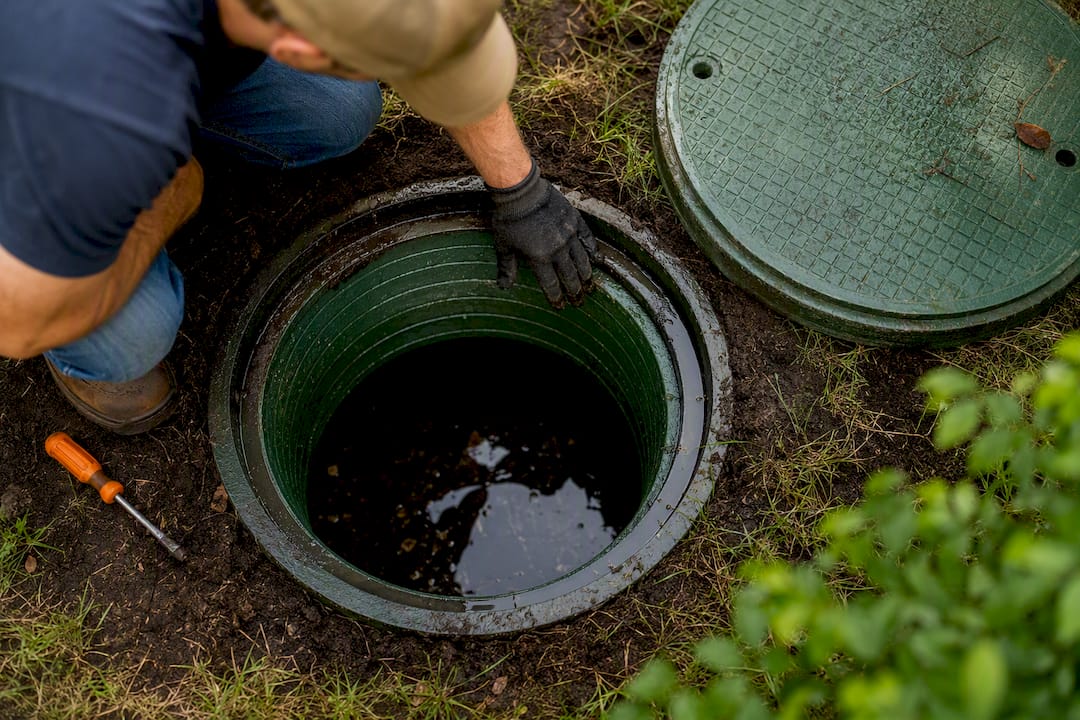
Timing tells you the most. Symptoms that clear up within a few days after the rain stops usually mean simple saturation. Problems that persist beyond about 72 hours, or that keep recurring with every storm, point toward an underlying failure that won’t fix itself once the ground dries out.
Do’s and Don’ts While Your System Is Waterlogged
What you do in the first few days after heavy rain can either buy your system time to recover or make the damage worse.
- Do cut water use hard. Every gallon you don’t send down the drain is a gallon the saturated drainfield doesn’t have to absorb.
- Do redirect obvious surface runoff. A temporary downspout extension or a few sandbags rerouting water away from the tank and drainfield can make a real difference, and it costs you almost nothing.
- Don’t pump the tank while the soil is saturated. An empty tank in waterlogged ground can float or shift, cracking pipe connections and turning a manageable problem into a major repair.
- Don’t reach for chemical drain cleaners or flush anything unusual. These products don’t fix a saturated drainfield, and some can disrupt the bacterial balance your tank depends on.
- Don’t drive or park over the drainfield while it’s wet. Soil compaction from a vehicle’s weight can permanently reduce the drainfield’s absorption capacity.
Pro Tip: Write down exactly what you did and when, including any temporary drainage fixes. Handing that timeline to your septic technician saves them time and often saves you money on the diagnostic visit.
Will Pumping Fix a Septic System After Rain?
Pumping helps in some situations and does nothing in others, and knowing the difference keeps you from spending money on the wrong fix.
If your tank has taken on stormwater or groundwater through a cracked lid, pumping can offer real short-term relief once the ground has dried enough to do it safely. But pumping does not repair a waterlogged drainfield. The tank is only half the system, and if the soil around the drain lines is saturated, removing wastewater from the tank just delays the same backup by a few days.
- Temporary rerouting of stormwater and simple grading changes are low cost and often make an immediate difference.
- Recovery time depends heavily on soil type: sandy soils often drain within one to three days, while clay-heavy soils can stay saturated for a week or longer.
- If symptoms are still showing up 72 hours after the rain has stopped and the ground has had time to dry, that’s not saturation anymore. That’s a system that needs a professional look.
How to Prevent Septic System Failure During Future Storms
Most rain-related septic emergencies trace back to something that could have been addressed months earlier. A little routine maintenance goes a long way toward keeping heavy rain from becoming a heavy rain septic backup.
- Stick to an inspection and pumping schedule. The EPA recommends inspecting your system every one to three years and pumping every three to five years, more often if your household is larger or you’re already seeing wet-weather symptoms.
- Seal lids and risers. A watertight tank access point is one of the cheapest ways to stop groundwater from sneaking in during a storm.
- Redirect downspouts, sump pumps, and foundation drains. Aim to route this water at least 20 feet away from the tank and drainfield whenever your property layout allows it.
- Install and clean an effluent filter. This keeps solids from washing into the drainfield, which preserves the capacity you need most when the ground is already stressed by rain.
- Never drain hot tubs or pools into the septic system. That much water dumped at once can stir up solids in the tank and shorten your drainfield’s lifespan considerably.
- Consider engineered drainage for chronic problem spots. Curtain drains, French drains, or regrading can solve a persistent high water table issue that simple downspout redirection can’t fix on its own.
Pro Tip: If your yard develops the same soggy patch after every storm, don’t just keep mowing around it. That repeat pattern usually means a design or grading issue, not bad luck with the weather.
When to Call a Septic Professional
Some situations call for immediate action, and others can wait a day or two, but neither should wait longer than that.
Call right away if sewage is backing into the house or you can see effluent surfacing anywhere in the yard. If you’re dealing with a wet zone that keeps coming back or a backup that clears and then returns, get a professional out within 24 to 48 hours rather than waiting to see if it resolves on its own.
A proper diagnostic visit typically includes a camera inspection of the lines, a loading or performance test to see how the system handles volume, a check of lids and risers for water intrusion, and sometimes a soil or percolation evaluation if drainfield failure is suspected.

Costs vary widely depending on what’s actually wrong. Sealing a leaking riser or lid often runs $200 to $2,000. Localized drainfield repairs or curtain drain installation typically fall between $3,000 and $15,000. A full system replacement or a mound system for poor soil conditions can run $15,000 or more. Get a written assessment before agreeing to any repair, and ask about permitting requirements if drainfield work is involved.
A Contractor’s View on Rain and Septic Failure
Rain doesn’t create most of the septic problems we get called out for. It reveals systems that were already running close to the edge. When we show up on an emergency call after a storm, the first questions are always the same: is this safe, where is the water actually coming from, and is the drainfield still capable of recovering or has it reached the end of its usable life.
That third question is the one homeowners struggle with, because a drainfield that’s simply saturated and one that’s genuinely failed can look identical for the first day or two. A visual inspection, a look at how the system responds once water use drops, and sometimes a soil check are what separate “wait it out” from “this needs replacing.” Homeowners who track when symptoms started and what the weather was doing beforehand hand us a much clearer picture than the property alone ever will.
— Jason
Get a Straight Answer From a Local Septic Team
We provide homeowners local expertise on clay-heavy soils and drainage patterns during heavy storms. That local knowledge shortens the diagnosis, because we’re not guessing at soil type or typical water tables from scratch on every visit.

If sewage has backed into your home or you’re staring at standing water that won’t recede, our emergency septic repair service is built for exactly this. On the call, expect to walk through safety steps first, then discuss likely causes based on what you’re seeing and when it started. Before arrival, snapping a few photos of any wet areas or backups and noting when they first appeared may help save time during the diagnostic visit and assist in obtaining a faster repair estimate.
Sources
For homeowners who want to dig deeper, the EPA’s septic care guidance covers inspection and pumping schedules in detail. Penn State Extension’s flooding guide explains stormwater diversion, and NC State Extension breaks down common failure signs worth watching for after any storm.
- How to care for your septic system | US EPA
- Protecting your septic system from flooding | Penn State Extension
- Septic overflow after rain? Why it happens and how to fix it | The Septic Guide
- Why do septic systems fail? | NC State Extension
FAQ
What should I do with my septic tank after heavy rain?
Stop nonessential water use immediately, keep people and pets away from any standing water, and avoid pumping the tank until the surrounding soil has had time to drain, usually a few days depending on soil type.
How long does it take for a septic system to drain after heavy rain?
Sandy soils often recover within one to three days, while clay-heavy soils can stay saturated for a week or longer; symptoms lasting beyond 72 hours after dry weather usually signal an underlying problem rather than simple saturation.
How do you fix a septic tank that backs up when it rains?
Start by redirecting downspouts, sump pumps, and yard drains away from the tank and drainfield, since stormwater inflow is one of the most common and cheapest problems to fix. If backups continue after runoff is diverted, a professional inspection can determine whether the drainfield itself needs repair.
Why does my septic system fill up when it rains?
Heavy rain saturates the soil around the drainfield so it can no longer absorb wastewater, and it can also let stormwater or groundwater into the tank through cracked lids or connected downspouts, both of which add volume the system wasn’t designed to handle.