
What to Do About Grease in a Sewer Line Before It Backs Up
Learn how to tackle grease in your sewer line effectively. Discover DIY tips and when to call in the pros to prevent backups.

If a sink is draining slowly and you suspect grease in the sewer line, the fix depends on how far the grease has traveled. Fresh grease near a single drain often responds to hot water, dish soap, and an enzyme treatment. Grease that has hardened into a pipe wall coating, or that’s affecting more than one fixture, needs a camera inspection and almost always a hydro jetting appointment, not another bottle of drain cleaner.
Here’s the quick version before you do anything else:
- Do: scrape grease into the trash, run hot water for a few minutes after washing greasy dishes, and try an enzyme drain treatment if the drain is just sluggish.
- Don’t: pour repeated rounds of caustic drain cleaner down the line or rent a high-pressure attachment for your own drill or hose. Both can push grease further into the pipe or damage older lines.
- The rule of thumb: one slow drain, recently greasy, near the kitchen? Try DIY. Multiple fixtures slow, gurgling, or a smell coming from more than one drain? Call a professional before you make it worse.
Key Takeaways
Grease clogs form gradually inside horizontal pipe runs and require camera-guided diagnosis, not repeated chemical treatments, once a single DIY fix stops holding.
| Point | Details |
|---|---|
| Match the fix to the grease’s location | Fresh grease near a drain responds to hot water and soap; hardened deposits need professional removal. |
| Watch for multi-fixture symptoms | Gurgling or slowness across several drains signals a mainline grease problem, not a local clog. |
| Enzyme treatments are maintenance, not rescue | Monthly bacterial enzyme use prevents buildup but won’t clear an already-established clog. |
| Camera inspection comes before cleaning | Video inspection reveals saponified deposits or pipe damage before a method like jetting is chosen. |
| Pressure must match pipe conditions | Hydro jetting works best when nozzle pressure and flow are matched to pipe diameter, which is why Jmseptic diagnoses before jetting any line in Alamance County. |
Table of Contents
- How Grease Buildup Turns Into a Sewer Line Clog
- DIY Steps That Actually Help With Fresh Grease
- Professional Diagnosis and Removal: Camera, Rodding, and Hydro Jetting
- Stopping Grease Before It Becomes a Sewer Problem Again
- What a Reputable Sewer Contractor Should Actually Do
- The Advice Nobody Tells You Until the Pipe Is Already Cracked
- Getting Your Sewer Line Professionally Cleared
- Sources
How Grease Buildup Turns Into a Sewer Line Clog
FOG, which stands for fats, oils, and grease, is the technical term plumbers and municipal engineers use for the substance behind most kitchen-related sewer clogs. It leaves your sink as a warm liquid, then cools as it travels through the pipe. Once it drops below its melting point, it stops flowing and starts sticking to the inside of the pipe wall, the same way bacon grease solidifies in a cold pan.
That’s the part most homeowners miss: grease doesn’t clog a pipe in one dramatic event. It builds in thin layers, wash after wash, narrowing the usable diameter of the pipe until water can barely pass. A line that handled dishwater fine in September can back up by December, once holiday cooking adds volume and colder ground temperatures make grease solidify faster inside the pipe.
Watch for these signs that point specifically to a grease problem rather than a single clogged trap:
- Slow drainage in the kitchen sink that gradually gets worse over weeks, not overnight.
- Gurgling sounds from other drains when you run the kitchen faucet.
- A sewage or rotten-egg odor near the kitchen or lowest drain in the house.
- More than one fixture slowing down at the same time, especially if the lowest drain in the house (often a basement floor drain or tub) is the first to back up.
Grease and flushed wipes account for up to 70% of sewer overflows in some municipal service areas, according to Houston Public Works. That statistic covers public mains, but the mechanism is identical in the private lateral line running from your house to the street, and that line is your responsibility to maintain and repair.
DIY Steps That Actually Help With Fresh Grease
Before reaching for a chemical drain cleaner, understand what you’re dealing with. DIY methods work well on grease that’s still soft and close to the fixture. They rarely touch grease that’s hardened further down the line, and knowing that difference saves you money and a second visit.
- Control the source first. Scrape pans into the trash instead of the sink, install a mesh sink strainer to catch food particles, and pull the P-trap under the sink apart occasionally to clear the small amount of grease that collects there. This single habit prevents more clogs than any product you can buy.
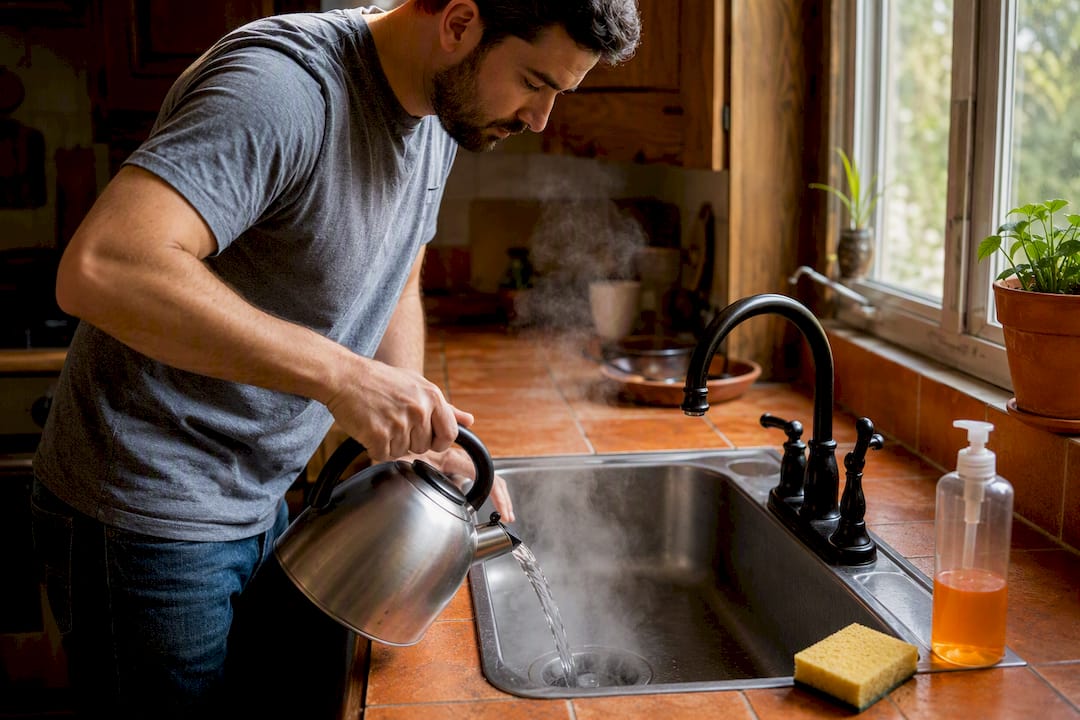
- Flush with hot water and grease-cutting dish soap. Mix a few tablespoons of dish soap into a pot of water heated to just short of boiling, then pour it slowly down the drain. This works because the heat re-liquefies grease that’s still warm enough to respond and the soap helps break the fat into smaller droplets that move with the water. It does almost nothing for grease that’s cooled and hardened ten or twenty feet down the line.
- Add a monthly enzyme treatment. Bacterial enzyme products digest organic grease gradually and are considered septic-safe prevention measures when other cleaners aren’t. They’re a maintenance tool, not an emergency fix. Expect days, not minutes, to see results.
- Try a manual auger for a stubborn but recent clog. A hand snake can punch a channel through a soft grease mass near the drain. It rarely scrapes the pipe wall clean, though, which means the hole it opens can narrow again within weeks.
Pro Tip: If hot water and soap only buy you a day or two before the sink slows down again, that’s a strong sign the grease has already hardened further down the line. Stop repeating the same fix and get a camera inspection instead.
Two things to avoid entirely. First, skip repeated doses of lye-based or caustic drain cleaner. These generate heat that can soften PVC joints and, in septic-connected homes, kill off the bacteria your tank relies on to break down waste. Second, don’t attach a pressure washer or a rented jetting nozzle to a garden hose and try to blast the line yourself. Without the right nozzle and flow rate, that setup can crack an aging pipe or force water through a joint it was never meant to test.
Professional Diagnosis and Removal: Camera, Rodding, and Hydro Jetting
A trustworthy contractor doesn’t guess at what’s clogging your line. They look first. Running a sewer camera through the pipe shows exactly where the grease sits, how thick it is, and whether the pipe itself is cracked, bellied, or offset at a joint. That last part matters more than most homeowners realize.
Some grease deposits react with calcium in wastewater to form saponified buildup that behaves almost like concrete inside the pipe. Standard cleaning tools can fail against it, or worse, jetting against an already-weakened section of pipe can turn a clog into a collapse.
That’s the case for inspection before treatment. Once a technician knows what they’re dealing with, hydro jetting is typically the tool that gets grease off the pipe wall rather than just punching a channel through it. High-pressure water, sprayed through a rotating nozzle, scours the full circumference of the pipe. Combination jetting and vacuum systems are common for heavier buildup, pulling loosened grease and debris out of the line instead of leaving it to resettle downstream.
The skill is in the pressure, not just the water. Operators match nozzle type, pressure, and flow rate to the pipe’s diameter and condition, then advance gradually rather than blasting at full force from the start. Move too fast or push too hard and you risk sending a pressure wave back toward a service lateral, which can damage fittings or blow debris into a septic tank inlet.
Expect roughly these ranges for common jobs:
- Camera inspection alone: often the first line item, usually completed same-day.
- Manual snaking: fastest option for a simple, isolated clog, though it’s often temporary against grease.
- Hydro jetting: takes longer to set up and run but clears the full pipe wall, and it’s usually paired with a follow-up camera pass to confirm the line is clear.
Stopping Grease Before It Becomes a Sewer Problem Again
Prevention is cheaper than any repair call, and it doesn’t take much discipline once it’s a habit. The goal is to keep grease out of the drain in the first place, then use low-effort maintenance to handle what sneaks through anyway.
Build these into your kitchen routine:
- Scrape plates and pans into the trash before rinsing, every time, not just when you remember.
- Wipe down greasy skillets with a paper towel before washing them.
- Keep a sink strainer in place to catch solids that carry grease residue.
- Pour used cooking oil into a sealable container instead of the sink, even small amounts.
On a schedule, rather than daily:
- Run an enzyme-based drain treatment monthly to keep grease from accumulating in the first place.
- Consider a grease trap if your household does heavy frying or your property is a rental with multiple tenants who may not follow the same habits. A grease trap catches fat before it reaches the sewer line, but it needs regular pumping to stay effective.
- Schedule a camera inspection every one to two years for households that cook frequently or have an older sewer line, so small buildup gets caught before it becomes a backup.
What a Reputable Sewer Contractor Should Actually Do
A grease call should never start with a truck full of chemicals and end with a bill. It should start with a camera. Here’s what to expect and ask for when you hire someone to clear a grease-clogged line:
- A video inspection before any cleaning method is chosen, so you see exactly what’s in the pipe.
- A clear explanation of why they’re recommending jetting, rodding, or a combination, based on what the camera showed.
- Before-and-after footage or photos proving the line is actually clear, not just “flowing for now.”
- Septic-safe practices if your home runs on a septic system, since the wrong chemicals or excess pressure can damage a tank’s bacterial balance.
Jmseptic runs this exact process for homeowners across Burlington, Mebane, Elon, Graham, Whitsett, and McLeansville, matching hydro jetting pressure to each pipe’s condition rather than using one setting for every job.
Pro Tip: If a contractor won’t show you camera footage or can’t explain why they chose jetting over rodding for your specific clog, that’s a red flag. A one-size-fits-all approach to grease removal is how pipes get damaged.
The Advice Nobody Tells You Until the Pipe Is Already Cracked
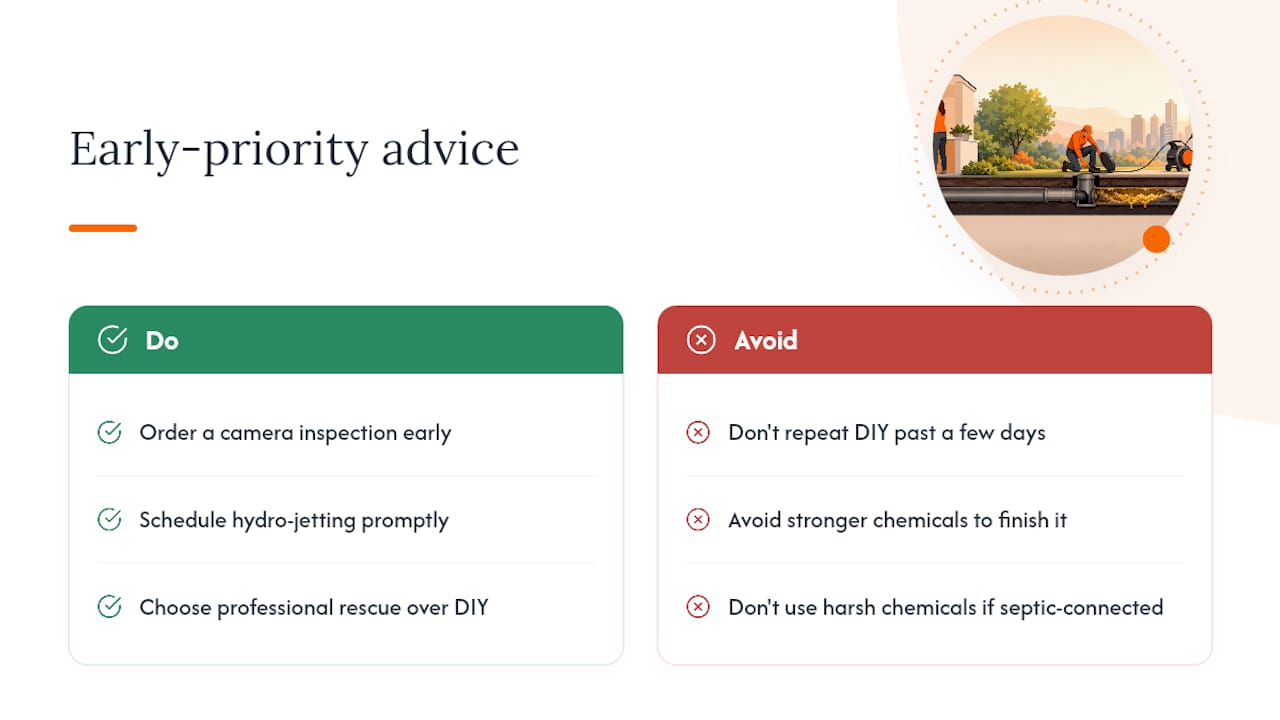
Most grease advice online treats DIY and professional work as a ladder: try the cheap thing first, escalate if it fails. That framing misses the actual risk. The real danger isn’t that hot water and dish soap won’t work. It’s that homeowners repeat DIY fixes past the point they’re useful, on the theory that more effort or a stronger chemical will finish the job a mild one started.
It won’t. Grease that’s hardened past the reach of your sink is a pipe-wall problem, not a drain problem, and no amount of boiling water changes that. The conventional wisdom undersells how often “it’s slow again” really means “the deposit is thicker than you think,” and it oversells enzyme treatments as a cure when they’re a maintenance habit, not a rescue plan.
If there’s one thing worth prioritizing, it’s this: get a camera inspection and hydro jetting the first time a fix stops holding for more than a few days. That single decision, made early, is the difference between a routine jetting appointment and a line replacement. Septic-connected homes carry extra stakes here, since the wrong chemical approach doesn’t just fail to clear the pipe. It can quietly wreck the tank at the other end of it.
Getting Your Sewer Line Professionally Cleared
If the DIY steps above haven’t held for more than a couple of days, it’s time to stop experimenting and get someone who can see inside the pipe. Jmseptic handles hydro jetting and sewer line cleaning for homeowners throughout Alamance County, matching pressure and flow to your specific pipe diameter and condition instead of running every job at the same setting.

A typical service call starts with a camera inspection so you know exactly what’s causing the slowdown, whether it’s grease, roots, or a structural issue, before any cleaning tool touches the line. Have your fixture symptoms ready when you call: which drains are affected, how long it’s been happening, and whether you’ve tried any chemical treatments recently, since that affects how the technician approaches the job. For homeowners dealing with a grease-clogged line that keeps coming back, our sewer line cleaning guide walks through what a full service visit includes. Call Jmseptic to schedule a camera inspection before a slow drain turns into a backup in your yard.
Sources
- Protect Our Pipes | City of Houston – Houston Public Works
- Sewer cleaning 101 | Vactor
- Finding the sweet spot between equipment and technique in sewer line cleaning | Plumber Magazine
- Water (MDPI) — technical article on sewer deposits and saponification
- Grease Clog Sewer Line Prevention Tips | Waterway Plumbing